
- Home
- Defense Systems
- Bombers & Strategic Aircraft
- CV-22 Osprey Aircraft
CV-22 Osprey Aircraft
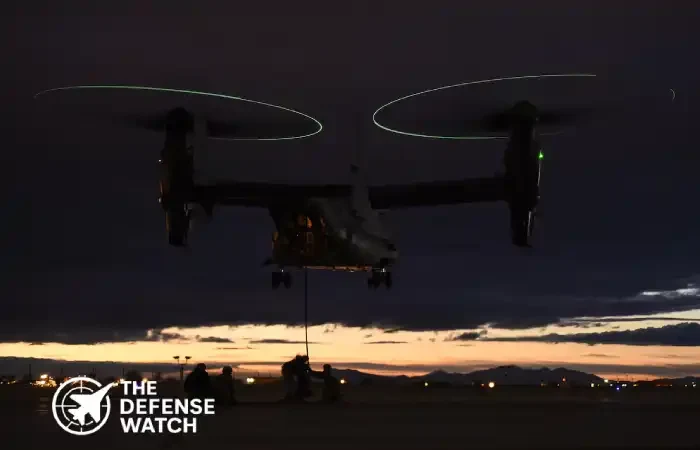
Defense Systems Full Specifications
1. General Information
| Name | CV-22 Osprey |
| Manufacturer | Bell Boeing |
| Country of Origin | United States |
| Introduction / In Service Since | 2007 |
| Status | Active |
| Category | Tiltrotor Special Operations Aircraft |
| Crew | 4 |
| Unit Cost | 70 to 80 million USD |
2. Dimensions & Structure
| Length | 17.5 meters |
| Wingspan | 25.8 meters |
| Height | 6.7 meters |
| Wing Area | Not publicly standardized |
| Empty Weight | ~15,000 kg |
| Maximum Takeoff Weight (MTOW) | ~27,400 kg |
3. Performance
| Maximum Speed | ~270 knots |
| Range | ~860 nautical miles |
| Combat Radius | ~500 nautical miles |
| Service Ceiling | ~25,000 feet |
| Rate of Climb | ~2,000 feet per minute |
4. Powerplant
| Engine Type | 2 × Rolls Royce AE 1107C turboshaft |
| Thrust (per engine) | ~6,000 shaft horsepower |
| Total Thrust | ~12,000 shaft horsepower |
5. Payload & Armament
| Internal Payload Capacity | ~9,000 kg |
| Weapons Bay | None |
| Compatible Weapons | Door mounted machine guns, defensive armament |
| Hardpoints | External mounting provisions |
6. Avionics & Systems
| Radar System | Multi mode navigation radar |
| Navigation | GPS and INS integrated system |
| Electronic Warfare (EW) | Defensive countermeasures suite |
| Stealth Features | Reduced infrared and acoustic signature |
7. Operational History
| Primary Operator | United States Air Force Special Operations Command |
| Conflict Usage | Iraq, Afghanistan, global missions |
| Notable Missions | Long range infiltration and extraction operations |
8. Additional Information
| Variants | CV-22, MV-22, CMV-22 |
| Successor / Future Replacement | None currently planned |
| Notable Features | Tiltrotor transition between helicopter and airplane modes |
| Estimated Operational Life | 30 plus years |
PROS
- Vertical takeoff and landing with fixed wing speed
- Long operational range for special operations missions
- In flight refueling capability extends endurance
- Higher cruise speed than conventional helicopters
- Advanced avionics and navigation systems
CONS
- High procurement and maintenance cost
- Complex tiltrotor mechanics increase maintenance demands
- Limited payload compared to large transport aircraft
- Requires highly trained pilots and crews
- Vulnerable during certain phases of transition flight
CV 22 Osprey Tiltrotor Special Operations Aircraft
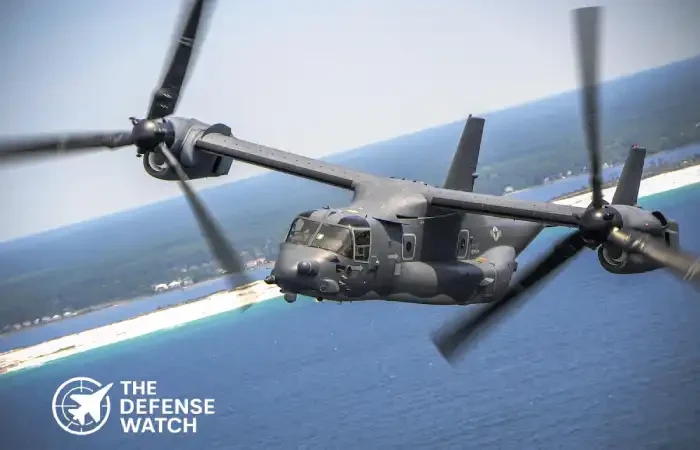
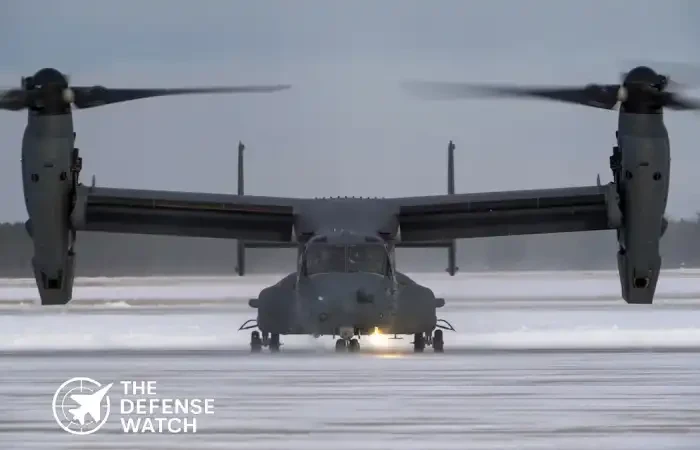
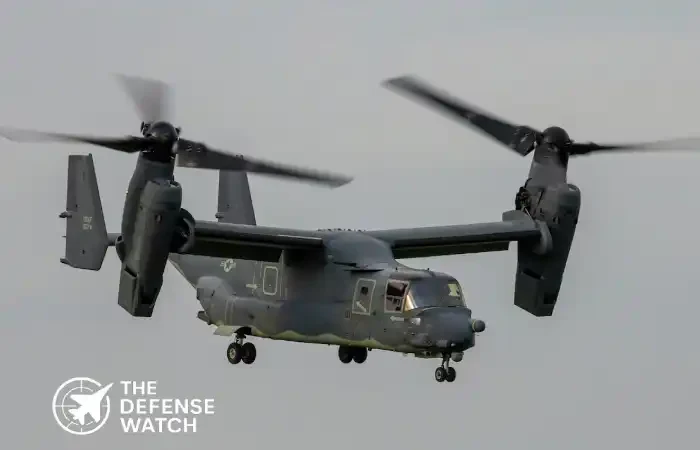
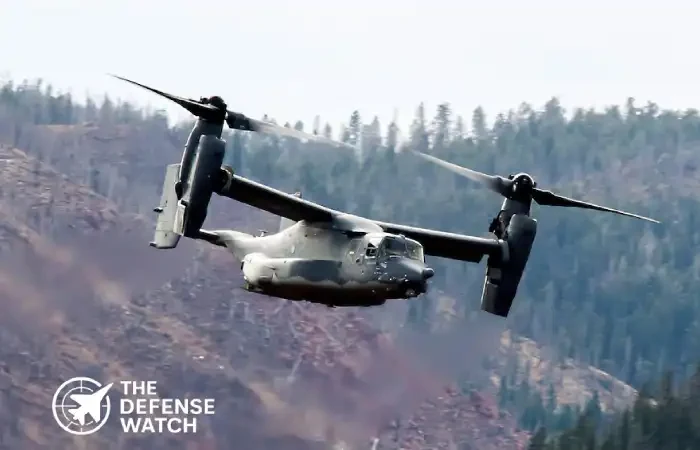
The CV-22 Osprey is a tiltrotor aircraft designed to combine the vertical lift capability of a helicopter with the speed and range of a fixed wing airplane. Operated primarily by the United States Air Force Special Operations Command, it supports long range infiltration, exfiltration, and resupply missions in challenging environments where conventional aircraft may be limited. Its unique configuration allows it to take off and land vertically, then transition to forward flight for efficient high speed travel.
Manufacturer
The CV 22 Osprey is produced by Bell Boeing, a joint venture between Bell Helicopter and Boeing. The aircraft emerged from decades of development aimed at improving vertical lift performance while extending operational range and survivability for special operations forces. Its advanced tiltrotor design positions it as a versatile platform for modern battlefield requirements.
Speed and Range
The aircraft can reach a maximum speed of approximately 270 knots, or about 316 miles per hour, when operating in airplane mode. Its operational range exceeds 860 nautical miles without refueling, and it can be extended further with aerial refueling. The CV 22 is capable of cruising at high altitudes compared to traditional helicopters, improving fuel efficiency and reducing exposure to ground threats.
Cost Price
The unit cost of a CV 22 Osprey is estimated at around 70 million to 80 million US dollars depending on configuration and support equipment. Total program costs are higher when including training, maintenance, and mission systems integration.
Disclaimer Note
The information provided on TheDefenseWatch.com is for general informational purposes only. While we strive to ensure the accuracy, completeness, and timeliness of our content regarding defense and aerospace products, technologies, and specifications, we cannot guarantee that all information is 100% accurate or up-to-date due to the evolving nature of military technology and classified data.TheDefenseWatch.com does not warrant the reliability, suitability, or availability of the information for any specific purpose. Users are advised to consult official sources, such as manufacturers, government publications, or defense agencies, for precise and verified data before making decisions based on our content.We are not affiliated with any defense manufacturers, governments, or military organizations mentioned. Opinions, reviews, and ratings reflect expert analysis but are subjective and should not be considered endorsements. TheDefenseWatch.com is not responsible for any errors, omissions, or consequences arising from the use of this website’s content.External links are provided for convenience and do not imply endorsement. TheDefenseWatch.com reserves the right to update or modify content without prior notice. By using this website, you agree to our Privacy & Cookies Policy.
More Defense Systems from Bell Boeing
New Arrivals

Popular Comparisons
-
 J-10C vs JF-17 Thunder: Which Fighter Is More Capable?
View Comparison →
J-10C vs JF-17 Thunder: Which Fighter Is More Capable?
View Comparison → -
Tejas vs Gripen: Key Differences and Capabilities
View Comparison →
-
Tejas vs MiG-21 Bison: How India Replaced Its Iconic Supersonic Fighter
View Comparison →
-
F-35 vs F-16: Stealth, Sensors and Combat Roles
View Comparison →
-
Tejas Fighter Jet vs F-16 Fighting Falcon: Capability Compared
View Comparison →
-
Rafale Fighter Jet vs F-16 Fighting Falcon : Which Fighter Has the Edge?
View Comparison →
-
Su-57 Fighter Jet vs J-20 Fighter Jet: Stealth and Air Combat Compared
View Comparison →
-
Mirage 2000 vs Tejas Mk1A: Legacy Combat Power vs Indigenous Modernization
View Comparison →
-
Rafale Fighter Jet vs F-22 Raptor: Which Air Dominance Fighter Has the Edge?
View Comparison →
-
Tejas Fighter Jet vs. Rafale Fighter Jet: India’s Indigenous Fighter Meets France’s Proven Multirole Combat Aircraft
View Comparison →


- Pratt & Whitney Begins $100 Million Polish Expansion for F-35 Engine Parts

- Northrop Grumman Wins $43.9 Million Contract for Trident II Rocket Motor Facilities
- Ukraine Drone Strikes Disrupt Russian Data Centers, Raising Questions About AI Infrastructure Security
- Lockheed Martin Wins $114.6 Million Contract to Redesign F-35 Navigation Systems
- Project Agincourt Pushes Pentagon to Speed Up Autonomous Weapons Fielding
- Northrop Grumman Factory Expansion Aims to Increase B-21 Raider Production
- France Orders Four More SAMP/T NG Air Defense Systems
- France and UAE Revive Rafale F5 Fighter Development Partnership
- P-800 Oniks Missile: Range, Speed and BrahMos Comparison
- Ukrainian Drone Unit Caused 70% of Simulated U.S. Brigade Casualties in Germany Exercise


Fighter Jets
-
 F-100 Super Sabre
-
North American F-86 Sabre
-
Northrop YF-23 Fighter
-
Rafale F5 Fighter
-
SU-57 Felon Stealth Fighter
-
Boeing F/A-XX Fighter
-
JF-17 Thunder Fighter Jet
-
F-47 Fighter Jet
-
MIG-31 Fighter Jet
-
J-10CE Fighter Jet
-
Chengdu J-10 Fighter Jet
-
Chengdu J-10C Fighter Jet
-
Gripen E Fighter Jet
-
Tejas Mk1A Fighter Jet
-
Tejas Mk‑2 Fighter Jet
-
F-16V Viper Block 70 Fighter Jet
-
F-15EX Eagle II Fighter
-
F-15E Strike Eagle Fighter
-
F/A-18E/F Super Hornet Fighter Jet
-
Saab Gripen F Fighter Jet
-
JAS 39E/F Gripen Fighter Jet
-
JAS 39 Gripen Fighter Jet
-
F-35A Lightning II Fighter Jet
-
F/A-18F Super Hornet







Recent Compares
-
J-10C vs JF-17 Thunder: Which Fighter Is More Capable?
View Comparison →
-
Tejas vs Gripen: Key Differences and Capabilities
View Comparison →
-
Tejas vs MiG-21 Bison: How India Replaced Its Iconic Supersonic Fighter
View Comparison →
-
F-35 vs F-16: Stealth, Sensors and Combat Roles
View Comparison →
-
Tejas Fighter Jet vs F-16 Fighting Falcon: Capability Compared
View Comparison →
Latest Defense Systems
10 Compares Defense Systems
-
J-10C vs JF-17 Thunder: Which Fighter Is More Capable?
View Comparison →
-
Tejas vs Gripen: Key Differences and Capabilities
View Comparison →
-
Tejas vs MiG-21 Bison: How India Replaced Its Iconic Supersonic Fighter
View Comparison →
-
F-35 vs F-16: Stealth, Sensors and Combat Roles
View Comparison →
-
Tejas Fighter Jet vs F-16 Fighting Falcon: Capability Compared
View Comparison →
-
Rafale Fighter Jet vs F-16 Fighting Falcon : Which Fighter Has the Edge?
View Comparison →
-
Su-57 Fighter Jet vs J-20 Fighter Jet: Stealth and Air Combat Compared
View Comparison →
-
Mirage 2000 vs Tejas Mk1A: Legacy Combat Power vs Indigenous Modernization
View Comparison →
-
Rafale Fighter Jet vs F-22 Raptor: Which Air Dominance Fighter Has the Edge?
View Comparison →
-
Tejas Fighter Jet vs. Rafale Fighter Jet: India’s Indigenous Fighter Meets France’s Proven Multirole Combat Aircraft
View Comparison →
- Pratt & Whitney Begins $100 Million Polish Expansion for F-35 Engine Parts
- Northrop Grumman Wins $43.9 Million Contract for Trident II Rocket Motor Facilities
- Ukraine Drone Strikes Disrupt Russian Data Centers, Raising Questions About AI Infrastructure Security
- Lockheed Martin Wins $114.6 Million Contract to Redesign F-35 Navigation Systems
- Project Agincourt Pushes Pentagon to Speed Up Autonomous Weapons Fielding