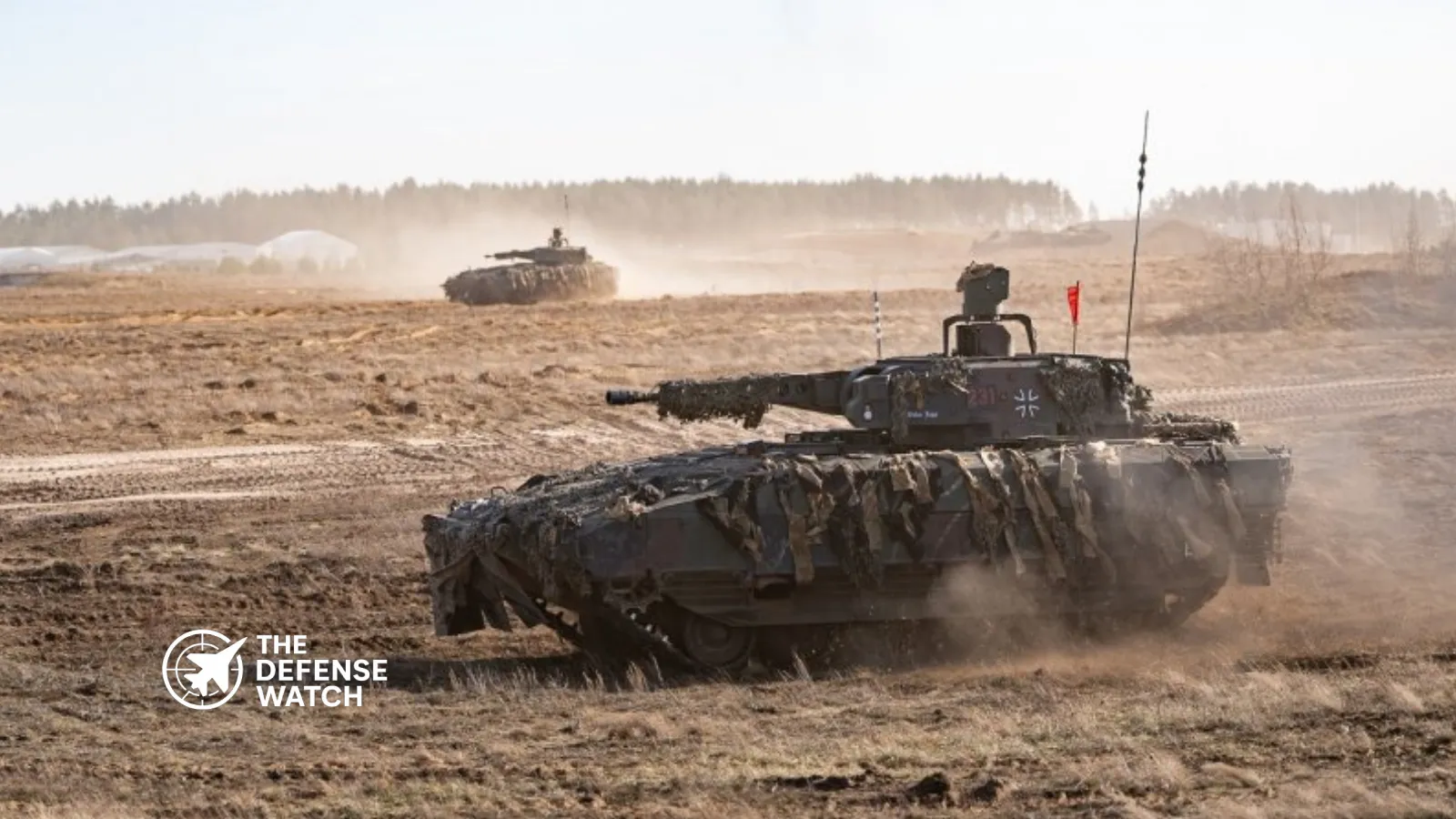
NATO forces build up in Germany as troops and equipment arrive ahead of the Steadfast Dart 2026 exercise, a key part of the alliance’s readiness and rapid deployment training. NATO said allied units began arriving at the port of Emden on January 15 as part of the opening phase of the drills, which are the largest of the year and the first full test of NATO’s new Allied Reaction Force.
Exercise Overview and Strategic Goal
NATO’s Steadfast Dart 2026 exercise is designed to test rapid deployment, command and control, and interoperability across multiple domains including land, air, maritime, cyber, and space. Around 10,000 personnel from 11 allied nations are participating, with troops and equipment moving through Germany before wider maneuvers.
Major General Nicola Mandolesi, deputy chief of staff support at NATO’s Joint Force Command Brunssum, described the deployment as visible proof of alliance cohesion, unity, and defensive readiness.
Forces and Contributors
Participating nations include Italy, Greece, Germany, Czechia, Spain, Lithuania, Bulgaria, and Türkiye, with additional support from France, Belgium, and the United Kingdom. The initial sealift from Italy delivered more than 1,500 vehicles and equipment, with further shipments expected into early February.
The Allied Reaction Force is a high-readiness formation intended to move rapidly to emerging crises and reinforce NATO’s eastern flank if needed. Its structure spans multiple domains and aims to shorten deployment timelines compared with previous NATO force models.
Operational Context
Steadfast Dart 2026 follows a series of NATO readiness drills and deployments across Europe since 2024, including prior exercises that tested rapid reinforcement concepts in the alliance’s eastern regions. For example, Exercise Steadfast Dart 2025 involved new rapid reaction units and large allied contingents training in Romania and Bulgaria.
These activities are part of a broader shift in NATO’s posture following Russia’s full-scale invasion of Ukraine in 2022, prompting allied leaders to reinforce deterrence and defence capabilities along NATO’s eastern flank and central Europe.
Logistics and Movement
Equipment arriving in Germany is processed through reception, staging, and onward movement hubs before distribution to training areas. The phased deployment is intended to mirror the logistical demands of a real-world rapid reinforcement scenario.
Interoperability and Capability Testing
A key objective for Steadfast Dart 2026 is validating interoperability between allied units from different nations and services. This includes command arrangements and joint operations procedures across domains, a focus aligned with recent NATO exercises that integrate land, air, and maritime forces.
Regional Security Implications
Looking Ahead
Steadfast Dart 2026 will continue through the coming weeks, with forces spread from Germany into wider Central Europe training areas. NATO officials stress sustained investment in readiness and the ability to reinforce quickly across allied territory as core priorities for 2026.