Executive Summary:
Saab expects production of the Boeing T-7A Red Hawk advanced trainer to accelerate following the U.S. Air Force’s Milestone C approval, which formally cleared the program to enter low rate initial production. The decision is expected to improve production stability at Saab’s Indiana manufacturing facility, which has experienced reduced activity while the aircraft completed development and testing.
Saab T-7A Red Hawk Production Enters A New Phase After Milestone C
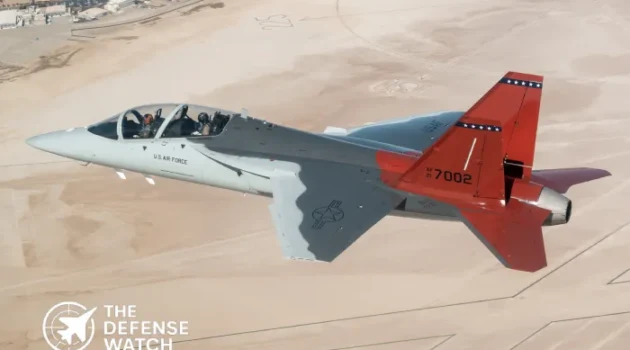
Saab’s T-7A Red Hawk production program is entering a more stable manufacturing phase after the U.S. Air Force approved Milestone C, allowing the advanced trainer aircraft to transition from development into low rate initial production. The approval, announced by the Air Force in May 2026, authorized Boeing to begin building the first production aircraft under a $219 million contract covering 14 aircraft, associated support equipment, simulators, and spares.
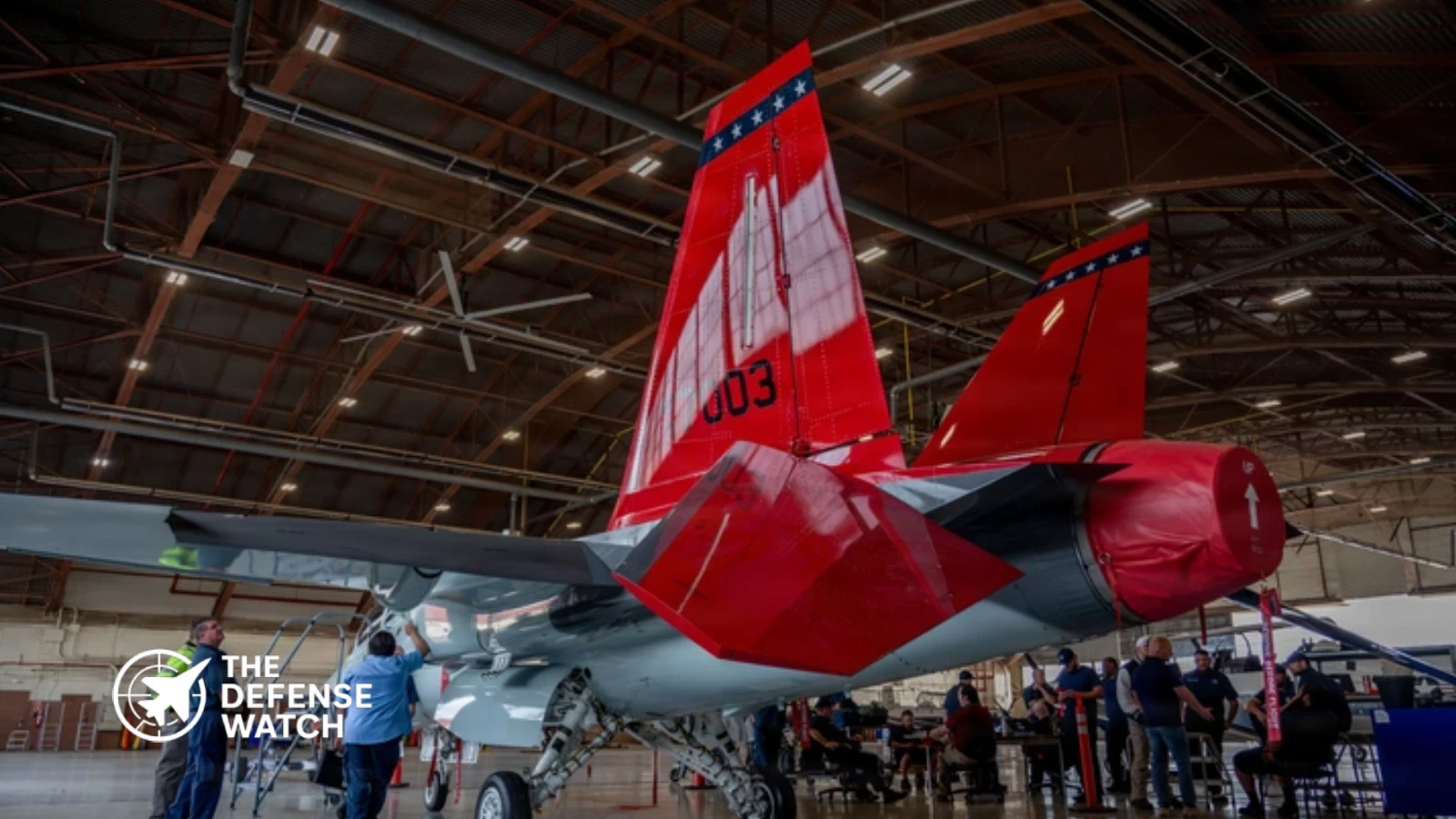
For Saab, which manufactures the aircraft’s aft fuselage at its West Lafayette, Indiana facility, the decision represents an important industrial milestone. Company executives have indicated that higher production rates are expected to support a multi year financial recovery for the U.S. operation after several years of lower than anticipated output during program delays.
The T-7A is being jointly developed by Boeing and Saab to replace the U.S. Air Force’s aging T-38 Talon fleet, which has served as the primary advanced jet trainer for more than six decades.
Indiana Factory Positioned For Higher Output
Saab invested heavily in its purpose built manufacturing facility in West Lafayette to support long term T-7A production. The site now serves as the exclusive production location for all production aft fuselage sections after manufacturing transitioned from Sweden to the United States.
Earlier program delays affected manufacturing schedules, resulting in lower factory utilization than originally planned. With Milestone C completed, Saab expects aircraft deliveries to gradually increase as Boeing begins assembling production aircraft.
According to previous Saab statements, the Indiana facility was designed specifically around advanced digital manufacturing techniques developed jointly with Boeing, allowing highly automated assembly and improved production precision.
What Milestone C Actually Means
Milestone C is one of the most significant decision points in the U.S. Department of Defense acquisition process.
Rather than representing full rate production, it authorizes Low Rate Initial Production (LRIP) after developmental testing demonstrates sufficient maturity.
For the T-7A program, the Air Force adopted an incremental production strategy that differs from many previous acquisition programs.
Milestone Significance Development Complete Major engineering and testing objectives achieved Milestone C Approval for Low Rate Initial Production Initial Production First 14 production aircraft ordered IOC Target Operational service beginning in 2027 Full Rate Production Expected after additional operational evaluation The Air Force has stated that each of the first three LRIP production lots will receive separate approval, allowing engineers to incorporate lessons learned before committing to larger production quantities. That phased approach is intended to reduce technical and manufacturing risk while maintaining delivery schedules.
Why The T-7A Matters To The U.S. Air Force
The Red Hawk represents a substantial modernization of pilot training.
Unlike the T, 38 Talon, which entered service during the Cold War, the T-7A was designed using digital engineering techniques and incorporates modern avionics, open architecture systems, and training capabilities intended to prepare pilots for fifth and future sixth generation aircraft.
The aircraft supports training for future operators of platforms including:
- F, 35 Lightning II
- F, 22 Raptor
- F, 15EX Eagle II
- B, 21 Raider
Its digital design also enables software updates and future capability enhancements more efficiently than legacy trainer aircraft.
Industrial And Strategic Importance
Beyond replacing the T-38, the T-7A has become an important example of how the Pentagon is attempting to modernize defense acquisition.
The program has faced challenges, including ejection seat redesigns, flight control software improvements, and schedule delays. Rather than immediately transitioning into large scale manufacturing, the Air Force adopted an incremental production strategy intended to reduce concurrency risk.
That approach reflects broader acquisition reforms emphasizing testing before large procurement commitments. While it slows initial production growth, it reduces the likelihood of expensive retrofits after aircraft enter service.
For Saab, sustained production at the Indiana facility also strengthens its long term U.S. industrial footprint. The company has invested significantly in domestic manufacturing capacity, positioning itself as a supplier within the American defense industrial base rather than solely as a foreign defense contractor.
Outlook For Production
With Milestone C complete, Boeing and Saab can now begin increasing production in line with Air Force procurement decisions.
Initial Operational Capability remains targeted for 2027, while the full program is expected to eventually replace hundreds of T, 38 trainers across multiple Air Education and Training Command bases.
Although production will expand gradually rather than immediately reaching full capacity, Saab’s Indiana facility is expected to benefit from more predictable manufacturing schedules and improved financial performance as additional production lots are approved.