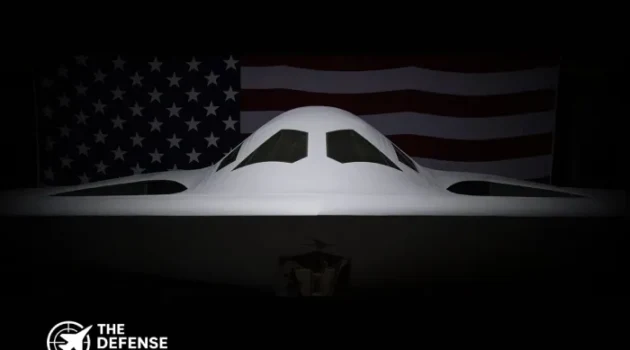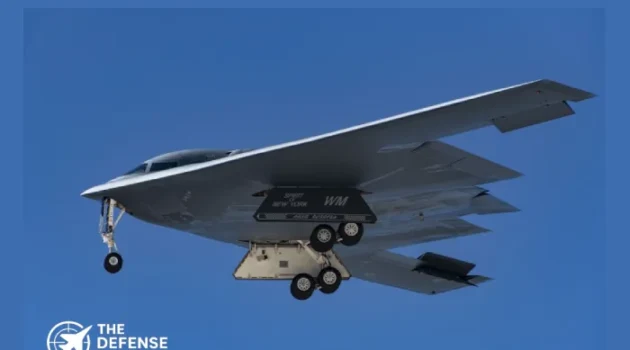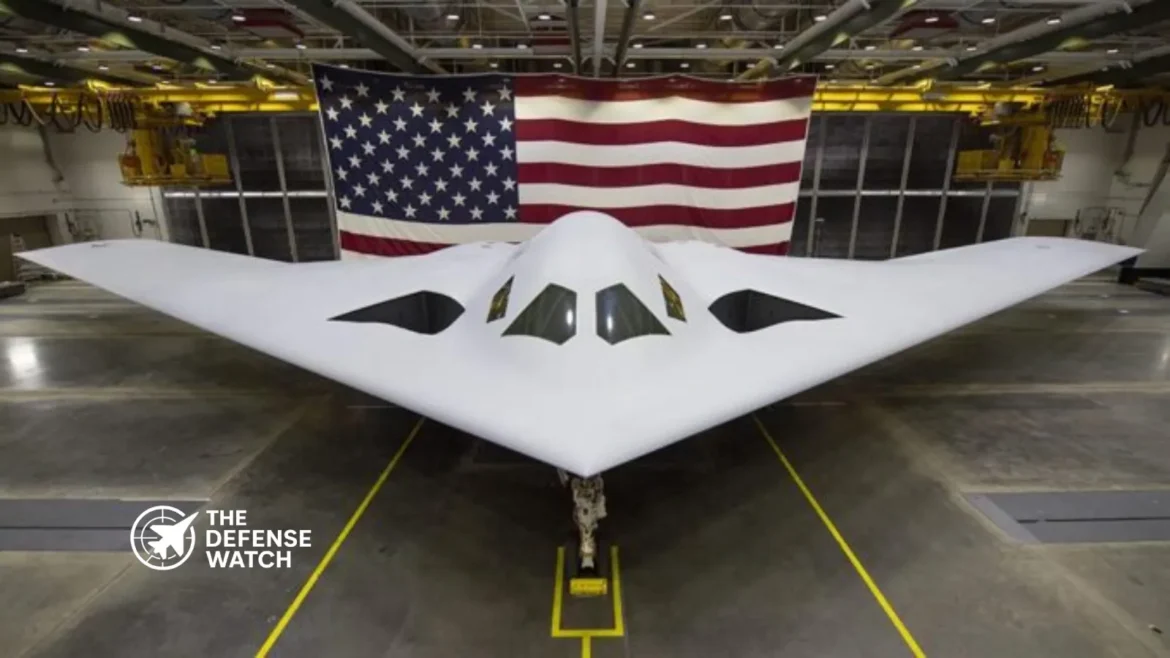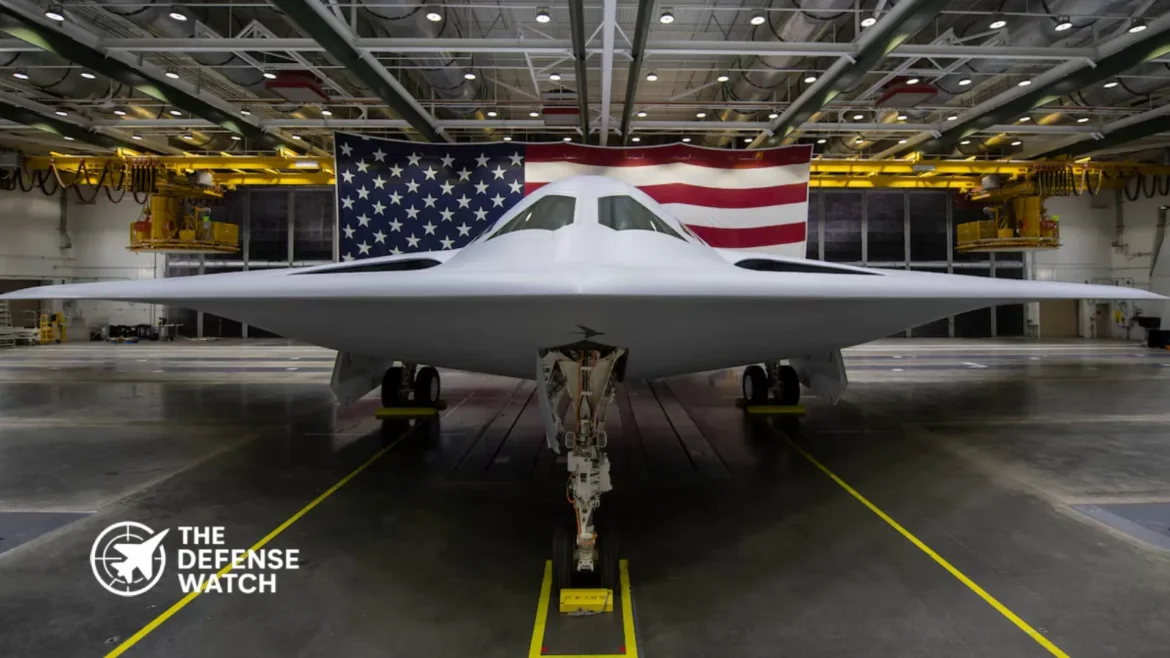
- ► The U.S. Air Force and Northrop Grumman signed a deal on February 23, 2026 at the AFA Warfare Symposium to increase B-21 Raider annual production by 25%.
- ► The acceleration is backed by $4.5 billion in reconciliation funding approved by Congress as part of the “One Big Beautiful Bill” signed in 2025.
- ► Northrop Grumman has invested more than $5 billion in digital engineering and manufacturing infrastructure to support faster production cycles.
- ► The first operational B-21 Raider is scheduled to arrive at Ellsworth Air Force Base, South Dakota, in 2027.
- ► At least two B-21 aircraft are currently conducting flight testing at Edwards Air Force Base, California, with performance reported to exceed digital model predictions.
- ► Northrop’s Palmdale facility currently produces an estimated seven to eight aircraft annually; the exact accelerated rate remains classified.
- ► The B-21 program employs more than 8,000 personnel and over 400 suppliers across 40 U.S. states, making it one of the most broadly distributed defense industrial programs in the country.
B-21 Raider Production Acceleration Marks a Strategic Inflection Point for U.S. Airpower
The B-21 Raider production acceleration, formalized at the Air & Space Forces Association Warfare Symposium on February 23, 2026, is not simply a procurement contract milestone. It reflects a deliberate choice by Pentagon leadership to close what it perceives as a widening window of strategic vulnerability — one defined by an aging bomber fleet, accelerating Chinese and Russian air defense modernization, and the operational lessons drawn from 2025’s Operation Midnight Hammer.
(adsbygoogle = window.adsbygoogle || []).push({});The deal pairs $4.5 billion in already-appropriated reconciliation funding with a new production agreement raising Northrop Grumman’s annual B-21 output by 25 percent. The practical result: the Air Force’s nuclear-capable, penetrating long-range strike capacity reaches operational units faster. The strategic result is more complex — and worth examining carefully.
The Industrial Foundation Behind the Deal
Northrop Grumman’s willingness to commit to faster production is not corporate optimism. It rests on a documented infrastructure investment that, by the company’s own accounting, exceeds $5 billion in digital engineering and advanced manufacturing tools at its Plant 42 facility in Palmdale, California.
The company reports that its digital environment supports flight test planning and real-time performance analysis, enabling increased test cadence — with maintainers able to service aircraft for another test flight the following day. That kind of rapid turnaround in testing is significant because it translates directly to what the Air Force can expect from operational sorties. If the combined test force can regenerate a B-21 overnight under test conditions, the operational maintenance model should track closely with that performance baseline.
(adsbygoogle = window.adsbygoogle || []).push({});Northrop has also reduced software certification time by 50 percent, using advanced manufacturing tools including digital and augmented reality technologies to improve efficiency and scale production across facilities nationwide.
This is not small-batch artisan production. The program involves more than 400 suppliers across 40 states, a supply chain architecture deliberately designed to build political durability into the program budget line — and to reduce single-point-of-failure risk in the production base.
Why the Timing Matters
The Pentagon currently fields only 20 Northrop Grumman B-2 Spirit bombers — the Western world’s only low-observable, nuclear-capable heavy bomber — a fleet that played a central role in 2025’s Operation Midnight Hammer, the U.S. operation to destroy Iran’s underground nuclear enrichment sites.
That mission exposed both the B-2’s irreplaceable value and the acute danger of depending on a 20-aircraft fleet for the nation’s most demanding strike missions. The B-2 is aging, difficult to sustain, and expensive to fly. Its stealth coatings require intensive maintenance. Its radar cross-section management systems, while still effective, were designed against threat environments that have since evolved considerably.
(adsbygoogle = window.adsbygoogle || []).push({});The B-21 Raider program was built with those realities in mind. Its design incorporates modernized low-observable materials and manufacturing processes intended to reduce maintenance burden compared to the B-2. The open-systems architecture allows avionics and mission system upgrades without major airframe modifications — a lesson learned the hard way across the B-2’s operational life. The aircraft can carry both conventional and nuclear payloads, and is designed for manned or optionally unmanned operation, providing flexibility that no current U.S. bomber offers.
Air Force Secretary Troy Meink, speaking at the symposium, stated that “the B-21 is foundational to our long-range strike capability and to credible deterrence,” and that accelerating production ensures delivery to combatant commanders faster, strengthening the ability to “outpace, deter, and, if necessary, defeat emerging threats.”
That language is deliberate. Deterrence credibility in the nuclear domain depends not only on capability but on demonstrated capacity — adversaries need to believe the United States can field sufficient penetrating strike assets to hold their highest-value, hardened targets at risk. Twenty B-2s do not provide that assurance at scale. One hundred or more B-21s, delivered on a compressed timeline, begins to rebuild it.
The Financial Architecture of Acceleration
The $4.5 billion reconciliation injection is not discretionary — it was specifically designated by Congress for B-21 production capacity expansion. Northrop CEO Kathy Warden indicated that Northrop plans to invest between $2 to $3 billion over multiple years in facility upgrades to support the acceleration. That private industrial investment, layered on top of the government funding, suggests both parties have committed to a production rate increase that cannot easily be unwound by future budget volatility.
(adsbygoogle = window.adsbygoogle || []).push({});That said, the financial trajectory has not been smooth. As of early 2026, Northrop had absorbed roughly a $2 billion hit trying to accelerate the program and cover material costs — a reminder that fixed-price contracts in development-phase programs carry real risk for the prime contractor. The new deal should provide more favorable terms for the accelerated lots, though the Pentagon has not disclosed pricing details.
The per-unit cost of the B-21 currently sits near $700 million per aircraft at current production rates. Increased volume should drive per-unit costs down through learning-curve economics, though stealth manufacturing is labor-intensive enough that cost reduction will be gradual rather than dramatic.
Comparing the Industrial Baseline to Competitors
It is worth placing this production decision in comparative context. China’s H-20 stealth bomber has been in development for years but has not entered series production or been confirmed as operationally deployed. Russia’s PAK DA program remains mired in development, with no credible timeline for fielding. Neither adversary currently operates a penetrating stealth bomber comparable to the B-2, and neither is likely to field one on a timeline that matches the B-21’s accelerated delivery schedule.
This matters because the accelerated B-21 production is not a symmetric arms race response — it is an effort to lock in an asymmetric advantage before competitors can close the gap. Long-range strike penetration capability is among the hardest military attributes to replicate quickly. The industrial knowledge, materials science, and systems integration experience required cannot be acquired on short notice.
(adsbygoogle = window.adsbygoogle || []).push({});The United Kingdom and Australia, both close intelligence partners operating within AUKUS, have no equivalent penetrating bomber program. The B-21 effectively makes the United States the sole Western power with this capability for at least the next two decades, reinforcing Washington’s role as the alliance’s indispensable long-range strike backstop.
Program of Record and the 100-Aircraft Question
The current B-21 program of record calls for a minimum of 100 aircraft. Some officials have called for expanding the program of record beyond that number, though Air Force Secretary Meink did not address whether the overall buy would change.
The case for expanding the buy is straightforward: with a fleet of 100, accounting for depot maintenance cycles, training aircraft, testing attrition, and forward deployment requirements, actual mission-capable aircraft available at any given time could be well under 70. For a force designed to hold at-risk a large and geographically dispersed set of hardened targets across China or Russia, that may prove insufficient.
(adsbygoogle = window.adsbygoogle || []).push({});Conversely, at $700 million per aircraft and with the Air Force simultaneously funding the B-52J re-engine program, the Sentinel ICBM (itself under significant cost pressure), and LRSO cruise missile development, budget competition is fierce. The reconciliation funding provides short-term relief, but sustained production acceleration beyond 100 aircraft would require additional appropriations that are not yet committed.
 ■ KEY FACTS AT A GLANCE
- ► The LGM-35A Sentinel ICBM is expected to reach initial operational capability in the early 2030s, the U.S. Air Force confirmed on February 17, 2026.
- ► The Sentinel program restructure is projected to be complete by the end of 2026, along with a new Milestone B acquisition decision.
- ► Original program cost was estimated at $77.7 billion; it ballooned to approximately $160 billion before a critical Nunn-McCurdy breach was declared in January 2024.
- ► The Pentagon’s revised cost estimate with a restructured acquisition strategy stands at approximately $140.9 billion.
- ► Gen. Dale White was appointed as Direct Reporting Portfolio Manager (DRPM) to cut bureaucracy and accelerate delivery of the Sentinel and other major Air Force programs.
- ► Sentinel is intended to replace the Cold War-era LGM-30G Minuteman III, which has been in service for over 50 years and is well past its designed service life.
- ► The original IOC target of 2029 slipped first to 2030, and is now pushed further into the early 2030s.
U.S. Air Force Sets Early 2030s Rollout For LGM-35A Sentinel Nuclear Missile After Major Overhaul
The U.S. Air Force confirmed on February 17, 2026, that its next-generation LGM-35A Sentinel nuclear missile is now projected to reach initial operational capability in the early 2030s — a further delay from earlier targets, but one the service says reflects a more credible, data-driven acquisition path following a sweeping program restructure.
(adsbygoogle = window.adsbygoogle || []).push({});The announcement marks the latest chapter in the troubled development of the Northrop Grumman-built intercontinental ballistic missile, which is central to America’s ground-based nuclear deterrent and designed to replace the aging LGM-30G Minuteman III — a system first fielded more than 50 years ago.
A Program Mired in Cost Overruns
When the Pentagon first awarded Northrop Grumman the Sentinel contract, the program carried a projected price tag of roughly $77.7 billion. That figure subsequently ballooned to an estimated $160 billion — more than double the original estimate — driven primarily by the enormous cost of constructing a new network of missile silos and launch control centers spread across thousands of miles of Great Plains terrain.
The cost spiral triggered a formal Nunn-McCurdy critical breach declaration in January 2024, a threshold that under federal law requires the Pentagon to notify Congress and justify whether the program should continue. After a detailed review, the Defense Department concluded in July 2024 that the Sentinel was too critical to national security to cancel — but ordered the Air Force to restructure the program and put it on a sustainable financial footing.
As part of that restructure, the original Milestone B approval — granted in September 2020 to authorize entry into engineering and manufacturing development — was formally revoked, requiring the program to re-earn that authorization under a revised acquisition framework.
Restructure on Track, New Milestone B Expected This Year
The Air Force said Tuesday that the Sentinel program restructure is now expected to conclude by the end of 2026, at which point the service anticipates receiving a new Milestone B decision. Officials described the program as having “leveraged considerable progress over the last 12 to 18 months” and said a “transformed acquisition strategy” is enabling the team to move with greater speed and discipline.
(adsbygoogle = window.adsbygoogle || []).push({});Air Force Secretary Troy Meink underscored the strategic urgency of the program. “Modernizing our nuclear deterrent is a critical priority,” Meink wrote on X. “The Sentinel program is on a data-driven path to deliver this capability, replacing a 1970s-era system to guarantee Peace through Strength for decades to come.”
A final updated cost figure for the restructured program was not immediately released. However, a U.S. official confirmed to Defense News that the Milestone B process will include an independent cost estimate from the Pentagon’s Office of Cost Assessment and Program Evaluation (CAPE). The Pentagon’s 2024 revised estimate, conducted under the restructured acquisition approach, put the program’s total cost at approximately $140.9 billion.
New Leadership Mechanism Designed to Cut Bureaucracy
A significant structural change behind the renewed confidence in Sentinel’s trajectory is the appointment of Gen. Dale White as the Air Force’s Direct Reporting Portfolio Manager (DRPM) — a role created by Defense Secretary Pete Hegseth in August 2025 specifically to oversee the service’s most consequential major acquisition programs.
Beyond the LGM-35A Sentinel and the legacy Minuteman III, White’s portfolio includes the F-47 sixth-generation fighter and the B-21 Raider stealth bomber — programs that collectively represent the backbone of future U.S. air and nuclear power.
The DRPM has the direct authority to make decisions, informed by integrated inputs across the enterprise and in alignment with the mission priorities set by the Secretary of War and the Secretary for the Air Force,” White stated. “That construct allows us to resolve tradeoffs quickly and move with the speed required to deliver credible deterrence, while preserving the discipline this mission demands.”
Following his appointment, White and his team conducted a comprehensive review of the Sentinel program before arriving at the current early 2030s IOC projection.
Why Sentinel Matters for U.S. Nuclear Strategy
The LGM-35A Sentinel nuclear missile is not simply a modernization effort — it is a foundational pillar of the U.S. strategic triad, which also includes submarine-launched ballistic missiles and nuclear-capable bombers. The ground-based leg of the triad, housed in hardened silos across Montana, Wyoming, North Dakota, Colorado, and Nebraska, provides a survivable and promptly responsive deterrent.
(adsbygoogle = window.adsbygoogle || []).push({});The Minuteman III missiles currently occupying those silos were designed in the 1960s and have been extended and upgraded well beyond their original design lives. The Air Force has maintained that the aging airframes and electronics cannot be reliably sustained indefinitely, and that a clean-sheet replacement — rather than further life extension — is the appropriate path forward.
The Sentinel program, despite its well-documented cost and schedule challenges, remains the only program of record for that replacement. There is no credible alternative currently in development.
Timeline Slip Raises Questions, But Program Survives
The IOC target for Sentinel has now shifted three times. The original goal of 2029 slipped to 2030, and the Air Force’s latest statement pushes it further — into a range described only as the “early 2030s.” While the service did not specify a single target year, the phrasing suggests a window of 2031 to 2033.
Defense analysts and congressional observers have previously raised concerns about the compounding schedule and cost risks inherent in the program, particularly given the complexity of silo construction and the technical requirements of fielding a new ICBM. The Air Force’s decision to require new silos — rather than reuse existing Minuteman III infrastructure — added significantly to both cost and construction timelines, though officials have maintained that new silos are necessary for reliability and safety.
The revised acquisition strategy, the DRPM oversight structure, and the expected new Milestone B decision by end of 2026 represent the Air Force’s attempt to demonstrate to Congress and the Pentagon that the program is being managed with greater rigor than before.
What Comes Next
With the restructuring phase expected to close out this year, attention will turn to the Milestone B re-authorization process and the accompanying independent cost estimate from CAPE. That estimate will be closely scrutinized by both the Office of the Secretary of Defense and Capitol Hill.
(adsbygoogle = window.adsbygoogle || []).push({});Beyond that, the Air Force will need to demonstrate sustained execution against a revised schedule and cost baseline — a challenge that has proved elusive for the program to date. Northrop Grumman’s performance in the engineering and manufacturing development phase, once officially re-authorized, will be the critical variable in determining whether the early 2030s IOC target holds.
For now, the U.S. Air Force is projecting cautious confidence: the LGM-35A Sentinel nuclear missile is moving forward, with a cleaner acquisition structure and more direct oversight than at any point in its turbulent history.
Northrop Grumman VALEN AESA Radar Signals A New Phase In Airborne Sensing
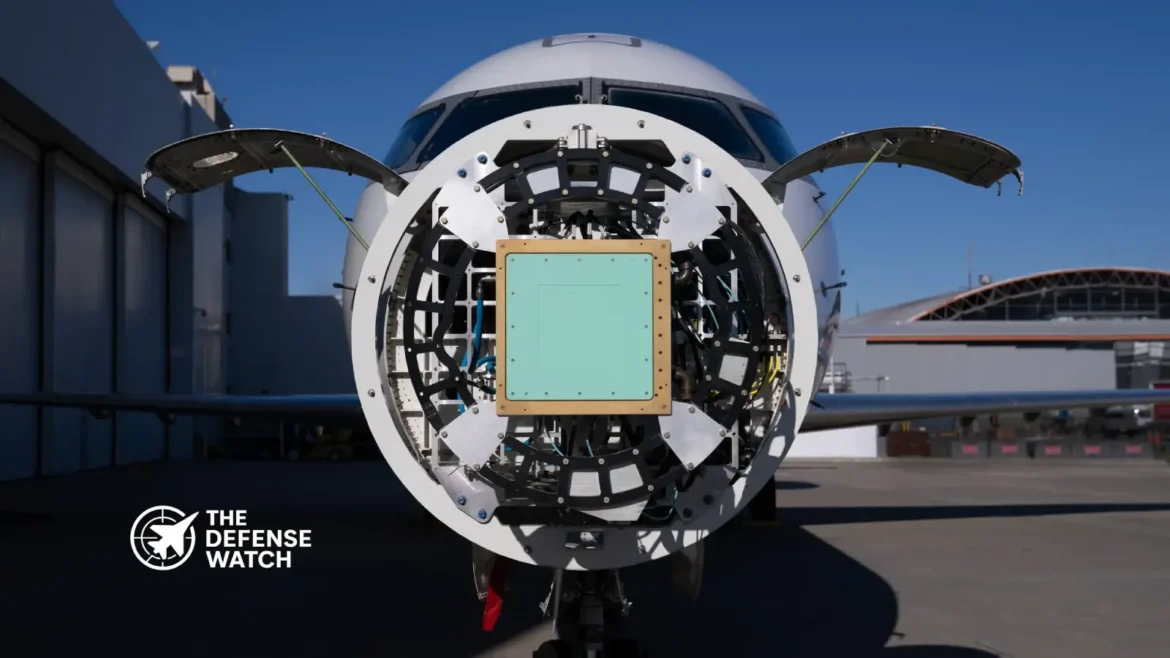
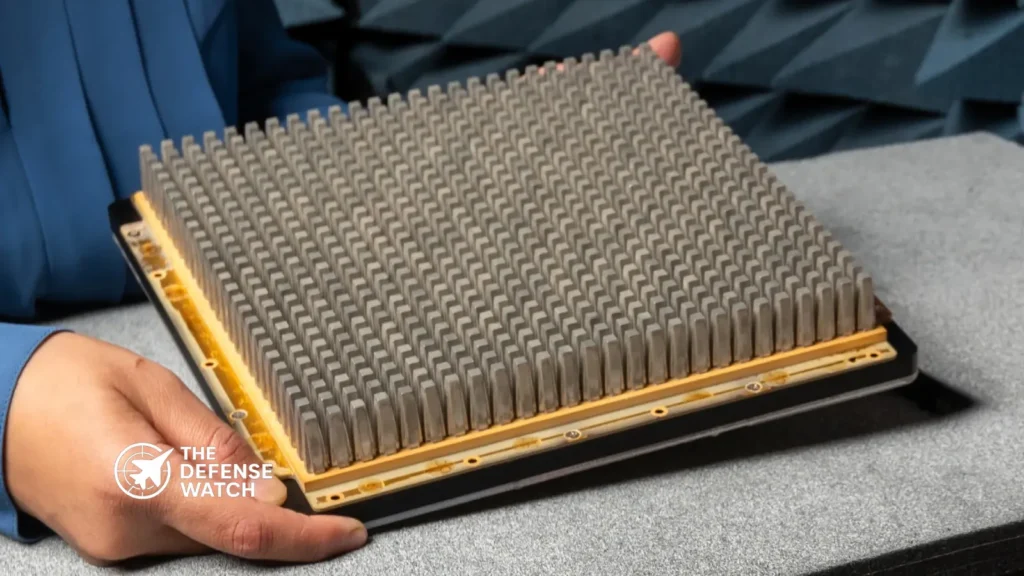
Northrop Grumman VALEN AESA is being positioned as a generational leap in airborne sensing, expanding the capabilities of active electronically scanned array radar for modern and future combat environments.
In an announcement published by Northrop Grumman, the company introduced VALEN as a scalable AESA radar family designed to support next generation aircraft and mission systems. The system builds on decades of experience in electronically scanned arrays and digital radar architectures.
The launch reflects growing demand across the U.S. and allied defense sectors for sensors capable of operating in contested, spectrum dense environments.
What Is VALEN AESA?
VALEN, which stands for a new radar product line under Northrop Grumman’s portfolio, is a modular, open architecture AESA radar system engineered for adaptability across multiple platforms.
AESA radars use electronically controlled beams instead of mechanically steered antennas. This allows rapid beam steering, simultaneous multi-mode operations, and improved resistance to electronic attack.
According to Northrop Grumman, VALEN integrates:
- Advanced digital beamforming
- Scalable hardware configurations
- Software defined capabilities
- Open mission systems compatibility
The company describes VALEN as a future ready sensing backbone rather than a single platform specific radar.

Image: Northrop Grumman Built For Multi Domain Operations
Modern combat aircraft and unmanned systems operate in increasingly complex environments. Air superiority missions, long range strike, electronic warfare, and intelligence gathering often occur simultaneously.
The Northrop Grumman VALEN AESA radar is designed to support these multi mission demands.
By leveraging digital architecture and scalable transmit receive modules, the system can be tailored to various aircraft sizes and mission sets. This includes:
- Tactical fighters
- Advanced trainers
- Unmanned aerial systems
- Collaborative combat aircraft
Northrop Grumman has long supplied AESA radars to U.S. platforms, including systems for the U.S. Air Force and U.S. Navy. VALEN builds on that legacy, with a focus on modularity and digital transformation.
Digital Backbone And Open Architecture
A key feature of the VALEN AESA radar system is its open systems approach.
The U.S. Department of Defense has increasingly emphasized Modular Open Systems Approach, or MOSA, to reduce vendor lock in and speed up upgrades. By aligning with open architecture standards, VALEN can integrate with evolving mission software, data links, and sensor fusion frameworks.
This design philosophy supports rapid capability insertion, allowing operators to add new waveforms, electronic protection features, and processing upgrades without redesigning the entire radar.
In practical terms, that means improved lifecycle flexibility and reduced long term sustainment costs.
Enhanced Survivability In Contested Environments
Air forces are preparing for high end conflicts where adversaries deploy advanced integrated air defense systems, jamming platforms, and cyber tools.
AESA radars already provide advantages such as low probability of intercept modes and agile beam steering. Northrop Grumman states that VALEN is engineered to further enhance survivability in electronically contested environments.
Digital beamforming enables more precise target tracking and improved discrimination in cluttered battlespaces. The scalable architecture also allows tailored electronic protection measures depending on mission needs.
This is particularly relevant as near peer competitors continue investing in advanced air defense and electronic warfare capabilities.
Supporting Next Generation Aircraft Programs
While Northrop Grumman has not publicly linked VALEN to a specific aircraft program, the timing aligns with several major U.S. modernization efforts.
These include:
- Next generation air dominance initiatives
- Collaborative combat aircraft concepts
- Advanced unmanned systems development
The U.S. Air Force and Navy are both pursuing future air combat ecosystems that rely heavily on sensor fusion and data sharing. In such architectures, radar is not just a detection tool but a central node in a larger combat cloud.
VALEN appears positioned to function as part of that distributed sensing framework.
Northrop Grumman is also a key player in strategic and stealth programs such as the B-21 Raider, underscoring its experience in integrating advanced sensors into low observable platforms.
Scalability Across Platforms
One of the defining features of the Northrop Grumman VALEN AESA radar is scalability.
Rather than designing unique radars for each aircraft, VALEN’s architecture can be adjusted in size, power output, and processing capability.
This approach offers several advantages:
- Reduced development timelines
- Common logistics and training pipelines
- Easier cross platform upgrades
- Interoperability across allied fleets
For allied nations seeking advanced radar performance without bespoke development programs, scalable AESA families can reduce risk and accelerate fielding.
Strategic Implications For U.S. Defense
The introduction of VALEN comes amid intensified global competition in sensor technology.
China and Russia have both invested heavily in AESA radars and electronic warfare systems. Maintaining an edge in sensing and electronic protection remains central to U.S. air dominance strategy.
By focusing on digital architecture, open systems, and modularity, Northrop Grumman is aligning its radar roadmap with Pentagon priorities for adaptability and long term modernization.
For policymakers and defense planners, the emergence of systems like VALEN underscores the shift from platform centric thinking to network centric operations, where sensors, shooters, and command nodes operate as an integrated ecosystem.
Industry Context
Northrop Grumman is one of several major U.S. defense contractors advancing AESA technology. Companies such as Raytheon Technologies and Lockheed Martin also field advanced radar systems across multiple platforms.
However, Northrop Grumman has historically been a pioneer in electronically scanned arrays, including early airborne AESA deployments.
With VALEN, the company signals a continued push toward digitally defined sensing capabilities designed for rapid evolution over decades of service life.
Why VALEN Matters
The Northrop Grumman VALEN AESA radar represents more than a hardware update. It reflects a broader transformation in how airborne sensors are designed, integrated, and upgraded.
As air combat shifts toward data driven, network enabled operations, radar systems must serve as both detection tools and information hubs.
VALEN’s emphasis on scalability, digital backbone, and open architecture aligns with this operational reality.
While specific performance metrics such as range, power class, or waveform details were not disclosed, the strategic positioning of the system suggests it is intended to anchor future airborne sensing solutions across U.S. and allied fleets.
Northrop Grumman And Thales In Belgium Strengthen NATO Industrial Cooperation
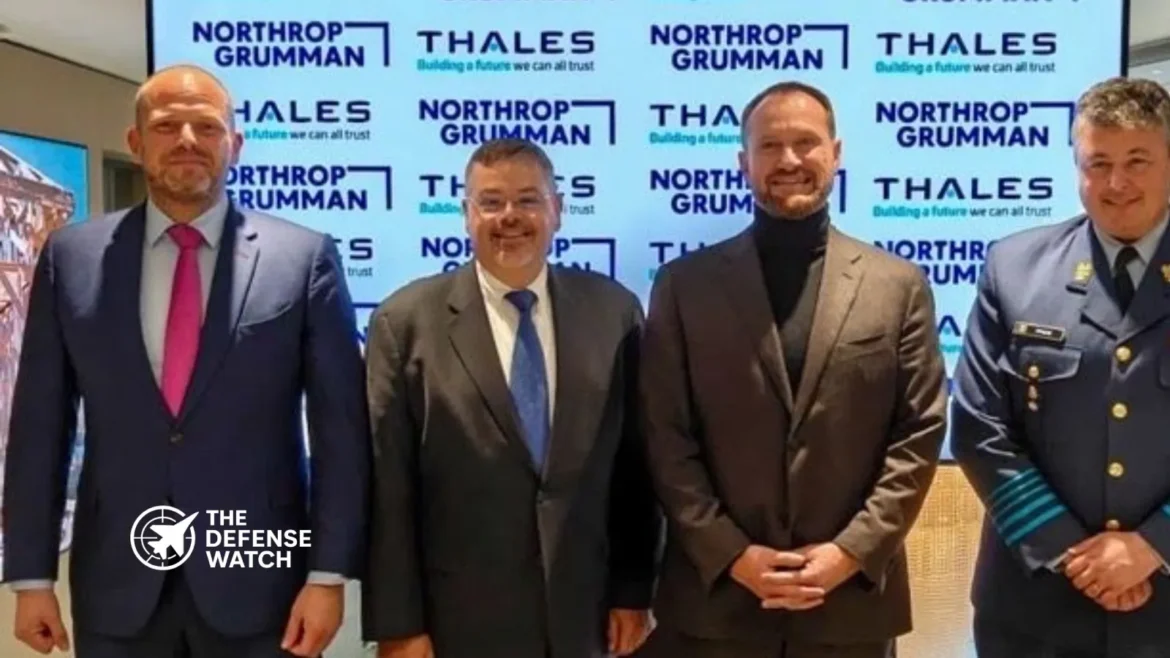
Northrop Grumman and Thales in Belgium have expanded their partnership to better support NATO customers and strengthen the European defense industrial base, according to an official company announcement.
The agreement links U.S. defense prime Northrop Grumman with Thales Belgium to enhance cooperation across missile systems, ammunition, and related technologies aimed at European and NATO requirements. The move reflects growing transatlantic defense coordination as allies increase spending and accelerate modernization programs.
The companies said the partnership will focus on industrial collaboration that supports both European customers and the broader NATO alliance.
Expanding Transatlantic Industrial Integration
The expanded agreement builds on existing cooperation between Northrop Grumman and Thales in Belgium, particularly in advanced propulsion systems and defense manufacturing.
Northrop Grumman, a major supplier of missile systems, air and missile defense technologies, and advanced aerospace platforms, has sought to deepen its industrial footprint in Europe. The latest partnership step aligns with NATO’s push to strengthen supply chain resilience and increase production capacity across allied nations.
Thales in Belgium brings established expertise in propulsion systems for rockets and missiles. The company has long supported European and allied defense programs with energetic materials and advanced rocket motor technologies.
By integrating industrial capabilities more closely, both companies aim to enhance responsiveness to NATO member requirements and support regional production.
Supporting NATO Readiness And European Security
The Northrop Grumman and Thales in Belgium cooperation comes as NATO allies face sustained demand for missile systems, munitions, and air defense capabilities. Since 2022, European governments have significantly increased defense budgets in response to the war in Ukraine and broader security concerns across the continent.
The United States remains NATO’s largest contributor, but European nations are expanding domestic production capacity. Partnerships like this are designed to ensure that allied nations can access advanced systems while strengthening local industry.
According to Northrop Grumman, closer collaboration with European partners enhances interoperability and ensures that systems meet NATO operational standards. For NATO customers, industrial cooperation inside Europe can reduce lead times and support lifecycle sustainment.
Industrial Cooperation Across Missile And Propulsion Systems
While specific program details were not disclosed, the partnership is expected to support missile propulsion and related subsystems that align with NATO capability priorities.
Northrop Grumman has a broad missile portfolio that includes air defense interceptors, precision strike systems, and rocket propulsion technologies. Thales in Belgium specializes in small to medium caliber rocket motors and energetic materials, making it a key supplier in European missile programs.
The companies indicated that their collaboration will focus on providing scalable production capacity for European and NATO markets.
In practical terms, that could mean joint work on propulsion subsystems, co production arrangements, or expanded supplier relationships for allied missile programs. Such cooperation aligns with European Union and NATO efforts to reduce dependence on external supply chains while maintaining interoperability with U.S. systems.
Strategic Context: NATO And European Defense Spending
The Northrop Grumman and Thales in Belgium partnership reflects broader trends in transatlantic defense cooperation.
NATO Secretary General officials have repeatedly emphasized the need for allies to increase industrial output, particularly in munitions and missile systems. The alliance has also encouraged multinational procurement and joint production initiatives.
At the same time, European defense firms are seeking partnerships with U.S. primes to access advanced technologies while maintaining local manufacturing roles.
Belgium plays a strategic role within NATO. It hosts NATO headquarters in Brussels and remains an active participant in alliance modernization programs. Strengthening Belgium based industrial capacity supports both national and alliance level objectives.
Reinforcing Supply Chain Resilience
Defense supply chains have faced strain in recent years due to high operational demand and global disruptions. Increasing production capacity inside Europe is viewed by policymakers as a way to enhance resilience and reduce bottlenecks.
By expanding cooperation with Thales in Belgium, Northrop Grumman can leverage local expertise and facilities to support NATO customers more efficiently.
Industrial partnerships also support political and economic objectives. European governments increasingly require industrial participation and technology cooperation when procuring major defense systems.
This model allows U.S. primes to remain competitive in European markets while contributing to allied industrial strength.
Broader Implications For Transatlantic Defense
The Northrop Grumman and Thales in Belgium initiative underscores how U.S. defense companies are adapting to a changing security environment in Europe.
Rather than operating solely as exporters, major U.S. contractors are embedding themselves within European industrial ecosystems. This approach supports alliance cohesion and addresses concerns about supply chain autonomy.
For NATO, the outcome is intended to be improved readiness, faster delivery timelines, and stronger interoperability across allied forces.
For Belgium and other European states, partnerships like this can sustain high value manufacturing jobs and reinforce domestic defense capabilities.
Looking Ahead
The companies did not disclose financial terms or specific program timelines. However, the partnership signals sustained U.S. industry commitment to European security requirements.
As NATO continues to prioritize air and missile defense, long range fires, and munitions stockpile replenishment, industrial collaboration will remain central to alliance strategy.
The Northrop Grumman and Thales in Belgium cooperation fits within that broader framework. It reflects a shift toward integrated, multinational production models designed to meet sustained demand across NATO member states.
E 2D Advanced Hawkeye contract strengthens fleet radar readiness
The E 2D Advanced Hawkeye contract awarded to Northrop Grumman Systems Corp marks a significant sustainment investment for the US Navy airborne early warning fleet and its Japanese partner. The Navy has issued a ceiling priced delivery order valued at up to 198 million dollars for the procurement of 608 power amplifier module spares used on the E 2D Advanced Hawkeye aircraft.
(adsbygoogle = window.adsbygoogle || []).push({});The award was announced by the Department of Defense and executed by Naval Supply Systems Command Weapon Systems Support in Philadelphia. Work will be performed at Northrop Grumman facilities in Melbourne Florida and is scheduled for completion by February 2029.
Contract details and scope of work
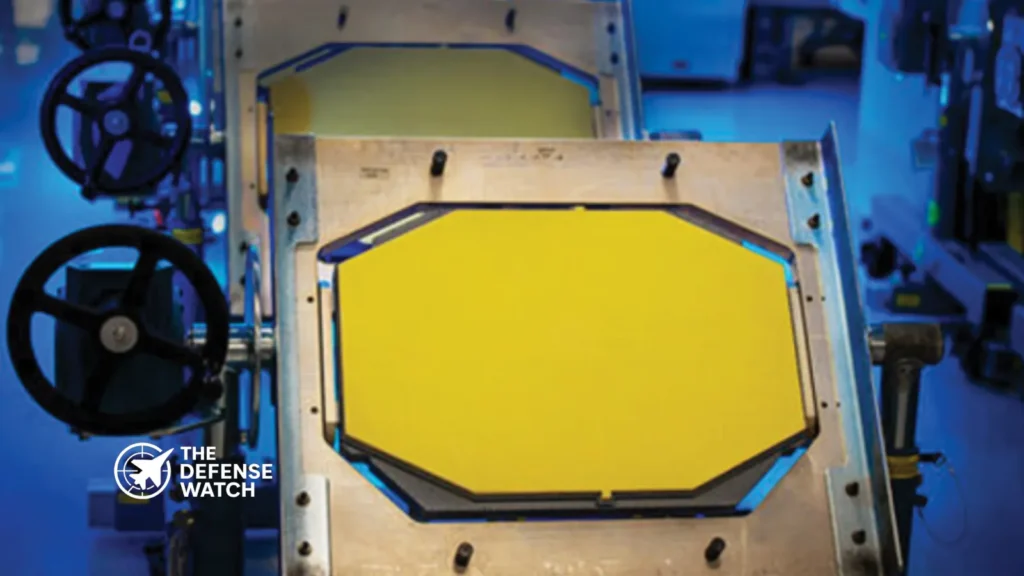
Under delivery order N00383 26 F S50R, issued against an existing basic ordering agreement, Northrop Grumman will manufacture and deliver power amplifier modules critical to the E 2D radar and mission system architecture. These modules support the aircrafts advanced electronically scanned array radar, which provides long range air and maritime surveillance for carrier strike groups.
The delivery order does not include an option period. Funding at the time of award totals approximately 97 million dollars, split between Navy working capital funds and Foreign Military Sales funds. According to the announcement, 64.3 million dollars in Navy funds and 32.7 million dollars in FMS funding from Japan were obligated immediately and will not expire at the end of the current fiscal year.
Support for Japan through Foreign Military Sales
A portion of the E 2D Advanced Hawkeye contract supports Japan under the US Foreign Military Sales program. The Japan Air Self Defense Force operates the E 2D as part of its airborne early warning and control mission, replacing older E 2C platforms and expanding interoperability with US forces in the Indo Pacific.
By aligning US Navy and Japanese requirements in a single sustainment action, the Navy aims to streamline logistics and maintain common configuration standards across allied fleets. This approach reflects broader Pentagon efforts to improve readiness while supporting key regional allies through established FMS mechanisms.
Non competitive award rationale
The Navy solicited one firm for this requirement under the authority of Title 10 US Code 3204 a 1, which permits non competitive awards when only one responsible source can meet agency requirements. Northrop Grumman is the original equipment manufacturer for the E 2D mission systems, including the radar and associated electronic components.
Officials stated that one offer was received. This is consistent with past E 2D sustainment actions, which typically rely on the prime contractor due to proprietary designs and integration requirements.
Importance of power amplifier modules
Power amplifier modules are a key element of the E 2D Advanced Hawkeye radar system. They enable high power transmission and precise beam control, supporting the aircrafts ability to detect and track airborne and surface threats at extended ranges.
(adsbygoogle = window.adsbygoogle || []).push({});Maintaining an adequate supply of spares is essential for operational availability, especially as the E 2D fleet continues high tempo deployments aboard US Navy aircraft carriers and at land based sites. The contract supports long term sustainment as the platform remains a cornerstone of naval integrated air and missile defense.
Program background and broader context
The E 2D Advanced Hawkeye is operated by the US Navy and Japan and is widely regarded as one of the most capable airborne early warning platforms in service. It features a digital cockpit, advanced communications, and the AN APY 9 radar, allowing it to act as a battle management node across air, sea, and joint forces.
Northrop Grumman continues to serve as the prime contractor for the platform, supporting production, upgrades, and sustainment. Recent Navy budget documents have emphasized readiness and sustainment funding for high demand aviation assets, including the E 2D, as part of broader force posture and modernization efforts.
This latest E 2D Advanced Hawkeye contract aligns with those priorities, ensuring radar performance and mission availability through the end of the decade.
Northrop Grumman Lands Major Microelectronics Contract for Military Systems
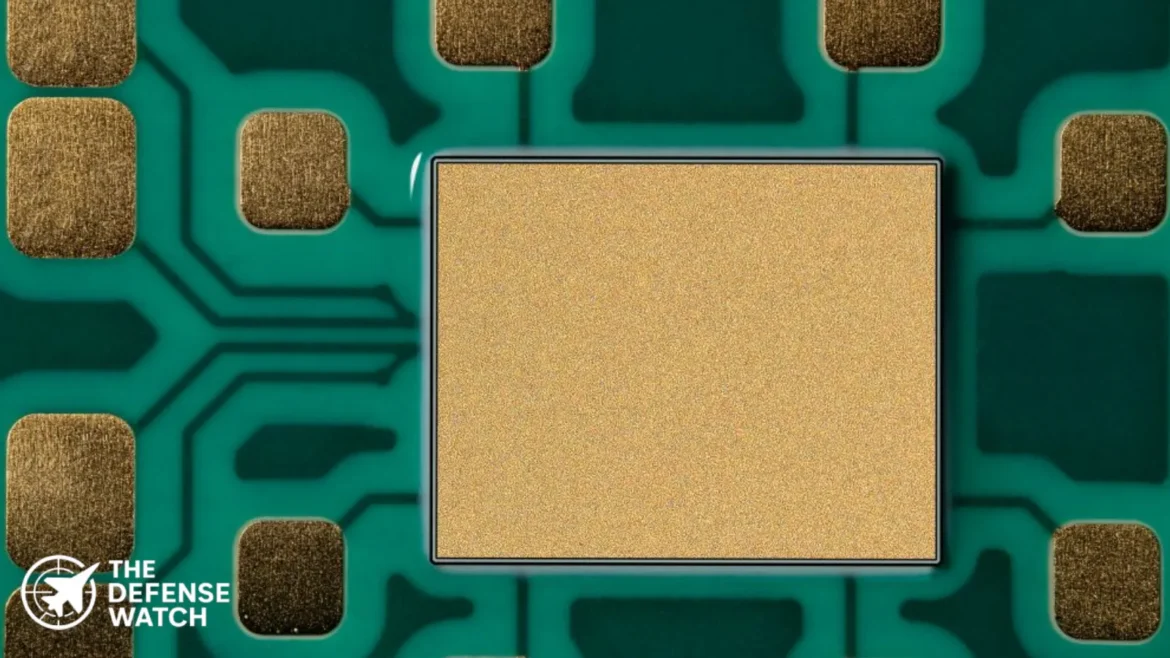
Northrop Grumman won a US defense microelectronics contract designed to speed American‑made chips into military systems, the company and US Defense Microelectronics Activity announced February 2, 2026.
(adsbygoogle = window.adsbygoogle || []).push({});The award places Northrop Grumman on the Advanced Technology Support Program V, or ATSP V, a long‑term contracting vehicle with a ceiling of about $25 billion aimed at getting domestic semiconductor technology into Department of Defense systems faster.
What the ATSP V Contract Means
The ATSP V contract is an indefinite delivery, indefinite quantity vehicle that lets the DoD and other federal agencies access advanced microelectronics engineering and manufacturing support without a full separate acquisition process for each order.
Under ATSP V, Northrop Grumman and other awardees can:
• Respond to government requests for proposals within roughly 30 days.
• Complete the work from proposal to contract award in an estimated 80 to 90 days.Those timelines aim to shorten the time between identifying a need and delivering capable microelectronics solutions, a priority for military systems that increasingly depend on modern chips.
Boosting Domestic Microelectronics Capability
The ATSP V award supports broader US efforts to bring microelectronics design, packaging, and production into the domestic supply chain. Northrop Grumman said it has executed more than 200 task orders under similar frameworks, giving it experience in rapid integration of American‑made microelectronics for defense customers.
Lori Manley, Northrop Grumman’s ATSP V program manager, said the award demonstrates readiness to meet government demands and strengthen the US supply chain for reliable systems destined for warfighters.
The company notes that its microelectronics operations span design, fabrication, assembly, testing, and packaging, with facilities geared toward domestic production of chips and advanced components used in defense and commercial systems.
Context in US Defense Tech Procurement
ATSP V is part of a series of Department of Defense efforts to secure trusted and resilient supply lines for semiconductors, a class of components critical to everything from secure communications to weapons systems. Earlier programs have included long‑term agreements with fab partners to build trusted technologies on US soil.
(adsbygoogle = window.adsbygoogle || []).push({});Northrop Grumman joins other major defense and tech firms on this contract vehicle, which is expected to support a range of engineering activities from next‑generation manufacturing and packaging to emerging materials and processes.
Why It Matters
Semiconductors are at the heart of modern military systems, powering sensors, communications, navigation, and weapons controls. The ATSP V contract intends to deliver needed technologies at speed, helping the DoD keep pace with evolving threats and maintain a competitive advantage.
Short, clear procurement cycles and deeper domestic production align with US defense strategy to reduce reliance on foreign sources for critical components, a focus shared across the Pentagon and Congress.
Northrop Grumman Validates Advanced Manufacturing Approach with BAMM!29 2.0 Static Fire
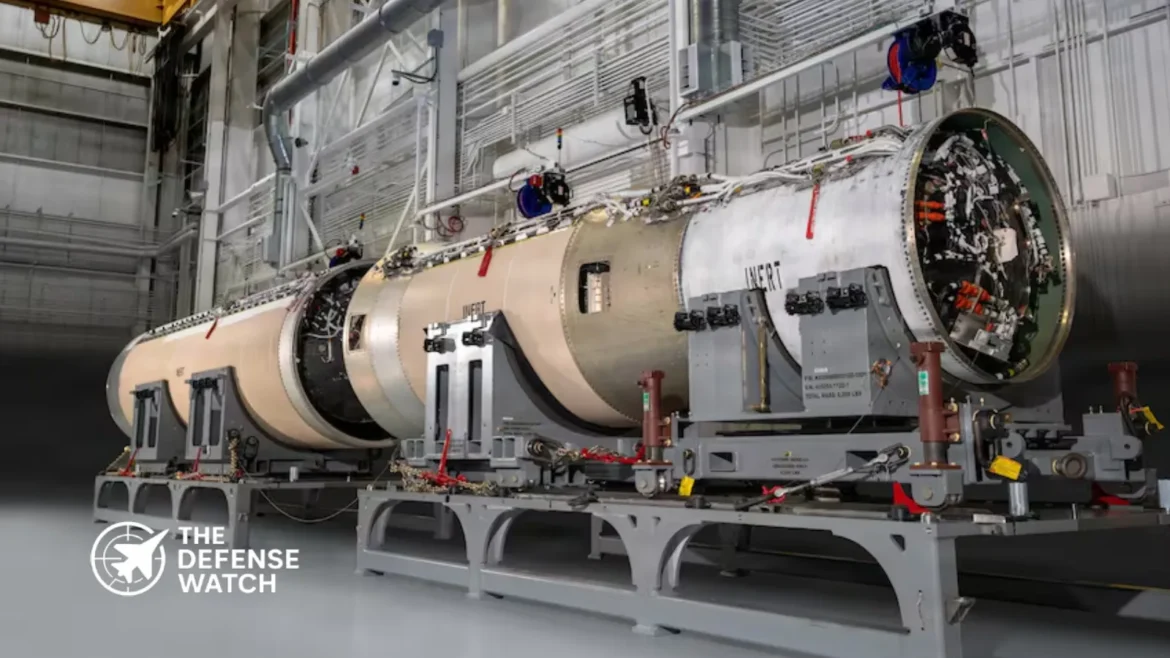
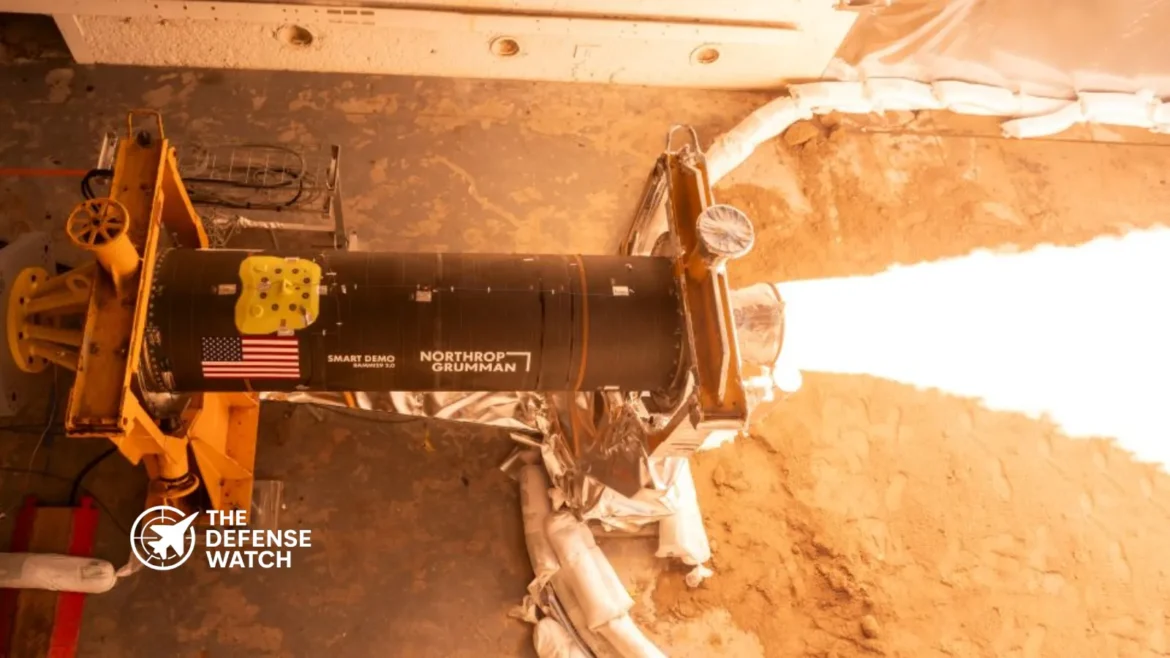
PROMONTORY, Utah — Northrop Grumman Corporation successfully conducted a static fire test of its second advanced solid rocket motor in two months, demonstrating the defense contractor’s accelerated development approach under the Solid Motor Annual Rocket Technology Demonstrator program.
The company tested the 29-inch diameter BAMM!29 2.0 (Bombardment Attack Missile Motor) on January 29, 2026, at its Promontory, Utah facility. This followed the successful December 2025 static fire of the SMASH!22 motor, both developed and manufactured in under 12 months.
The rapid succession of tests validates Northrop Grumman’s strategy to compress traditional multi-year development timelines through advanced manufacturing techniques, alternative materials, and streamlined supply chain integration.
SMART Demo Program Demonstrates Industry-Leading Development Speed
The SMART Demo initiative represents a company-funded effort to design, develop, build, and test new solid rocket motors with their associated advanced tooling on an annual basis. The program allows Northrop Grumman to accept higher technical risk while validating innovative technologies for potential incorporation into existing production programs.
According to Jim Kalberer, vice president of Northrop Grumman’s propulsion systems business unit, the BAMM!29 motor could support applications in strike weapons and hypersonic missions. The 29-inch diameter configuration integrates next-generation carbon fiber casing with advanced additively manufactured tooling and components.
The company’s development approach compresses what traditionally requires three years of work into approximately eight months from initial design to critical design review. This acceleration addresses supply chain bottlenecks that have affected defense industrial base capacity in recent years.
Advanced Manufacturing Technologies Drive Cost and Schedule Reduction
The BAMM!29 2.0 motor incorporates several technological innovations designed to reduce production costs and lead times. The test motor featured additive manufacturing for primary nozzle structures and long-lead tooling components, demonstrating the viability of 3D-printed metal components in high-stress propulsion applications.
Northrop Grumman also integrated a cost-effective propellant formulation with broad temperature tolerance, enabling operation across various launch platforms and mission profiles. The motor design incorporates materials from alternative suppliers to alleviate supply chain constraints affecting traditional solid rocket motor production.
The company employed robotic manufacturing processes during motor construction to increase reliability while reducing both production time and cost. These automated systems handle precision tasks such as applying liner materials inside motor casings, replacing manual operations that previously required extensive skilled labor hours.
December SMASH!22 Test Established Development Baseline
The SMASH!22 motor tested in December 2025 established the development baseline for the 2025 SMART Demo program. The 22-inch diameter motor, designated as Solid Motor Adaptable, Scalable, Half Time/Cost, fired for approximately 30 seconds during its static test at the Promontory facility.
That motor utilized a steel case produced with new welding and manufacturing methods, along with complex additively manufactured components. The configuration matches the size profile of motors used in interceptor missiles and sounding rockets, though Northrop Grumman has not designated it for any specific product application.
The company has already identified opportunities to insert technologies validated through earlier SMART Demo tests into existing production programs. A low-cost propellant formulation demonstrated in a previous program year is being evaluated for incorporation into current product lines.
Program Supports Missile Defense and Space Launch Requirements
The technologies demonstrated through SMART Demo could support large-scale production requirements for systems including the Golden Dome for America missile defense initiative. The program’s focus on qualifying alternative suppliers and materials manufactured through efficient processes aims to strengthen the solid rocket motor industrial base.
Northrop Grumman has invested over $1 billion in the past seven years to significantly increase solid rocket motor production capacity. The company has delivered 1.3 million motors to date and maintains nearly 100,000 employees across more than 30 million square feet of manufacturing space.
The SMART Demo program provides a flight-relevant scale platform for testing new technologies and processes before committing them to operational production programs. By annually demonstrating advanced technologies and process improvements aligned with industry demands, Northrop Grumman aims to rapidly mature new materials and manufacturing approaches.
Industry Context and Implications
The successful completion of two major solid rocket motor tests in under 60 days represents a significant acceleration from traditional defense industry development timelines. Conventional solid rocket motor programs typically require 36 months or more from initial design to static fire testing.
This compressed schedule demonstrates the potential for defense contractors to address urgent capability requirements more rapidly through focused internal research and development programs. The approach allows for higher technical risk acceptance than traditional acquisition programs while generating data applicable to existing production lines.
The program’s emphasis on additive manufacturing, robotic assembly, and supply chain diversification addresses several challenges currently affecting defense industrial base capacity. Component lead times for specialized materials have increased significantly in recent years, creating schedule risks for production programs.
Northrop Grumman’s strategy of annually executing SMART Demo tests provides a consistent platform for technology maturation and qualification. The company can demonstrate new capabilities to potential customers while simultaneously building a knowledge base for future product development efforts.
For the third consecutive year, the SMART Demo program has successfully designed, developed, and demonstrated new solid rocket motor capabilities. The program’s track record suggests the company has established repeatable processes for rapid propulsion system development.
The technologies validated through these tests may find applications beyond missile defense systems. Hypersonic weapons, tactical strike missiles, and space launch vehicles all require solid rocket motors with characteristics similar to those demonstrated in the SMART Demo program.
Northrop Grumman wins $50M Air Force software task order
Northrop Grumman software contract activity expanded this week as the company secured a $50 million task order from the U.S. Air Force to support agile software development for nuclear mission systems.
According to a Department of Defense contract announcement, Northrop Grumman Systems Corp., based in McLean, Virginia, was awarded a time and materials and firm fixed price task order valued at $50 million. The effort focuses on direct sustainment and modernization of software that supports the Strategy Mission Planning and Execution, Data Fusion, and Visualization suite of applications.
The work under the Northrop Grumman software contract will be performed in Bellevue, Nebraska, and at Offutt Air Force Base, Nebraska. Contract performance is expected to continue through Oct. 31, 2031.
The Air Force Nuclear Weapons Center, Command and Control Division at Offutt AFB is the contracting activity.
Supporting nuclear command and control modernization
The task order supports software systems used in planning, executing, and visualizing strategic missions tied to the U.S. nuclear enterprise. These applications play a central role in integrating data, enabling situational awareness, and supporting command level decision making.
The Air Force has placed increasing emphasis on modernizing digital infrastructure that underpins nuclear command, control, and communications, often referred to as NC3. Software sustainment and agile development are seen as essential to maintaining reliability while adapting to evolving operational and cyber requirements.
Officials did not release technical details about the software architecture or classified mission sets, consistent with the sensitive nature of nuclear command systems. However, the focus on agile commercial development services aligns with broader Department of Defense efforts to accelerate software delivery and reduce sustainment risk.
Contract structure and funding details
The Northrop Grumman software contract was awarded as a competitive acquisition, though only one offer was received. At the time of award, operations and maintenance funding totaling $685,155 was obligated.
The mix of time and materials and firm fixed price elements suggests the Air Force is balancing flexibility for ongoing development work with cost controls for defined sustainment activities. This approach has become common for long duration defense software efforts where requirements evolve over time.
The contract identifier is FA2217-26-F-B001.
Northrop Grumman role in Air Force digital systems
Northrop Grumman has long served as a key industry partner for U.S. Air Force command, control, and mission planning systems. The company has deep experience in nuclear enterprise support, including ground based strategic deterrence, airborne command platforms, and digital mission systems.
This latest award reinforces Northrop Grumman presence at Offutt Air Force Base, home to U.S. Strategic Command and a major hub for nuclear command and control operations.
Broader context for defense software modernization
Across the Pentagon, software sustainment contracts are increasingly structured to support continuous updates rather than large block upgrades. The Air Force, in particular, has pushed agile development practices to keep pace with cyber threats and operational demands.
Programs tied to nuclear mission planning and execution face additional scrutiny due to their critical role in national security. As a result, long term contracts like this one are designed to ensure stability, security, and continuity while still allowing incremental improvements.
Defense officials have repeatedly stressed that software resilience and data integration are as vital to deterrence as physical platforms.
Northrop Grumman Finalizing Major Production Agreement
Northrop Grumman expects to finalize an agreement with the Air Force to accelerate B-21 Raider production expansion by the end of March, according to company CEO Kathy Warden during a Jan. 27 earnings call.
The announcement confirms that negotiations for one of the U.S. military’s most critical modernization programs are entering their final phase. Congress approved $4.5 billion for expanding production capacity for the B-21 as part of a reconciliation package passed in July 2025, and defense officials have been working to structure the contract terms since then.
“We continue to work closely with the Air Force on plans to increase the production rate of the program,” Warden stated. Our priority is to establish a mutually beneficial agreement that accelerates the delivery of this game-changing capability to our nation.”
The current fiscal quarter concludes March 31, 2026, establishing a firm timeline for contract finalization.
Massive Investment in Bomber Capacity
The production expansion contract represents substantial financial commitment from both parties. The Air Force outlined plans in its 2026 budget request to spend all $4.5 billion from the reconciliation bill this fiscal year: nearly $2.4 billion in research and development and $2.1 billion in procurement.
Northrop Grumman is also making significant internal investments to support increased manufacturing throughput. Warden revealed that Northrop plans to invest between $2 to $3 billion over multiple years for “facilitizing for that acceleration”, though specific details about these facility upgrades were not disclosed.
The defense contractor previously announced in April 2025 that it had invested $477 million in a “process change” designed to enable higher production rates for the advanced stealth bomber.
Low-Rate Initial Production Advances
Parallel to expansion negotiations, the B-21 program continues advancing through its planned production phases. Warden confirmed that Northrop received the contract for the third lot of low-rate initial production in the final quarter of 2025, as well as a contract for advanced procurement for the fifth lot.
The low-rate initial production phase is expected to encompass 21 aircraft distributed across five lots, establishing the manufacturing foundation before full-rate production begins.
Flight testing is also progressing on schedule. The CEO highlighted the first flight of a second B-21 test aircraft as evidence of program momentum, building on the successful maiden flight of the initial test platform.
Classification Limits Public Disclosure
Specific details about production metrics and long-term program objectives remain highly classified. The Air Force has consistently declined to reveal exact production rates or whether the expansion aims to exceed the current program of record of 100 aircraft or simply deliver that baseline quantity on an accelerated timeline.
Defense industry sources have previously suggested the B-21 production rate operates around seven aircraft annually, though official confirmation remains restricted.
An Air Force spokesperson provided limited comment, stating: “The B-21 program of record has not changed. We are in low-rate initial production. We don’t have additional details to share at this time.”
Congressional Funding Adjustments
Despite overall program progress, lawmakers recently modified the B-21’s fiscal 2026 baseline budget allocation. Congressional appropriators cut $620 million from procurement and added $409 million for research and development for a net reduction of $211 million, citing “classified adjustments” without elaborating on specific rationale.
These budget shifts are separate from the $4.5 billion reconciliation package dedicated to production expansion, which remains intact.
Sentinel ICBM Program Faces Delays
While the B-21 bomber program accelerates, Warden provided sobering updates on the Air Force’s other major nuclear modernization effort—the Sentinel intercontinental ballistic missile system.
The Sentinel program is undergoing comprehensive restructuring following a “Nunn-McCurdy breach” triggered by significant cost overruns and schedule delays. If the program had continued on its trajectory, it would have been 81 percent over budget and three years late.
We still believe that the program will be in development for several years and not transitioning into production until later in the decade,” Warden explained, adding that production transition falls “outside of that two-to-three-year window at this point.
The Pentagon cleared Sentinel to continue in July 2024 but rescinded its previous approval for engineering and manufacturing development, mandating the current restructure before the program can advance.
Strategic Significance of B-21 Expansion
The B-21 Raider represents the cornerstone of the Air Force’s future strategic bomber fleet and nuclear deterrence posture. The aircraft’s stealth characteristics, advanced sensors, and open-architecture design position it to operate in highly contested environments against peer adversaries.
Accelerating production delivery directly supports the Department of Defense’s priority to field next-generation capabilities faster amid intensifying great power competition. The bomber is designed to eventually replace aging B-1 and B-2 fleets while complementing upgraded B-52 Stratofortress bombers.
Industry analysts anticipate the March contract announcement will provide greater clarity on delivery timelines and potential force structure implications, though classification constraints will likely limit public disclosure of operational details.
The production expansion initiative reflects broader Pentagon efforts to strengthen America’s deterrence capabilities and ensure air dominance against advanced anti-access/area-denial threats in the 2030s and beyond.
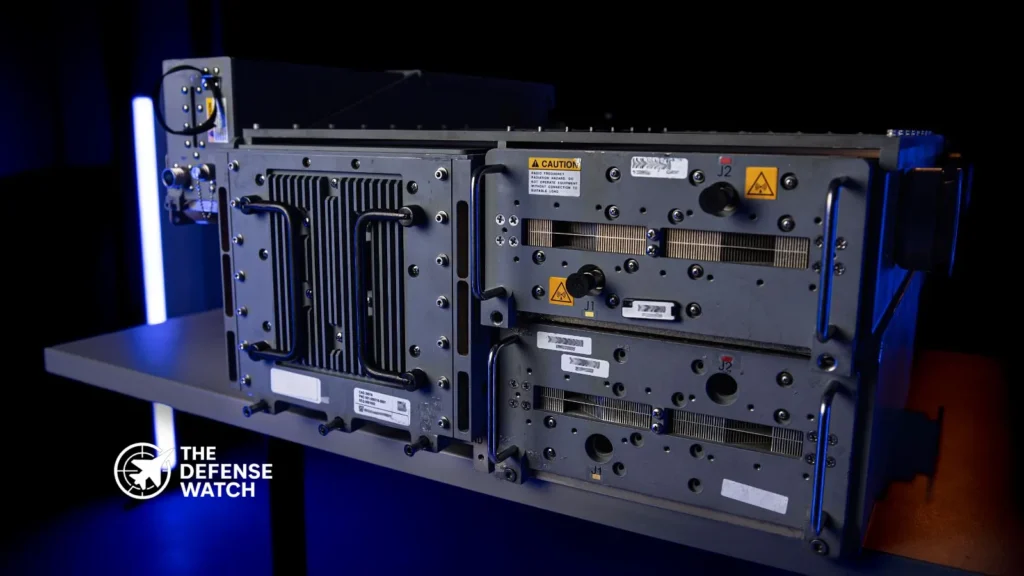
Northrop Grumman’s Integrated Viper Electronic Warfare Suite has been fully paired with the Scalable Agile Beam Radar on F-16 fighter jets, giving the aircraft layered protection and improved tracking without harming radar performance. The fixed integration of AN/ALQ-257 IVEWS with the AN/APG-83 SABR active electronically scanned array lets the systems operate on the same slice of the electromagnetic spectrum in combat conditions
Integration milestone completed
Northrop Grumman announced that its AN/ALQ-257 IVEWS has been successfully matched with the AN/APG-83 SABR radar on U.S. Air Force F-16 aircraft. That pairing allows the jet to hunt and jam threats while keeping a clear radar picture. This avoids the traditional need to shut off radar during electronic attack, which used to reduce situational awareness.
Image Source: X-account/northropgrumman The SABR radar provides long-range search and precision tracking plus synthetic aperture mapping and maritime modes. IVEWS brings wideband digital radar warning and jamming to help counter modern threats such as surface-to-air missile fire control radars, direction finders and agile emitters that can hop frequencies.
Digital synchronization protects the spectrum
A key technical advance of the integrated stack is how radar and electronic warfare functions work together on a pulse-to-pulse basis. With digital coordination, the radar never needs to blank its emissions for the jammer, and neither function degrades the other. That lets crews simultaneously execute high-resolution tracking and denial of hostile radar engagement systems.
Northrop says this pulse-level interoperability is unique among F-16 EW upgrades and gives the aircraft improved self-protection and mission effectiveness in contested electromagnetic environments.
Operational testing and assessment
IVEWS has been in testing for some time. An operational assessment involving more than 70 flights and 100 flying hours demonstrated its ability to stand up against simulated modern threats. Flight tests also confirmed that both the EW suite and radar maintain performance when operating together.
Independent reporting notes that early flight flights with IVEWS installed on USAF F-16s passed key milestones, and the system has been pushed toward production and fielding.
Comparing EW paths for the Viper
Northrop’s IVEWS is now one of the most advanced internal EW suites for the F-16. Other systems like L3Harris’s Viper Shield also pursue internal or podded electronic warfare solutions that tie into AESA radars such as SABR. Viper Shield has completed safety-of-flight qualifications and is entering low-rate production for international customers, including six allied air forces.
Image Source: X-account/northropgrumman Both approaches aim to keep F-16 fleets ready against evolving radar threats, especially as fourth-generation fighters are called on to operate closer to sophisticated integrated air defenses. Planners see electronic warfare integration as critical to survivability and mission success.
Global relevance
The combination of advanced EW and radar is relevant to F-16 upgrade programs worldwide. Many operators upgrading to the Viper standard include modern AESA radar and electronic warfare enhancements. Several nations seek to align with U.S.-validated technologies to maintain interoperability and face near-peer threats.