

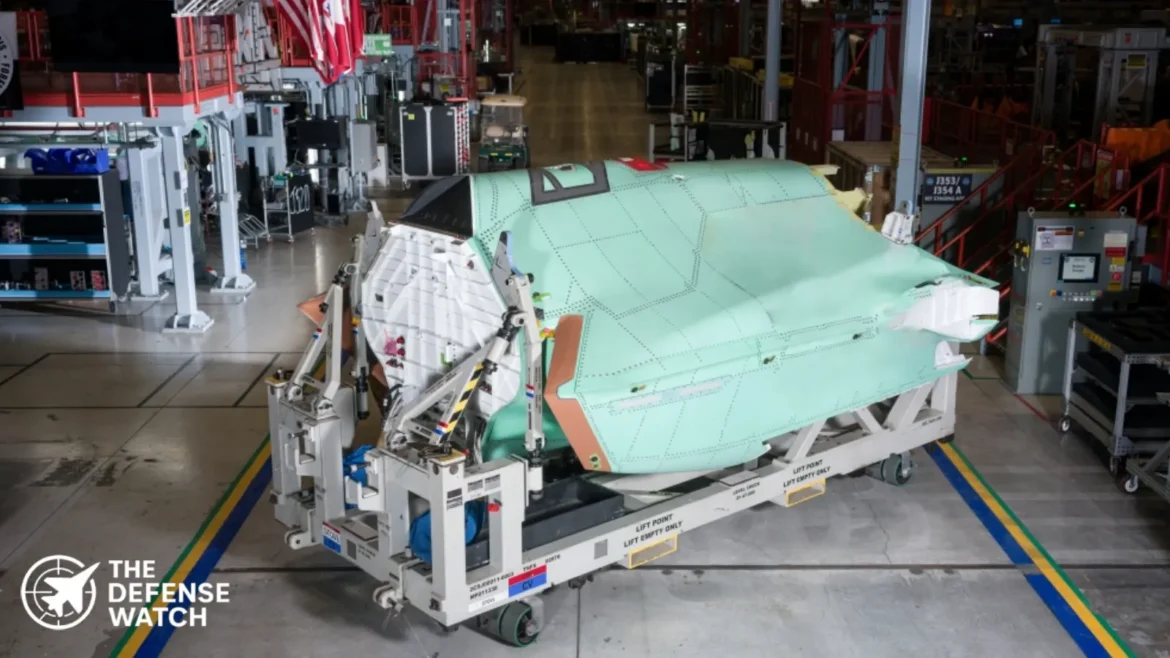
Northrop Grumman Delivers 1,500th F 35 Center Fuselage
Northrop Grumman has delivered its 1,500th F 35 center fuselage, marking a major production milestone for the F 35 Lightning II program and the broader U.S. and allied fighter fleet.
The center fuselage is a critical structural section of the aircraft, integrating the cockpit, weapons bays, and key avionics. Northrop Grumman produces the component at its Integrated Assembly Line in Palmdale, California, before shipping it to Lockheed Martin for final aircraft assembly.
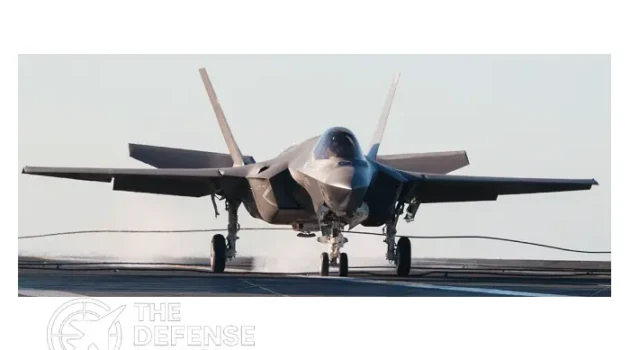
According to the company, the delivery reflects more than a decade of continuous manufacturing in support of the Joint Strike Fighter program. The F 35 center fuselage is common across all three variants of the aircraft, including the conventional takeoff F 35A, the short takeoff and vertical landing F 35B, and the carrier based F 35C.
Northrop Grumman stated that its role in the F 35 program extends beyond fuselage production. The company also provides the AN APG 81 active electronically scanned array radar, communications subsystems, and mission systems integration support. These components are central to the aircraft’s stealth, sensor fusion, and multi domain capabilities.
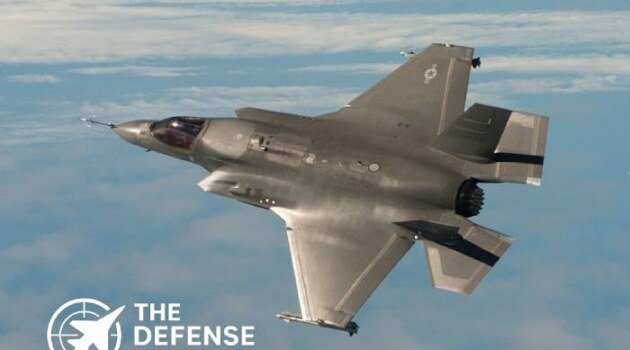
The F 35 program remains the largest fighter aircraft program in the world, with more than 1,000 aircraft delivered globally and operators across the U.S. military and allied air forces. Sustained delivery of the F 35 center fuselage supports ongoing production lots and long term fleet growth.
Industry officials have consistently highlighted the importance of production stability and supply chain resilience as the program transitions toward sustainment and modernization. The 1,500th fuselage delivery underscores the maturity of the industrial base supporting the F 35.
Northrop Grumman to Produce Advanced Lightweight Torpedo for U.S. Navy
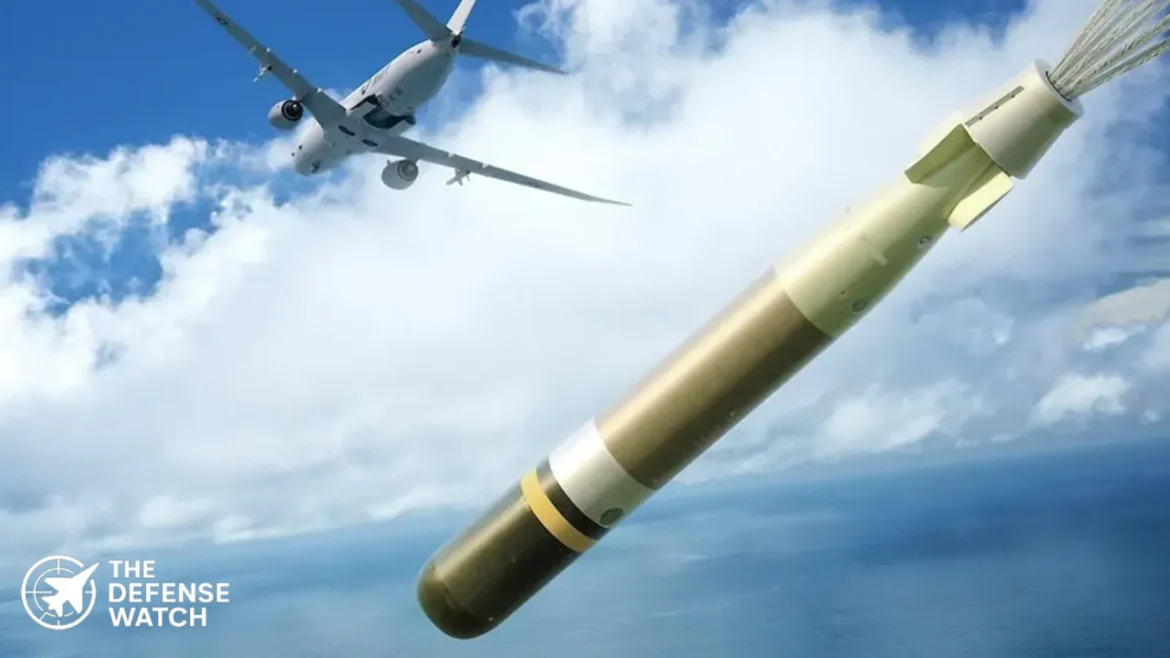
Northrop Grumman has been awarded a 233 million dollar contract to produce the Advanced Lightweight Torpedo for the U.S. Navy, reinforcing ongoing efforts to modernize naval anti-submarine warfare capabilities.
According to information released by Defence Industry Europe, the contract covers production of the Advanced Lightweight Torpedo, also known as the ALWT, a key weapon used by U.S. Navy surface ships, submarines, and maritime patrol aircraft. The system is designed to engage and neutralize hostile submarines in contested maritime environments.
Contract Scope and Program Details
The Advanced Lightweight Torpedo is a core element of the U.S. Navy’s undersea warfare inventory. It is deployed across multiple platforms, including MH-60R Seahawk helicopters, P-8A Poseidon maritime patrol aircraft, and surface combatants.
Northrop Grumman’s work under the contract includes torpedo production, system components, and associated support activities. The award reflects continued reliance on the company as a long-standing supplier of undersea warfare technologies to the U.S. Department of Defense.
The U.S. Navy has steadily invested in the Advanced Lightweight Torpedo to improve detection, tracking, and engagement of modern submarine threats. The weapon is designed to operate in shallow and deep-water environments, with improved processing and guidance systems compared to earlier lightweight torpedo variants.
Supporting U.S. Navy Undersea Warfare Modernization
The Advanced Lightweight Torpedo program supports broader U.S. Navy efforts to maintain undersea dominance amid evolving submarine capabilities fielded by near-peer competitors. Lightweight torpedoes remain a critical tool for protecting carrier strike groups, sea lines of communication, and forward-deployed naval forces.
Northrop Grumman stated in previous program disclosures that the torpedo incorporates advanced sensors, signal processing, and acoustic counter-countermeasures to enhance effectiveness in complex acoustic conditions.
Industry and Strategic Context
The award comes as the U.S. Navy continues to prioritize anti-submarine warfare investments across platforms and domains. Lightweight torpedoes are a cost-effective and flexible option for countering submarine threats without relying solely on heavier submarine-launched weapons.
Northrop Grumman is one of the primary defense contractors supporting U.S. Navy undersea systems, with a portfolio that includes sensors, command and control systems, and weapons integration.
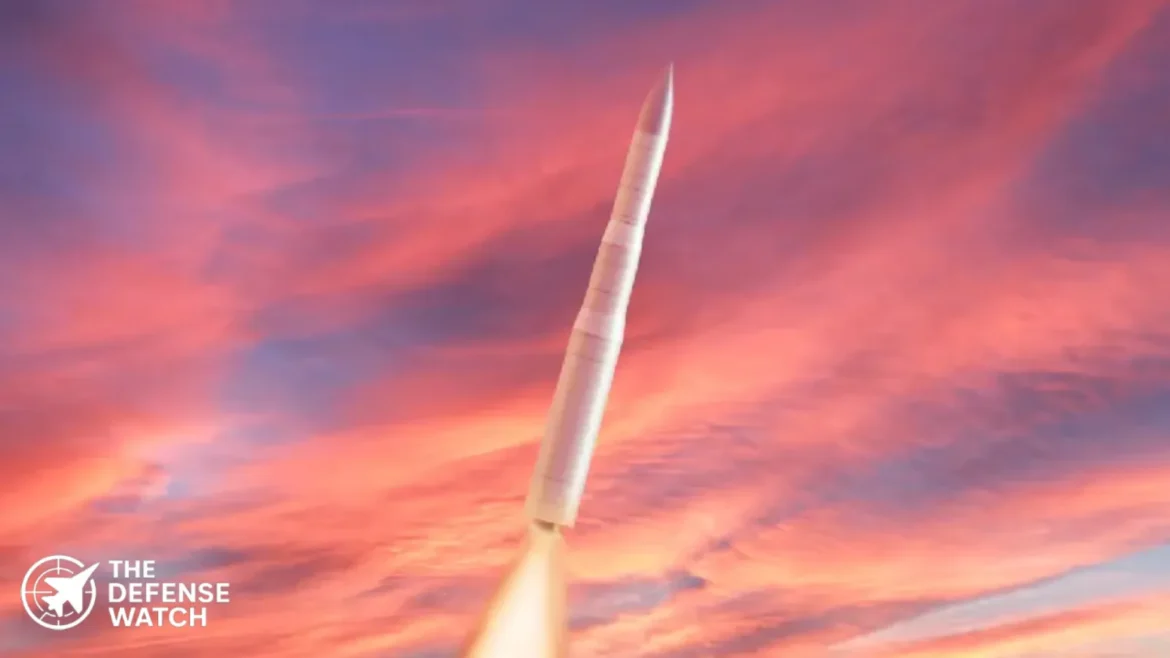
Northrop Grumman Completes First Launch of Digitally Redesigned ICBM Target
Northrop Grumman has successfully completed the first flight of its digitally redesigned intercontinental ballistic missile (ICBM) target vehicle, marking a key step in efforts to improve US missile defense testing. The updated target is designed to simulate advanced ballistic threats for the Missile Defense Agency (MDA) during planned flight tests.
(adsbygoogle = window.adsbygoogle || []).push({});The maiden launch demonstrated the performance of the new design, which uses a repurposed Peacekeeper SR119 solid rocket motor supplied by the US Space Force Rocket Systems Launch Program. The redesigned vehicle met all objectives for the test event, giving defense officials a new capability for missile defense flight missions.
Northrop Grumman said the use of digital engineering tools helped improve safety across manufacturing, assembly and testing phases while reducing field execution time by about 25 percent during pre-launch pathfinder operations. These tools included a digital twin of the vehicle and virtual and augmented reality simulations that helped plan factory integration and stacking operations.
Robin Heard, Northrop Grumman’s director of targets and interceptors, said embedding digital technology throughout the redesign and integration processes streamlined field operations, enhanced safety and improved cost effectiveness.
(adsbygoogle = window.adsbygoogle || []).push({});ICBM target vehicles are used by the MDA to assess US missile defense systems, including the Ground-Based Midcourse Defense and Aegis ballistic missile defense systems. Northrop Grumman has delivered more than two dozen such targets and supported multiple successful launches since 2011. The new design’s increased range, apogee and payload capacity aim to help replicate more complex threats in future tests.

The US Air Force on December 22, 2025 officially designated Northrop Grumman’s experimental drone Project Talon as the YFQ‑48A. This designation marks the aircraft as a prototype in the service’s Collaborative Combat Aircraft (CCA) effort, which aims to field unmanned systems that fly with and extend the reach of manned fighters.1
What It Is
The official US Air Force designation YFQ‑48A reflects Pentagon naming practice where Y indicates a prototype, F signals a fighter role, and Q denotes unmanned aircraft. This is the first time Talon receives such a label, putting it alongside other prototype drone fighters like the YFQ‑42A from General Atomics and the YFQ‑44A from Anduril.3
How It Works
Details about the aircraft’s systems and performance remain limited. Available reports note Talon has a long slender body, unique wing planform, and single small turbofan engine. The focus is on rapid, affordable production and the ability to integrate sensors, communications and autonomy software to work in contested spaces.4
The broader CCA concept envisions networks of crewed and uncrewed systems. A manned fighter could lead a group of drones, handing off tasks such as surveillance, jamming, or targeting while preserving pilot decision authority. This shared workload aims to make air forces more flexible and resilient in high‑threat environments.
Why It Matters
The designation signals that the Air Force sees Project Talon as a serious contender in its effort to field collaborative drones quickly and at scale. The CCA program emphasizes industry competition and aims to speed up development cycles for new technologies.1
Unmanned wingmen are part of a broader shift in military aviation. They aim to reduce risk to pilots, extend operational reach, and counter advanced air defenses. Concepts like manned‑unmanned teaming are seen as key to future air combat in contested spaces, especially against near‑peer competitors with layered air defenses.
Strategic Context
Other nations are also pursuing similar systems. Australia’s MQ‑28 Ghost Bat, for example, is an autonomous wingman designed for interoperability with allied jets. These developments reflect a global trend toward combining human judgment with unmanned platforms that can face greater danger or carry additional sensors and payloads. (This comparison is based on publicly reported programs; specifics vary by operator and mission.)
Information on Project Talon’s exact capabilities remains partly speculative. Northrop’s focus on simplicity, fewer parts, and rapid build suggests a lean approach to innovation compared with legacy large‑platform programs. Some analysis suggests Talon is meant to be lighter and quicker to build than earlier designs Northrop offered for CCA.5
Strategic Impact
The official YFQ‑48A designation indicates that the USAF and its industry partners are advancing beyond concept toward tangible prototype systems that could reshape air combat. As Collaborative Combat Aircraft prototypes mature, the strategic balance in airpower competition may shift. For the United States, fielding effective manned‑unmanned teams could give an edge over potential rivals. Allies watching these developments may seek similar capabilities, influencing global air force modernization plans. Continued testing and eventual selection decisions in the CCA program will clarify how these systems perform and how widely they might be adopted.
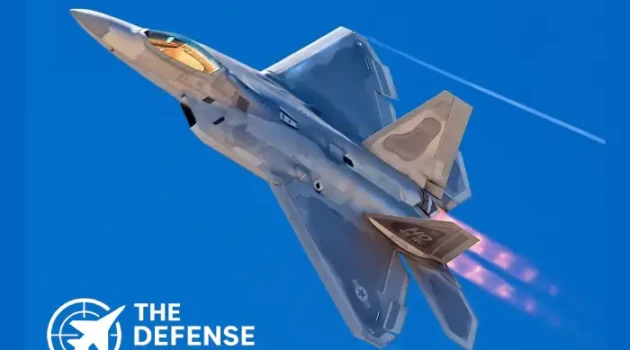
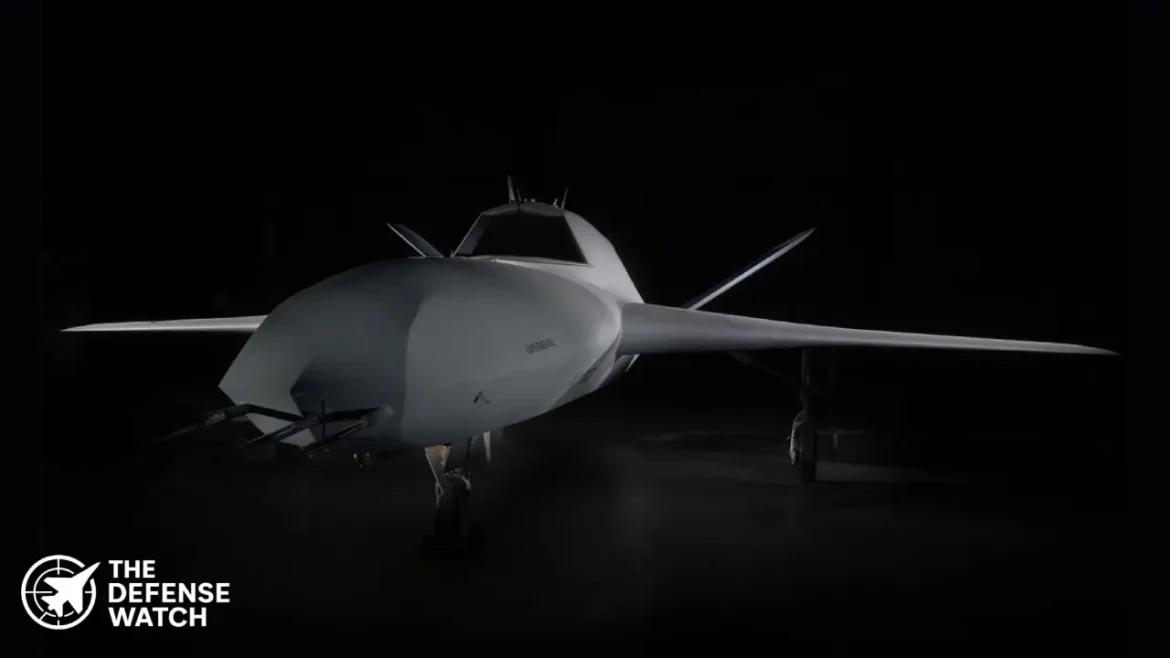
Northrop Grumman formally unveiled Project Talon — a new uncrewed fighter jet concept designed to accompany crewed combat aircraft. Company representatives presented the small jet at the company’s Mojave facility, positioning Talon as an “autonomous wingman” built to support manned air-dominance fighters.
Why it matters
Project Talon enters a fast-growing market for autonomous combat aircraft, offering what Northrop describes as a cost-effective, quickly-produced drone intended to complement existing manned fighters. Its debut underscores shifting priorities in aerial combat, where unmanned systems play an increasingly critical role in contested airspace.
Talon at a glance
Design and origins
- Talon appears derived from Scaled Composites Model 437 — a compact optionally manned jet now used by Northrop to test autonomous systems.
- The prototype reveals a long slender fuselage, a dorsal-mounted air intake above the wings, a shovel-shaped nose, a low-aspect-ratio lambda wing, and sharply canted twin V-tails.
- Its layout resembles that of other uncrewed combat aircraft currently under development by other firms.
Manufacturing and timeline
- Northrop reports Talon went from program launch to “weight on wheels” in roughly 15 months — a strikingly rapid pace for a jet-powered combat aircraft.
- The company targets a first flight within nine months, keeping the full development period under two years.
- The aircraft uses a fully composite structure, reducing build weight by about 1,000 pounds compared to previous designs, and includes roughly half the number of parts. This, combined with modular manufacturing methods, cuts assembly time by roughly 30 percent.
Mission role and capabilities
- Talon is described as a “collaborative” combat aircraft capable of teaming with crewed fighters, serving as a force multiplier.
- Its design reportedly allows for versatile mission roles, including intelligence, surveillance and reconnaissance (ISR), electronic warfare, and strike missions. Modular payload bays (internal) could allow carriage of air-to-air or air-to-ground missiles, sensors or jammers.
- Open avionics architecture and secure data links are expected to support integration with crewed platforms, enabling sensor sharing, target tracking, and coordinated mission execution in contested environments.
Context in the evolving CCA landscape
The U.S. Air Force’s initiative to field uncrewed, semi-autonomous “Collaborative Combat Aircraft” (CCA) has already produced two prime contenders: YFQ-42A by General Atomics and YFQ-44A by Anduril Industries. They were selected in 2024 for prototype development and are scheduled for flight testing soon.
Northrop’s Talon, while not explicitly awarded a contract under the first CCA round, appears shaped to compete in future phases or acquisition efforts — including export opportunities with allied air forces.
What’s next
Northrop plans the first flight of Project Talon by fall 2026 if development proceeds on schedule. The company says Talon was developed independently — funded internally — highlighting a strategy to respond quickly to evolving military needs without relying solely on established procurement cycles.
As Talon advances toward flight testing, attention will focus on performance, payload capacity, sensor integration, and data-link reliability. Its success could reshape expectations for how crewed and uncrewed platforms operate together in future air conflicts.
Production Contracts Loom for the B-21 Raider
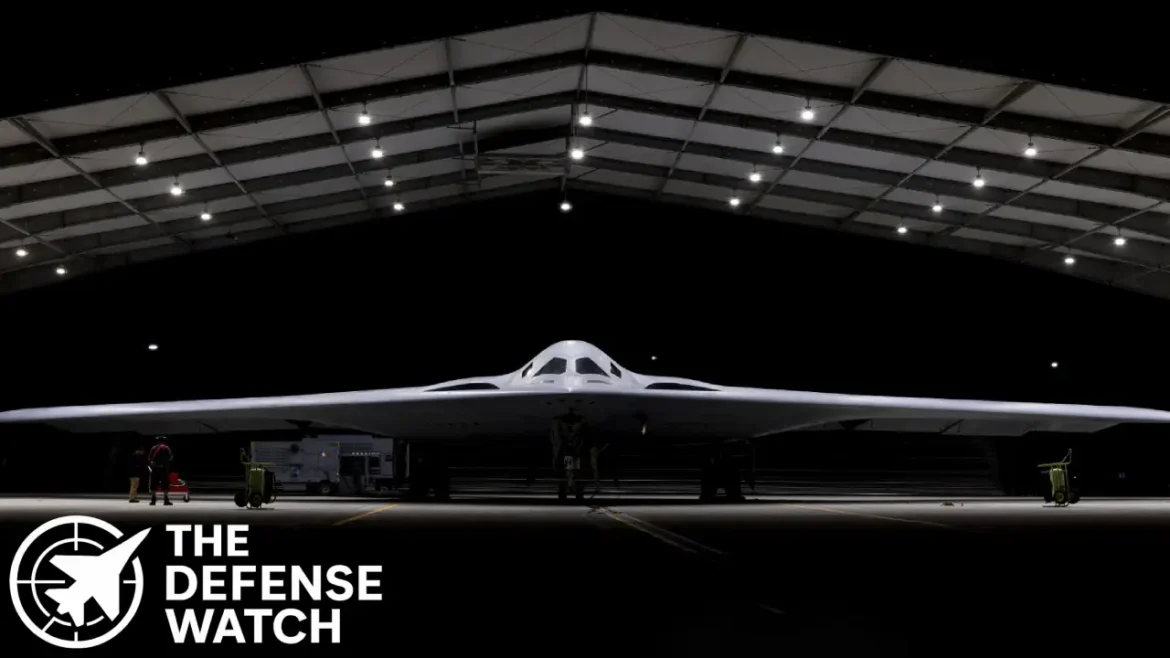
In its latest earnings call, Northrop Grumman revealed it expects to finalize new contracts with the United States Air Force by year-end for the next production lots of the B-21 Raider stealth bomber. CEO Kathy Warden confirmed that the company is also in active discussions with the service about structuring a deal to ramp up the bomber’s production rate.
Congress has allocated $4.5 billion in a recent budget reconciliation bill to accelerate B-21 manufacturing capacity. While the negotiations remain ongoing — with delays related to the federal government shutdown — the potential agreement could pave the way for an earlier full-rate production transition.
Northrop is poised to receive the contract for Low-Rate Initial Production (LRIP) Lot 3, and an advance procurement award for Lot 5, during the fourth quarter of 2025.
Testing Milestones and Production Reality
The B-21 program continues to advance technically. The second B-21 test aircraft began flight testing in September, marking a shift from initial flight-handling validation to full mission-system and weapons-integration testing. Multiple other airframes are currently undergoing ground tests to reduce risk ahead of flight operations.
However, the production landscape remains challenging. In April, Northrop took a $477 million charge linked to a major manufacturing-process change intended to enable higher future production rates. CFO Ken Crews stated that while the engineering and manufacturing development costs for flight-test aircraft exceeded expectations, a contract restructure for the remaining LRIP lots largely offset that overrun.
Warden noted that the precise production rate and financial outcome depend on the result of talks with the Air Force, and declined to give firm predictions.
Strategic Procurement and Fleet Size
The U.S. Air Force’s current “program of record” for the B-21 stands at a minimum of 100 aircraft, intended to replace the aging B‑2 Spirit and B‑1 Lancer fleets by the 2030s. Some Air Force and combatant-command officials have proposed raising that number toward 145 or more aircraft in light of a more contested global environment.
Importantly, Warden emphasized that discussions about increasing the total quantity of B-21s would be a separate negotiation from the production-rate acceleration talks.
Analysis: What It Means for U.S. Defense and Airpower
The ongoing negotiations and production acceleration effort for the B-21 stand at the intersection of three major strategic realities for U.S. defense:
- Deterrence and long-range strike capability. The B-21 is designed to penetrate advanced air-defence systems and deliver both conventional and nuclear payloads. Faster production means the U.S. Air Force can field the next-generation bomber in greater numbers and sooner—important as peer competitors develop increasingly sophisticated anti-access/area denial (A2/AD) capabilities.
- Industrial base and affordability pressure. Northrop’s manufacturing hit underscores the challenge of moving from development to production in a complex stealth program. The decision to invest up-front (with losses now) to enable higher production later reflects a long-term mindset—but it also highlights cost-risk for both the contractor and the government. The $4.5 billion congressional funding is a recognition that accelerating production requires transition investment—not just the unit cost of the aircraft.
- Geopolitical timing and scale. In an era of intensifying great-power competition, the U.S. may require more than the initial 100-aircraft fleet to maintain strategic flexibility across the Indo-Pacific, Europe, and other forward-leaning theatres. The fact that talks are underway to both speed up production and maintain optionality for higher quantities signals awareness of this reality.
For Northrop, the arrangement could improve profit margins and revenue sooner if production ramps up. Analysts estimate the B-21 program could eventually amount to over 10 % of Northrop’s revenues depending on final contract terms. But the company must manage the downside risk of scaling production while maintaining affordability and performance.
Internationally, a more rapid fielding of the B-21 could shift deterrence equations—not only vis-à-vis Russia and China, but also in the context of allied burden-sharing, integration, and interoperable strike planning. The stealth bomber becomes a visible symbol of U.S. long-range strike capability, which in turn may influence allied planning and adversary calculations.
Conclusion: A Forward Look
As the Air Force and Northrop Grumman negotiate the details of ramped-up B-21 Raider production, the coming months will be pivotal. A signed agreement will likely trigger a sharper ramp-up in manufacturing, earlier revenue recognition for Northrop, and faster delivery of a transformational air-power asset for the U.S. military.
If the acceleration deal proceeds, the B-21 Raider may reach higher production rates and potentially exceed the current 100-aircraft baseline in response to evolving strategic demands. Conversely, any delay could push delivery timelines and force the Air Force to retain legacy bombers longer. In short: the next phase of the B-21 programme is entering the launch stage — and how smoothly it proceeds will shape U.S. deterrence posture for decades to come.
Second B-21 Raider Bomber Joins U.S. Air Force Testing Fleet at Edwards AFB
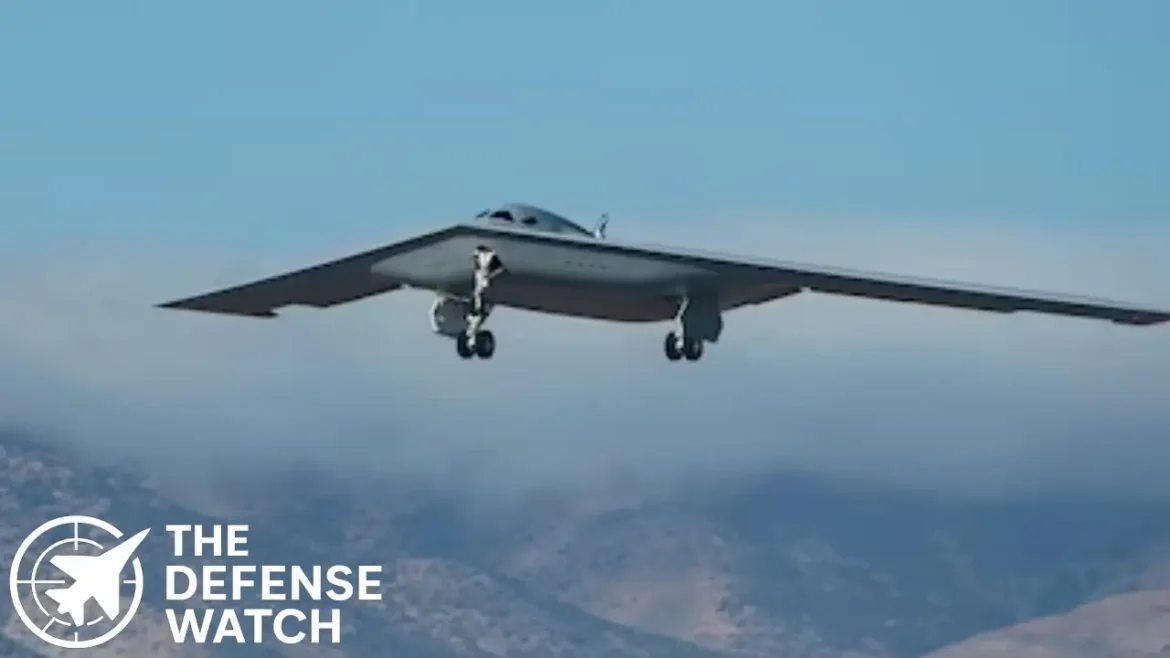
The U.S. Air Force has confirmed that its second B-21 Raider stealth bomber has successfully flown to Edwards Air Force Base (AFB) in California, marking a significant expansion of the test campaign for America’s next-generation long-range strike aircraft.
With two B-21s now on-site, the service said it can accelerate testing beyond basic flight performance checks, moving into evaluations of weapons integration and advanced mission systems. This development is a milestone in preparing the bomber for operational use later this decade.
Accelerating the Test Campaign
Air Force Secretary Troy Meink emphasized the momentum the second bomber brings to the program.
“With the arrival of the second B-21 Raider, our flight test campaign gains substantial momentum,” Meink said. “We can now expedite critical evaluations of mission systems and weapons capabilities, directly supporting the strategic deterrence and combat effectiveness envisioned for this aircraft.”
The addition allows for parallel testing of flight performance, mission systems, and weapons integration, while also giving maintainers hands-on training in sustainment, repairs, and logistics management.
Designed for Stealth and Survivability
Built by Northrop Grumman, the B-21 is described as the world’s first sixth-generation aircraft, designed to operate in contested environments against modern air defense networks. The Raider will carry both nuclear and conventional weapons, with its stealth and long-range capabilities allowing it to penetrate heavily defended airspace.
The B-21 is set to replace the aging B-1B Lancer and B-2A Spirit, forming a modernized bomber fleet alongside upgraded B-52J Stratofortresses. The Air Force plans to acquire at least 100 Raiders, with the first units expected to achieve initial operational capability in the latter half of the 2020s.
Edwards AFB at the Center of Testing
Edwards AFB, long the hub of Air Force flight testing, is now supporting expanded B-21 evaluations. The first Raider arrived there in November 2023, nearly a year after its public unveiling in Palmdale, California.
Now, with two bombers available, the Air Force can conduct more simultaneous testing and maintenance drills, providing critical data on how the aircraft can be sustained in real-world conditions.
General David Allvin, Air Force Chief of Staff, highlighted the operational urgency:
“The addition of a second B-21 to the flight test program accelerates the path to fielding. By having more assets in the test environment, we bring this capability to our warfighters faster, demonstrating the urgency with which we’re tackling modernization.”
Strategic Context and Analysis
The B-21 Raider forms the backbone of the Pentagon’s long-range strike modernization strategy, ensuring U.S. strategic deterrence remains credible against peer competitors like China and Russia. Its combination of stealth, digital engineering, and open architecture makes it central to the Air Force’s vision of networked, multi-domain operations.
Analysts note that having two aircraft in flight testing significantly reduces program risk, enabling redundancy in case of maintenance issues and allowing the Air Force to validate systems faster. However, with costs projected in the hundreds of billions over the program’s lifecycle, keeping the B-21 on schedule and within budget will remain a critical challenge.
FAQs
The B-21 Raider is the U.S. Air Force’s next-generation stealth bomber designed to carry both nuclear and conventional weapons.
At least 100 B-21 Raiders, alongside 76 modernized B-52J bombers.
The Air Force expects initial operational capability in the latter half of the 2020s.
The Raider is being developed and produced by Northrop Grumman.
It allows expanded testing of mission systems, weapons integration, and maintenance practices, accelerating the path to operational readiness.
🔗 Source: U.S. Air Force