- Home
- Catalog
- Missiles & Precision Weapons
- SM-3 Block IB Missile
SM-3 Block IB Missile
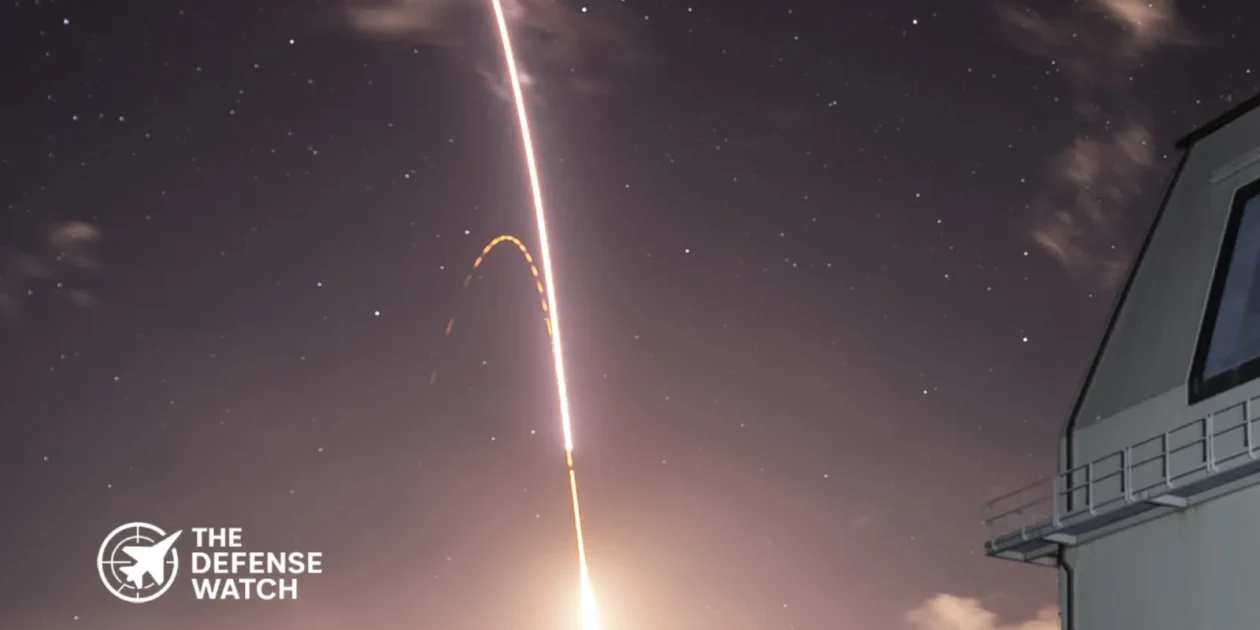
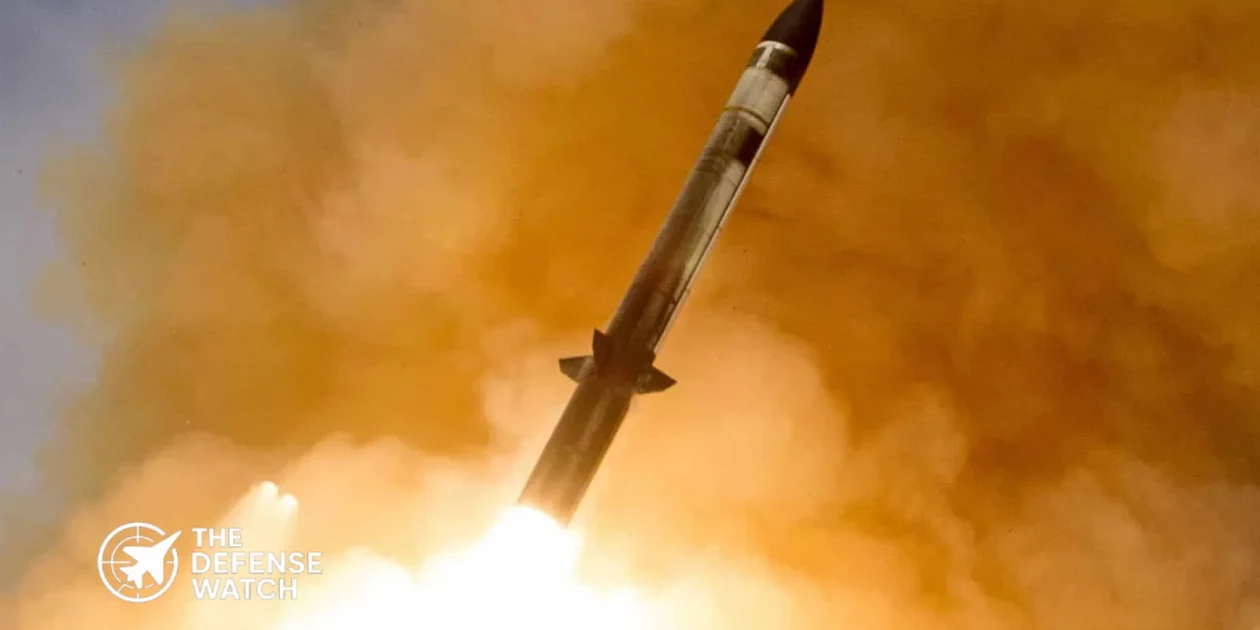
Full Specifications
1. General Information
| Name / Designation | SM 3 Block IB (Standard Missile 3 Block IB) |
| Type / Role | Ballistic Missile Defense Interceptor |
| Country of Origin | United States |
| Manufacturer | Raytheon Technologies |
| Service Entry / Year Introduced | 2014 |
| Operational Status | Active |
2. Performance & Range
| Range | Approx. 700 km intercept capability |
| Speed | Mach 10+ |
| Ceiling / Altitude Limit | Up to ~500 km exo atmospheric intercept |
| Accuracy (CEP) | Direct hit to kill kinetic impact |
| Warhead Type | Kinetic Energy Interceptor (no explosive warhead) |
3. Guidance & Targeting
| Guidance System | Inertial navigation with infrared homing seeker |
| Targeting Mode | Fire and forget midcourse interception |
| Launch Platform Compatibility | Naval destroyers, cruisers, Aegis Ashore sites |
| Seeker Type | Infrared seeker kinetic warhead |
4. Physical Characteristics
| Length | 6.55 m |
| Diameter | 0.34 m |
| Wingspan | Approx. 1.57 m |
| Launch Weight | Approx. 1,500 kg |
| Propulsion | Multi stage solid fuel rocket |
5. Warhead & Payload
| Warhead Weight | Approx. 23 kg kinetic kill vehicle |
| Explosive Type | None, kinetic impact |
| Detonation Mechanism | Direct collision |
| Payload Options | Kinetic interceptor only |
6. Operational Use & Capabilities
| Operational Range Type | Long |
| Deployment Platform | Sea based and land based missile defense |
| Target Types | Short and intermediate range ballistic missiles |
| Combat Proven | Yes (operational deployments and intercept tests) |
| Users / Operators | United States, Japan |
PROS
- Highly accurate hit to kill interception method
- Capable of exo atmospheric ballistic missile interception
- Compatible with widely deployed Aegis combat system
- Provides layered missile defense for naval and land sites
- Proven in multiple successful intercept tests
CONS
- Very high unit cost compared to shorter range interceptors
- Designed mainly for short to intermediate range ballistic threats
- Requires Aegis radar network for targeting data
- Limited inventory compared with demand for missile defense
- Cannot intercept low altitude cruise missiles
SM 3 Block IB Naval Missile Defense Interceptor
The Standard Missile-3 Block IB is a ship based ballistic missile defense interceptor developed for the Aegis Ballistic Missile Defense System. It is designed to intercept and destroy short to intermediate range ballistic missiles during the midcourse phase of flight, outside the Earth’s atmosphere.
Unlike conventional missiles that use explosive warheads, the SM 3 Block IB relies on kinetic energy. Its kill vehicle collides directly with an incoming ballistic missile at extremely high speeds. This hit to kill approach increases precision while reducing the risk of debris carrying explosive payloads.
The interceptor is primarily deployed aboard U.S. Navy destroyers and cruisers equipped with the Aegis combat system. It also supports land based missile defense through the Aegis Ashore installations. The missile forms a key layer of the United States and allied ballistic missile defense architecture.
Manufacturer
The SM 3 Block IB was developed jointly by Raytheon Technologies and Lockheed Martin for the United States Navy and the Missile Defense Agency.
Raytheon serves as the prime contractor responsible for missile integration and production, while Lockheed Martin provides the advanced guidance components and combat system integration. The interceptor represents an upgraded variant of the earlier SM 3 Block IA, featuring improved target discrimination and maneuverability.
Speed and Range
The SM 3 Block IB interceptor reaches speeds exceeding Mach 10 during flight. This extremely high velocity allows the missile to intercept ballistic targets in the midcourse phase, typically outside the atmosphere.
Its operational intercept range is estimated at more than 700 kilometers, with engagement altitudes reaching up to roughly 500 kilometers depending on the trajectory and sensor data provided by the Aegis radar network.
The missile uses a third stage rocket motor to deploy the kinetic warhead known as the kinetic warhead vehicle, which then uses infrared sensors and divert thrusters to guide itself directly into the target.
Cost
The estimated unit cost of the SM 3 Block IB interceptor ranges between 10 million and 12 million dollars per missile depending on production batch size and configuration. Procurement programs are funded through the U.S. Missile Defense Agency and deployed across U.S. Navy Aegis equipped vessels and allied missile defense sites.
Get real time update about this post category directly on your device, subscribe now.
Reviews
Disclaimer Note
The information provided on TheDefenseWatch.com is for general informational purposes only. While we strive to ensure the accuracy, completeness, and timeliness of our content regarding defense and aerospace products, technologies, and specifications, we cannot guarantee that all information is 100% accurate or up-to-date due to the evolving nature of military technology and classified data.TheDefenseWatch.com does not warrant the reliability, suitability, or availability of the information for any specific purpose. Users are advised to consult official sources, such as manufacturers, government publications, or defense agencies, for precise and verified data before making decisions based on our content.We are not affiliated with any defense manufacturers, governments, or military organizations mentioned. Opinions, reviews, and ratings reflect expert analysis but are subjective and should not be considered endorsements. TheDefenseWatch.com is not responsible for any errors, omissions, or consequences arising from the use of this website’s content.External links are provided for convenience and do not imply endorsement. TheDefenseWatch.com reserves the right to update or modify content without prior notice. By using this website, you agree to our Privacy & Cookies Policy.


New Arrivals




Popular Comparisons
-
 SIG XM7 Rifle vs M4: Key Differences and Performance Comparison
View Comparison →
SIG XM7 Rifle vs M4: Key Differences and Performance Comparison
View Comparison → -
Eurofighter Typhoon vs Rafale vs F-35: Fighter Jet Comparison
View Comparison →
-
J-20 vs F-22: Stealth Fighter Showdown Explained
View Comparison →
-
F-14 Tomcat vs Su-57: Can a Legend Challenge Russia’s Stealth Fighter?
View Comparison →
-
Su-35 vs Su-57: Russia’s Top Fighter Jets Compared
View Comparison →
-
Eurofighter Typhoon vs Su-57: Ultimate Fighter Jet Comparison
View Comparison →
-
Rafale vs Su-57: 4.5 Gen vs 5th Gen Fighter Jet Comparison
View Comparison →
-
Su-57 vs F-16 Fighting Falcon: Stealth vs Speed
View Comparison →
-
China vs Russia: J-20 Mighty Dragon vs Su-57 Felon Comparison
View Comparison →
-
Su-57 Felon vs F-22 Raptor: Stealth Air Superiority Face-Off
View Comparison →


- US Army And Lockheed Martin Successfully Test PrSM Increment 2 Missile With Moving And Maritime Strike Capability

- Belgium Trials F-16s With Laser-Guided Rockets For Counter-UAS Defense
- South Korea Completes Cheongeom Missile Final Certification For Light Armed Helicopters
- Raytheon Secures $1.36B Contract To Restart SM-3 Block IB Missile Production
- US Air Force Awards Boeing $2.33 Billion Contract Modification For E-7A Rapid Prototype Airborne Mission Segment
- USAF Says Boeing Must Fix KC-46 Tanker Problems Before New 75 Aircraft Order
- US KC-135 Tanker Crash In Iraq During Operation Epic Fury Raises Questions About Air Campaign Tempo
- Pentagon Seeks AI Model Evaluation System To Ensure Military AI Reliability
- UK Confirms Limits On US Strikes From British Bases Amid Iran Escalation
- New British Military Helicopter Set To Enter Service In 2031 Under NMH Program