- Home
- Catalog
- Defense Systems
- R-77 FrankenSAM Air Defense System
R-77 FrankenSAM Air Defense System
Full Specifications
1. General Information
| System Name | R-77 FrankenSAM |
| Manufacturer | Vympel NPO (missile); Field-modified launcher |
| Country of Origin | Russia |
| Type / Role | Improvised Short-to-Medium Range Surface-to-Air Missile System |
| In Service | Limited / Emerging (2026 sightings) |
| Year Introduced | 2026 (observed) |
| Unit Cost | Undisclosed (low-cost adaptation) |
2. Performance & Capabilities
| Maximum Engagement Range | Reduced from air-launched 80–110 km |
| Maximum Engagement Altitude | ~25 km |
| Target Types | Drones, Cruise Missiles, Aircraft, Helicopters |
| Interception Probability | Not publicly specified |
| Reaction Time | Rapid (mobile setup) |
| Radar Detection Range | Relies on external or cueing radar |
3. Missile Specifications
| Missile Type | R-77 / R-77-1 (AA-12 Adder) |
| Missile Length | 3.6 m |
| Missile Weight | ~175–226 kg |
| Warhead Type | HE-Fragmentation |
| Warhead Weight | ~22–30 kg |
| Speed | Mach 4 |
4. Radar & Fire Control
| Radar Type | External cueing / Improvised integration |
| Radar Name | Not integrated (likely paired with existing Russian radars) |
| Detection Range | Variable |
| Tracking Capacity | Limited by configuration |
| Guidance System | Inertial + Active Radar Homing |
| Fire Control System | Adapted aviation-style |
5. Launcher & Mobility
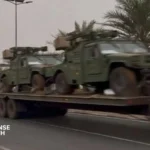
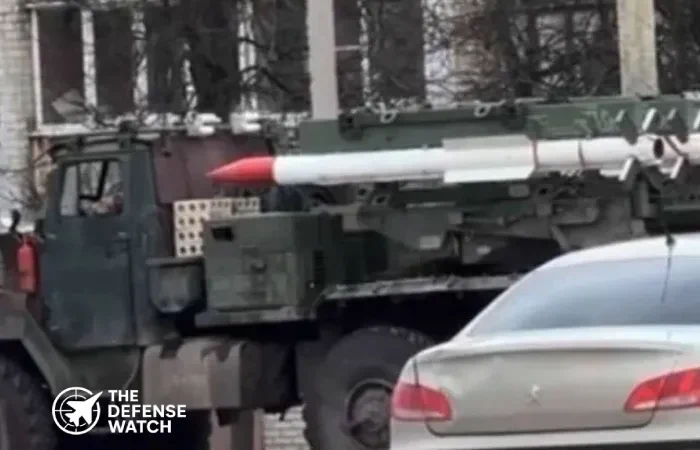
| Launcher Type | Truck-mounted (Ural-4320) with pylons |
| No. of Missiles per Launcher | 4 (observed) |
| Reload Time | Not specified |
| Mobility Platform | Ural truck |
| Crew Required | Small crew (estimated 3–5) |
6. Command & Control
| C2 System | Basic / Networked with Russian air defense |
| Connectivity | Likely radio/data link |
| Network Capability | Limited |
| Operation Mode | Manual / Semi-automated |
7. Operational Use
| Primary Operator | Russian Armed Forces |
| Combat Proven | Emerging (border defense role) |
| Conflict History | Russo-Ukrainian War (defensive positioning) |
| Notable Feature | Rapid adaptation of air-to-air missiles for ground SAM role |
PROS
- Utilizes existing R-77 missile stockpiles, reducing the need for new production lines.
- Highly mobile truck-mounted platform enables quick repositioning and concealment.
- Active radar homing offers fire-and-forget engagement against multiple aerial threats.
- Provides interim short-to-medium range capability against drones and low-altitude targets.
- Lower development cost compared to purpose-built SAM systems.
CONS
- Reduced effective range and altitude performance when ground-launched versus air-launched.
- Limited missile loadout (typically four missiles observed) restricts sustained engagements.
- Dependence on external radar cueing or improvised fire control for target acquisition.
- Potential reliability issues from non-optimized ground launch adaptations.
- Lacks the multi-target tracking and layered integration of advanced SAM batteries.
R-77 FrankenSAM: Russian Improvised Air Defense System
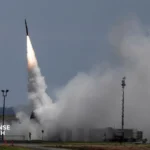
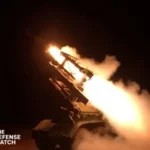
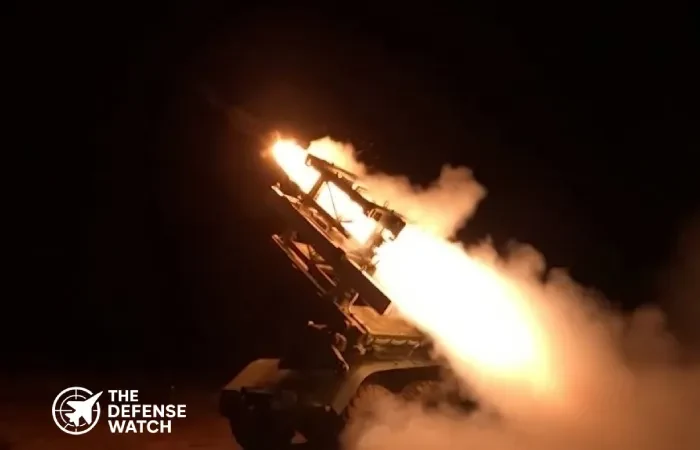
The R-77 FrankenSAM represents a pragmatic improvisation in modern air defense, emerging as Russia adapts to sustain layered protection amid ongoing conflicts. This hybrid system repurposes the Vympel R-77 (NATO: AA-12 Adder) beyond-visual-range air-to-air missile for ground launch, mounted on a mobile Ural truck chassis with aviation-style pylons. Observers first noted it in Oryol, Russia, close to the Ukrainian border in early 2026. It addresses gaps in short-to-medium range coverage, particularly against Ukrainian drones and cruise missiles, by leveraging existing air-to-air stockpiles in a ground role—similar to Ukrainian FrankenSAM adaptations but using native Russian hardware.
Manufacturer
The core missile comes from Vympel NPO (now part of Tactical Missiles Corporation), a leading Russian defense enterprise. The launcher appears to be a field-modified civilian or military truck platform, likely involving local engineering units rather than a single prime contractor. This reflects Russia’s approach of rapid, low-cost field adaptations rather than full-scale new production.
Speed and Range
The R-77 missile reaches speeds of Mach 4, with an air-launched maximum range of approximately 80 km for baseline variants and up to 110 km for the improved R-77-1 (RVV-SD). In ground-launched configuration, effective range reduces significantly due to the lack of aircraft forward velocity and altitude, likely falling in the 12–40 km class depending on target altitude and engagement geometry. It engages targets from very low altitudes up to around 25 km, making it suitable for intercepting drones, helicopters, and low-flying aircraft or cruise missiles. Guidance relies on inertial navigation with mid-course updates and active radar homing in the terminal phase, providing fire-and-forget capability after launch.
Cost/Price
R-77 FrankenSAM Price estimates remain speculative due to its improvised nature, but individual R-77 missiles historically cost far less than dedicated surface-to-air interceptors. The hybrid setup offers a cost-effective way to utilize existing inventories without developing entirely new systems, though integration and radar pairing add engineering expenses.
The system enhances point or area defense with mobility and rapid deployment. While not a replacement for integrated SAM batteries like the S-400 or Buk, it provides flexible, attritable coverage in contested environments. Its appearance highlights the realities of prolonged high-intensity conflict, where both sides improvise to maintain air defense density using available munitions.
Get real time update about this post category directly on your device, subscribe now.
Reviews
Disclaimer Note
The information provided on TheDefenseWatch.com is for general informational purposes only. While we strive to ensure the accuracy, completeness, and timeliness of our content regarding defense and aerospace products, technologies, and specifications, we cannot guarantee that all information is 100% accurate or up-to-date due to the evolving nature of military technology and classified data.TheDefenseWatch.com does not warrant the reliability, suitability, or availability of the information for any specific purpose. Users are advised to consult official sources, such as manufacturers, government publications, or defense agencies, for precise and verified data before making decisions based on our content.We are not affiliated with any defense manufacturers, governments, or military organizations mentioned. Opinions, reviews, and ratings reflect expert analysis but are subjective and should not be considered endorsements. TheDefenseWatch.com is not responsible for any errors, omissions, or consequences arising from the use of this website’s content.External links are provided for convenience and do not imply endorsement. TheDefenseWatch.com reserves the right to update or modify content without prior notice. By using this website, you agree to our Privacy & Cookies Policy.
New Arrivals
-
 XM8 Carbine Rifle
-
P 800 Oniks Missile
-
Beechcraft M-346N Trainer Aircraft
-
AT-6 Wolverine Aircraft
-
T-6C Texan II Trainer Aircraft
-
Mudamir LR AI Drone
-
Boeing AH-6 Little Bird Helicopter
-
Indra Lanza 3D Radar
-
FP-5 Flamingo Cruise Missile
-
GBU-53/B StormBreaker Bomb
-
USS Fitzgerald Arleigh Burke-Class Destroyer
-
RQ-11B Raven Drone
Popular Comparisons
-
 BrahMos Missile System vs P 800 Oniks Missile, Key Differences Explained
View Comparison →
BrahMos Missile System vs P 800 Oniks Missile, Key Differences Explained
View Comparison → -
GCAP vs FCAS, Europe Sixth Generation Fighter Race
View Comparison →
-
Su-57 vs F-35 Cost Analysis: Price, Maintenance, and Export Availability
View Comparison →
-
SIG XM7 Rifle vs M4: Key Differences and Performance Comparison
View Comparison →
-
Eurofighter Typhoon vs Rafale vs F-35: Fighter Jet Comparison
View Comparison →
-
J-20 vs F-22: Stealth Fighter Showdown Explained
View Comparison →
-
F-14 Tomcat vs Su-57: Can a Legend Challenge Russia’s Stealth Fighter?
View Comparison →
-
Su-35 vs Su-57: Russia’s Top Fighter Jets Compared
View Comparison →
-
Eurofighter Typhoon vs Su-57: Ultimate Fighter Jet Comparison
View Comparison →
-
Rafale vs Su-57: 4.5 Gen vs 5th Gen Fighter Jet Comparison
View Comparison →


- Australia Becomes First Nation After US To Test Fire Locally Made GMLRS Missiles

- France Unveils STRATUS Supersonic Missile To Counter Advanced Air Defenses
- UK Moves To Expand Munitions Stockpiles As Ukraine War Reshapes Force Planning
- Royal Navy Takes Command Of NATO Maritime Task Group As Alliance Boosts Atlantic Security
- Mali Races To Deploy Chinese Yitian-L Air Defense System Amid Rising Drone Threats
- Russia Races To Deploy R-77 FrankenSAM Air Defense System Amid Rising Ukrainian Drone Threat
- Türkiye Moves To Expand Defense Industry Reach As Global Demand Surges
- Poland vs. Türkiye: Who Really Leads Europe’s Tank Power in 2026?
- U.S. Army Moves To Field XM8 Carbine As Infantry Modernization Accelerates
- Pakistan Coast Guards Hit In First Direct Sea Attack Near Iran Border