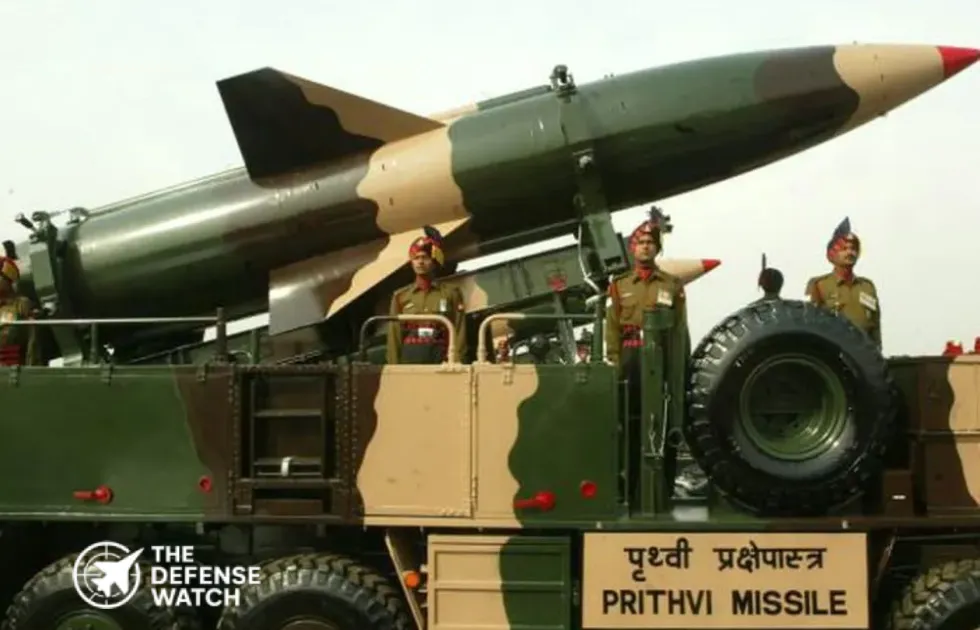
Prithvi-I Short-Range Ballistic Missile
The Prithvi-I represents a foundational achievement in India’s indigenous missile development program. As a single-stage, liquid-fueled surface-to-surface short-range ballistic missile (SRBM), it was designed primarily for tactical battlefield support, offering rapid response capabilities against high-value targets in regional conflicts. Developed as part of the Integrated Guided Missile Development Programme (IGMDP), the Prithvi-I marked India’s entry into operational ballistic missile technology in the 1990s. Its mobility and versatility made it a key asset for the Indian Army, capable of delivering both conventional and nuclear payloads with notable effectiveness for its era.
Manufacturer
The Prithvi-I was developed by India’s Defence Research and Development Organisation (DRDO) in collaboration with other agencies. Production was handled by Bharat Dynamics Limited (BDL), a premier Indian defense public sector undertaking specializing in missile systems. This domestic manufacturing approach underscored India’s push toward self-reliance in strategic defense technologies.
Speed and Range
The Prithvi-I has a maximum range of approximately 150 km with a 1,000 kg payload, making it suitable for short-range tactical strikes. It achieves speeds in the supersonic regime during its ballistic trajectory. The missile’s minimum range is around 40 km, providing flexibility for various operational scenarios. Its liquid-fueled propulsion system enables a relatively compact design while delivering significant throw-weight.
Cost/Price
Historical production costs for Prithvi-I missiles were estimated at around ₹3 crore (roughly $0.7–1 million USD at contemporary exchange rates) per unit, though full system costs including launchers and support equipment were higher. These figures positioned it as a cost-effective tactical option compared to more advanced systems.
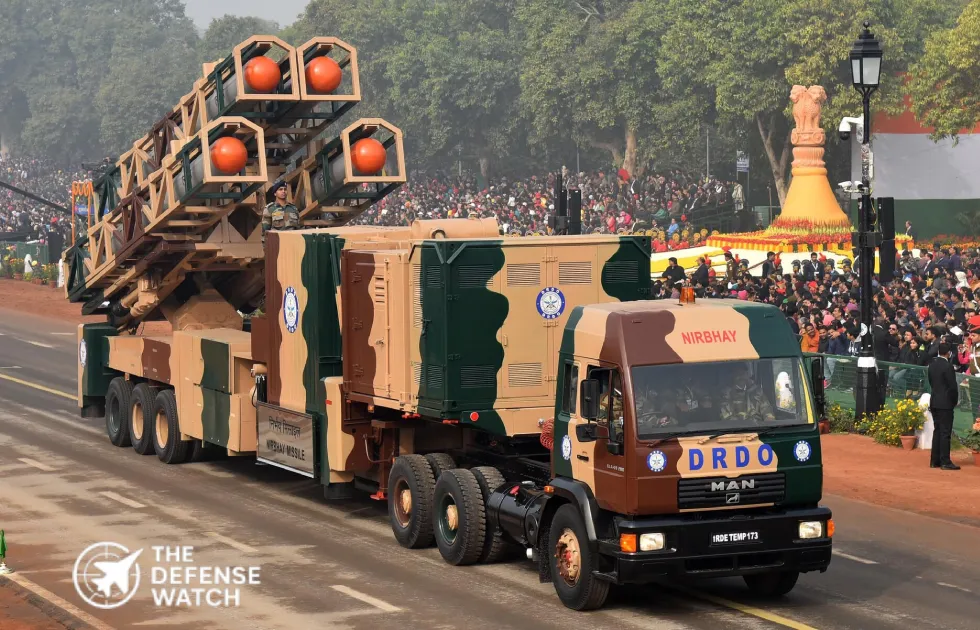
The missile measures about 8.55–9.5 meters in length with a 1-meter diameter and a launch weight of approximately 4,600 kg when fully fueled. It employs a strapdown inertial guidance system with an Intel 8086/8087-based flight computer, achieving a Circular Error Probable (CEP) typically cited in the 100–300 meter range depending on launch conditions. Multiple warhead options were developed, including unitary high-explosive, pre-fragmented, cluster munitions, and nuclear-capable variants. Launched from mobile transporter-erector-launchers (TELs), it offered rapid deployment and survivability.
The Prithvi-I entered service with the Indian Army around 1994–1996 and saw limited production before being phased out in favor of more advanced solid-fuel systems like the Prahaar. It played a significant role in shaping India’s early missile doctrine and deterrence posture in South Asia.