- Home
- Catalog
- Bombers & Strategic Aircraft
- Xian H-20 Bomber
Xian H-20 Bomber
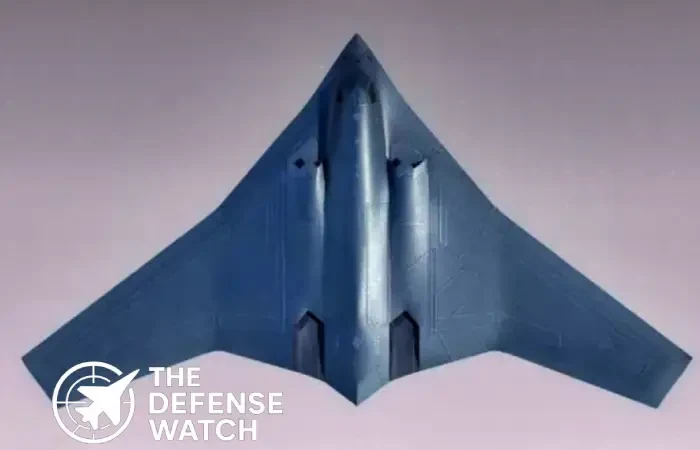
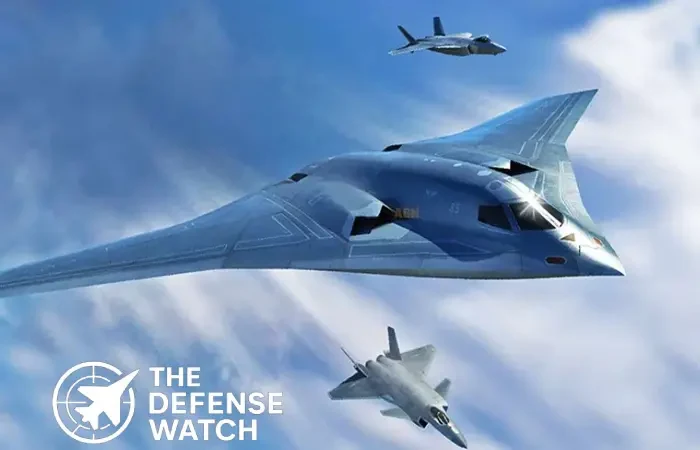
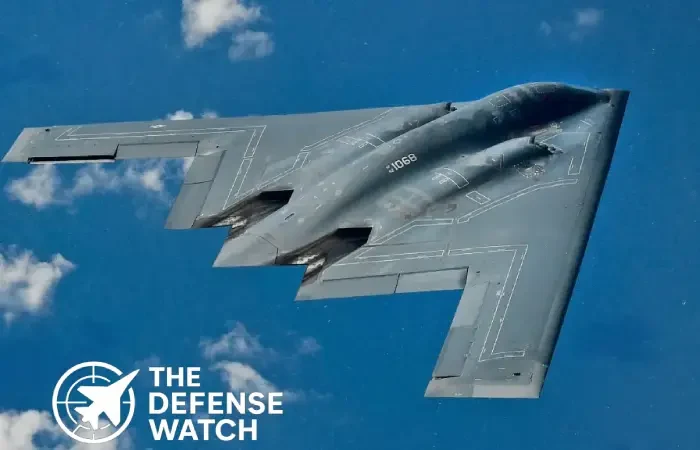
Full Specifications
1. General Information
| Name | Xian H-20 |
| Manufacturer | Xian Aircraft Industrial Corporation |
| Country of Origin | China |
| Introduction / In Service Since | Not yet in service |
| Status | Under development |
| Category | Strategic Stealth Bomber |
| Crew | 2 |
| Unit Cost | $750 million–$1 billion (estimated) |
2. Dimensions & Structure
| Length | Approx. 20–25 m |
| Wingspan | 45–50 m |
| Height | 6 m (estimated) |
| Wing Area | Classified |
| Empty Weight | ~80,000 kg (estimated) |
| Maximum Takeoff Weight (MTOW) | ~200,000 kg (estimated) |
3. Performance
| Maximum Speed | Mach 0.95 |
| Range | 8,500 km |
| Combat Radius | 4,000+ km |
| Service Ceiling | 15,000 m |
| Rate of Climb | Classified |
4. Powerplant
| Engine Type | 4 × WS-10 or WS-18 turbofans (expected) |
| Thrust (per engine) | ~13,000–15,000 kgf |
| Total Thrust | ~60,000 kgf |
5. Payload & Armament
| Internal Payload Capacity | 45,000 lb (20,400 kg) |
| Weapons Bay | Dual internal bays |
| Compatible Weapons | Nuclear bombs, cruise missiles, precision-guided munitions |
| Hardpoints | Internal only (stealth design) |
6. Avionics & Systems
| Radar System | AESA stealth radar |
| Navigation | Satellite + inertial navigation |
| Electronic Warfare (EW) | Integrated ECM/ECCM suite |
| Stealth Features | Radar-absorbing materials, flying wing design, infrared suppression |
7. Operational History
| Primary Operator | People’s Liberation Army Air Force (PLAAF) |
| Conflict Usage | None (pre-operational) |
| Notable Missions | None yet reported |
8. Additional Information
| Variants | None known |
| Successor / Future Replacement | Future heavy stealth bomber |
| Notable Features | Long-range stealth strike, nuclear capability |
| Estimated Operational Life | 30–40 years |
PROS
- Stealth flying-wing configuration reduces radar detection.
- Long-range strike capability exceeding 8,000 km.
- Nuclear and conventional payload flexibility.
- Advanced avionics and AI-assisted mission systems.
- Strengthens China’s long-range deterrence capability.
CONS
- Limited operational data and unknown combat readiness.
- Likely high production and maintenance costs.
- Dependence on domestic engine technology.
- Potential vulnerabilities to satellite tracking.
- Restricted availability of accurate technical specifications.
Xian H-20 Stealth Bomber: China’s Next-Gen Strategic Strike Aircraft
The Xian H-20 represents a major leap in China’s strategic bomber fleet, marking the nation’s entry into the stealth bomber era. Developed by Xian Aircraft Industrial Corporation, the H-20 is designed to rival the U.S. Air Force’s B-2 Spirit and the upcoming B-21 Raider. As part of China’s modernization efforts, the H-20 aims to provide the People’s Liberation Army Air Force (PLAAF) with long-range, stealthy, and nuclear-capable strike capability, allowing it to reach targets far beyond the Asia-Pacific region.
The bomber is expected to feature a flying wing design, low radar cross-section, and advanced composite materials to maximize stealth performance. Reports suggest an operational range of up to 8,500 km, enabling deep-penetration missions against high-value targets without aerial refueling. The H-20 is believed to cruise at subsonic speeds but carry a significant payload of over 45,000 pounds, including both nuclear and conventional precision-guided munitions.
Technological highlights include AI-assisted mission systems, active electronically scanned array (AESA) radar, electronic warfare (EW) suites, and an integrated data fusion cockpit. With China’s growing emphasis on anti-access/area denial (A2/AD) strategies, the H-20 will play a pivotal role in power projection across the Indo-Pacific and potentially beyond.
Xian H-20 Price in US
While the exact H-20 bomber price remains undisclosed, estimates place the cost per unit between $750 million and $1 billion, aligning it with U.S. stealth bombers like the B-2 Spirit and B-21 Raider. This reflects the extensive stealth technology, composite materials, and advanced avionics integrated into its design.
Get real time update about this post category directly on your device, subscribe now.
Reviews
Disclaimer Note
The information provided on TheDefenseWatch.com is for general informational purposes only. While we strive to ensure the accuracy, completeness, and timeliness of our content regarding defense and aerospace products, technologies, and specifications, we cannot guarantee that all information is 100% accurate or up-to-date due to the evolving nature of military technology and classified data.TheDefenseWatch.com does not warrant the reliability, suitability, or availability of the information for any specific purpose. Users are advised to consult official sources, such as manufacturers, government publications, or defense agencies, for precise and verified data before making decisions based on our content.We are not affiliated with any defense manufacturers, governments, or military organizations mentioned. Opinions, reviews, and ratings reflect expert analysis but are subjective and should not be considered endorsements. TheDefenseWatch.com is not responsible for any errors, omissions, or consequences arising from the use of this website’s content.External links are provided for convenience and do not imply endorsement. TheDefenseWatch.com reserves the right to update or modify content without prior notice. By using this website, you agree to our Privacy & Cookies Policy.
More Products from Xian Aircraft Industrial Corporation
New Arrivals
-
 P 800 Oniks Missile
-
Beechcraft M-346N Trainer Aircraft
-
AT-6 Wolverine Aircraft
-
T-6C Texan II Trainer Aircraft
-
Mudamir LR AI Drone
-
Boeing AH-6 Little Bird Helicopter
-
Indra Lanza 3D Radar
-
FP-5 Flamingo Cruise Missile
-
GBU-53/B StormBreaker Bomb
-
USS Fitzgerald Arleigh Burke-Class Destroyer
-
RQ-11B Raven Drone
-
QF-4 Drone





Popular Comparisons
-
 BrahMos Missile System vs P 800 Oniks Missile, Key Differences Explained
View Comparison →
BrahMos Missile System vs P 800 Oniks Missile, Key Differences Explained
View Comparison → -
GCAP vs FCAS, Europe Sixth Generation Fighter Race
View Comparison →
-
Su-57 vs F-35 Cost Analysis: Price, Maintenance, and Export Availability
View Comparison →
-
SIG XM7 Rifle vs M4: Key Differences and Performance Comparison
View Comparison →
-
Eurofighter Typhoon vs Rafale vs F-35: Fighter Jet Comparison
View Comparison →
-
J-20 vs F-22: Stealth Fighter Showdown Explained
View Comparison →
-
F-14 Tomcat vs Su-57: Can a Legend Challenge Russia’s Stealth Fighter?
View Comparison →
-
Su-35 vs Su-57: Russia’s Top Fighter Jets Compared
View Comparison →
-
Eurofighter Typhoon vs Su-57: Ultimate Fighter Jet Comparison
View Comparison →
-
Rafale vs Su-57: 4.5 Gen vs 5th Gen Fighter Jet Comparison
View Comparison →


- Textron Aviation Defense Showcases Beechcraft M-346N Trainer To Expand U.S. Navy Carrier Pilot Training

- U.S. Space Force Awards Contracts To Expand Orbital Surveillance Under Andromeda Program
- Pakistan Expands Air Power Presence In Saudi Arabia Under Defense Pact
- FAA, Pentagon Move To Deploy Anti-Drone Laser System As Border Airspace Threats Rise
- U.S. Navy and NASA Race To Solve Space Motion Sickness Ahead of Artemis Lunar Missions
- U.S. Names New Command Senior Enlisted Leader For Defense Security Cooperation Agency
- UK Moves To Counter Russian Submarine Threat As Covert Undersea Operations Exposed
- China Moves To Reinforce Cross-Strait Stability As Xi Jinping Meets Taiwan Opposition Leader In Beijing
- Pakistan Unveils Mudamir LR AI Drone To Counter Maritime Threats
- Operation Epic Fury: A Detailed Analysis of U.S. Air Strikes on Iranian Military Assets