

Russia Bastion Coastal Defense System Reinforces Arctic Strategy
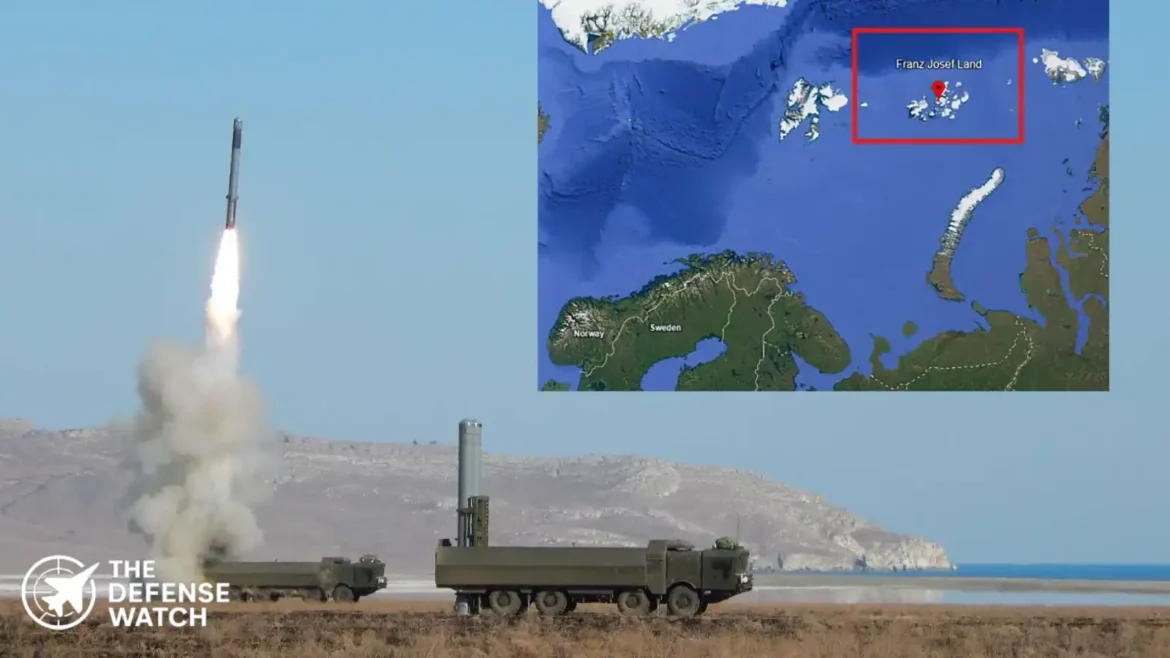
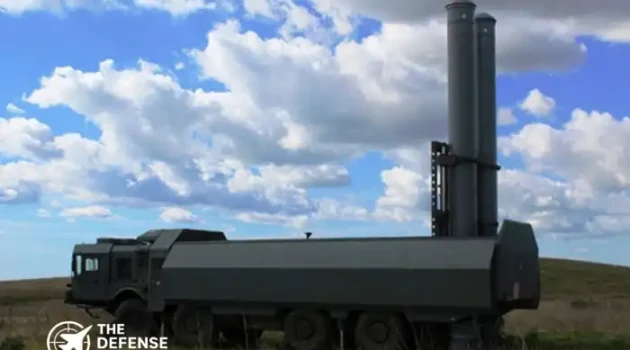
Russia’s Bastion coastal defense system is playing a central role in Moscow’s evolving Arctic naval denial strategy, as demonstrated during recent exercises at the remote Franz Josef Land archipelago. According to reporting by Army Recognition, Russian forces conducted drills simulating the defense of critical Arctic approaches using the Bastion system, a mobile anti-ship missile platform designed to engage high-value naval targets at extended ranges.
- Russia rehearsed Arctic naval denial operations using the Bastion coastal defense system at Franz Josef Land.
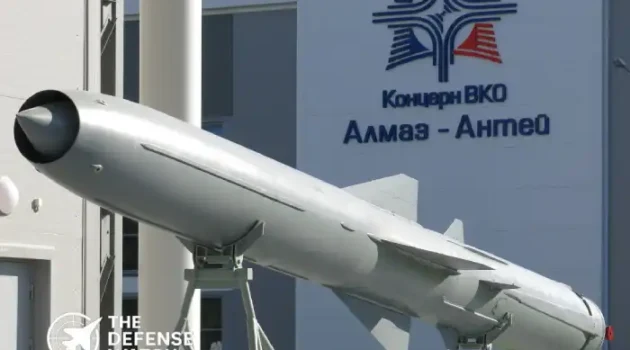
- The Bastion system is equipped with P-800 Oniks supersonic anti-ship missiles capable of striking maritime targets at long range.
- The deployment supports Russia’s strategy to secure the Northern Sea Route and restrict adversary naval access.
- Arctic bases are being upgraded to host advanced missile systems and sustain year-round operations.
- The move reflects growing geopolitical competition in the Arctic region involving NATO and Russia.
The exercise underscores Russia’s focus on securing its northern maritime frontier, particularly as melting ice expands access to the Arctic and intensifies competition over shipping routes and natural resources.
Strategic Importance of Bastion Deployment in the Arctic
The Bastion system, known in Russia as K-300P, deploys the P-800 Oniks supersonic cruise missile, a weapon capable of striking targets at ranges exceeding 300 kilometers. Its mobility and rapid deployment capability make it well suited for remote Arctic environments, where fixed defenses are harder to maintain.
By stationing Bastion systems at forward outposts such as Franz Josef Land, Russia is effectively extending its anti-access and area denial umbrella across key segments of the Arctic Ocean. This allows Moscow to monitor and potentially restrict naval movement along the Northern Sea Route, a shipping corridor that is gaining strategic and economic importance.
From a military perspective, this deployment reflects a layered defense concept. Coastal missile batteries, supported by radar systems and air defense networks, create overlapping zones of control. This approach complicates any adversary’s ability to operate freely in contested Arctic waters.
Arctic Militarization and Infrastructure Expansion
Russia’s Arctic posture has evolved steadily over the past decade. The country has reopened Soviet-era bases and constructed new facilities designed to operate in extreme conditions. Franz Josef Land, located deep in the Arctic Ocean, has become a key node in this network.
Infrastructure upgrades include reinforced airstrips, radar installations, and logistics hubs capable of supporting year-round operations. These developments enable sustained deployment of advanced systems like Bastion, ensuring readiness even in harsh winter conditions.
The emphasis on Arctic readiness is not limited to missile systems. Russia has also expanded its fleet of icebreakers, including nuclear-powered vessels, to ensure access and mobility across frozen waters. This integrated approach strengthens both military and economic control over the region.
Geopolitical Context and NATO Response
The deployment of the Bastion coastal defense system must be viewed within the broader context of rising geopolitical competition in the Arctic. NATO members, particularly the United States, Canada, and Norway, have increased their own military presence and surveillance activities in the region.
Western analysts note that Russia’s anti-ship missile deployments are intended to deter NATO naval operations and protect strategic assets, including submarine bastions used for nuclear deterrence. The Arctic remains a critical domain for second-strike capabilities, making its defense a priority for Moscow.
At the same time, the Northern Sea Route is becoming more viable for commercial shipping due to climate change. Control over this route offers both economic leverage and strategic advantage, further motivating Russia’s military investments.
Operational Implications of Naval Denial Strategy
Russia’s use of the Bastion system highlights a broader shift toward denial-based strategies rather than traditional power projection. Instead of seeking to dominate distant theaters, Moscow is focusing on securing its periphery and limiting adversary access.
In practical terms, this means creating contested zones where the cost of entry for opposing forces is significantly increased. The Bastion system, with its long-range precision strike capability, plays a key role in this concept by threatening surface vessels operating within its engagement envelope.
This approach is particularly effective in the Arctic, where geography and climate already pose challenges for naval operations. By combining natural barriers with advanced weapon systems, Russia enhances its defensive posture without requiring large-scale force deployments.
Analysis: Why the Arctic Matters Now
The renewed focus on Arctic military capabilities reflects a convergence of factors. Climate change is opening new sea lanes, resource competition is intensifying, and great power rivalry is extending into previously less contested regions.
Russia’s investment in systems like Bastion suggests a long-term strategy aimed at shaping the Arctic security environment. By establishing credible denial capabilities early, Moscow is positioning itself to influence future access and governance of the region.
For the United States and its allies, this development raises important questions about deterrence and freedom of navigation. Countering such systems requires a mix of technological solutions, including long-range strike capabilities, stealth platforms, and enhanced situational awareness.
U.S. Air Power Plan Signals New Focus On Deep Strike
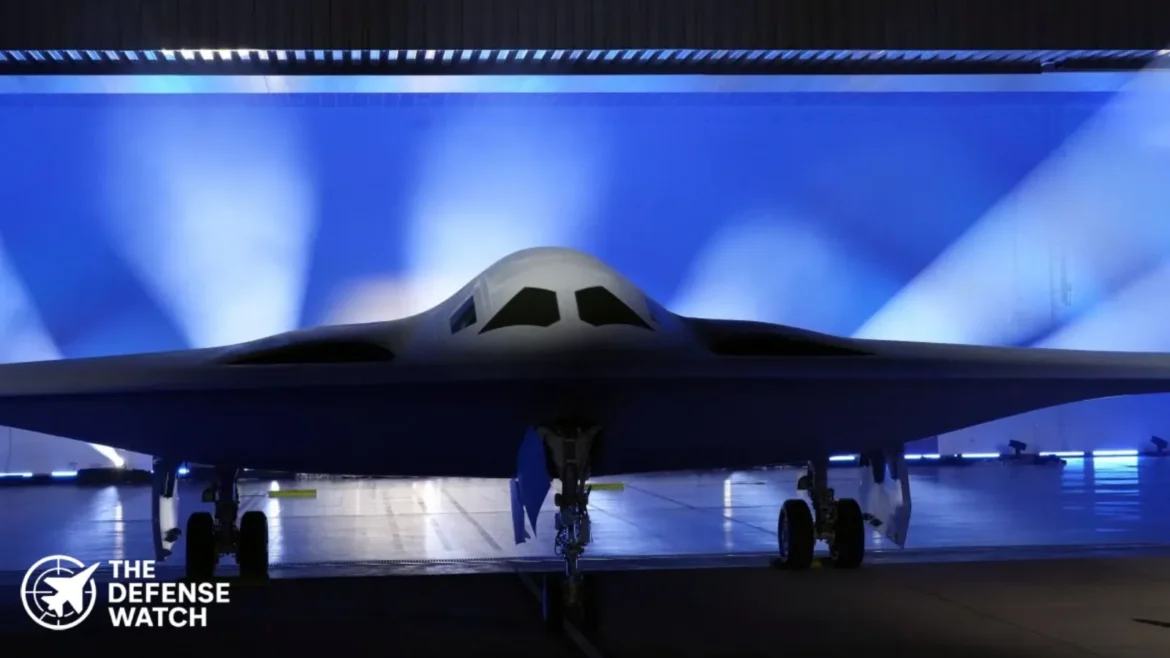
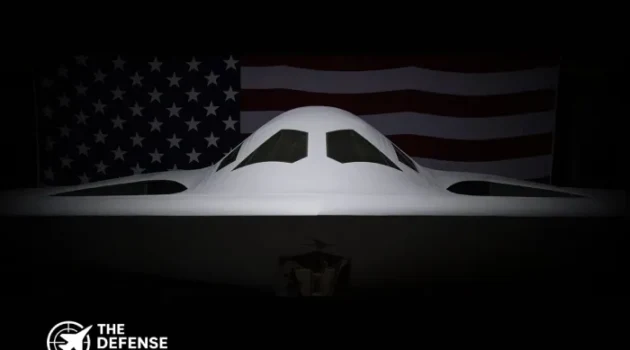
The U.S. air power plan worth roughly $102 billion highlights Washington’s push to strengthen deep strike capacity and maintain air superiority against rising challenges from China and Russia. The spending profile, aligns with broader Pentagon modernization priorities focused on stealth aircraft, long range weapons, survivable networks, and next generation combat aviation.
- U.S. funding package centers on long range strike and future air superiority programs.
- Major priorities include stealth bombers, advanced fighters, weapons, and support networks.
- Strategy reflects rising concern over Chinese force growth and Russian combat aviation threats.
- Investment scale signals multi year modernization rather than a one year surge.
- The central goal is to preserve U.S. ability to strike first, survive, and sustain operations.
The Big Picture
Airpower remains central to U.S. military strategy. It enables rapid response, precision strike, intelligence collection, airlift, and deterrence across Europe, the Indo Pacific, and the Middle East.
That advantage is no longer uncontested. China has expanded fighter production, long range missile forces, airborne sensors, and integrated air defenses. Russia, despite combat losses in Ukraine, still fields a capable tactical aviation force and layered air defense architecture. For U.S. planners, the era of automatic air dominance is over.
The result is a shift from counterinsurgency era fleets toward systems built for heavily defended battlespace.
What’s Happening
The reported U.S. air power plan allocates major resources toward several categories:
- Stealth bomber procurement, led by the B-21 Raider
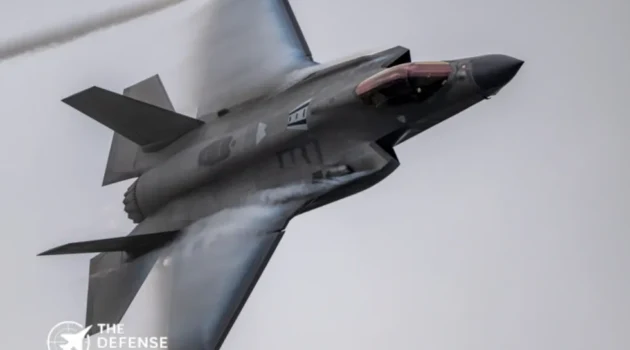
- Tactical fighter modernization, including F-35A Lightning II fleets
- Future air dominance programs, including sixth generation concepts
- Precision munitions and stand off strike weapons
- Tankers, command and control, and support infrastructure
- Research into collaborative autonomous aircraft and networked warfare systems
This reflects a force design built for penetrating defended airspace and sustaining long range campaigns rather than short duration permissive operations.
Why It Matters
Modern air warfare depends on more than fighters. Aircraft need tankers, electronic warfare support, resilient communications, munitions stockpiles, and distributed bases.
That is why the U.S. air power plan matters. It suggests Washington understands that advanced adversaries will target airfields, satellites, fuel logistics, and command networks early in any conflict.
Buying aircraft without fixing those enablers would leave gaps. Funding both strike platforms and supporting architecture is strategically more credible.
Strategic Implications
For the Indo Pacific, range is the defining challenge. Distances are vast, bases are exposed, and resupply could be contested. Long range bombers and survivable tankers become essential.
For Europe, readiness and mass matter more. NATO would need rapid sortie generation, missile defense integration, and sustained combat power if facing Russian escalation.
In both theaters, airpower is tied directly to deterrence. If adversaries believe U.S. forces can penetrate defenses and keep fighting after initial attacks, the threshold for aggression rises.
Competitor View
China is likely to read this investment as confirmation that the U.S. intends to preserve power projection inside the first and second island chains. That may reinforce Beijing’s own spending on missiles, sensors, fighters, and counter space tools.
Russia will likely view the plan through a NATO lens, especially if paired with more rotational deployments and precision strike capacity in Europe.
Neither competitor is standing still, which means procurement speed may matter as much as total dollars.
Capability Gap The Plan Aims To Close
The most serious U.S. weakness is not pilot skill or technology quality. It is the combination of aging fleets, limited production rates, fragile logistics chains, and insufficient munition depth for a prolonged high end war.
The U.S. air power plan appears designed to close four gaps:
- Range against distant targets
- Survivability in contested airspace
- Mass after early attrition
- Sustainment over long campaigns
A realistic limitation remains industrial capacity. Even large budgets cannot instantly produce engines, airframes, chips, or trained maintainers.
What To Watch Next
Watch these indicators over the next 12 to 24 months:
- Annual procurement numbers for bombers and fighters
- Progress on next generation air dominance programs
- Missile stockpile expansion
- New tanker and dispersal basing concepts
- Defense industry production timelines
- Congressional support during budget negotiations
If funding turns into timely deliveries, the plan gains real weight. If programs slip, strategic value falls quickly.
The Bottom Line
The $102 billion push shows the United States is investing not just in aircraft, but in restoring credible air dominance for a more contested era.
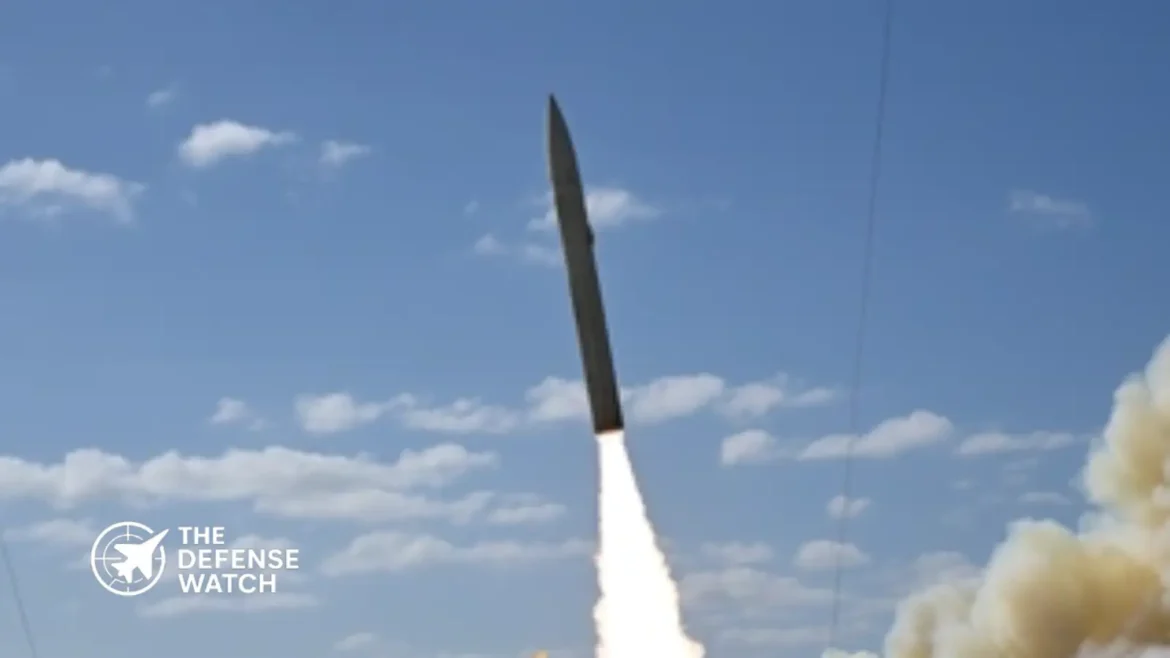
The race between hypersonic missile speed and ballistic missile defense has become the defining arms competition of the 2020s — and U.S. strategists are watching closely, because the outcome could reshape deterrence across every major theater of war.
For decades, American ballistic missile defense (BMD) systems were architected around a predictable threat: missiles that arc through space on fixed, calculable trajectories. Intercept the arc, and you win. But adversaries studied that logic — and engineered around it. Today, China’s DF-17 hypersonic glide vehicle and Russia’s Avangard system maneuver unpredictably at speeds exceeding Mach 20, operating in an altitude band that existing sensors and interceptors were never designed to cover. The question facing the Pentagon, NATO partners, and U.S. allies in the Indo-Pacific is blunt: can the shield hold?
Specifications: Hypersonic Threats vs. BMD Systems
| Specification | Hypersonic Glide Vehicles (e.g., DF-17 / Avangard) | U.S. Ballistic Missile Defense (GMD / THAAD / SM-3) |
|---|---|---|
| Speed | Mach 5–27 (varies by system) | Interceptors: Mach 8–10+ |
| Flight Altitude | 25–100 km (near-space glide) | GMD: 1,000+ km; THAAD: 40–150 km |
| Maneuverability | High — lateral, pull-up maneuvers | Limited — fire-solution depends on predicted path |
| Range | 1,800–15,000+ km | THAAD: ~200 km; GMD: intercontinental |
| Radar Signature | Small; plasma sheath disrupts radar | Relies on early-warning satellites + ground radar |
| Warhead Options | Conventional / nuclear capable | Hit-to-kill (kinetic); no explosive warhead |
| Unit Cost (est.) | $50–100M+ per missile | SM-3: ~$24M; GBI: ~$75M per interceptor |
| Reaction Window | Minutes to impact from launch | GMD: 30+ min lead time needed; THAAD: 5–8 min |
| Service Entry | DF-17: 2019; Avangard: 2019 | GMD: 2004; THAAD: 2008; SM-3 IIA: 2018 |
| Test Success Rate | China/Russia: Classified | GMD: ~55%; THAAD: ~100% (17/17 tests) |
Design & Technology: A Fundamental Mismatch
How Hypersonic Glide Vehicles Work
Hypersonic glide vehicles (HGVs) are launched atop ballistic missiles but separate before the terminal phase. Instead of following a predictable parabolic arc, they re-enter the atmosphere and glide at sustained hypersonic speeds — generating intense plasma that partially blinds radar. The DF-17’s warhead, designated the DF-ZF, reportedly pulls lateral maneuvers up to several Gs, making fire-control solutions exponentially harder to compute in real time.
How U.S. Ballistic Missile Defense Is Architected
The U.S. BMD architecture is layered. The Ground-Based Midcourse Defense (GMD) system — based at Fort Greely, Alaska — targets ICBMs in their midcourse phase, relying on long-range X-band radars and kill vehicles (EKVs) that collide with warheads at closing speeds above Mach 15. THAAD (Terminal High Altitude Area Defense) handles shorter-range threats in the terminal phase. Aegis SM-3 provides ship-based midcourse intercept capability and is the most mobile layer. The gap: none of these systems was designed to track and intercept a vehicle flying at 40–80 km altitude, maneuvering unpredictably at Mach 10+.
“You can’t intercept what you can’t track. Hypersonic glide vehicles exploit the seam between what our radars see and what our interceptors can reach.”
Firepower & Performance: Speed Is the Weapon
At Mach 20, the Russian Avangard travels roughly 6.8 kilometers per second. From a launch site in western Russia, it can reach the U.S. East Coast in under 15 minutes — far less than the 25–30 minutes a traditional ICBM requires. That compression of decision time is itself the weapon. It does not need to be nuclear to be destabilizing; a conventional HGV strike on a carrier strike group or command node collapses the window in which defensive responses — diplomatic, kinetic, or otherwise — can be organized.
U.S. BMD interceptors are fast, but the geometry is unforgiving. THAAD’s kill vehicle closes at approximately Mach 8. Against a target that maneuvers after radar track, the fire-control algorithm must predict where the threat will be at intercept — and HGVs are specifically designed to defeat that prediction.
Operational Range & Mobility
Range asymmetry compounds the problem. China’s DF-17, with a reported range of 1,800–2,500 km, can target U.S. bases in Guam, Japan, and South Korea from launch sites deep inside Chinese territory — well outside the effective defensive perimeter of sea-based SM-3 batteries. Avangard, boosted by Russia’s heavy RS-28 Sarmat ICBM, is essentially global in range.
On the U.S. side, THAAD batteries are mobile and deployable — as demonstrated by rotational deployments to South Korea and Guam — but they cover relatively small areas. Aegis-equipped destroyers offer flexibility, but repositioning ships takes hours to days. The Missile Defense Agency’s Next Generation Interceptor (NGI), currently in development, is intended to replace aging GMD kill vehicles, but it addresses ballistic threats primarily, not HGVs in their glide phase.
Combat Effectiveness: Real World & Doctrine
Hypersonic Offense BMD Defense Strengths in Combat Strengths in Defense Near-unpredictable terminal trajectory THAAD: 17/17 intercept test success Exploits “midcourse gap” in BMD layers Aegis SM-3: proven at sea, widely exported Compresses adversary decision time Layered architecture — multiple intercept opportunities Dual-use (conventional + nuclear ambiguity) Hypersonic Defense Architecture (HDA) in development China showcased the DF-17 at its 2019 National Day parade; Russia confirmed Avangard operational in December 2019. Neither system has been used in live combat — but Russia’s reported use of the Kinzhal quasi-ballistic missile in Ukraine has offered real-world data on radar evasion under combat conditions. The U.S. Missile Defense Agency acknowledged the HGV gap explicitly in its 2022 and 2024 budget requests, funding the Glide Phase Interceptor (GPI) program to address the near-space threat. The GPI aims for a first intercept demonstration in the late 2020s — a timeline that leaves a window of vulnerability. Cost & Export Value: Economics of the Arms Race
One overlooked dimension is cost asymmetry. A single GBI interceptor costs roughly $75 million. If an adversary saturates defenses with cheaper HGVs — or even conventional ballistic decoys — the economics of defense become unsustainable at scale. Each THAAD battery costs approximately $800 million; the missiles themselves run $11 million apiece. Against a $50–100 million HGV, the exchange ratio is problematic but not catastrophic — yet.
On the export front, Aegis and THAAD are critical U.S. alliance tools. Japan operates advanced Aegis destroyers and is integrating SM-3 Block IIA. South Korea hosts THAAD. Romania and Poland host Aegis Ashore sites. These deployments extend deterrence — but also extend the attack surface that adversary HGVs must be able to defeat, driving their development further. It is a feedback loop baked into the system. For more on U.S. BMD export posture.
Analysis: Where the Balance Sits in 2026
The honest assessment, drawn from open-source MDA documentation and think-tank analyses from CSIS and RAND, is that the United States currently lacks a fielded system capable of reliably intercepting a maneuvering HGV in its glide phase. The GPI program addresses this, but it will not reach operational capability before 2030 at the earliest. Space-based sensors — the Hypersonic and Ballistic Tracking Space Sensor (HBTSS) constellation, now in early orbit testing — are the most promising near-term enabler; they can track HGVs from above the plasma sheath that blinds ground radar.
That said, framing this purely as a “defense loses” story misses strategic context. Deterrence does not require perfect defense. It requires that any adversary calculate that a hypersonic first strike cannot disarm U.S. retaliatory capability entirely. The U.S. nuclear triad — submarines, ICBMs, and bombers — is survivable against a hypersonic strike, which limits the strategic utility of HGVs to coercive or conventional-strike scenarios. The more acute danger is conventional: hypersonic precision strikes on carriers, airfields, or command nodes in a Taiwan or Baltic crisis could create facts on the ground before a U.S. conventional response could organize.
Conclusion: Which System Has the Edge?
In a direct comparison of hypersonic missile speed vs. ballistic missile defense today, the offense holds a meaningful but not absolute advantage. Existing U.S. BMD layers were not designed for the HGV threat. The GPI and HBTSS programs are credible responses, but they are years away from operational readiness. In the near term, the U.S. relies on deterrence-by-punishment rather than deterrence-by-denial against hypersonic threats.
The edge shifts under different conditions. In a theater defense scenario — protecting a fixed asset like Guam — THAAD’s proven kill chain and potential GPI augmentation provide a meaningful layered defense by the early 2030s. In an ICBM-exchange scenario, Avangard’s glide phase still outpaces current GMD. The race is not over. But the United States is, for now, playing catch-up in the glide phase — and speed, in this contest, is everything.
While current U.S. Ballistic Missile Defense systems like THAAD and Aegis are highly effective against traditional arcs, they face a ‘capability gap’ against hypersonic glide vehicles. The Pentagon is currently closing this gap by developing the Glide Phase Interceptor (GPI) and satellite-based tracking layers.
FAQs
Can U.S. missile defense systems currently intercept hypersonic missiles?No current U.S. system is specifically fielded to intercept a maneuvering hypersonic glide vehicle in its glide phase. THAAD and GMD were designed for ballistic trajectories. The Glide Phase Interceptor (GPI), under MDA development, aims to close this gap but is not expected to reach operational status before 2030.
How fast are hypersonic missiles compared to traditional ballistic missiles?Traditional ICBMs re-enter at roughly Mach 20–23 at terminal phase, but follow predictable arcs. Hypersonic glide vehicles sustain speeds of Mach 5–27 across most of their flight and maneuver laterally — making speed and unpredictability a dual threat rather than speed alone.
What is the Glide Phase Interceptor and when will it be ready?The GPI is a Missile Defense Agency program to develop an interceptor capable of engaging HGVs during their extended glide phase, before terminal descent. It is being developed in partnership with Raytheon and Northrop Grumman. A first intercept flight test is targeted for the late 2020s, with initial operational capability potentially in the early 2030s.
Which countries pose the greatest hypersonic missile threat to the United States?China and Russia are the primary concerns. China has operationally deployed the DF-17 HGV and is developing additional hypersonic systems. Russia’s Avangard, boosted by the Sarmat ICBM, is declared operational.
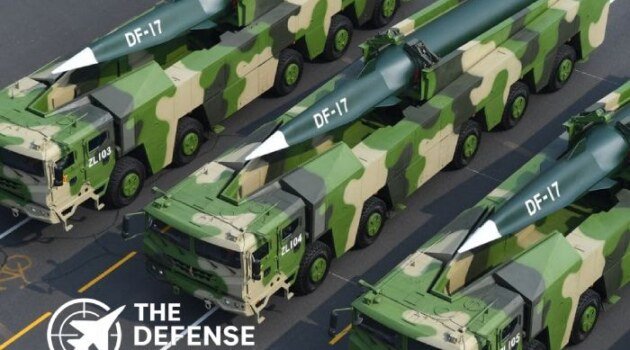


Russia Restarts SR-2M Production to Support Infantry Firepower
Russia has restarted production of the SR-2M Veresk submachine gun as part of efforts to sustain compact armor-piercing firepower for military and internal security forces. The move reflects ongoing demand for close-quarters weapons capable of defeating modern body armor.
(adsbygoogle = window.adsbygoogle || []).push({});The SR-2M, developed by TsNIITochMash under the Rostec state defense conglomerate, is chambered for the 9×21 mm cartridge. This round was designed to penetrate ballistic protection beyond the capabilities of standard 9×19 mm ammunition.
Sustaining a Niche Infantry Capability
The decision to resume SR-2M production comes as Russia continues to prioritize infantry equipment suited for urban combat, vehicle crews, and specialized units. Compact automatic weapons remain in demand for operations where maneuverability and penetration against protected targets are required.
The SR-2M is an upgraded version of the original SR-2, featuring improved ergonomics, an updated folding stock, and compatibility with modern optics. Its compact design allows it to be deployed by personnel operating in confined environments while retaining effective firepower.
Renewed production is aimed at sustaining existing inventories and ensuring replacement weapons remain available rather than introducing an entirely new platform.
Weapon Characteristics and Operational Role
The SR-2M fires the 9×21 mm SP-10 and SP-11 armor-piercing cartridges, which Russian sources claim can defeat certain levels of body armor at close range. This capability has long defined the weapon’s role within Russian internal security units and select military formations.
Key characteristics include a short barrel, high rate of fire, and detachable box magazines. The weapon is designed for close-range engagements where rapid target acquisition and penetration are critical.
(adsbygoogle = window.adsbygoogle || []).push({});The SR-2M is not intended to replace standard assault rifles but to complement them. Its role is focused on close protection details, counterterrorism units, and crews operating armored vehicles or aircraft.
Context Within Russian Small Arms Modernization
Russia’s small arms portfolio already includes platforms such as the AK-74M, AK-12, and the PP-19 Vityaz. However, the SR-2M occupies a specific niche that those systems do not fully address.
By restarting SR-2M production, Russia appears to be maintaining diversity within its infantry weapons inventory. This approach allows different units to be equipped according to mission requirements rather than adopting a single standard solution.
Analysts note that sustaining production of legacy but capable systems is often more cost-effective than developing new weapons during periods of high operational demand.
Industrial and Strategic Implications
The restart also highlights the role of Russia’s domestic defense industry in meeting internal requirements despite external pressures. TsNIITochMash has historically been responsible for specialized weapons development, particularly for ammunition and compact firearms.
Maintaining production lines for systems like the SR-2M ensures technical expertise and manufacturing capacity remain intact. This can be important for long-term sustainment and potential incremental upgrades.
(adsbygoogle = window.adsbygoogle || []).push({});While no export plans have been announced, the SR-2M has previously been marketed to select foreign customers. Any renewed production could also support future limited exports, subject to Russian government approval.
Broader Trends in Compact Weapon Demand
The SR-2M production restart aligns with broader global trends emphasizing close-quarters combat capabilities. Urban warfare, internal security missions, and protective duties continue to drive demand for compact automatic weapons with enhanced penetration.
Similar trends can be observed in other militaries that retain submachine guns or compact carbines for specialized roles rather than fully replacing them with standard rifles.