Executive Summary: Northrop Grumman is increasing B-21 Raider production activity while the U.S. Air Force examines whether to accelerate deliveries and potentially expand the program beyond its current minimum fleet of 100 aircraft. The review is expected to be completed by the end of 2026 and comes as the Air Force continues replacing older bombers with a new penetrating strike platform.
B-21 Raider Production Moves Into A New Phase
The B-21 Raider production program is entering a potentially larger phase as the U.S. Air Force evaluates faster manufacturing and a fleet exceeding 100 aircraft, according to comments by Northrop Grumman CEO Kathy Warden during the company’s second-quarter 2026 earnings call. The company said an agreement with the Air Force allows the service to examine both accelerated production and a larger program of record.
Northrop Grumman expects the Air Force analysis to be completed by the end of 2026. Warden did not disclose a potential new fleet size or the production rates under consideration, meaning the current minimum requirement of 100 aircraft remains the established program baseline.
The development follows a February 2026 agreement between the Department of the Air Force and Northrop Grumman to expand B-21 production capacity. That agreement uses $4.5 billion already authorized and appropriated under fiscal 2025 legislation and increases annual production capacity by 25 percent.
What The Air Force Is Actually Considering
The distinction between production capacity and the size of the fleet is important.
The February agreement increases Northrop Grumman’s ability to manufacture B-21 aircraft at a faster rate. The later review goes a step further by examining whether the Air Force should actually order aircraft at an accelerated pace and potentially increase the total number planned.
| Area | Current Position |
|---|---|
| Aircraft | B-21 Raider |
| Manufacturer | Northrop Grumman |
| Program baseline | Minimum 100 aircraft |
| Production action | Annual capacity increased by 25% |
| Additional funding cited by Air Force | $4.5 billion |
| Fleet expansion review | Under consideration |
| Expected review completion | End of 2026 |
| Mission | Penetrating conventional and nuclear strike |
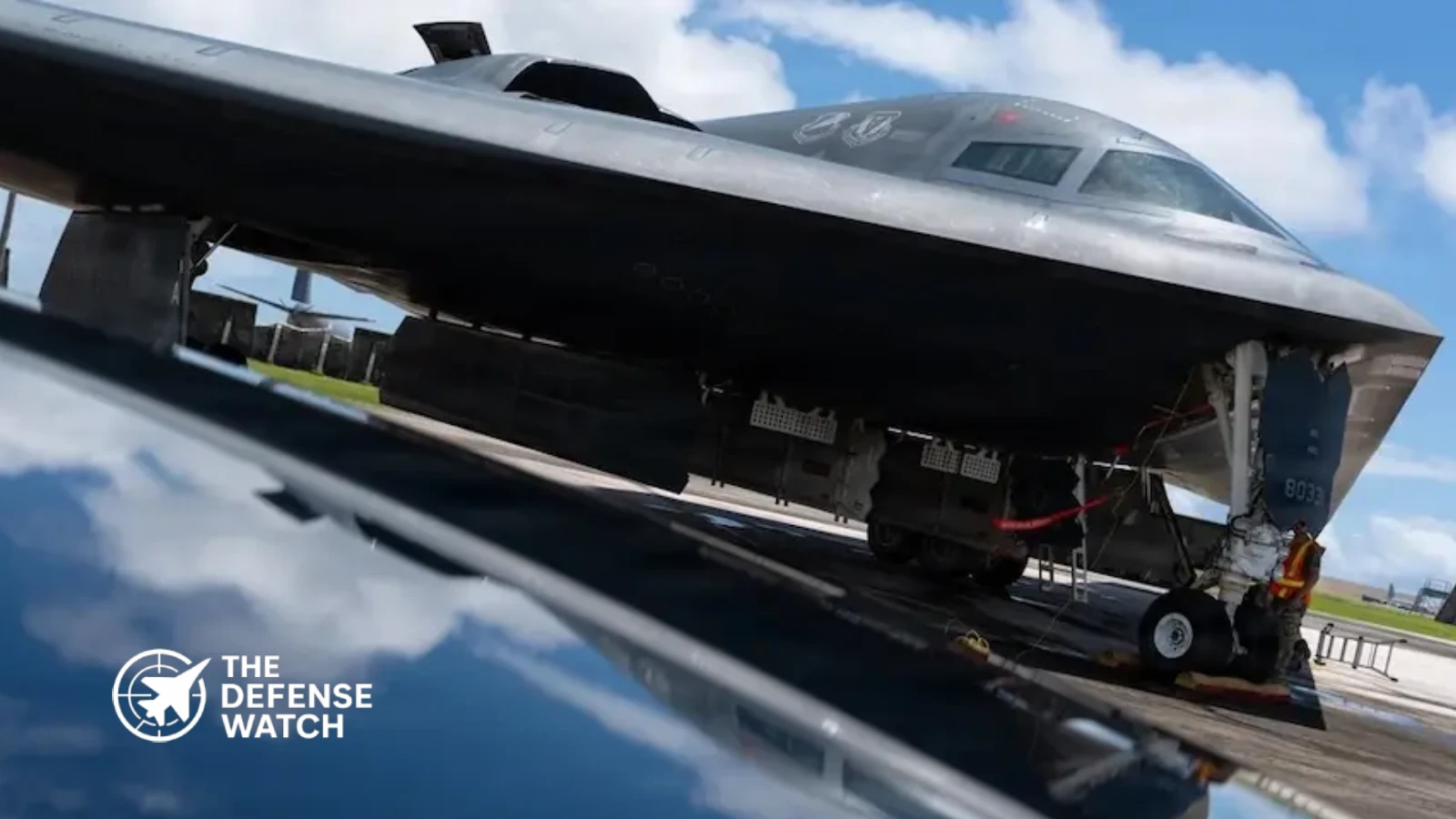
The Air Force describes the B-21 as a dual-capable penetrating strike bomber designed to deliver both conventional and nuclear weapons. It is intended to become a central element of the future bomber force alongside the B-52.
Why The B-21 Could Become Larger Than 100 Aircraft
The B-21’s planned fleet size is directly connected to the Air Force’s broader bomber modernization effort.
The service currently operates the B-1B, B-2 and B-52 fleets, but the B-21 is intended to replace the B-1 and B-2 while becoming the backbone of the future bomber force. The Air Force’s official B-21 fact sheet identifies a minimum inventory of 100 aircraft.
A larger B-21 fleet would therefore not simply represent additional aircraft. It would increase the number of penetrating aircraft available for global strike missions while reducing dependence on the relatively small B-2 fleet.
The Air Force currently lists 20 active B-2 aircraft, including one test aircraft, as of May 2026. The B-2 remains a nuclear-capable and conventional bomber, but its age and specialized maintenance requirements make the transition toward the B-21 increasingly important.
A larger B-21 fleet could also give planners greater flexibility to distribute aircraft among operational units, training organizations, test requirements and maintenance cycles. That matters for a bomber force expected to conduct operations over long distances while maintaining aircraft availability for deterrence and combat missions.
Flying-Wing Technology Remains Central To The B-21
Northrop Grumman’s discussion of the B-21 also highlighted a much longer technological lineage.
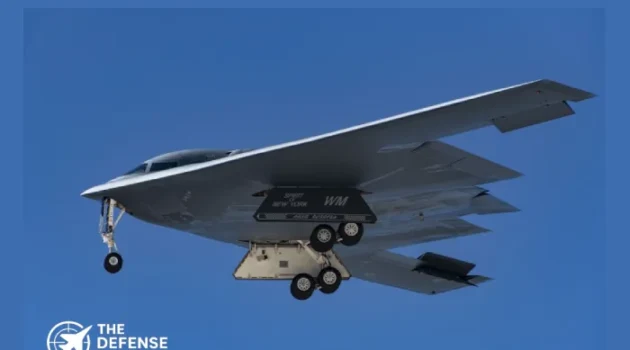
Warden specifically connected the B-21 with the company’s experience developing the B-2 and other flying-wing aircraft. The flying-wing configuration is not simply a visual characteristic. On the B-2, the configuration forms part of a broader low-observable design intended to reduce the aircraft’s radar signature while maintaining aerodynamic efficiency.
The Air Force says the B-2’s low observability results from a combination of reduced infrared, acoustic, electromagnetic, visual and radar signatures. Its composite materials, coatings and flying-wing configuration all contribute to that design.
Northrop Grumman describes the B-21 as the continuation of its stealth development, with company experience extending from earlier flying-wing work through the B-2 and into the new bomber.
The B-21, however, is not simply a redesigned B-2. The Air Force has emphasized that the Raider was developed around a digital architecture and an open systems approach intended to support technology upgrades as threats change.
That distinction is significant because the future value of the aircraft depends not only on its initial stealth characteristics but also on how effectively its systems can be upgraded during decades of service.
Production Capacity Is Becoming A Strategic Issue
The most important development may be the industrial side of the program.
Northrop Grumman reported that its Aeronautics Systems sales increased 13 percent in the second quarter of 2026, with higher B-21 volumes contributing to the increase. The company also raised its 2026 Aeronautics Systems sales outlook to approximately $14 billion.
The company expects capital expenditures to remain around 4.5 percent of sales in 2027 and 2028 while it continues investing in infrastructure supporting the B-21 production ramp.
This illustrates a central challenge in any potential fleet expansion. Increasing the number of aircraft in the program requires more than additional funding for airframes.
It requires sustained production capacity across manufacturing facilities, specialized components, tooling, suppliers, skilled labor, testing and sustainment infrastructure. Expanding too quickly can create bottlenecks if the broader industrial base cannot grow at the same pace.
The Air Force’s February decision to increase annual production capacity by 25 percent indicates that industrial preparation is already being treated as a major part of B-21 modernization.
B-21 Testing And Operational Development Continue
The production discussion comes as the B-21 continues to progress through flight testing.
In April 2026, the Air Force reported that a B-21 had demonstrated aerial refueling with a KC-135 Stratotanker. The service described the testing as an important step in maturing the systems required for survivable, long-range penetrating strike.
Northrop Grumman separately highlighted the aerial refueling milestone as part of the aircraft’s expanding flight-test campaign.
The Air Force also announced in July 2026 that the B-21 will operate with a two-pilot crew. The service said its analysis determined that a two-pilot configuration best supports the aircraft’s mission profile, while a transition program will allow selected weapons system officers and combat systems officers to receive pilot training for future B-21 assignments.
These developments show that the program is advancing across several areas at the same time, including flight testing, crew structure, production and operational preparation.
What A Larger B-21 Fleet Would Mean For U.S. Strategy
A fleet larger than 100 aircraft would strengthen the Air Force’s ability to generate penetrating long-range strike capacity while transitioning away from aging bomber fleets.
The B-21 is intended to provide both nuclear and conventional capabilities. That dual role gives the aircraft relevance to both the U.S. nuclear triad and conventional long-range strike planning.
The strategic value also comes from survivability. The Air Force describes the Raider as a highly survivable penetrating bomber designed to operate in contested environments. Unlike non-stealth bombers that can rely heavily on stand-off weapons, penetrating aircraft are intended to operate closer to defended target areas when required.
That capability becomes increasingly important as potential operating environments include sophisticated integrated air defense networks, long-range sensors and increasingly distributed targeting systems.
However, fleet size alone does not determine combat effectiveness. Aircraft availability, weapons inventories, trained crews, tanker support, maintenance capacity, basing infrastructure and secure communications will all influence how many B-21s can actually be generated for operations.
For that reason, any decision to expand the fleet would need to be matched by investment across the wider bomber enterprise.
The B-2 Remains An Important Bridge
The B-2 continues to provide the operational capability that the B-21 is being developed to sustain and eventually replace.
In July 2026, a B-2 Spirit returned to operational service after programmed depot maintenance. The Air Force said the work was important for maintaining the aircraft’s low-observable characteristics, structural condition and operational readiness.
The Air Force’s current B-2 inventory is small, making every available aircraft strategically significant. The B-2 therefore remains an important bridge while the B-21 moves through testing, production and introduction into operational units.
The transition is expected to be gradual rather than immediate. The B-21 will enter a force that still depends on existing bombers, while the Air Force builds the infrastructure, personnel and sustainment system required for the new aircraft.
A Decision Expected By The End Of 2026
Northrop Grumman’s latest comments do not establish that the Air Force will buy more than 100 B-21s. They confirm that the service is evaluating the option and that the existing agreement permits consideration of faster production and a larger program of record.
The expected completion of the analysis by the end of 2026 should provide a clearer indication of whether the current 100-aircraft baseline remains sufficient or whether the Air Force intends to expand the fleet.
For Northrop Grumman, the decision could have significant implications for production planning and investment in the company’s Aeronautics Systems business.
For the Air Force, the issue is broader than industrial output. It is about determining the scale of a bomber force designed to provide long-range penetrating strike and nuclear deterrence well into the future.
The B-21’s progression from flight testing toward larger-scale production therefore represents one of the most consequential elements of U.S. bomber modernization. Whether the program ultimately stops at 100 aircraft or expands beyond that figure will depend on the Air Force’s assessment of future operational requirements, acquisition priorities and industrial capacity.