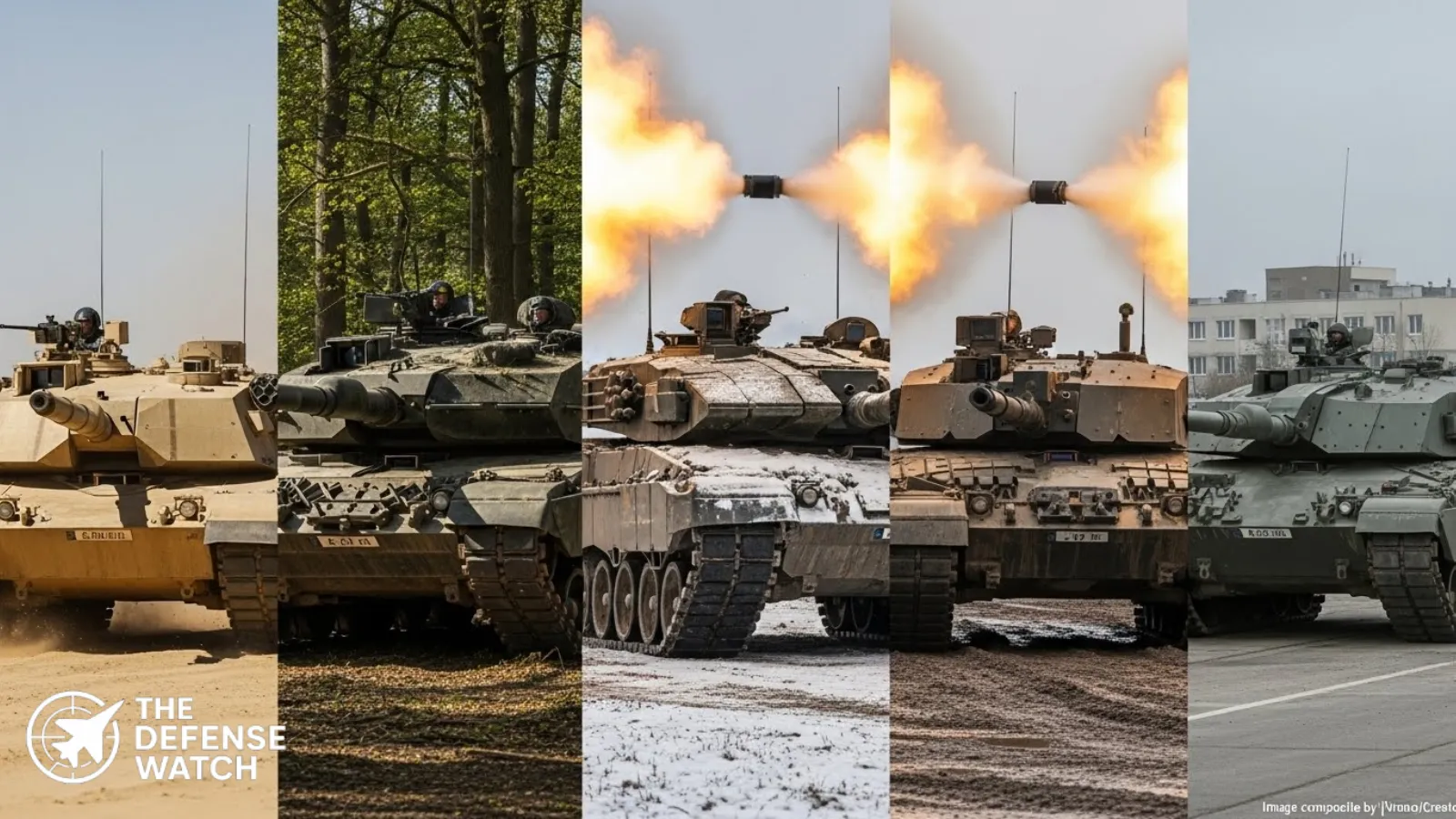
The Evolution of Armored Warfare in 2026
The best tanks in the world for 2026 represent the pinnacle of armored vehicle engineering, combining cutting-edge firepower, advanced protection systems, and network-centric warfare capabilities. As global tensions rise and battlefield dynamics shift toward multi-domain operations, main battle tanks (MBTs) remain critical assets for ground forces worldwide. Modern MBTs now integrate active protection systems (APS), artificial intelligence-assisted targeting, hybrid propulsion, and enhanced survivability features that redefine armored warfare.
- The Evolution of Armored Warfare in 2026
- 1. Leopard 2A8 (Germany) – The European Heavyweight Champion
- Unmatched Combat Pedigree and Modernization
- Key Technical Specifications
- Advanced Protection Systems
- Battlefield Performance and Export Success
- 2. M1A2 SEPv4 Abrams (United States) – American Armor Supremacy
- The World’s Most Combat-Tested Tank Evolves
- Revolutionary Upgrades in the SEPv4 Configuration
- Network-Centric Warfare Capabilities
- Trophy APS and Enhanced Survivability
- 3. T-14 Armata (Russia) – Revolutionary Design Philosophy
- Moscow’s Ambitious Next-Generation Platform
- Technical Innovation and Specifications
- Afghanit Active Protection System
- Production Challenges and Deployment Status
- 4. K2 Black Panther (South Korea) – Asian Innovation Leader
- High-Tech Engineering Excellence
- Advanced Technical Features
- In-Arm Suspension Revolution
- Export Success and International Recognition
- 5. Challenger 3 (United Kingdom) – British Armor Reinvented
- Complete Modernization of British Armor
- Revolutionary Firepower Upgrade
- Smoothbore Transition and NATO Standardization
- Digital Battlefield Integration
- Limited Production and Future Prospects
- Analysis: What Makes a Tank “The Best” in 2026?
- Conclusion: The Future of Armored Warfare
- FAQs
This comprehensive analysis examines the top 5 tanks in 2026, evaluating combat-proven platforms and next-generation systems that set new standards in ground combat. From Germany’s legendary Leopard 2A8 to the technologically ambitious Russian T-14 Armata, these armored behemoths showcase how traditional tank design has evolved to meet 21st-century threats, including anti-tank guided missiles, drone swarms, and urban warfare challenges.
1. Leopard 2A8 (Germany) – The European Heavyweight Champion
Unmatched Combat Pedigree and Modernization
The German Leopard 2A8 continues its dominance as one of the best tanks in the world for 2026, building on decades of combat excellence and continuous upgrades. Developed by Krauss-Maffei Wegmann (now part of KNDS), the latest A8 variant integrates lessons learned from the Ukraine conflict, where earlier Leopard 2 models demonstrated exceptional survivability and lethality.
Key Technical Specifications
- Main Armament: 120mm L/55A1 smoothbore cannon with enhanced ammunition compatibility
- Armor Protection: Third-generation composite armor with Trophy APS integration
- Engine: MTU MB 873 Ka-501 diesel producing 1,500 hp
- Weight: Approximately 66 tons (combat-loaded)
- Crew: 4 (commander, gunner, loader, driver)
Advanced Protection Systems
The Leopard 2A8 features Rafael’s Trophy Active Protection System, successfully tested by the German military in 2024. This Israeli-developed APS can intercept incoming anti-tank missiles and rocket-propelled grenades before impact, significantly enhancing crew survivability. Additional upgrades include improved side armor packages, reactive armor tiles, and reinforced mine protection, addressing vulnerabilities identified in recent conflicts.
Battlefield Performance and Export Success
Over 18 nations operate Leopard 2 variants, demonstrating widespread confidence in the platform. The tank’s exceptional fire control system, powered by advanced thermal imaging and laser rangefinding, enables first-shot kills at ranges exceeding 3,000 meters. Germany’s commitment to continuous modernization ensures the Leopard 2A8 remains operationally relevant through 2040.
According to reports from Defense News, Germany approved €2.93 billion for Leopard 2A8 production in late 2024, with deliveries beginning in 2026.
2. M1A2 SEPv4 Abrams (United States) – American Armor Supremacy
The World’s Most Combat-Tested Tank Evolves
The M1A2 SEPv4 Abrams represents the latest iteration of America’s legendary main battle tank, incorporating technologies that maintain U.S. ground combat superiority. General Dynamics Land Systems has delivered over 10,000 Abrams tanks since 1980, with the SEPv4 variant introducing revolutionary upgrades that address modern battlefield threats.
Revolutionary Upgrades in the SEPv4 Configuration
- Main Gun: 120mm M256A1 smoothbore cannon (future 130mm upgrade planned)
- Armor: Depleted uranium composite with modular add-on protection
- Powerplant: Honeywell AGT1500C multi-fuel gas turbine (1,500 hp)
- Electronics: Third-generation Forward Looking Infrared (FLIR) system
- Weight: 73.6 tons (fully loaded)
Network-Centric Warfare Capabilities
The SEPv4 configuration prioritizes digital battlefield integration, featuring advanced command, control, communications, computers, and intelligence (C4I) systems. The Integrated Battle Command System (IBCS) enables real-time data sharing with infantry, artillery, and air assets, transforming the Abrams into a mobile battlefield hub. Enhanced cyber defense measures protect against electronic warfare threats increasingly prevalent in modern conflicts.
Trophy APS and Enhanced Survivability
Following successful Israeli combat experience, the U.S. Army rapidly fielded Trophy APS on Abrams tanks deployed to Europe and the Middle East. Combined with improved reactive armor packages and upgraded track systems, the M1A2 SEPv4 offers exceptional crew protection against tandem-charge warheads and top-attack missiles.
The U.S. Army’s modernization strategy, detailed by Breaking Defense, emphasizes extending Abrams service life through 2050 while developing next-generation platforms under the Optionally Manned Fighting Vehicle (OMFV) program.
3. T-14 Armata (Russia) – Revolutionary Design Philosophy
Moscow’s Ambitious Next-Generation Platform
The Russian T-14 Armata represents the most radical departure from conventional tank design among the top tanks of 2026. Unveiled in 2015, the Armata features an unmanned turret, fully automated loading system, and crew compartment isolated from ammunition storage—addressing catastrophic vulnerability issues that plagued earlier Russian designs.
Technical Innovation and Specifications
- Main Armament: 125mm 2A82-1M smoothbore cannon (152mm upgrade capability)
- Armor: Malachit dual-layer explosive reactive armor with Afghanit APS
- Engine: ChTZ 12N360 diesel producing 1,500 hp
- Crew: 3 (all positioned in armored capsule)
- Advanced Features: Unmanned turret, AI-assisted fire control
Afghanit Active Protection System
The T-14’s Afghanit APS represents one of the most comprehensive protection suites globally, combining millimeter-wave radar, optical sensors, and both hard-kill and soft-kill countermeasures. The system can reportedly defeat kinetic energy penetrators and tandem-charge warheads, though independent verification remains limited due to operational secrecy.
Production Challenges and Deployment Status
Despite its technological sophistication, the T-14 faces significant production obstacles. Russian defense industry sources indicate fewer than 100 units have entered service, with economic sanctions and manufacturing bottlenecks delaying mass production. Limited battlefield deployment in Ukraine suggests Russia prioritizes protecting this advanced technology while addressing reliability concerns.
Analysis from Janes Defence Weekly indicates Russia plans to accelerate T-14 production through 2027, though actual numbers remain uncertain.
4. K2 Black Panther (South Korea) – Asian Innovation Leader
High-Tech Engineering Excellence
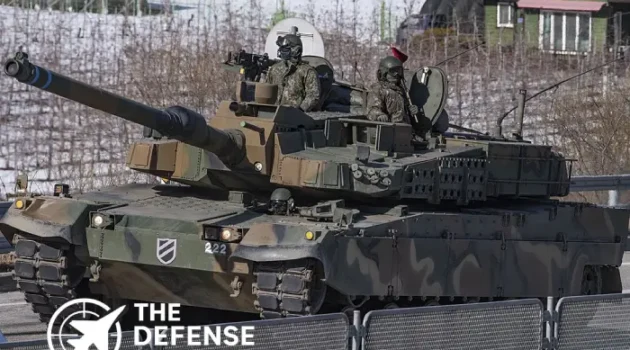
South Korea’s K2 Black Panther combines cutting-edge technology with indigenous defense industry capability, establishing itself among the best tanks in the world for 2026. Developed by Hyundai Rotem, the K2 addresses specific Korean Peninsula terrain challenges while offering exceptional export appeal to nations seeking alternatives to Western or Russian platforms.
Advanced Technical Features
- Main Gun: 120mm L/55 smoothbore with Korean-developed autoloader
- Armor: Composite armor with reactive armor tiles
- Propulsion: Doosan DV27K 1,500 hp diesel engine
- Suspension: Advanced hydropneumatic active suspension system
- Weight: 55 tons (combat-ready)
In-Arm Suspension Revolution
The K2’s hydropneumatic suspension system enables unprecedented mobility across challenging terrain. The tank can “kneel” to reduce its profile, raise specific corners to optimize gun angles, and adjust ground clearance for obstacle crossing. This system provides significant tactical advantages in mountainous Korean terrain while enabling rapid position changes during combat.
Export Success and International Recognition
Poland’s decision to acquire up to 820 K2 tanks represents the largest foreign military sale in South Korean history, validating the platform’s capabilities. The K2PL variant for Polish service includes NATO-standard communications, Trophy APS integration, and cold-weather modifications. Additional export negotiations with nations in the Middle East and Southeast Asia underscore growing international confidence in South Korean armor technology.
According to Defense News, South Korea delivered the first K2 tanks to Poland in 2024, with production continuing through 2030.
5. Challenger 3 (United Kingdom) – British Armor Reinvented
Complete Modernization of British Armor
The British Challenger 3 represents a comprehensive upgrade of the venerable Challenger 2 platform, transforming the United Kingdom’s main battle tank fleet for 21st-century warfare. Rather than developing an entirely new design, the British Army opted for deep modernization, replacing the turret, main gun, electronics, and protection systems while retaining the proven hull and automotive components.
Revolutionary Firepower Upgrade
- Main Armament: 120mm L/55A1 Rheinmetall smoothbore cannon
- Armor: Dorchester Level 2H composite with reactive armor
- Engine: MTU MT883 diesel (1,200 hp)
- Fire Control: Advanced digital fire control system with hunter-killer capability
- Crew: 4 members
Smoothbore Transition and NATO Standardization
The Challenger 3’s most significant change involves replacing the rifled 120mm gun with Rheinmetall’s L/55A1 smoothbore cannon, aligning British ammunition with NATO standards. This transition enables compatibility with advanced German-developed kinetic energy penetrators and programmable high-explosive rounds, dramatically enhancing lethality against modern armor and soft targets.
Digital Battlefield Integration
The Challenger 3 features comprehensive digital systems connecting tank crews with dismounted infantry, artillery, and aerial assets through secure networks. Enhanced situational awareness displays, powered by AI-assisted threat identification, reduce crew workload while improving target engagement speeds. The platform’s modular open architecture allows rapid technology insertion as capabilities mature.
Limited Production and Future Prospects
The British Army plans to field 148 Challenger 3 tanks by 2030, focusing on quality over quantity. While some defense analysts question this relatively small fleet size, proponents argue that advanced networking, superior training, and integration with broader military systems maximize combat effectiveness. The Challenger 3’s upgrade pathway ensures United Kingdom ground forces maintain credible armored capability through mid-century.
Reports from Breaking Defense indicate the first Challenger 3 prototypes completed testing in 2024, with initial operational capability expected in 2027.
Analysis: What Makes a Tank “The Best” in 2026?
Beyond Raw Specifications
Evaluating the best tanks in the world for 2026 requires examining factors beyond armor thickness and gun caliber. Modern tank effectiveness depends on:
Protection Integration: Active protection systems, reactive armor, and crew survivability features now matter as much as traditional armor thickness. The proliferation of advanced anti-tank guided missiles makes layered defense essential.
Network Connectivity: Tanks operating as isolated platforms face significant disadvantages. Integration with combined arms formations through secure data links multiplies combat effectiveness.
Logistical Sustainability: Fuel consumption, maintenance requirements, and supply chain resilience determine operational availability. Gas turbine-powered tanks like the Abrams offer exceptional power but consume significantly more fuel than diesel equivalents.
Crew Training and Doctrine: Even the most advanced tank proves ineffective without properly trained crews and sound tactical employment. Nations with superior training programs often achieve disproportionate combat success.
The Urban Warfare Challenge
Recent conflicts, particularly in Ukraine and Middle Eastern theaters, demonstrate that tanks face unprecedented challenges in dense urban environments. Overhead attacks from loitering munitions, close-range anti-armor teams, and restricted maneuverability demand new defensive measures. Future tank development increasingly emphasizes:
- Top-attack protection systems
- 360-degree situational awareness cameras
- Improved reactive armor coverage
- Enhanced infantry-tank cooperation protocols
Emerging Technologies Reshaping Armor Warfare
Several technological trends will reshape tank design beyond 2026:
Artificial Intelligence: AI-assisted target identification, automated threat prioritization, and predictive maintenance will reduce crew workload while improving combat effectiveness.
Directed Energy Weapons: High-energy laser systems may supplement or replace traditional active protection systems, offering unlimited “ammunition” against drones and missiles.
Hybrid Electric Propulsion: Next-generation tanks will likely incorporate hybrid powertrains, reducing fuel consumption, lowering thermal signatures, and enabling silent watch operations.
Unmanned Variants: Several nations explore optionally-manned or fully autonomous tank variants, potentially reducing crew risk while maintaining armored firepower.
Conclusion: The Future of Armored Warfare
The 5 best tanks in the world for 2026—the Leopard 2A8, M1A2 SEPv4 Abrams, T-14 Armata, K2 Black Panther, and Challenger 3—demonstrate that main battle tanks remain indispensable despite predictions of their obsolescence. These platforms combine traditional armored warfare principles with revolutionary technologies addressing modern battlefield threats.
Each tank offers unique advantages reflecting national defense priorities, industrial capabilities, and strategic requirements. Germany’s Leopard 2A8 provides proven reliability and continuous modernization. America’s Abrams leverages unmatched combat experience and industrial depth. Russia’s T-14 Armata showcases radical innovation despite production challenges. South Korea’s K2 Black Panther demonstrates emerging defense industry sophistication. Britain’s Challenger 3 proves smart modernization can extend platform relevance decades.
As military forces worldwide navigate complex geopolitical landscapes, these advanced armored vehicles will continue shaping ground combat outcomes through the 2030s and beyond. The integration of artificial intelligence, active protection systems, and network-centric warfare capabilities ensures that tanks evolve alongside emerging threats, maintaining their position as decisive instruments of military power.
FAQs
What is the most powerful tank in the world in 2026?The M1A2 SEPv4 Abrams and Leopard 2A8 are widely considered the most powerful operational tanks in 2026, combining proven combat effectiveness, advanced protection systems, and continuous modernization. The T-14 Armata offers revolutionary features but limited combat verification.
Which tank has the best armor protection?The M1A2 SEPv4 Abrams features depleted uranium composite armor offering exceptional protection, while the Leopard 2A8 and Challenger 3 utilize advanced composite arrays. All top tanks now integrate active protection systems like Trophy APS for comprehensive defense.
How much does a modern main battle tank cost?Modern main battle tanks cost between $8-15 million per unit depending on configuration. The K2 Black Panther costs approximately $8.5 million, while the M1A2 SEPv4 Abrams exceeds $10 million with full systems integration.
Can modern tanks be destroyed by drones?First-person-view (FPV) drones and loitering munitions pose significant threats to tanks lacking active protection systems. However, tanks equipped with Trophy APS, Afghanit, or similar systems can intercept many drone attacks. Top-attack remains a vulnerability for most platforms.
What is the future of tank warfare?Future tank development emphasizes artificial intelligence integration, hybrid-electric propulsion, enhanced network connectivity, and optionally-manned configurations. Directed energy weapons and advanced active protection systems will provide layered defense against evolving threats through 2040 and beyond.