

Table of Contents
Russia’s Su-30SM Fighter: A Symbol of Aerial Supremacy
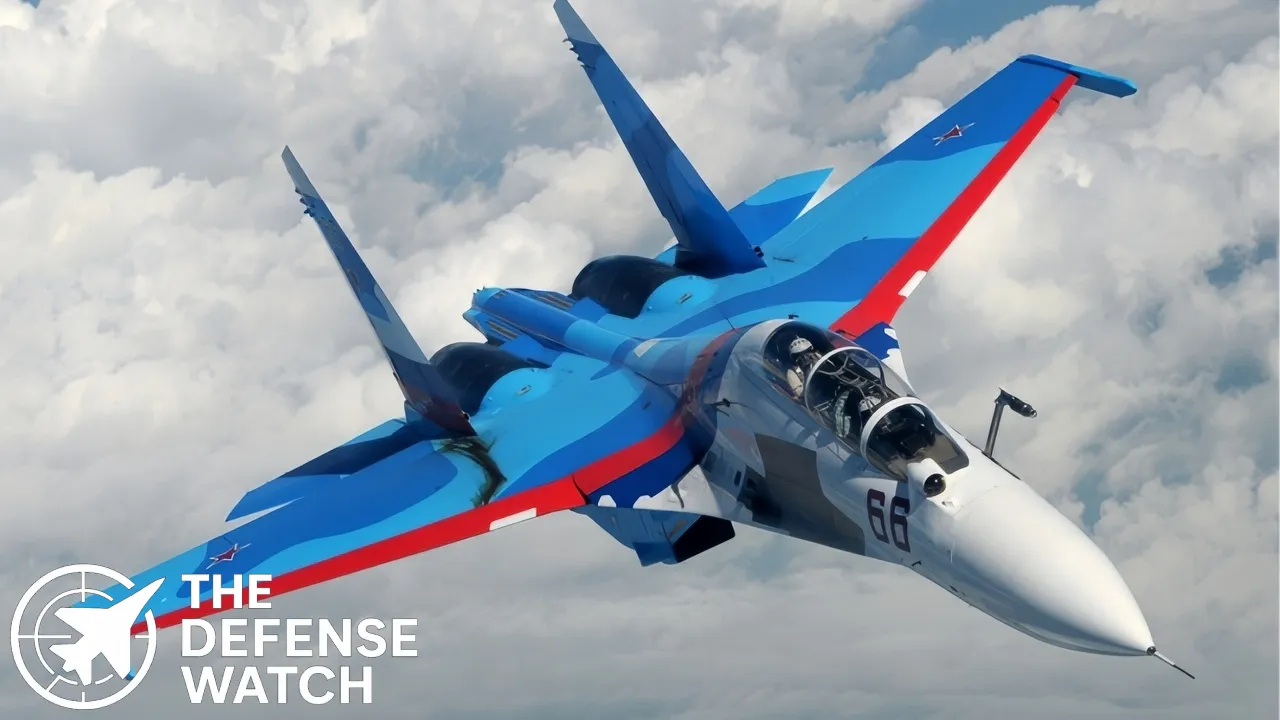
In an era of rapid advancements in aerial warfare, Russia’s Su-30SM fighter stands as a formidable testament to Moscow’s commitment to air superiority. Capable of reaching Mach 2 speeds, this twin-engine multirole platform combines supermaneuverability with a heavy weapons load, posing a direct challenge to any adversary’s air defenses. As geopolitical frictions intensify across Eastern Europe and beyond, the Su-30SM’s evolving role underscores Russia’s strategy to maintain parity—or even superiority—in contested skies.
Developed by the Sukhoi Design Bureau, the Su-30SM entered service with the Russian Aerospace Forces in 2012, building on the storied Su-27 Flanker lineage. Its design emphasizes versatility, enabling seamless transitions between air-to-air intercepts and precision ground strikes. Recent deliveries and upgrades, including those to allies like Belarus in August 2025, highlight its ongoing relevance. For defense analysts, the Su-30SM fighter represents not just a machine, but a calculated message: Russia’s air power remains agile, lethal, and export-ready for nations seeking to counterbalance Western dominance.
The Engineering Marvel Behind Mach 2 Performance
At the heart of the Su-30SM’s prowess are its two Saturn AL-31F turbofan engines, each delivering over 27,000 pounds of thrust in afterburner mode. This propulsion duo propels the aircraft to a top speed of approximately 1,500 miles per hour at altitude, earning its Mach 2 moniker and allowing it to outpace many contemporaries in high-threat environments. Low-level dashes reach around 840 miles per hour, ideal for evading surface-to-air threats during penetration missions.
What sets the Su-30SM fighter apart is its thrust-vectoring nozzles, which enable post-stall maneuvers like the Pugachev’s Cobra—a dramatic pitch-up that can reverse direction mid-dogfight. Coupled with a combat radius exceeding 900 miles without refueling, and compatibility with in-flight probes for extended loiter times up to 3.5 hours, the platform excels in prolonged operations. These attributes make it a nightmare for enemy pilots, as its agility disrupts predictable engagement patterns.
Armament Arsenal: Versatility in Every Hardpoint
The Su-30SM’s 12 external pylons can shoulder up to 17,600 pounds of ordnance, transforming it into a flying arsenal for diverse threats. Its fixed 30mm GSh-30-1 cannon, with a blistering rate of fire up to 1,800 rounds per minute, serves as a close-in equalizer, effective against both aerial and ground targets out to 1,200 meters.
For beyond-visual-range engagements, the aircraft integrates advanced missiles like the R-77-1 active radar-guided variant, boasting a 110-kilometer reach, and the longer-legged R-37M, which stretches to 350 kilometers on upgraded SM2 models. Anti-ship duties fall to the Kh-31A, a supersonic missile skimming just meters above waves to strike destroyer-class vessels at 38 nautical miles. Ground-attack options include laser-guided Kh-29s and glide bombs, ensuring the Su-30SM can dismantle armored columns or fortified positions with pinpoint accuracy.
This payload flexibility extends to electronic warfare suites, with integrated jammers to spoof enemy radars. In essence, the Su-30SM fighter’s armament philosophy prioritizes adaptability, allowing crews to tailor loads for theater-specific demands—from Baltic patrols to Pacific island chains.
Recent Upgrades: Elevating the Su-30SM
Modernization efforts have breathed new life into the Su-30SM fleet. The SM2 variant, spotlighted in 2025 deliveries to Belarus, incorporates enhanced avionics and a Bars-R radar with nearly triple the detection range of predecessors—scanning out to 400 kilometers for stealthy intruders. Navigation upgrades, including GPS/INS hybrids resistant to jamming, bolster all-weather operations.
Closer to home, Russia’s Aerospace Forces are transitioning select units to the Su-30SM1 standard, featuring improved stores management for precision-guided munitions like the KAB-250 smart bombs. Internationally, Kazakhstan turned to Indian expertise in August 2025 for AESA radar retrofits on its Su-30SMs, integrating Virupaksha systems to rival fifth-generation stealth fighters. These enhancements, detailed in recent analyses, ensure the platform’s viability against evolving threats like drone swarms and hypersonic interceptors.
Such upgrades aren’t mere tweaks; they reflect Russia’s industrial resilience amid sanctions, with serial production humming at the Irkutsk Aviation Plant. By late 2025, over 130 Su-30SMs operate with the VKS, supplemented by exports totaling hundreds worldwide.
Global Deployments: From Crimea to Caracas
The Su-30SM’s footprint spans continents, underscoring its appeal as a cost-effective powerhouse. India’s fleet of over 270 Su-30MKIs— a close cousin—patrols the Indo-Pacific, while Vietnam’s squadrons deter maritime incursions in the South China Sea. In Africa, Algeria and Uganda leverage the type for border security, and Venezuela’s aircraft have staged provocative flyovers near U.S. assets in the Caribbean.
Operationally, the fighter has seen combat in Syria, where it coordinated strikes against ISIS holdouts, and more recently in Ukraine-related theaters. A notable incident in October 2024 saw a Su-30SM downed by friendly fire over Crimea during a drone intercept, with pilots ejecting safely—a reminder of the risks in dense electronic battlespaces. Yet, these deployments affirm the aircraft’s robustness, with high sortie rates and low maintenance demands.
Exports continue apace: Belarus’s full receipt of 12 SM/SM2 jets in August 2025 bolsters NATO’s eastern flank concerns, while Indonesia eyes additional units for archipelago defense. This proliferation sends a clear signal—nations from Astana to Hanoi can acquire Mach 2 capabilities without breaking the bank.
Geopolitical Ramifications: A Message in the Skies
Beyond technical specs, the Su-30SM fighter embodies Russia’s bid to reshape airpower dynamics. In a multipolar world, its export success erodes Western monopolies on advanced fighters, empowering non-aligned states to challenge U.S.-led coalitions. For instance, Venezuela’s integration of Kh-31A missiles with Su-30SMs serves as a deterrent against hemispheric interventions, mirroring Iran’s use of similar platforms in the Gulf.
Analysis: As tensions simmer in 2025—from Taiwan Strait flare-ups to Arctic resource scrambles—the Su-30SM’s upgrades position Russia as a swing supplier in arms races. Allies like Belarus gain not just aircraft, but interoperability with Moscow’s command networks, potentially complicating NATO exercises. However, vulnerabilities persist: reliance on imported components and pilot training gaps could blunt its edge against F-35 swarms. Ultimately, the Su-30SM warns that affordable, high-performance fighters democratize aerial threats, forcing global air forces to rethink deterrence strategies.
Contextual Insight: With U.S. F-15EX rollouts and China’s J-20 expansions, the Su-30SM’s role evolves from frontline workhorse to networked enabler. Integrated with S-400 systems, it forms denial bubbles over key theaters, compelling adversaries to invest in standoff weapons. This layered approach amplifies Russia’s asymmetric advantages, ensuring the Su-30SM remains a pivotal asset through the decade.
In summary, Russia’s Mach 2 Su-30SM fighter isn’t just an evolution—it’s a strategic imperative, reminding every air force that speed, versatility, and reach define survival in modern skies.
FAQs
The Su-30SM achieves Mach 2 (about 1,500 mph) at high altitude, powered by twin AL-31F engines for rapid intercepts.
While the F-15 edges in radar stealth, the Su-30SM excels in maneuverability and payload, offering cost-effective multirole flexibility for export markets.
Key 2025 enhancements include tripled radar detection ranges in the SM2 variant and AESA integrations for allies like Kazakhstan, boosting anti-stealth capabilities.
Operators include Russia, India, Vietnam, Algeria, Belarus, and Venezuela, with over 400 units in global service.
It supports air patrols and strikes in regions like Ukraine and Syria, demonstrating resilience in high-intensity electronic warfare environments.

9 comments
[…] Used by Russian Navy and Aerospace Forces […]
[…] the PL‑15E to external customers (e.g., Pakistan) underscores China’s growing confidence in its aerospace export […]
[…] lowered its interception rate around Kyiv from approximately 37% in August to just 6% in September. Russian forces have employed complex maneuvers, including abrupt pull-downs and lateral jinks, often embedded in […]
[…] the war has evolved, so too have tactics. According to Pivnenko, Russian forces increasingly move in small, dispersed groups and rely on drones for cover and target acquisition […]
[…] precision fires at ranges of up to 80 km with GMLRS rockets. Its mobility has made it difficult for Russian forces to […]
[…] Powered by an MTU 8V199 TE20 turbo-diesel engine delivering 720 hp; hydropneumatic suspension; maximum road speed of 65 km/h; fully amphibious with swimming […]
[…] to officials familiar with the matter, Tehran delivered messages to governments hosting US forces, including states in the Gulf, cautioning them against allowing their territory to be used for any […]
[…] component of FMS programs, ensuring interoperability, airworthiness, and long-term readiness of aircraft delivered to partner […]
[…] marking the air force’s 90th anniversary. The appearance represents the first publicly verified export of Russia’s medium altitude long endurance unmanned aerial […]