Executive Summary:
The Federal Aviation Administration is investigating a safety incident involving Marine One and a regional passenger aircraft operating near Ronald Reagan Washington National Airport. The review will determine whether established airspace separation procedures for presidential helicopter operations were correctly followed, even though both aircraft landed safely without coming into dangerous proximity.
FAA Investigates Marine One Safety Incident Near Reagan National
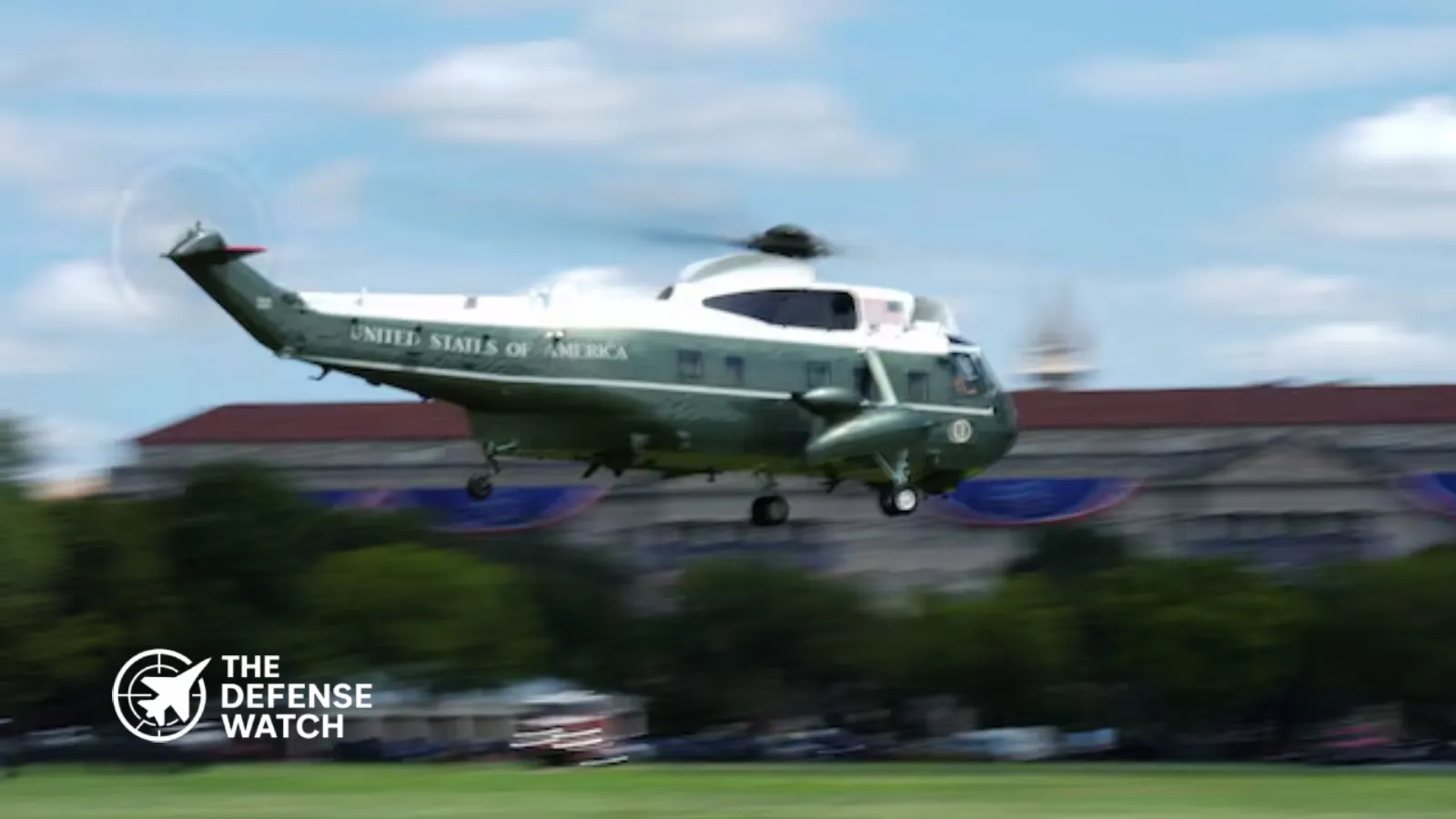
The FAA Marine One safety incident is under federal investigation after presidential helicopter operations near Washington, D.C., coincided with commercial airline departures from Ronald Reagan Washington National Airport.
According to the Federal Aviation Administration, the incident occurred Tuesday afternoon when Marine One, carrying President Donald Trump, departed from the White House while an Envoy Air regional flight departed Reagan National shortly afterward. Although both aircraft maintained safe flight paths and landed without incident, investigators are examining whether mandatory airspace separation requirements were properly observed.
The review comes as aviation authorities continue implementing stricter procedures around one of the nation’s busiest and most complex airspaces following the fatal January 2025 collision involving an Army helicopter and a regional passenger aircraft.
What Happened?
FAA officials said Marine One lifted off from the White House at approximately 2:33 p.m. local time. About one minute later, Envoy Air Flight 3742 departed Ronald Reagan Washington National Airport.
Federal regulations generally require aircraft to maintain at least 1.5 miles of horizontal separation and 500 feet of vertical separation. While preliminary information indicates the two aircraft were not converging and never reached a point considered a near midair collision, investigators believe the required minimum separation may not have been maintained throughout the operation.
A second regional aircraft was reportedly delayed as a precaution while controllers managed traffic in the area.
Why Marine One Flights Require Special Airspace Procedures
Marine One flights involve some of the most tightly controlled airspace management procedures in the United States.
Whenever the President travels by helicopter between the White House and Joint Base Andrews or other destinations, the FAA coordinates with the U.S. Secret Service, military flight crews, and air traffic controllers to temporarily restrict nearby civilian operations.
These procedures are designed to accomplish two objectives:
- Maintain safe aircraft separation.
- Protect presidential security through controlled airspace.
Following the January 2025 midair collision near Reagan National that killed 67 people, the FAA introduced additional restrictions that significantly reduced simultaneous helicopter and commercial jet operations around the airport. Those reforms were intended to minimize the risk of conflicting traffic in Washington’s highly congested airspace.
FAA Review Will Focus on Air Traffic Procedures
The FAA has confirmed that its Safety Review Team will evaluate the circumstances surrounding the event.
Investigators are expected to review:
- Air traffic control communications.
- Flight tracking and radar data.
- Timing of aircraft departures.
- Compliance with established presidential movement procedures.
FAA officials emphasized that the event does not currently appear to qualify as a near miss because the aircraft were never on converging flight paths. Nevertheless, any deviation from required separation standards triggers a formal safety review under federal procedures.
The White House had not publicly commented on the investigation at the time of reporting.
Defense and Aviation Perspective
While the incident does not indicate an operational failure aboard Marine One itself, it underscores the growing complexity of managing military, VIP, and civilian aviation in the Washington metropolitan area.
Marine One missions require seamless coordination among multiple federal agencies, including the U.S. Marine Corps, FAA air traffic controllers, the Secret Service, and airport operators. As commercial traffic continues to increase, maintaining procedural discipline becomes even more important around sensitive government flight operations.
The investigation also highlights the broader shift toward proactive aviation safety oversight following the extensive reforms introduced after the 2025 Washington air collision. Rather than waiting for accidents, regulators are increasingly examining procedural deviations that could reveal systemic weaknesses before they lead to more serious events.
From a defense aviation perspective, the review demonstrates that presidential airlift missions remain subject to rigorous civilian aviation safety standards despite their military and national security role. Such investigations are a normal part of aviation safety management and help refine coordination between military and civilian airspace users.
What Happens Next?
The FAA’s Safety Review Team will determine whether established procedures were correctly followed and whether additional operational changes or recommendations are necessary.
At present:
- Both aircraft landed safely.
- No injuries were reported.
- Officials have stated the aircraft did not come dangerously close.
- The investigation remains ongoing.