Executive Summary:
The US Air Force has successfully demonstrated an artificial intelligence controlled airborne interception using its X-62 VISTA experimental aircraft, expanding autonomous flight testing beyond air combat maneuvering into real world interception scenarios. The milestone highlights the growing role of AI in future Collaborative Combat Aircraft and next generation air superiority programs.
US Air Force Demonstrates AI Led X-62 Airborne Intercept Capability
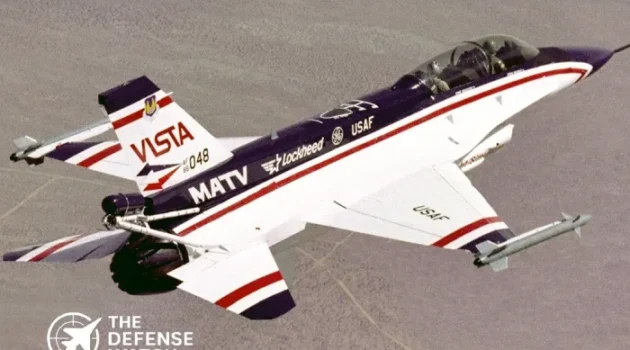
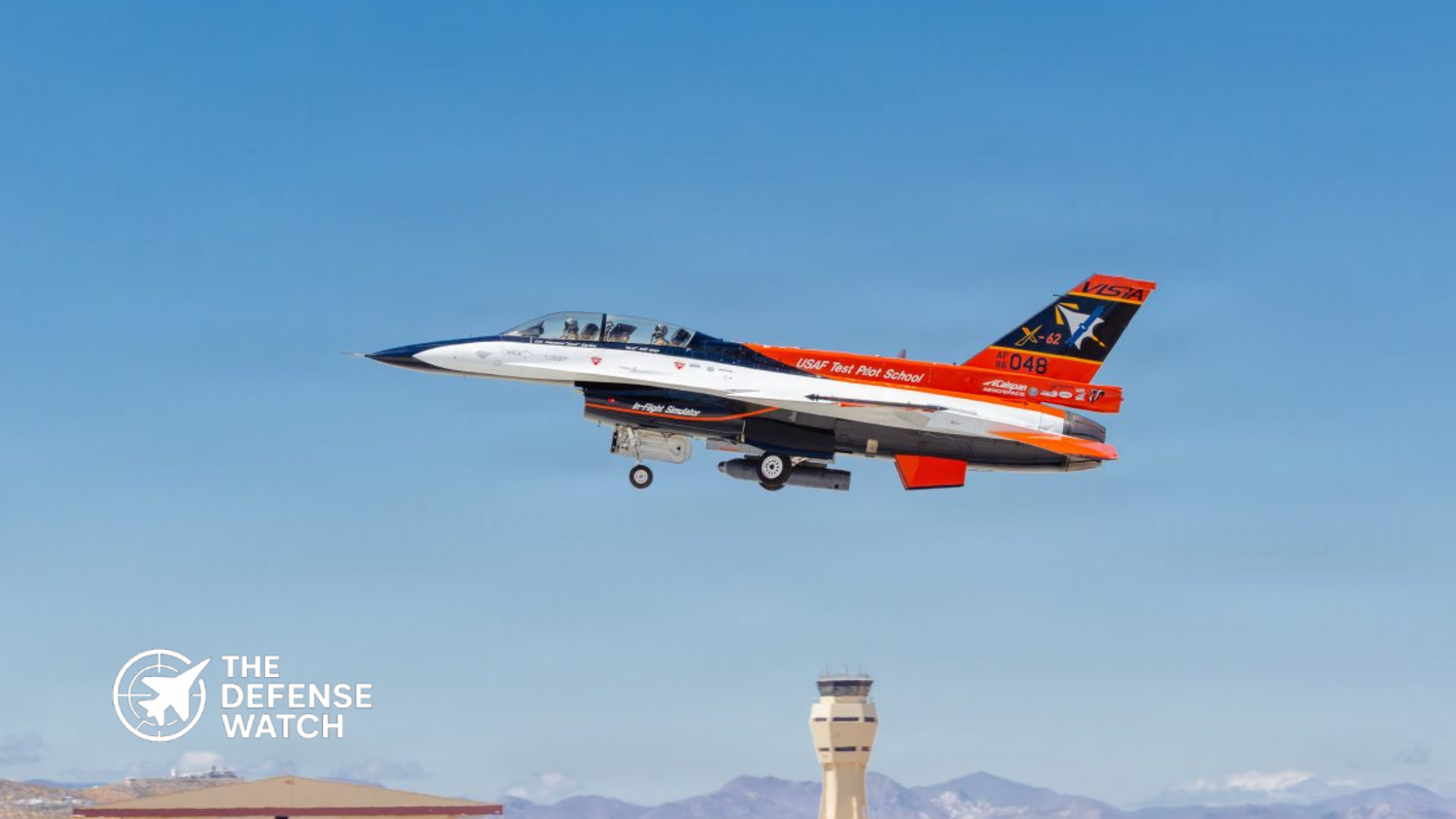
The US Air Force X-62 AI program has reached another milestone after successfully demonstrating an artificial intelligence controlled interception of airborne targets using the X-62A Variable Stability In-flight Simulator Test Aircraft (VISTA). The demonstration marks the first publicly reported instance of AI directing an intercept mission rather than solely executing defensive maneuvers or within-visual-range dogfights.
Conducted by the US Air Force Test Pilot School at Edwards Air Force Base, the test represents another step in integrating autonomous software into tactical aviation while retaining a qualified safety pilot onboard.
The demonstration builds upon several years of research under the Defense Advanced Research Projects Agency (DARPA) Air Combat Evolution initiative and ongoing Air Force autonomy programs.
How The X-62 VISTA Serves As An AI Flight Testbed
The X-62A VISTA is a heavily modified F-16D Block 30 equipped with advanced simulation software that allows engineers to rapidly install and evaluate different autonomous flight algorithms.
Unlike a conventional fighter, the aircraft can emulate multiple aircraft types and flight control characteristics through its Variable Stability In-flight Simulator architecture. Since receiving major autonomy upgrades, it has become the Air Force’s primary flying laboratory for evaluating machine learning in tactical aviation.
Previous milestones include:
- AI controlled supersonic flight
- Autonomous dogfight testing against human pilots
- AI controlled defensive missile evasion
- Evaluation of collaborative autonomous flight behaviors
The latest airborne interception demonstration expands these capabilities into another mission area that future autonomous combat aircraft are expected to perform.
What Makes Airborne Interception More Challenging
Intercepting another aircraft is significantly more complex than executing scripted maneuvers.
The autonomous system must continuously:
Mission Function AI Requirement Detect target Process sensor information rapidly Track aircraft Predict changing flight paths Maneuver safely Maintain aircraft performance limits Select intercept geometry Optimize closure rates and positioning Adapt in real time Respond to unexpected target maneuvers These functions require autonomous software to make rapid decisions while operating within strict flight safety constraints.
Unlike demonstrations focused solely on aggressive maneuvering, interception requires balancing tactical effectiveness with safe aircraft handling throughout the engagement.
Supporting Future Collaborative Combat Aircraft
The demonstration directly supports the Department of the Air Force’s broader effort to field autonomous Collaborative Combat Aircraft (CCA).
Future CCAs are expected to operate alongside crewed fighters including the F-35A and the forthcoming Next Generation Air Dominance (NGAD) platform.
Rather than replacing pilots, autonomous aircraft are envisioned to perform missions such as:
- Forward scouting
- Airborne interception
- Defensive counter air
- Electronic warfare
- Decoy operations
- Cooperative missile employment
Testing these capabilities aboard the X-62 allows engineers to validate software in realistic flight conditions before transitioning algorithms to operational uncrewed aircraft.
AI Development Continues To Expand
The X-62 continues to receive upgrades designed to support increasingly sophisticated autonomy testing.
The Air Force is enhancing the aircraft with advanced mission systems, including modern radar and sensor integration, enabling autonomous software to process more representative combat information during future experiments. Those improvements are intended to support testing involving multiple aircraft and more operationally realistic scenarios.
The aircraft also complements the VENOM (Viper Experimentation and Next-generation Operations Model) program, which is modifying additional F-16s to accelerate autonomy research across a larger test fleet.
Why This Matters
Although the latest demonstration remains an experimental flight test, its significance extends well beyond a single aircraft.
Modern air combat is increasingly defined by compressed decision timelines, large numbers of airborne sensors, electronic warfare, and cooperation between crewed and uncrewed platforms. Artificial intelligence offers the potential to process information and recommend or execute tactical actions at speeds beyond human capability while allowing pilots to focus on mission command.
The interception test also illustrates a gradual shift in Air Force AI development. Earlier efforts concentrated on proving that autonomous systems could safely fly an aircraft or compete in basic dogfights. Current testing is expanding into operational mission sets that reflect how autonomous aircraft may contribute during future combat operations.
Importantly, the Air Force continues to emphasize that these demonstrations occur with extensive human oversight, rigorous safety controls, and onboard safety pilots. The objective is not fully independent combat aircraft today, but developing trusted autonomous systems that can operate alongside human aircrews in increasingly complex environments.
As Collaborative Combat Aircraft move toward operational service later this decade, demonstrations aboard the X-62 provide valuable risk reduction by validating software in real flight conditions before integration into next generation autonomous combat platforms.