

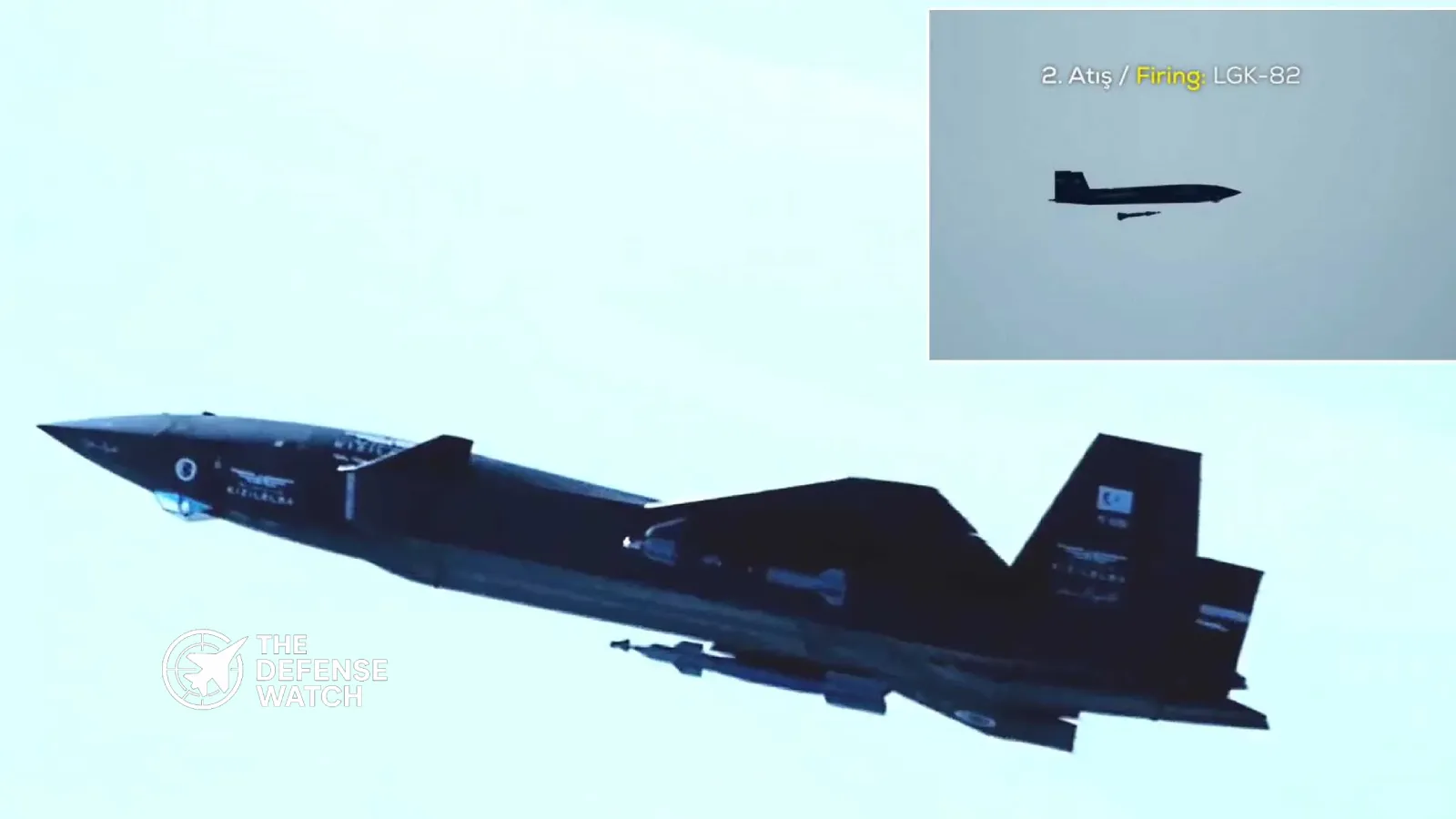
- Türkiye successfully tested the Bayraktar Kizilelma unmanned fighter jet with a precision guided bomb strike.
- The stealth oriented UCAV is designed for air to air and air to ground combat missions.
- Kizilelma forms part of Türkiye’s effort to build an independent next generation combat aviation ecosystem.
- The aircraft is expected to operate from short runway aircraft carriers such as the TCG Anadolu.
- The test highlights the rapid evolution of high performance unmanned combat aircraft globally.
Türkiye Advances Bayraktar Kizilelma Unmanned Fighter Jet Strike Capability
The Bayraktar Kizilelma unmanned fighter jet has completed a new test demonstrating precision guided bomb strike capability, marking a significant milestone in Türkiye’s effort to field a next generation unmanned combat aircraft. The test highlights the growing maturity of the Kizilelma program and signals Türkiye’s intent to integrate high performance combat drones into frontline operations.
Developed by Turkish defense company Baykar, the aircraft represents one of the most ambitious unmanned combat air vehicle (UCAV) programs currently under development. The latest flight test demonstrated the platform’s ability to conduct precision air to ground strikes, an essential step toward operational deployment.
The Big Picture
Unmanned combat aircraft are rapidly reshaping military aviation. Nations are increasingly investing in systems capable of performing missions traditionally handled by manned fighter jets, including precision strike, intelligence gathering, and even air to air combat.
Türkiye has become one of the most active developers in this sector. Over the past decade, Turkish industry has expanded its drone capabilities with systems such as the Bayraktar TB2 and the Akinci UCAV. These platforms have seen operational use in multiple conflict zones and have helped establish Türkiye as a major exporter of unmanned aerial systems.
The Bayraktar Kizilelma unmanned fighter jet represents the next stage of this evolution. Unlike earlier drones optimized primarily for surveillance and strike missions, Kizilelma is designed as a high performance combat aircraft capable of operating in contested airspace.
Its development also reflects Türkiye’s broader strategy to reduce dependence on foreign defense suppliers and build a domestically controlled aerospace ecosystem.
What Is Happening
The latest test flight involved the Bayraktar Kizilelma unmanned fighter jet conducting a precision guided bomb strike against a designated ground target. According to defense reporting, the aircraft successfully released and guided the munition during the flight test.
The demonstration verified the aircraft’s ability to perform precision strike missions using guided munitions, one of the key operational roles envisioned for the platform.
Kizilelma features several design characteristics intended to enhance survivability and combat performance. The aircraft incorporates a stealth influenced airframe with reduced radar signature, internal weapon carriage for certain configurations, and high subsonic or potentially supersonic flight performance depending on the engine configuration.
The aircraft is designed to carry a range of Turkish produced munitions, including precision guided bombs and air to air missiles.
A key design objective is compatibility with short runway and carrier operations. Turkish officials have previously indicated that the aircraft could operate from the amphibious assault ship TCG Anadolu, which Türkiye has positioned as a drone carrier after the removal of plans to operate the F 35B fighter aircraft.
Why It Matters
The successful precision strike test demonstrates that the Bayraktar Kizilelma unmanned fighter jet is moving beyond early flight testing and toward operational capability.
Strike capability is a core requirement for any UCAV intended to operate as a frontline combat aircraft. Precision guided bomb delivery confirms that the aircraft’s fire control, targeting systems, and weapons integration are progressing.
This capability is particularly important because unmanned systems can conduct high risk missions without exposing pilots to danger. They can also remain on station for longer periods than many manned aircraft.
For Türkiye, this test strengthens its position as a leading producer of combat drones and highlights the country’s ambition to compete in the emerging market for high performance UCAVs.
Suggested Internal Link
(Add link to related article on TheDefenseWatch)
Article about Turkish Bayraktar TB2 combat drone operationsStrategic Implications
The development of aircraft such as the Bayraktar Kizilelma unmanned fighter jet signals a broader shift in the future of air warfare.
Modern air forces increasingly view unmanned platforms as force multipliers capable of operating alongside manned aircraft. In some concepts of operation, unmanned aircraft can perform high risk strike missions, electronic warfare tasks, or reconnaissance roles while manned fighters focus on command and control.
The Kizilelma program may also help Türkiye fill capability gaps created by its removal from the F 35 Joint Strike Fighter program. By investing heavily in indigenous platforms, Türkiye aims to sustain advanced aerospace capabilities despite limitations on access to certain Western technologies.
Carrier capable drones represent another strategic dimension. Operating UCAVs from ships such as TCG Anadolu could provide Türkiye with flexible expeditionary air power without requiring a traditional aircraft carrier.
If successful, this model could influence how medium sized naval powers approach carrier aviation.
Competitor View
Regional and global competitors will closely monitor the progress of the Bayraktar Kizilelma unmanned fighter jet.
Russia and China are both investing heavily in advanced unmanned combat aircraft. China in particular has already demonstrated several stealth UAV designs, including systems intended to operate alongside manned fighters.
European nations and the United States are also pursuing collaborative combat aircraft concepts, often referred to as loyal wingman systems.
Türkiye’s program stands out because it combines relatively rapid development timelines with a focus on operational deployment rather than long term research programs.
The growing export success of Turkish drones could also raise concerns among regional rivals that such technologies may become widely available in global defense markets.
What To Watch Next
The next phase of development for the Bayraktar Kizilelma unmanned fighter jet will likely involve expanded weapons integration and operational testing.
Upcoming milestones could include:
Expanded flight envelope testing
Integration of additional air to air and air to ground weapons
Testing of autonomous mission capabilities
Carrier compatible launch and recovery trials
Potential operational evaluation with the Turkish Armed ForcesThese steps will determine how quickly the aircraft can transition from prototype testing to operational deployment.
Suggested Internal Link
(Add link to related article on TheDefenseWatch)
Article about Türkiye’s Akinci high altitude UCAV programCapability Gap
The Kizilelma program addresses a specific operational challenge faced by many air forces. Traditional manned fighters are expensive to operate and place pilots at risk during high threat missions.
Advanced unmanned combat aircraft can conduct dangerous operations such as deep strike or suppression of enemy air defenses with lower risk.
However, UCAVs still face limitations. Autonomous decision making, electronic warfare survivability, and integration with existing command networks remain complex technical challenges.
Operational doctrine for high performance combat drones is also still evolving in many militaries.
The Bottom Line
The Bayraktar Kizilelma unmanned fighter jet precision strike test marks a significant step toward operationalizing a new generation of high performance combat drones that could reshape future air warfare.


