
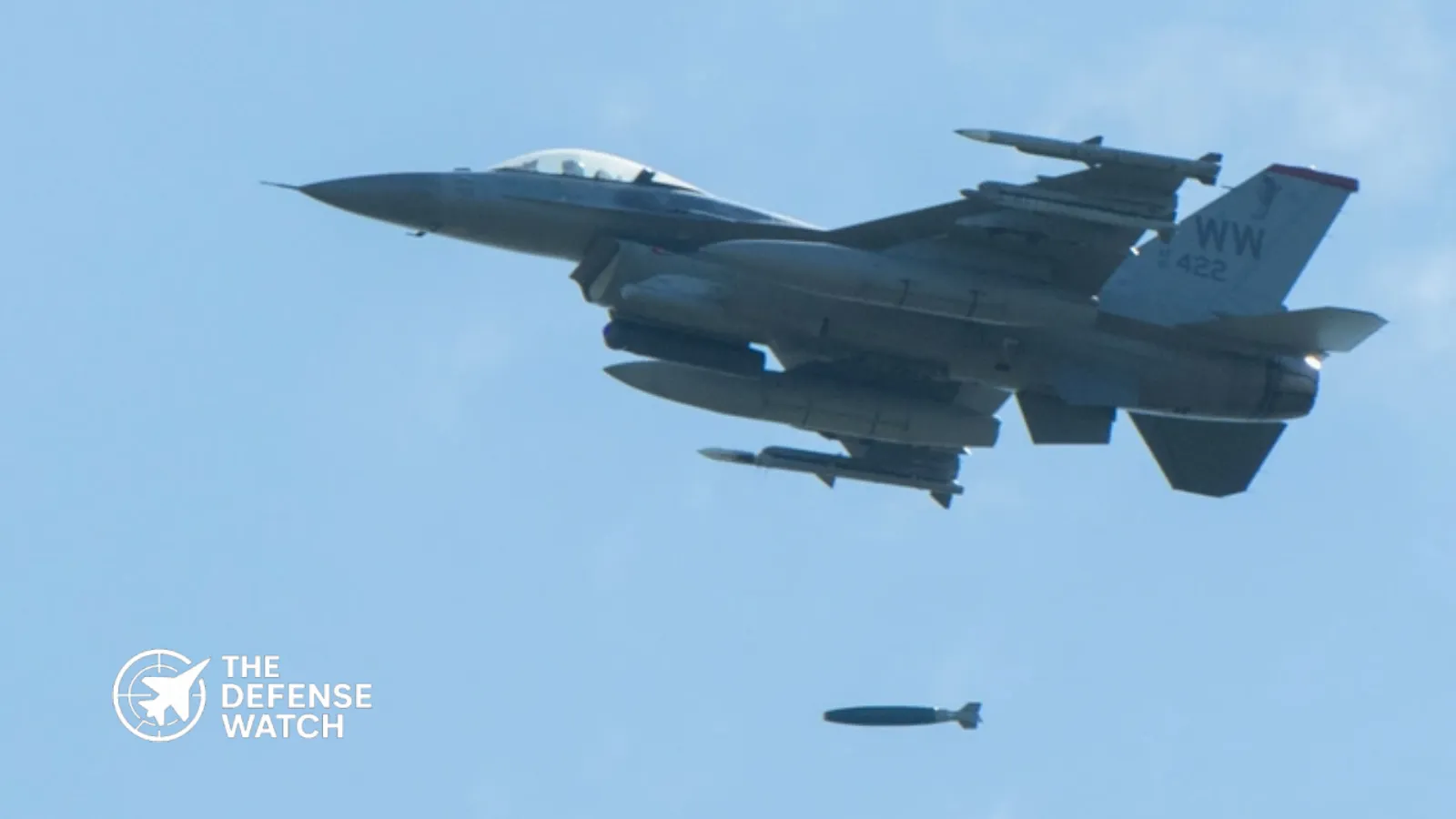
- Belgium is testing laser-guided rockets on F-16 fighter jets to intercept small drones.
- Trials involve precision-guided rocket systems designed to engage low-cost aerial threats.
- The effort reflects NATO’s growing focus on countering unmanned aerial systems.
- Testing supports operational evaluation of cost-effective air defense options.
- Results may influence future European counter-drone defense strategies.
Belgium Trials F-16 Laser-Guided Rockets For Counter-UAS Missions
Belgium F-16 laser-guided rockets are being tested as part of a counter-UAS capability effort aimed at addressing the growing threat posed by small unmanned aerial systems. The Belgian Air Force is evaluating the use of precision-guided rockets launched from its F-16 fighter aircraft to intercept hostile drones at a lower cost than traditional air-to-air missiles.
The initiative reflects a broader shift across NATO militaries toward scalable counter-drone solutions as unmanned systems proliferate on modern battlefields.
The Big Picture
Small drones have become a defining feature of modern warfare. Conflicts in Ukraine and the Middle East have demonstrated how low-cost unmanned systems can disrupt conventional military operations.
NATO air forces traditionally rely on advanced air-to-air missiles to engage aerial targets. These weapons are highly effective against aircraft but can prove inefficient against small drones due to cost and target size.
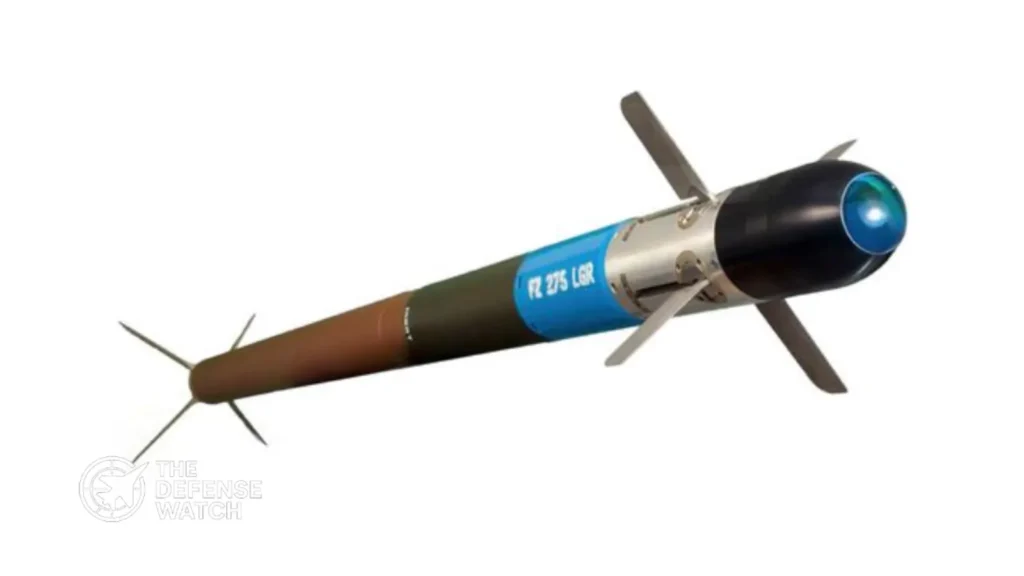
Belgium is trialling the use of the Forges de Zeebrugge (FZ)/Thales FZ275 70 mm laser-guided rocket (LGR) for the C-UAS role, evaluating the weapon aboard its F-16 combat aircraft. (Forges de Zeebrugge (FZ)/Thales)
A single missile can cost hundreds of thousands of dollars. Many small drones cost only a few thousand dollars or less.
This mismatch has driven NATO militaries to explore alternative interception methods, including laser-guided rockets, electronic warfare systems, and directed-energy weapons.
Belgium’s F-16 counter UAS capability trials fall directly within this broader effort to develop cost-effective drone defense tools.
What’s Happening
The Belgian Air Force recently conducted trials using laser-guided rockets mounted on F-16 fighter aircraft to engage unmanned aerial targets.
The testing evaluates whether these precision-guided rockets can reliably intercept small drones during flight operations.
The rocket systems are based on a concept that converts unguided 70 mm rockets into precision-guided weapons using laser guidance kits. Pilots can designate a target with a laser system, allowing the rocket to home in with improved accuracy.
According to defense reporting, the Belgian Air Force aims to determine whether this approach provides a viable counter-UAS capability for operational use.
Testing involves simulated engagements against aerial targets representing small unmanned systems.
The trials support ongoing NATO experimentation with layered counter-drone defenses.
Why It Matters
Laser-guided rockets offer a significantly cheaper interception method than traditional air-to-air missiles.
An air-to-air missile like the AIM-120 AMRAAM can cost more than one million dollars depending on the variant. In contrast, guided rocket systems are far less expensive.
This cost difference becomes critical when confronting large numbers of low-cost drones.
Military planners increasingly expect future conflicts to involve drone swarms, loitering munitions, and reconnaissance UAVs operating simultaneously.
Using fighter aircraft armed with laser-guided rockets could provide a flexible airborne defense layer capable of neutralizing these threats before they reach critical infrastructure or frontline forces.
For NATO air forces operating legacy fighter platforms such as the F-16, the approach also extends the utility of existing aircraft fleets.
Strategic Implications
Belgium’s experiment highlights an emerging trend in NATO airpower doctrine.
Air forces are adapting traditional fighter aircraft roles to address new threat environments dominated by unmanned systems.
Airborne counter-UAS missions could complement ground-based defenses such as short-range air defense systems and electronic warfare units.
Fighter aircraft equipped with laser-guided rockets could patrol high-risk areas and intercept drones before they approach sensitive locations such as military bases, ports, or critical infrastructure.
The concept also supports NATO’s layered air defense strategy, which integrates multiple sensors and interceptors across different ranges and altitudes.
If proven effective, the Belgium F-16 laser-guided rockets approach could influence similar programs across other NATO members that still operate F-16 fleets.
Competitor View
Russia and China have both invested heavily in unmanned systems and counter-drone technologies.
Military analysts note that adversaries are closely observing NATO efforts to address drone threats.
Russia’s extensive use of drones in Ukraine has highlighted both the tactical value of unmanned systems and the difficulty of defending against them.
China has also expanded production of small UAVs and loitering munitions while researching integrated air defense solutions against drone swarms.
NATO’s exploration of cost-efficient counter-UAS tools may therefore influence future competition in drone warfare technologies.
Affordable interception methods could become a critical factor in maintaining operational advantage against large-scale drone deployments.
What To Watch Next
The Belgian Air Force will likely continue operational evaluations to determine whether the rocket-based counter-UAS system meets reliability and accuracy requirements.
Future testing phases may focus on several factors:
• engagement success rates against different drone types
• integration with targeting sensors
• pilot workload and operational procedures
• compatibility with NATO air defense networksResults from these trials could inform procurement decisions or operational doctrine within NATO air forces.
Belgium is also transitioning its combat aviation fleet toward the F-35 fighter aircraft in the coming years, which may open additional options for integrating advanced counter-drone technologies.
Capability Gap
The Belgium F-16 laser-guided rockets initiative addresses a clear capability gap.
Traditional air defense systems are optimized for larger aircraft and cruise missiles. Small drones present a different challenge due to their size, maneuverability, and low radar signatures.
Using high-end missiles to intercept inexpensive drones is operationally unsustainable during prolonged conflicts.
Laser-guided rockets offer a potential solution by combining precision with lower cost.
However, limitations remain.
Rocket engagement ranges are shorter than those of air-to-air missiles. Weather conditions and laser designation requirements may also affect effectiveness in certain environments.
Operational testing will determine whether the system can reliably perform under realistic combat conditions.
The Bottom Line
Belgium’s F-16 laser-guided rocket trials highlight NATO’s growing focus on affordable, scalable counter-drone defenses as unmanned threats reshape modern air warfare.
Get real time update about this post category directly on your device, subscribe now.


