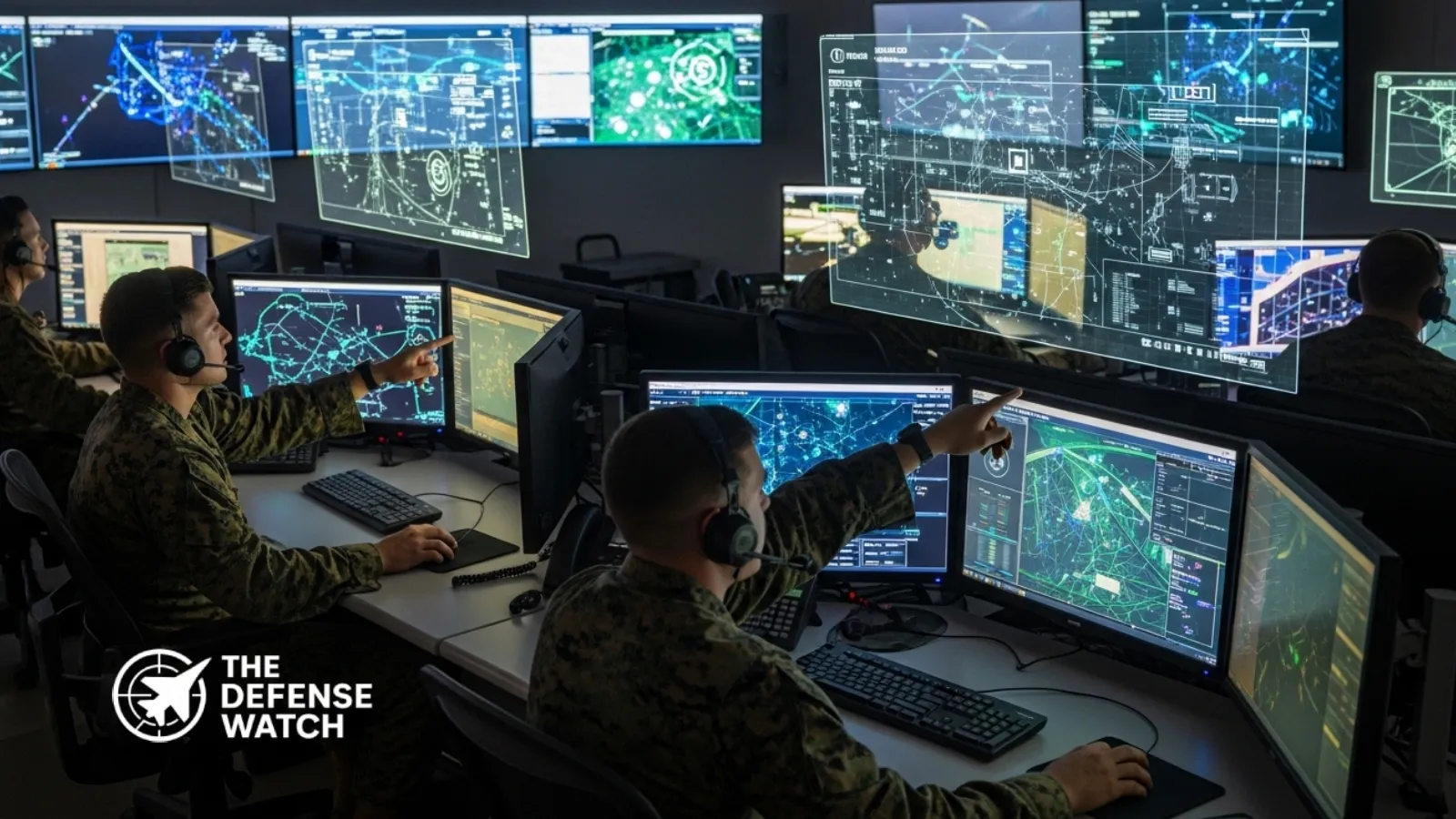
- The Pentagon is seeking a standardized system to test whether AI models perform as intended before operational use.
- The framework would simulate real battlefield conditions, including degraded networks and adversarial cyber attacks.
- The initiative reflects growing reliance on artificial intelligence for military planning, intelligence, and decision support.
- The Defense Innovation Unit and the Office of the Director of National Intelligence are seeking industry proposals.
- The effort aims to create a neutral evaluation architecture that works across AI vendors and defense contractors.
Pentagon AI Model Evaluation System Aims To Strengthen Military AI Reliability
The Pentagon AI model evaluation system initiative reflects the U.S. Department of Defense’s effort to ensure artificial intelligence systems perform reliably before they are deployed in military missions.
The Defense Innovation Unit (DIU), working alongside the Office of the Director of National Intelligence, is seeking proposals for a standardized testing framework capable of evaluating AI models against mission-specific benchmarks. The system would help determine whether AI tools operate as expected under operational conditions and alongside human operators.
Defense officials say the initiative is necessary as artificial intelligence becomes more deeply integrated into military operations ranging from intelligence analysis to logistics and battlefield decision support.
The Big Picture
The Pentagon has accelerated its adoption of artificial intelligence across multiple operational domains as part of broader U.S. military modernization efforts.
Programs such as Project Maven, which uses machine learning to analyze intelligence imagery and video data, demonstrate how AI can help process vast amounts of battlefield information and assist analysts.
More recently, the Defense Department has expanded access to commercial AI tools through platforms designed to support both classified and unclassified workflows. AI is increasingly used for data analysis, planning support, cyber defense, and operational logistics.
However, military leaders face a critical challenge: verifying that AI systems behave predictably under real-world conditions. Unlike traditional software, many AI models rely on probabilistic outputs and large training datasets, which can produce unexpected results if not rigorously tested.
A standardized evaluation system is intended to address that gap.
What’s Happening
The Pentagon’s Defense Innovation Unit has issued an “Area of Interest” announcement seeking technologies capable of evaluating AI systems before they are deployed to users.
Officials envision a testing “harness” with a modular architecture that can evaluate any AI model developed by government agencies or private contractors.
The system would perform several critical functions:
- Measure whether AI models meet mission requirements
- Test performance under operational stress conditions
- Evaluate human-AI collaboration in decision-making
- Conduct automated red teaming to identify vulnerabilities
Testing would also simulate degraded communications, incomplete data environments, and adversarial interference, conditions that frequently occur in real combat operations.
The framework must produce results that military decision-makers can easily interpret, including measurable benchmarks that define acceptable performance levels.
Importantly, the Pentagon emphasized that the evaluation system should remain vendor-neutral and avoid giving advantages to specific AI architectures or technology providers.
Why It Matters
Artificial intelligence is moving rapidly from experimental technology to operational capability across the U.S. military.
Commanders increasingly rely on automated systems for intelligence analysis, predictive logistics, mission planning, and cyber defense. These systems can process information at speeds far beyond human analysts, enabling faster operational decisions.
Yet reliability remains a central concern.
AI models can behave unpredictably when exposed to unfamiliar scenarios, biased datasets, or adversarial manipulation. In a military context, such failures could affect targeting decisions, operational planning, or battlefield awareness.
A standardized evaluation framework would provide the Defense Department with a structured method to validate AI performance before deployment.
This approach mirrors traditional military testing processes used for aircraft, weapons systems, and sensors.
Strategic Implications
The Pentagon’s effort to build a Pentagon AI model evaluation system reflects a broader shift toward institutionalizing AI assurance within defense acquisition.
Reliable AI systems could accelerate decision-making across joint operations, enabling faster analysis of intelligence data and improving coordination between military units.
Testing frameworks also help address concerns about trust in automated systems. Commanders must understand when AI recommendations are reliable and when human oversight is necessary.
Standardized evaluation tools could therefore play a central role in future command-and-control systems that integrate AI into operational planning.
The initiative also supports the Pentagon’s broader push to integrate commercial technology into defense programs while maintaining rigorous security and reliability standards.
Competitor View
Strategic competitors such as China and Russia closely monitor U.S. military AI development.
China has invested heavily in military AI research, including decision-support algorithms and autonomous systems designed to support command networks and battlefield analysis.
Russia has likewise explored AI applications in electronic warfare, autonomous vehicles, and military robotics.
A structured evaluation framework may strengthen the credibility and reliability of U.S. AI-enabled military systems. Reliable testing and verification processes could give U.S. forces greater confidence in AI-supported operations.
At the same time, the Pentagon’s emphasis on human-AI collaboration reflects Western defense doctrine that prioritizes human control over lethal force decisions.
What To Watch Next
Industry proposals for the AI evaluation framework are due in late March, marking the first phase of the initiative.
Next steps may include:
- Prototype testing platforms
- Integration with military AI programs
- Validation trials using operational data
- Expansion across multiple defense agencies
If successful, the testing framework could become a standard requirement for AI systems entering the Department of Defense acquisition pipeline.
Such systems may eventually support evaluations for intelligence tools, autonomous platforms, and future command-and-control networks.
Capability Gap
The initiative addresses a fundamental challenge in military AI deployment: verifying that machine learning systems behave reliably in unpredictable operational environments.
Traditional software testing methods often fail to capture how AI models respond to incomplete data, adversarial manipulation, or rapidly changing conditions.
Without rigorous evaluation frameworks, defense leaders risk deploying AI systems that may perform well in laboratory environments but fail under battlefield stress.
The proposed testing harness aims to close that gap by replicating operational conditions and assessing both technical performance and human-machine collaboration.
However, challenges remain. AI evaluation metrics are still evolving, and defining reliable performance thresholds across different mission types remains complex.
The Bottom Line
The Pentagon’s effort to build a Pentagon AI model evaluation system highlights a critical step toward ensuring that artificial intelligence can be safely and reliably integrated into future military operations.