Executive Summary:
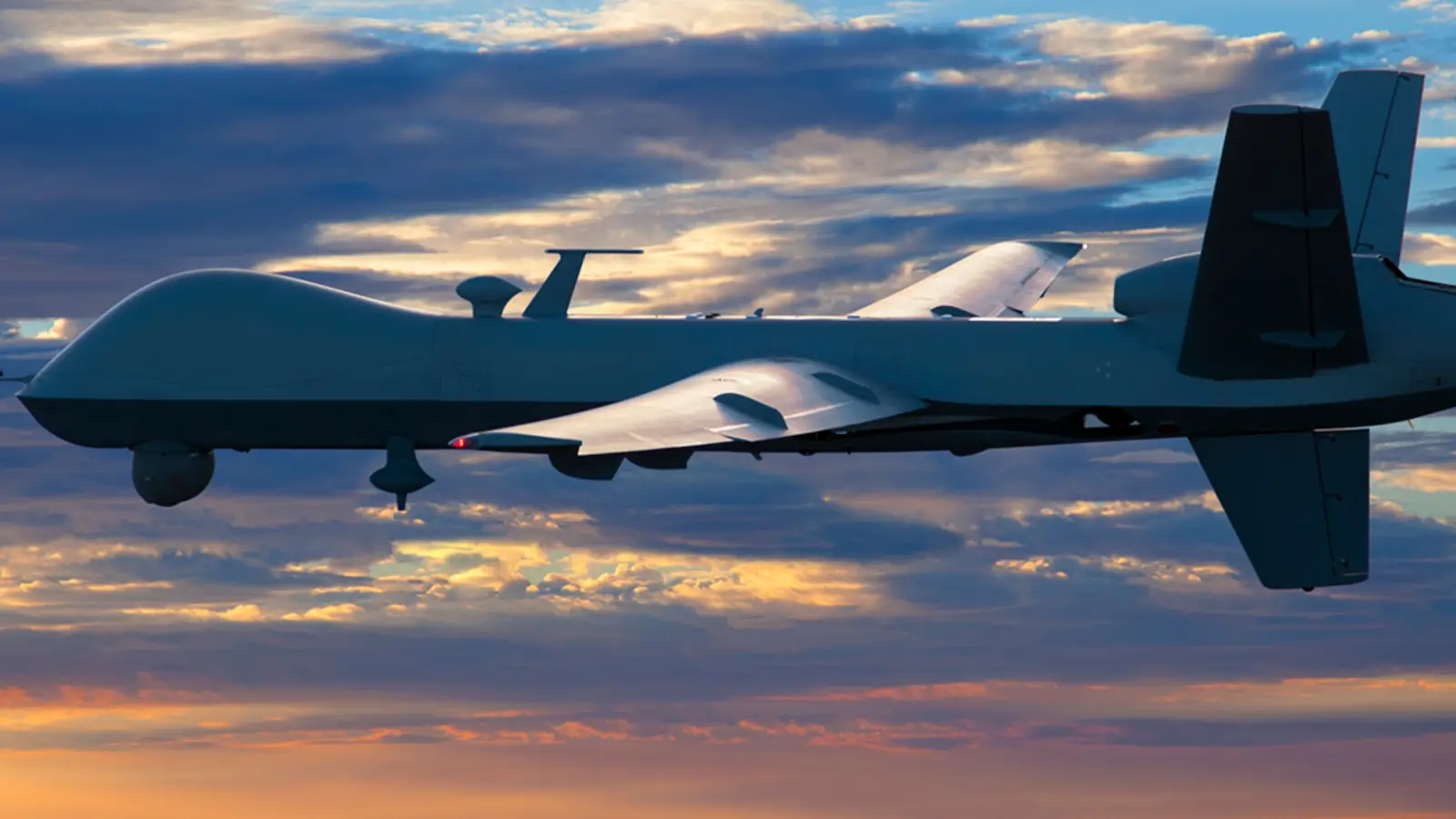
The U.S. Defense Innovation Unit has launched a new effort to develop an affordable successor to the MQ-9A Reaper through its Massed Modular Aircraft program. The initiative reflects growing Pentagon concerns that expensive, high value drones are increasingly vulnerable in contested airspace and must be replaced by systems that can be produced rapidly and in large numbers.
Pentagon Opens Competition For A Low Cost MQ-9A Successor
The Pentagon has formally begun searching for a low cost successor to the MQ-9A Reaper, signaling a significant shift in how the U.S. military intends to conduct long range intelligence, surveillance, strike, and electronic warfare missions in future conflicts. The new effort, led by the Defense Innovation Unit (DIU), seeks an aircraft that can perform many of the Reaper’s missions while costing substantially less and being available in far greater numbers.
Rather than pursuing another highly sophisticated, expensive unmanned aircraft, DIU is requesting proposals for what it calls the Massed Modular Aircraft (MMA), a platform specifically designed for affordability, modularity, and rapid production. According to the solicitation, today’s reliance on low density, high value aircraft has become increasingly unsustainable against modern integrated air defense systems.
Why The Pentagon Wants A New Reaper
The MQ-9A Reaper has served as the U.S. military’s premier medium altitude long endurance unmanned aircraft for more than two decades, supporting operations across Afghanistan, Iraq, Syria, Africa, and the Middle East.
However, recent combat experience has reinforced concerns about its survivability in contested environments protected by modern surface to air missiles and electronic warfare systems. Pentagon officials increasingly believe that future conflicts against peer competitors will require large numbers of affordable aircraft rather than a limited fleet of costly platforms.
DIU’s solicitation specifically argues that future unmanned aircraft must be designed with the expectation that some will be lost during combat while remaining inexpensive enough to replace quickly.
Key Requirements For The Massed Modular Aircraft
The solicitation outlines demanding operational requirements despite the emphasis on affordability.
Requirement Target Capability Payload At least 2,800 pounds Combat Radius Minimum 2,300 nautical miles One Way Transfer Range At least 8,000 nautical miles Cruise Speed Over 200 mph Power Available 25 kW Cooling Capacity 5 kW Operations Conventional runways and austere airfields Autonomy One operator controlling multiple aircraft The aircraft must also feature an open, modular architecture capable of rapidly integrating different payloads for intelligence gathering, strike missions, electronic warfare, communications relay, and other evolving mission sets.
Rapid Timeline Targets Operational Capability By 2031
DIU is pursuing an aggressive acquisition schedule.
According to the solicitation, contractors are expected to demonstrate full scale prototype flight testing within 21 months after contract award. The Pentagon is targeting an Initial Operational Capability during Fiscal Year 2031 consisting of approximately 20 mission ready aircraft delivered to an operational unit.
That schedule reflects growing urgency across the Department of Defense to field new autonomous systems before potential future conflicts require significantly greater operational mass.
Strategic Analysis: A Shift From Exquisite Platforms To Combat Mass
The Massed Modular Aircraft initiative represents more than a replacement for the MQ-9A. It illustrates a broader transformation underway across the U.S. military.
For decades, American airpower emphasized technologically superior platforms that delivered exceptional capability but required enormous investment. While these aircraft remain highly effective, they are increasingly challenged by adversaries deploying layered air defenses, inexpensive interceptors, electronic warfare, and large numbers of drones.
The Pentagon is now moving toward a force structure built around combat mass, where affordability becomes a military advantage rather than simply a budget objective.
This philosophy is also visible in other modernization efforts, including the Air Force’s Collaborative Combat Aircraft program, autonomous loyal wingmen, and numerous low cost strike drone initiatives. Together, these programs seek to distribute combat capability across many aircraft instead of concentrating it within a few expensive platforms.
Modularity is another important aspect of the MMA concept. Rather than permanently installing costly sensors and mission equipment, operators could configure aircraft for specific missions, reducing procurement costs while allowing faster technology upgrades as threats evolve.
Operational Implications For Future Warfare
If successfully developed, the Massed Modular Aircraft could reshape how U.S. forces conduct long endurance operations.
Instead of relying on a relatively small fleet of expensive Reapers, commanders could deploy significantly larger numbers of modular aircraft capable of:
- Intelligence, surveillance, and reconnaissance
- Precision strike missions
- Electronic warfare
- Communications relay
- Distributed sensing
- Theater level persistence
Operating larger fleets also complicates enemy targeting decisions. Even if some aircraft are destroyed, remaining platforms could continue executing missions while imposing substantial costs on opposing air defense networks.
The concept reflects lessons emerging from recent conflicts, where relatively inexpensive air defense weapons have increasingly threatened larger, slower unmanned aircraft.
Outlook
The Pentagon’s Massed Modular Aircraft initiative marks one of the clearest indications yet that future U.S. unmanned aviation will prioritize affordability, production scale, and adaptability alongside capability.
Although the MQ-9A Reaper remains an important operational asset, defense planners increasingly view future conflicts as requiring aircraft that can be fielded rapidly, upgraded easily, and replaced without imposing prohibitive costs. If the program remains on schedule, the first operational MMA aircraft could begin entering service early in the next decade, fundamentally changing how the United States approaches long range unmanned operations.
- The Pentagon is seeking a standardized system to test whether AI models perform as intended before operational use.
- The framework would simulate real battlefield conditions, including degraded networks and adversarial cyber attacks.
- The initiative reflects growing reliance on artificial intelligence for military planning, intelligence, and decision support.
- The Defense Innovation Unit and the Office of the Director of National Intelligence are seeking industry proposals.
- The effort aims to create a neutral evaluation architecture that works across AI vendors and defense contractors.
Pentagon AI Model Evaluation System Aims To Strengthen Military AI Reliability
The Pentagon AI model evaluation system initiative reflects the U.S. Department of Defense’s effort to ensure artificial intelligence systems perform reliably before they are deployed in military missions.
The Defense Innovation Unit (DIU), working alongside the Office of the Director of National Intelligence, is seeking proposals for a standardized testing framework capable of evaluating AI models against mission-specific benchmarks. The system would help determine whether AI tools operate as expected under operational conditions and alongside human operators.
Defense officials say the initiative is necessary as artificial intelligence becomes more deeply integrated into military operations ranging from intelligence analysis to logistics and battlefield decision support.
The Big Picture
The Pentagon has accelerated its adoption of artificial intelligence across multiple operational domains as part of broader U.S. military modernization efforts.
Programs such as Project Maven, which uses machine learning to analyze intelligence imagery and video data, demonstrate how AI can help process vast amounts of battlefield information and assist analysts.
More recently, the Defense Department has expanded access to commercial AI tools through platforms designed to support both classified and unclassified workflows. AI is increasingly used for data analysis, planning support, cyber defense, and operational logistics.
However, military leaders face a critical challenge: verifying that AI systems behave predictably under real-world conditions. Unlike traditional software, many AI models rely on probabilistic outputs and large training datasets, which can produce unexpected results if not rigorously tested.
A standardized evaluation system is intended to address that gap.
What’s Happening
The Pentagon’s Defense Innovation Unit has issued an “Area of Interest” announcement seeking technologies capable of evaluating AI systems before they are deployed to users.
Officials envision a testing “harness” with a modular architecture that can evaluate any AI model developed by government agencies or private contractors.
The system would perform several critical functions:
- Measure whether AI models meet mission requirements
- Test performance under operational stress conditions
- Evaluate human-AI collaboration in decision-making
- Conduct automated red teaming to identify vulnerabilities
Testing would also simulate degraded communications, incomplete data environments, and adversarial interference, conditions that frequently occur in real combat operations.
The framework must produce results that military decision-makers can easily interpret, including measurable benchmarks that define acceptable performance levels.
Importantly, the Pentagon emphasized that the evaluation system should remain vendor-neutral and avoid giving advantages to specific AI architectures or technology providers.
Why It Matters
Artificial intelligence is moving rapidly from experimental technology to operational capability across the U.S. military.
Commanders increasingly rely on automated systems for intelligence analysis, predictive logistics, mission planning, and cyber defense. These systems can process information at speeds far beyond human analysts, enabling faster operational decisions.
Yet reliability remains a central concern.
AI models can behave unpredictably when exposed to unfamiliar scenarios, biased datasets, or adversarial manipulation. In a military context, such failures could affect targeting decisions, operational planning, or battlefield awareness.
A standardized evaluation framework would provide the Defense Department with a structured method to validate AI performance before deployment.
This approach mirrors traditional military testing processes used for aircraft, weapons systems, and sensors.
Strategic Implications
The Pentagon’s effort to build a Pentagon AI model evaluation system reflects a broader shift toward institutionalizing AI assurance within defense acquisition.
Reliable AI systems could accelerate decision-making across joint operations, enabling faster analysis of intelligence data and improving coordination between military units.
Testing frameworks also help address concerns about trust in automated systems. Commanders must understand when AI recommendations are reliable and when human oversight is necessary.
Standardized evaluation tools could therefore play a central role in future command-and-control systems that integrate AI into operational planning.
The initiative also supports the Pentagon’s broader push to integrate commercial technology into defense programs while maintaining rigorous security and reliability standards.
Competitor View
Strategic competitors such as China and Russia closely monitor U.S. military AI development.
China has invested heavily in military AI research, including decision-support algorithms and autonomous systems designed to support command networks and battlefield analysis.
Russia has likewise explored AI applications in electronic warfare, autonomous vehicles, and military robotics.
A structured evaluation framework may strengthen the credibility and reliability of U.S. AI-enabled military systems. Reliable testing and verification processes could give U.S. forces greater confidence in AI-supported operations.
At the same time, the Pentagon’s emphasis on human-AI collaboration reflects Western defense doctrine that prioritizes human control over lethal force decisions.
What To Watch Next
Industry proposals for the AI evaluation framework are due in late March, marking the first phase of the initiative.
Next steps may include:
- Prototype testing platforms
- Integration with military AI programs
- Validation trials using operational data
- Expansion across multiple defense agencies
If successful, the testing framework could become a standard requirement for AI systems entering the Department of Defense acquisition pipeline.
Such systems may eventually support evaluations for intelligence tools, autonomous platforms, and future command-and-control networks.
Capability Gap
The initiative addresses a fundamental challenge in military AI deployment: verifying that machine learning systems behave reliably in unpredictable operational environments.
Traditional software testing methods often fail to capture how AI models respond to incomplete data, adversarial manipulation, or rapidly changing conditions.
Without rigorous evaluation frameworks, defense leaders risk deploying AI systems that may perform well in laboratory environments but fail under battlefield stress.
The proposed testing harness aims to close that gap by replicating operational conditions and assessing both technical performance and human-machine collaboration.
However, challenges remain. AI evaluation metrics are still evolving, and defining reliable performance thresholds across different mission types remains complex.
The Bottom Line
The Pentagon’s effort to build a Pentagon AI model evaluation system highlights a critical step toward ensuring that artificial intelligence can be safely and reliably integrated into future military operations.
- ► Hypersonix Launch Systems’ DART AE completed its first-ever flight in late February 2025, reaching speeds exceeding Mach 5 after launch from NASA’s Wallops Island facility in Virginia.
- ► The 3.5-meter autonomous vehicle is powered by the SPARTAN scramjet — a fully 3D-printed, hydrogen-fueled engine capable of sustained thrust up to Mach 7 with zero CO₂ emissions.
- ► The mission, named “That’s Not A Knife” by Rocket Lab and “Cassowary Vex” by the U.S. Defense Innovation Unit, was conducted under the Pentagon’s HyCAT hypersonic testing program.
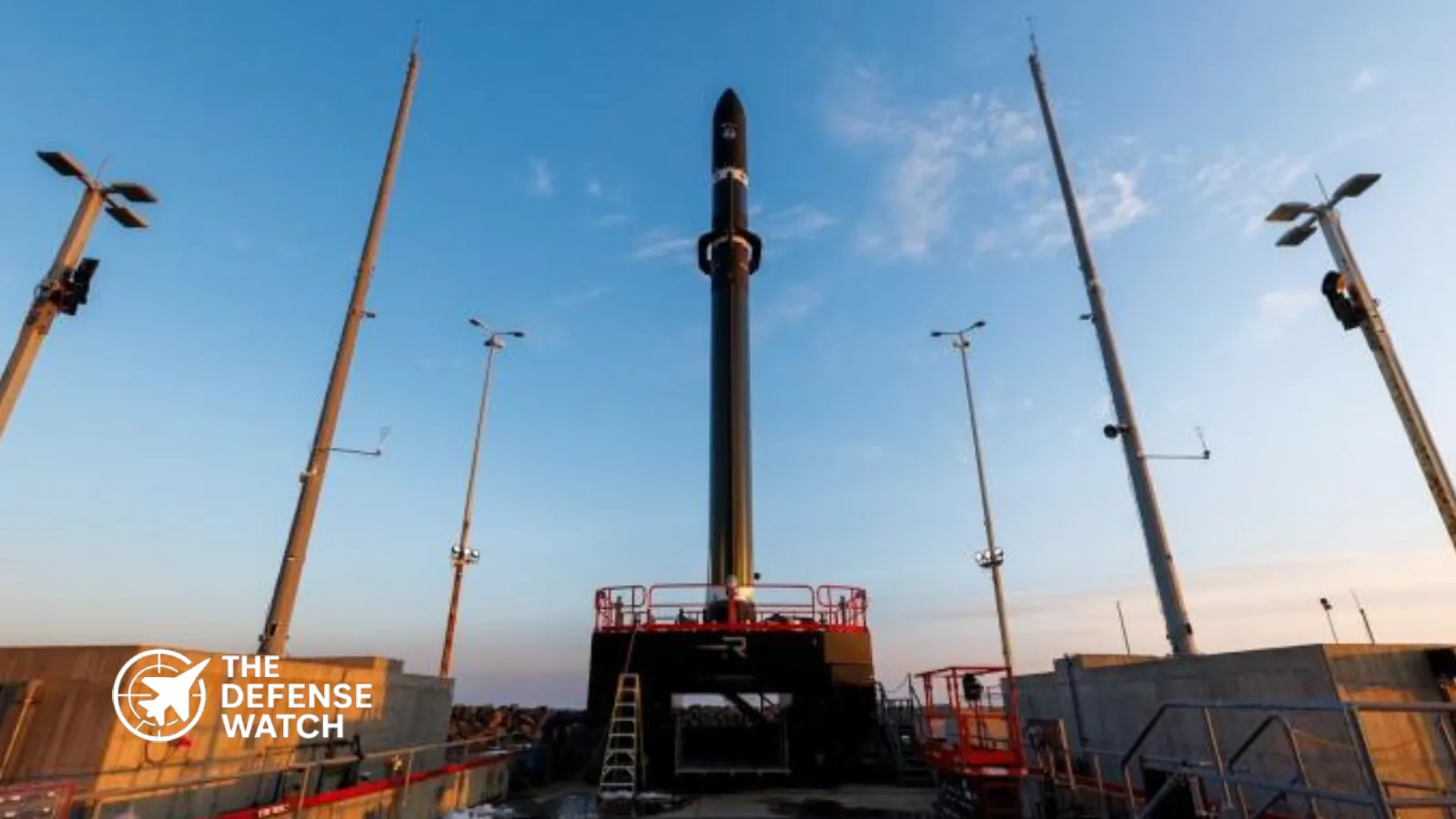
- ► DART AE was boosted into the upper atmosphere by Rocket Lab’s HASTE rocket from Launch Complex 2 at the Mid-Atlantic Regional Spaceport before its SPARTAN engine ignited for hypersonic flight.
- ► The flight followed Hypersonix’s A$46 million Series A funding round backed by Australia’s National Reconstruction Fund Corporation, Saab, High Tor Capital, and other investors.
Australia’s DART AE Completes First Hypersonic Flight In Landmark Test For U.S. Defense Program
Hypersonix Launch Systems has completed the first flight of its DART AE hypersonic aircraft, which reached speeds above Mach 5 after launching from NASA’s Wallops Island facility in Virginia. The achievement marks a pivotal moment not only for the Brisbane-based aerospace firm, but for the broader U.S.-allied hypersonic development ecosystem — and signals that allied industry is increasingly capable of delivering cutting-edge test platforms to American defense programs.
For a sector long dominated by U.S. and Chinese state programs, an Australian startup achieving sustained hypersonic scramjet flight under a Pentagon contract is no small matter.
The Mission: “That’s Not A Knife”
The mission saw DART AE carried into the upper atmosphere aboard Rocket Lab’s HASTE rocket, purpose-built for hypersonic test missions. At the planned deployment point, DART AE separated and the SPARTAN engine ignited, powering the aircraft through its hypersonic flight profile.
The flight was conducted under the U.S. Department of Defense’s Defense Innovation Unit, with Rocket Lab’s HASTE launch vehicle lifting off from Rocket Lab Launch Complex 2 at the Virginia Spaceport Authority’s Mid-Atlantic Regional Spaceport on Wallops Island.
The dual mission names reflect the collaborative nature of the program — “Cassowary Vex” designated by the DIU and “That’s Not A Knife” chosen by Rocket Lab, a nod to the Australian cultural reference that underscores the flight’s national significance.
What Is DART AE?
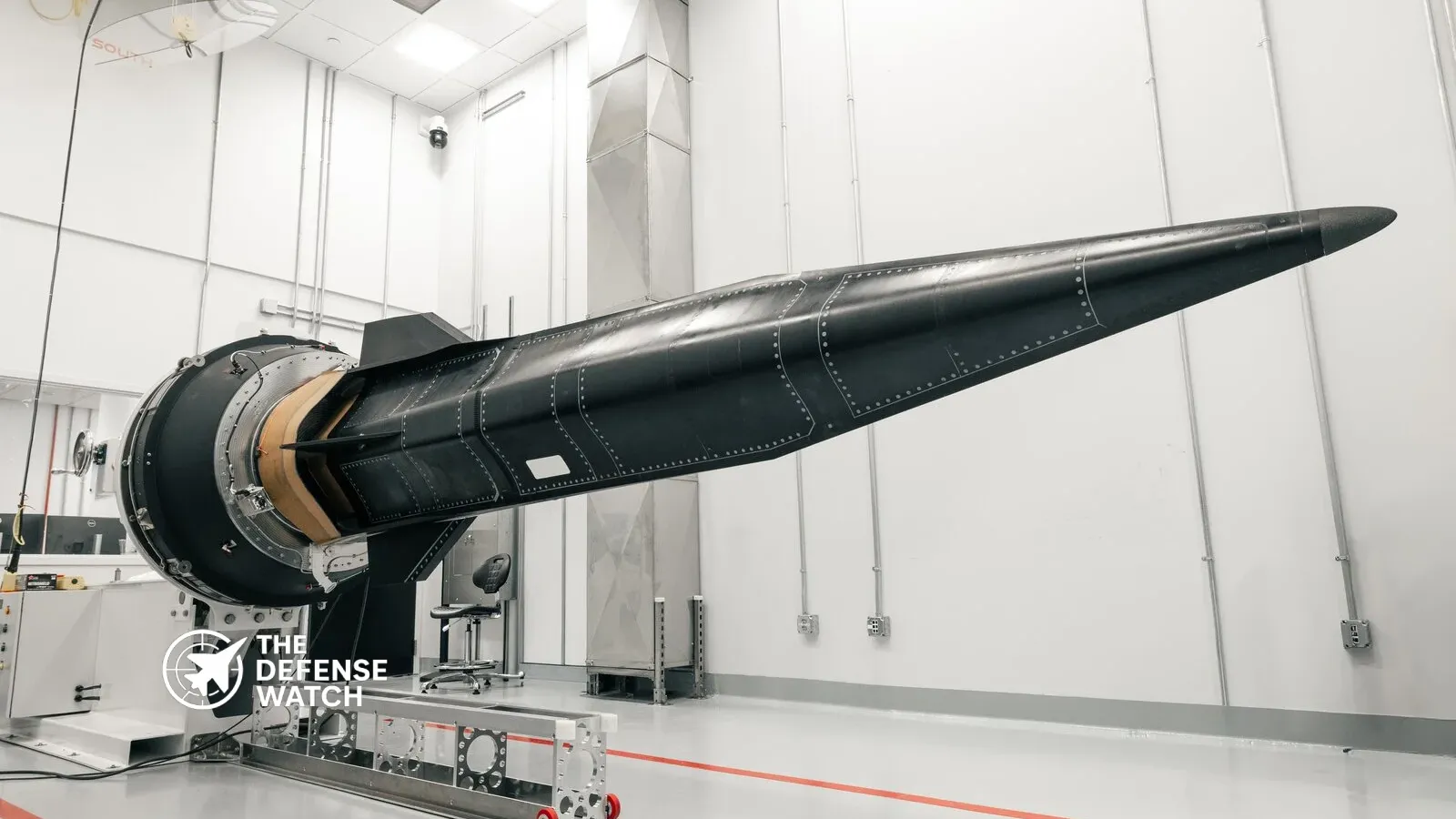
DART AE is an autonomous 3D-printed, hydrogen-fueled scramjet technology demonstrator and is the world’s first entirely 3D-printed airframe of a hypersonic launch vehicle. Its SPARTAN scramjet engine, powered by green hydrogen, provides the necessary thrust to propel DART at hypersonic speeds. This air-breathing engine emits zero CO₂ during flight.
The DART AE hypersonic system is 3.5 meters long and can travel up to a range of 1,000 kilometers at a speed of Mach 7. It can be launched via an unguided sounding rocket, a guided rocket, or air-launched.
Unlike solid-fuel or liquid-fuel ballistic test vehicles, DART AE’s scramjet design requires the vehicle to be accelerated to Mach 5 before the engine can sustain combustion — a key technical threshold that distinguishes scramjet-powered hypersonics from conventional boost-glide systems. The SPARTAN engine’s ability to self-ignite, throttle, and restart mid-flight represents a meaningful engineering advancement over prior scramjet demonstrators.
Why This Flight Matters For U.S. Defense
The launch is part of the Pentagon’s Defense Innovation Unit HyCAT program, which aims to develop affordable test platforms for hypersonic technologies. Hypersonix was selected for the program in March 2023, beating out more than 60 applicants.
The DIU’s HyCAT initiative reflects a deliberate shift in American defense acquisition strategy: rather than relying exclusively on large prime contractors for expensive, one-of-a-kind hypersonic demonstrators, the program seeks high-cadence, cost-efficient test assets from allied commercial industry. DART AE fits that model precisely.
Three flights are planned under the HyCAT program, with additional orders available without competitive tender once the technology is proven in flight. Kratos has committed to acquiring up to 20 DART AE systems from Hypersonix as part of an agreement following the successful demonstration.
That pipeline — backed by a U.S. defense contractor of Kratos’s stature — suggests DART AE is positioned not merely as a science experiment but as a candidate for operational-scale hypersonic test support in the years ahead.
The Technology Edge: Hydrogen-Fueled Scramjet
What distinguishes DART AE from competing hypersonic demonstrators is its propulsion architecture. The SPARTAN scramjet is 3D-printed and is designed to fly at speeds up to Mach 7. The aircraft will serve as a testbed for emerging and high-performance technologies.
Unlike conventional kerosene-fueled scramjets, SPARTAN is hydrogen-powered and designed to operate without moving parts. The absence of rotating components in the engine simplifies manufacturing, reduces failure points, and lowers the cost-per-flight — a critical consideration for a program designed around high-cadence testing.
The environmental angle also carries strategic weight. As defense establishments across NATO and the Indo-Pacific face increasing scrutiny over carbon footprints, a scramjet that produces only water vapor as exhaust offers both operational and political utility.
Co-founder Dr. Michael Smart, a former NASA research scientist and former Chair of Hypersonic Propulsion at the University of Queensland, emphasized that flight data is irreplaceable at these speeds. “At these speeds and temperatures, there is no substitute for flight data,” Smart said, noting that the flight allowed the team to test propulsion, materials, and control systems in real hypersonic conditions.
Funding and Industrial Scale-Up
The mission followed Hypersonix’s $46 million Series A funding round, backed by Australia’s National Reconstruction Fund Corporation and Queensland Investment Corporation. The round was led by High Tor Capital, a UK investor in national security and frontier technology, with European defense company Saab and Polish family office RKKVC also supporting the raise.
The composition of the investor group is telling. High Tor Capital’s focus on national security technology, Saab’s participation as a defense prime, and Australia’s sovereign manufacturing fund all signal that DART AE is viewed as strategically significant — not simply commercially interesting.
Hypersonix has linked the funding to expansion plans in Queensland and a faster flight-test cadence, and is also developing its next platform, VISR — Velos Intelligence, Surveillance and Reconnaissance. The company employs more than 50 people in Brisbane across aerospace engineering, advanced manufacturing, and testing roles.
What Comes Next: VISR and Delta Velos
Hypersonix is not stopping at DART AE. The company’s plans include developing the VISR and Delta Velos hypersonic vehicles. The 16-meter Delta Velos is designed to reach speeds between Mach 5 and 12 and can be used for satellite launches and low-Earth orbit resupply missions. The 8-meter VISR is designed to fly at speeds between Mach 5 and 10 and can land on a standard runway, intended for multiple applications including long-range military surveillance and high-speed cargo transport.
VISR in particular has direct military relevance. A reusable, runway-landing hypersonic surveillance platform capable of Mach 5–10 flight would address a critical gap in persistent high-speed ISR coverage — a capability that current satellite and subsonic ISR platforms cannot replicate in contested airspace.
Analysis: A Strategic Win for the U.S.-Australia Alliance
The DART AE first flight is more than a technical milestone — it is a data point in the broader strategic realignment of the Indo-Pacific defense industrial base. The AUKUS partnership has placed enormous emphasis on advanced capabilities, including hypersonics, as a pillar of deterrence. Australia’s ability to independently develop, manufacture, and fly hypersonic test vehicles — and do so under a U.S. DoD contract — demonstrates a degree of sovereign capability that strengthens the alliance’s collective deterrence posture.
For U.S. defense planners, access to allied hypersonic test assets diversifies the supply chain for critical test infrastructure. For Australia, it establishes a commercial pathway into the U.S. defense market that could generate significant export revenue and deepen technological interoperability.
The DART AE dataset will inform the design of Hypersonix’s next vehicles, with further flight tests expected as the company expands manufacturing and development in Queensland.
With two more HyCAT flights still on the schedule and a growing order pipeline through Kratos, Hypersonix is now firmly on the map as a credible hypersonic systems developer — one with direct ties to the U.S. defense innovation ecosystem.
- ► Rocket Lab preparing new hypersonic test mission for U.S. Defense Innovation Unit.
- ► Mission to launch aboard Electron rocket to support rapid flight testing.
- ► Part of Pentagon effort to increase test cadence for hypersonic weapons.
- ► Commercial launch providers used to reduce cost and scheduling constraints.
- ► Reflects growing integration of private space firms into U.S. defense programs.
Rocket Lab Hypersonic Test Mission Advances U.S. Defense Testing Goals
The Rocket Lab hypersonic test mission for the Defense Innovation Unit marks another step in expanding commercial support for U.S. military hypersonic flight testing. The company confirmed it is preparing to launch its latest mission on behalf of the Defense Innovation Unit, or DIU, using its Electron rocket.
The mission is part of a broader Pentagon effort to accelerate hypersonic system development through more frequent and lower cost test opportunities. DIU has been working to tap commercial launch providers to supplement traditional government managed test programs, which often face scheduling bottlenecks and higher costs.
Rocket Lab’s role centers on providing dedicated launch services that enable rapid turnaround and tailored flight profiles, supporting the Defense Department’s push for faster experimentation cycles.
Expanding Commercial Support For Hypersonic Testing
The Rocket Lab hypersonic test mission builds on the company’s previous work with DIU to provide responsive launch services. Under DIU’s hypersonic and high speed systems portfolio, the Pentagon is seeking to increase the pace of flight testing to validate technologies such as guidance systems, thermal protection, and maneuvering capabilities at high Mach speeds.
According to Rocket Lab, the upcoming launch will use its Electron small launch vehicle, designed to place payloads into low Earth orbit but also adaptable for suborbital and specialized test missions. Electron’s dedicated launch model allows defense customers to avoid rideshare delays and gain precise control over mission timing and trajectory.
DIU has emphasized that rapid access to flight testing is critical as the United States competes with peer adversaries in the hypersonic domain. The Department of Defense has repeatedly stated that China and Russia have fielded operational hypersonic capabilities, prompting Washington to accelerate its own programs.
The use of commercial rockets aligns with the Pentagon’s broader strategy to leverage private sector innovation. The U.S. Space Force and other defense agencies have increasingly relied on firms like Rocket Lab and SpaceX to provide flexible and cost effective launch solutions.
Why Test Cadence Matters
Hypersonic weapons travel at speeds above Mach 5 and often maneuver unpredictably, placing extreme demands on propulsion, materials, and guidance systems. Unlike traditional ballistic missiles, many hypersonic glide vehicles and cruise missiles operate within the atmosphere, where thermal stress and aerodynamic forces are severe.
Frequent flight testing allows engineers to gather real world data on these stresses. It also reduces program risk by identifying integration issues early. Historically, hypersonic development programs have faced delays tied to limited range availability and scheduling constraints at government launch sites.
By using commercial launch providers, DIU aims to expand the number of available test windows. That approach supports the Pentagon’s stated goal of moving from occasional demonstration launches to a more regular testing rhythm.
The Rocket Lab hypersonic test mission therefore represents more than a single launch. It reflects a shift toward distributed, commercially enabled test infrastructure.
Strategic Context
The Department of Defense’s 2023 budget documents highlighted continued investment in hypersonic strike and defense systems. Programs such as the Army’s Long Range Hypersonic Weapon and the Navy’s Conventional Prompt Strike have advanced through successive test milestones.
At the same time, the Missile Defense Agency and other organizations are exploring counter hypersonic capabilities. Accelerating test campaigns supports both offensive and defensive research.
Industry participation has expanded accordingly. Rocket Lab’s involvement through DIU illustrates how smaller launch providers are carving out roles in national security missions that were once dominated by larger legacy contractors.
Analysts note that commercial providers offer not only cost advantages but also production agility. Electron rockets can be manufactured and prepared for flight on shorter timelines compared to traditional heavy launch vehicles.
Operational Implications
If successful, the Rocket Lab hypersonic test mission could reinforce the viability of using small launch vehicles for high speed weapon experimentation. That could open the door to more distributed test campaigns across multiple sites, increasing resilience and reducing reliance on a limited number of government ranges.
For the Defense Innovation Unit, demonstrating reliable commercial launch partnerships strengthens its mandate to bridge Silicon Valley and the Pentagon. DIU was established to speed the adoption of commercial technology for military use, and hypersonic testing is now a prominent example of that effort.
The mission also signals confidence in Electron’s performance envelope for specialized defense applications. While primarily known for deploying small satellites, the rocket’s adaptability positions it as a flexible platform for suborbital and research missions.
Broader Defense Industry Impact
The integration of companies like Rocket Lab into sensitive defense programs reflects a wider transformation in U.S. military acquisition. Commercial space firms are increasingly seen as strategic assets, not just service providers.
This trend mirrors developments in satellite communications, space domain awareness, and responsive launch. The Rocket Lab hypersonic test mission adds hypersonic experimentation to that list.
As global competition intensifies, the ability to iterate quickly and test often may prove decisive. Commercial partnerships provide one path to achieving that speed.
War Department Launches Competitive Trials for Mass-Production Drone Program
The War Department announced February 3 that 25 defense contractors have been invited to compete in Phase I of the Drone Dominance Program, a $1.1 billion acquisition initiative designed to rapidly field low-cost, weaponized unmanned aerial systems at unprecedented scale.
The announcement marks the operational launch of Secretary of War Pete Hegseth’s cornerstone acquisition reform effort, which aims to equip U.S. combat units with hundreds of thousands of one-way attack drones by 2027. The program represents a fundamental shift in Pentagon procurement philosophy, prioritizing speed, competitive evaluation by warfighters, and iterative development cycles measured in months rather than years.
Gauntlet Evaluation Begins February 18
Phase I evaluations will commence February 18 at Fort Benning, Georgia, where military operators will directly fly and assess vendor systems during what the War Department has designated “the Gauntlet.” The hands-on evaluation process places warfighters at the center of procurement decisions, allowing soldiers to test drone capabilities in realistic operational scenarios.
The Gauntlet will conclude in early March, when approximately $150 million in prototype delivery orders will be awarded to successful vendors. Deliveries are scheduled to begin shortly thereafter and continue over the following five months, enabling rapid fielding of proven systems.
Acquisition Reform in Action
The Drone Dominance Program operationalizes Hegseth’s July 2025 memorandum “Unleashing U.S. Military Drone Dominance,” which established clear acquisition priorities centered on lethality, speed, and scale. The program structure includes four phases totaling $1.1 billion in planned expenditures, with unit prices decreasing and production volumes increasing across successive phases.
“Drone dominance is a process race as much as a technological race,” Hegseth wrote in the memorandum. “We are buying what works—fast, at scale, and without bureaucratic delay. Lethality will not be hindered by self-imposed restrictions.”
The program structure sends what officials describe as a clear demand signal to the defense industrial base, combining substantial funding commitments with compressed development timelines. By placing operational military personnel in direct evaluation roles, the War Department aims to bypass traditional acquisition bureaucracy while ensuring fielded systems meet actual warfighter requirements.
Twenty-Five Vendors Advance to Competition
The War Department selected 25 companies to participate in Phase I trials, representing a mix of established defense contractors, technology startups, and specialized drone manufacturers. The vendor list includes both domestic firms and international partners, notably including Ukrainian Defense Drones Tech Corp, reflecting lessons learned from ongoing conflicts where small unmanned systems have proven tactically decisive.
Phase I Gauntlet participants (alphabetically):
- ANNO.AI, Inc.
- Ascent Aerosystems Inc.
- Auterion Government Solutions Inc.
- Dzyne Technologies, LLC
- Ewing Aerospace LLC
- Farage Precision, LLC
- Firestorm Labs, Inc.
- General Cherry Corp.
- Greensight Inc.
- Griffon Aerospace, Inc.
- Halo Aeronautics, LLC
- Kratos SRE, Inc.
- ModalAI, Inc.
- Napatree Technology LLC
- Neros, Inc.
- Oksi Ventures, Inc.
- Paladin Defense Services LLC
- Performance Drone Works LLC
- Responsibly Ltd.
- Swarm Defense Technologies, LLC
- Teal Drones Inc.
- Ukrainian Defense Drones Tech Corp.
- Vector Defense, Inc.
- W.S. Darley & Co.
- Xtend Reality Inc.
The diverse vendor list reflects the War Department’s strategy of maintaining competitive pressure while sourcing innovative technologies from both traditional and non-traditional defense suppliers.
Program Structure and Timeline
The Drone Dominance Program’s four-phase structure is designed to progressively increase production capabilities while driving down unit costs through competition and economies of scale. Phase I focuses on rapid prototyping and initial deliveries, with subsequent phases scaling production to industrial quantities.
According to the War Department, the program will field hundreds of thousands of weaponized one-way attack drones by 2027, representing a significant expansion of U.S. military unmanned capabilities. The systems are intended to provide tactical commanders with expendable precision strike options that can be deployed at scale without risking manned aircraft or personnel.
The program is jointly sponsored by the Office of the Secretary of War and executed through a tri-organizational structure including the Defense Innovation Unit, the Test Resource Management Center, and Naval Surface Warfare Center Crane Division. This organizational approach combines acquisition expertise, test evaluation capabilities, and technical program management.
Strategic Context
The Drone Dominance Program emerges from broader strategic assessments highlighting the increasing importance of unmanned systems in modern warfare. Recent conflicts have demonstrated the tactical effectiveness of low-cost attack drones, particularly in contested environments where traditional air assets face sophisticated air defense networks.
Hegseth has positioned rapid technology adoption and procurement reform as core departmental priorities since taking office. The Drone Dominance Program exemplifies this approach by compressing traditional acquisition timelines, emphasizing competitive evaluation, and prioritizing operational capability over bureaucratic process.
The program’s emphasis on one-way attack systems reflects doctrinal shifts toward accepting higher attrition rates for unmanned platforms in exchange for increased operational tempo and reduced risk to personnel. By fielding these systems at scale, the War Department aims to provide tactical commanders with new operational options while complicating adversary defensive planning.
Industry and Budget Implications
The $1.1 billion total program value represents a significant investment in unmanned systems manufacturing capacity. The competitive structure, with multiple vendors potentially receiving contracts across four phases, is designed to maintain innovation pressure while building redundant production capabilities across the industrial base.
The program’s compressed timeline and iterative structure may establish new precedents for Pentagon acquisition practices, particularly for rapidly evolving technologies where traditional multi-year development cycles risk obsolescence before fielding.
Funding for the program has been allocated and appropriated, according to the War Department announcement, removing a typical source of acquisition delays and providing vendors with confidence in contract execution timelines.
The February 18 start date for Gauntlet evaluations places the program on a rapid operational schedule, with initial contract awards expected within approximately two weeks of evaluation completion. This accelerated timeline reflects the program’s emphasis on speed as a competitive advantage in technology adoption.