Executive Summary:
The US Air Force has successfully demonstrated an artificial intelligence controlled airborne interception using its X-62 VISTA experimental aircraft, expanding autonomous flight testing beyond air combat maneuvering into real world interception scenarios. The milestone highlights the growing role of AI in future Collaborative Combat Aircraft and next generation air superiority programs.
US Air Force Demonstrates AI Led X-62 Airborne Intercept Capability
The US Air Force X-62 AI program has reached another milestone after successfully demonstrating an artificial intelligence controlled interception of airborne targets using the X-62A Variable Stability In-flight Simulator Test Aircraft (VISTA). The demonstration marks the first publicly reported instance of AI directing an intercept mission rather than solely executing defensive maneuvers or within-visual-range dogfights.
Conducted by the US Air Force Test Pilot School at Edwards Air Force Base, the test represents another step in integrating autonomous software into tactical aviation while retaining a qualified safety pilot onboard.
The demonstration builds upon several years of research under the Defense Advanced Research Projects Agency (DARPA) Air Combat Evolution initiative and ongoing Air Force autonomy programs.
How The X-62 VISTA Serves As An AI Flight Testbed
The X-62A VISTA is a heavily modified F-16D Block 30 equipped with advanced simulation software that allows engineers to rapidly install and evaluate different autonomous flight algorithms.
Unlike a conventional fighter, the aircraft can emulate multiple aircraft types and flight control characteristics through its Variable Stability In-flight Simulator architecture. Since receiving major autonomy upgrades, it has become the Air Force’s primary flying laboratory for evaluating machine learning in tactical aviation.
Previous milestones include:
- AI controlled supersonic flight
- Autonomous dogfight testing against human pilots
- AI controlled defensive missile evasion
- Evaluation of collaborative autonomous flight behaviors
The latest airborne interception demonstration expands these capabilities into another mission area that future autonomous combat aircraft are expected to perform.
What Makes Airborne Interception More Challenging
Intercepting another aircraft is significantly more complex than executing scripted maneuvers.
The autonomous system must continuously:
Mission Function AI Requirement Detect target Process sensor information rapidly Track aircraft Predict changing flight paths Maneuver safely Maintain aircraft performance limits Select intercept geometry Optimize closure rates and positioning Adapt in real time Respond to unexpected target maneuvers These functions require autonomous software to make rapid decisions while operating within strict flight safety constraints.
Unlike demonstrations focused solely on aggressive maneuvering, interception requires balancing tactical effectiveness with safe aircraft handling throughout the engagement.
Supporting Future Collaborative Combat Aircraft
The demonstration directly supports the Department of the Air Force’s broader effort to field autonomous Collaborative Combat Aircraft (CCA).
Future CCAs are expected to operate alongside crewed fighters including the F-35A and the forthcoming Next Generation Air Dominance (NGAD) platform.
Rather than replacing pilots, autonomous aircraft are envisioned to perform missions such as:
- Forward scouting
- Airborne interception
- Defensive counter air
- Electronic warfare
- Decoy operations
- Cooperative missile employment
Testing these capabilities aboard the X-62 allows engineers to validate software in realistic flight conditions before transitioning algorithms to operational uncrewed aircraft.
AI Development Continues To Expand
The X-62 continues to receive upgrades designed to support increasingly sophisticated autonomy testing.
The Air Force is enhancing the aircraft with advanced mission systems, including modern radar and sensor integration, enabling autonomous software to process more representative combat information during future experiments. Those improvements are intended to support testing involving multiple aircraft and more operationally realistic scenarios.
The aircraft also complements the VENOM (Viper Experimentation and Next-generation Operations Model) program, which is modifying additional F-16s to accelerate autonomy research across a larger test fleet.
Why This Matters
Although the latest demonstration remains an experimental flight test, its significance extends well beyond a single aircraft.
Modern air combat is increasingly defined by compressed decision timelines, large numbers of airborne sensors, electronic warfare, and cooperation between crewed and uncrewed platforms. Artificial intelligence offers the potential to process information and recommend or execute tactical actions at speeds beyond human capability while allowing pilots to focus on mission command.
The interception test also illustrates a gradual shift in Air Force AI development. Earlier efforts concentrated on proving that autonomous systems could safely fly an aircraft or compete in basic dogfights. Current testing is expanding into operational mission sets that reflect how autonomous aircraft may contribute during future combat operations.
Importantly, the Air Force continues to emphasize that these demonstrations occur with extensive human oversight, rigorous safety controls, and onboard safety pilots. The objective is not fully independent combat aircraft today, but developing trusted autonomous systems that can operate alongside human aircrews in increasingly complex environments.
As Collaborative Combat Aircraft move toward operational service later this decade, demonstrations aboard the X-62 provide valuable risk reduction by validating software in real flight conditions before integration into next generation autonomous combat platforms.
(adsbygoogle = window.adsbygoogle || []).push({});Executive Summary:
The U.S. Army has awarded Groundswell Corp. a $48.6 million contract to deploy Agentic Auditor, an artificial intelligence-enabled platform designed to automate financial audit evidence collection across multiple Department of Defense organizations. The initiative supports ongoing Pentagon efforts to improve audit readiness, reduce manual processes, and standardize financial reporting across the military services.
The U.S. Army Contracting Command at Aberdeen Proving Ground, Maryland, has awarded McLean, Virginia-based Groundswell Corp. a firm-fixed-price delivery order valued at $48.6 million for its Agentic Auditor platform, according to a Department of Defense contract announcement.
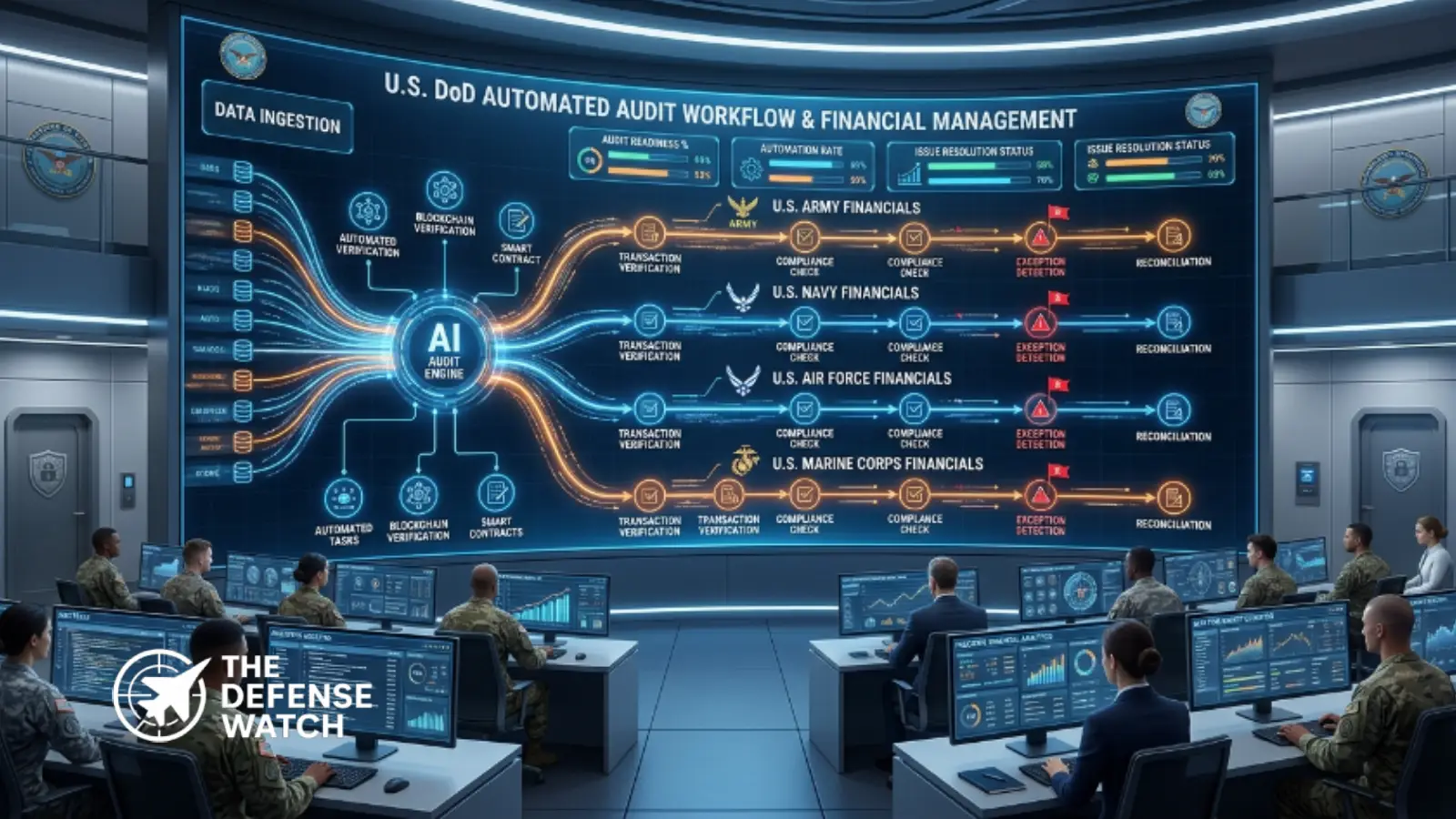
The award covers the deployment of an artificial intelligence-enabled auditing solution intended to automate and standardize the collection, normalization, and delivery of evidential material required for financial statement audits across Department of Defense organizations, including the Army, Navy, Air Force, and the Defense Department’s Fourth Estate agencies.
The contract carries an estimated completion date of June 8, 2031. Contracting officials noted that work locations and funding allocations will be determined on individual task orders issued throughout the performance period.
(adsbygoogle = window.adsbygoogle || []).push({});Deep Technical & Strategic Context Analysis
While defense artificial intelligence investments often focus on battlefield applications such as autonomous systems, intelligence analysis, and command-and-control networks, a growing portion of Pentagon modernization funding is being directed toward enterprise operations. Financial management remains one of the most challenging areas for the Department of Defense, which manages trillions of dollars in assets and operates thousands of interconnected accounting, logistics, procurement, and sustainment systems.
The Agentic Auditor initiative reflects a broader shift toward “agentic AI” architectures, systems capable of independently performing complex, multi-step tasks while maintaining human oversight. In the auditing environment, such platforms can automatically gather supporting documentation from disparate databases, reconcile records across organizations, identify missing evidence, flag anomalies, and prepare audit-ready documentation packages. This reduces the extensive manual labor traditionally required to support annual financial statement audits.
The award is strategically significant because the Pentagon continues efforts to achieve full audit compliance across all military departments. Although the Department of Defense has made measurable progress in recent years, the scale and complexity of its financial ecosystem remain a major challenge. AI-enabled audit automation offers a potential pathway to improve accuracy, accelerate reporting timelines, and reduce costs associated with audit preparation and remediation activities.
The contract’s firm-fixed-price structure is also noteworthy. Under this arrangement, the contractor assumes greater responsibility for cost control and delivery performance because payment is fixed regardless of actual expenses incurred. For the government, this reduces financial risk and provides greater predictability in long-term budgeting compared with cost-reimbursement contract structures commonly used for research and development programs.
(adsbygoogle = window.adsbygoogle || []).push({});Contract Breakdown & Details
Program Overview
- Contract Awardee: Groundswell Corp.
- Headquarters: McLean, Virginia
- Contract Value: $48,595,099
- Contract Type: Firm-Fixed-Price Delivery Order
- Program Name: Agentic Auditor
- Contract Number: W91CRB-26-F-A155
- Contracting Activity: Army Contracting Command, Aberdeen Proving Ground, Maryland
- Estimated Completion Date: June 8, 2031
Capability Objectives
The Agentic Auditor platform is designed to:
- Automate audit evidence collection across multiple defense systems.
- Normalize financial data from diverse sources into standardized formats.
- Support financial statement audits through automated evidence delivery.
- Reduce manual audit preparation workloads for defense agencies.
- Improve audit consistency and traceability across the Department of Defense.
Supported Organizations
The system will support audit activities for:
- U.S. Army
- U.S. Navy
- U.S. Air Force
- DoD Fourth Estate Agencies
The Fourth Estate includes defense organizations operating outside the military departments, such as logistics, intelligence, healthcare, and administrative support entities that collectively manage significant portions of the Pentagon’s budget and infrastructure.
Contract Structure
- Award Type: Firm-Fixed-Price
- Solicitation Method: Internet-based competitive solicitation
- Bids Received: One
- Task Order Funding: Determined with each subsequent order
- Work Locations: To be identified on individual task orders
Strategic Implications
The award highlights three major Pentagon priorities:
- Enterprise AI adoption beyond combat systems
- Improved financial accountability and audit readiness
- Modernization of legacy administrative processes through automation
As defense organizations increasingly pursue digital transformation initiatives, enterprise-focused AI platforms such as Agentic Auditor are expected to become a larger component of future modernization budgets. Successful implementation could provide a model for applying agentic AI technologies to other government functions, including logistics management, procurement oversight, compliance monitoring, and resource planning.
Lockheed Martin Unveils AI Fight Club™ To Revolutionize Defense AI Development For National Security
Executive Summary: Lockheed Martin’s AI Center (LAIC) has launched its inaugural AI Fight Club™ — a groundbreaking program that pits AI agents against each other in synthetic aerial combat environments to validate their performance at unprecedented scale. In a single month of testing, the program simulated the equivalent of 114 years of real-world flight tests. The initiative marks a critical shift in how U.S. defense contractors are developing, testing, and deploying artificial intelligence for military operations.
Lockheed Martin Launches AI Fight Club™ To Stress-Test Defense AI At National Security Scale
Lockheed Martin has taken a decisive step in military artificial intelligence development with the launch of its AI Fight Club™ — an initiative designed to develop, evaluate, and validate AI systems under realistic combat conditions before they ever reach the battlefield.
The program, run by the Lockheed Martin AI Center (LAIC), represents one of the most ambitious AI testing frameworks in the U.S. defense industry to date. It directly addresses one of the most critical questions in modern warfare: how do you trust an AI system when lives are on the line?
What Is the AI Fight Club™?
The AI Fight Club™ is a groundbreaking initiative that brings together industry collaborators and Lockheed Martin’s business areas to develop and test AI capabilities in a joint all-domain operations synthetic environment.
The concept is straightforward but powerful: pit AI agents against each other in simulated tactical scenarios, capture detailed performance data, and use those insights to refine the systems — all without risking aircraft, personnel, or mission-critical assets.
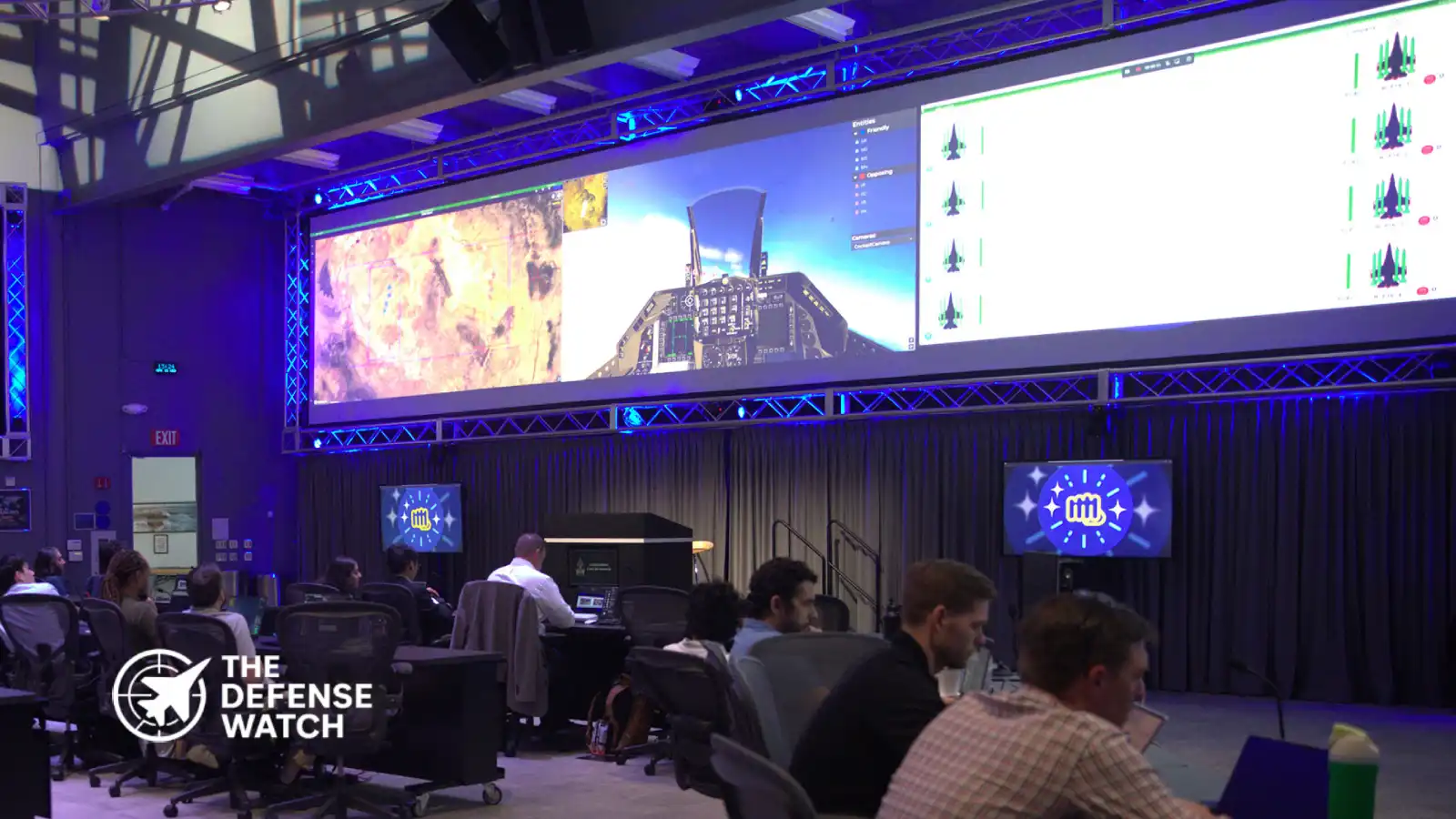
During the inaugural event, Lockheed Martin collaborated with teams from Ansys Government Initiatives (AGI) and ATG to execute a series of virtual 4 vs. 4 aerial mission scenarios, with five unique AI agent teams engaging each other in real-time battles as the audience observed.
The format mirrors competitive red-team/blue-team exercises familiar to the Pentagon, but conducted entirely in simulation — at a pace and scale that physical testing could never match.
The Cogniverse™: A Synthetic Proving Ground
Central to the AI Fight Club™ is Lockheed Martin’s proprietary simulation platform known as the Cogniverse™.
Within the Cogniverse™ — the synthetic environment that enables the AI Fight Club proving ground — AI agents and systems are tested in a highly realistic and dynamic environment, simulating the complexity of tactical air combat. lockheedmartin
This kind of high-fidelity synthetic testing is increasingly critical as defense AI programs scale. Real-world testing of AI in military contexts is constrained by cost, logistics, safety regulations, and sheer time. The Cogniverse™ eliminates those barriers.
The use of synthetic environments for AI validation is aligned with broader Department of Defense priorities, including DARPA’s long-running investments in autonomous systems testing and the DoD’s AI Adoption Strategy, which emphasizes responsible and validated deployment of AI across warfighting domains.
114 Years of Testing in One Month
Perhaps the most striking data point from the AI Fight Club™’s inaugural run is its scale.
In just one month of testing alone, Lockheed Martin’s Skunk Works® AI Fight Club team and others ran the equivalent of 114 years’ worth of tests, which would have cost more than $540 trillion and expended 18 million aircraft.
That figure reframes what’s possible in defense AI development. Traditional flight test programs are measured in sorties, hours, and years. This initiative compresses that timeline to weeks — while generating exponentially more data.
For context, the U.S. Air Force’s entire operational fleet is approximately 5,000 aircraft. The AI Fight Club™ simulated the consumption of 18 million aircraft equivalents in 30 days. The cost savings and data density are, by any measure, transformational.
Strategic Implications for the Warfighter
The operational payoff of this testing framework is direct.
The data gathered from these simulations is critical in developing AI solutions that can enhance speed, accuracy, and decision-making for military operations.
For the warfighter — the pilot, the commander, the systems operator — that means AI tools backed by validated performance data rather than theoretical models. In modern contested environments, where decisions are made in fractions of a second against adversaries wielding peer or near-peer capabilities, that validation matters enormously.
Warfighters will have cutting-edge tools to facilitate informed decisions in high-pressure situations, multiplying their effectiveness — and they will be able to rely on AI systems that have been thoroughly tested and validated, giving them a critical edge in complex, high-pressure environments: an AI-enhanced force multiplier.
The force multiplier framing is deliberate and significant. U.S. defense planners have long sought to offset potential adversary numerical advantages — in aircraft, missiles, or personnel — through technological superiority. AI Fight Club™ is essentially building and validating that edge in simulation before it is needed in reality.
Expanding to Multi-Domain Operations
The AI Fight Club™’s current focus is tactical air combat, but Lockheed Martin has signaled a significantly broader ambition.
As the AI Fight Club initiative continues to evolve, future scenarios will expand to include other platforms and multiple domains.
That expansion path — from air to sea, land, space, and cyber — aligns with the Joint All-Domain Operations (JADO) framework that underpins current U.S. military doctrine. The ability to test AI agents across all warfighting domains within a single synthetic environment would give Lockheed Martin, and by extension U.S. defense planners, an unparalleled development and validation tool.
This also positions Lockheed Martin competitively against other major primes. Rivals such as Northrop Grumman, Raytheon, and General Dynamics are all deepening AI investments, and several companies — including Shield AI and Anduril — have built their entire business models around autonomous military systems. The AI Fight Club™ gives Lockheed Martin a structured, repeatable, and scalable methodology to prove AI performance that pure software-first companies may lack.
Responsible AI at the Core
Developing AI for life-or-death decisions demands more than performance benchmarks — it demands trust. Lockheed Martin’s approach appears deliberately structured to address this.
By running thousands of simulation cycles, capturing granular performance data, and stress-testing AI agents against adversarial counterparts, the AI Fight Club™ generates the kind of evidence-based validation record that both internal engineering teams and government customers require for responsible AI deployment. That aligns with the DoD’s AI Ethical Principles, which include reliability, governability, and traceability.
Through data capture and deep analyses, the AI Fight Club team was able to thoroughly evaluate how each team performed as they would have in the real world.
That documentation and traceability — knowing exactly how an AI system behaved under specific conditions — is not just good engineering. It is increasingly a regulatory and contractual requirement for defense AI programs.
Bottom Line
The AI Fight Club™ is more than a headline-grabbing concept. It is a sophisticated, large-scale answer to one of defense technology’s hardest problems: how to develop, test, and trust AI systems fast enough to matter in a rapidly evolving threat environment.
By compressing years of testing into weeks, generating performance data at a scale impossible in the physical world, and designing a methodology extensible across all warfighting domains, Lockheed Martin has established a framework that may define the standard for defense AI validation in the years ahead.
The next generation of air superiority may not be won by the fastest jet — but by the most reliably tested AI behind the controls.
U.S. Army’s 1st Armored Division Deploys AI To Accelerate Planning, Logistics, And Combat Readiness
The U.S. Army’s 1st Armored Division is expanding its use of artificial intelligence across core staff operations, embedding the technology into personnel management, logistics planning, and operational workflows to sharpen combat readiness and cut time spent on routine administrative tasks.
- The U.S. Army’s 1st Armored Division is embedding AI tools across its G1 (personnel), G3 (operations), and G4 (logistics) staff sections to accelerate planning and reduce administrative burden.
- AI-assisted logistics planning has cut operational order preparation time by approximately five days, according to division officials.
- The personnel section used AI to analyze thousands of soldier pay records and identify recurring financial issues, a process that previously required weeks of manual effort.
- The initiative aligns with Secretary of the Army guidance and is part of a broader Army-wide modernization push toward future battlefield requirements.
- Division leadership confirmed a “human-in-the-loop” approach is maintained to ensure accuracy and command oversight of all AI-generated products.
The initiative, confirmed by Army officials and reported by Defence Industry Europe, signals a concrete step in translating broad service-level AI policy into day-to-day divisional practice — moving AI from concept to operational reality in one of the Army’s premier heavy armored formations.
Division Leadership Signals Cultural Shift
Maj. Gen. Curtis Taylor, commanding general of the 1st Armored Division, framed the effort as more than a technology upgrade. It represents a fundamental transformation in how staff work gets done.
“We are fundamentally changing the character of staff work,” Taylor said. “Our division is leaning forward, embracing innovation to ensure we can think faster, plan more effectively, and operate with greater precision than any adversary.”
Taylor made clear that AI adoption is expected across all staff functions — not selectively. “There is no staff process in our division that should not be reimagined in light of the potential of AI,” he said. “This is about saving time, managing data, and getting soldiers focused on the complex business of warfighting readiness.”
The statement carries operational weight. In large-scale combat operations against a near-peer adversary, the speed of staff planning cycles directly affects whether a division can seize and maintain initiative. Reducing friction in administrative and logistics processes upstream frees commanders downstream to focus on warfighting.
Personnel Section Targets Soldier Pay Issues Proactively
One of the more tangible applications has come from the division’s G1 personnel section. Officials said AI tools were used to analyze thousands of individual soldier pay records, identifying systemic financial problems affecting junior enlisted soldiers — a category historically prone to pay processing errors that erode morale and distract from training.
Lt. Col. Ken Horton, the division’s G1, said the technology dramatically compressed a process that once consumed weeks of manual effort.
“The AI allowed us to rapidly identify the top three pay issues affecting our formations and, more importantly, predict when they were most likely to occur,” Horton said. “We then produced a simple, one-page guide for command teams that outlines the problem, the steps a soldier will face, and exactly how to solve it.”
Horton added that the approach shifts the division from reactive problem-solving to preemptive intervention. “We’re now preemptively solving problems before they impact a soldier’s readiness,” he said.
This use case illustrates a broader principle: AI’s near-term military value may be less about autonomous decision-making and more about data compression — turning large, noisy administrative datasets into actionable command guidance quickly.
Logistics Planning Time Cut By Five Days
The G4 logistics section has applied AI to two priority areas: drafting operational orders and analyzing non-tactical vehicle utilization across the division.
Lt. Col. Crystal Hines said the technology has generated measurable time savings at a critical stage in mission planning.
“We are leveraging AI to gain significant efficiencies in our planning and staffing processes,” Hines said. “Our team uses it to generate initial drafts of operation orders, which reduces our preparation time by roughly five days.”
A five-day reduction in order preparation time carries meaningful operational implications. In a high-tempo exercise or real-world deployment scenario, compressing the planning cycle allows the division to respond to dynamic battlefield conditions more rapidly — a capability the Army refers to as improving operational tempo.
Hines also noted that AI-assisted analysis of non-tactical vehicle usage is helping the division optimize fleet management, reducing wear on equipment and improving asset availability across garrison and field environments.
Operations Section Automates Meeting Summaries
The G3 operations section has focused AI integration on reducing the administrative load associated with command briefings. Officials said AI tools are being used to process and summarize commanders’ update briefs — routine but time-intensive products that staff officers have traditionally drafted manually.
Mike Pierce, the division’s G3, said the technology allows staff to spend less time transcribing and more time analyzing.
“The operations section uses AI tools to analyze and summarize meetings like the Division’s commanders update brief and brigade update briefs,” Pierce said. “One of the benefits of using AI for this is the time saved generating an executive summary from the meeting.”
Pierce was explicit about the role of human oversight in this workflow. “This ‘human-in-the-loop’ approach ensures the accuracy and context of every product before it reaches commanders,” he said.
That emphasis on human review is consistent with current Army AI policy, which requires human validation of AI-generated outputs before they inform command decisions. The approach guards against the risk of AI systems producing inaccurate or contextually flawed products in high-stakes operational environments.
Analysis: AI Adoption Moving From Policy To Practice
The 1st Armored Division’s initiative is one of the more documented examples of Army AI integration at the divisional level. While the service has invested heavily in AI research and policy frameworks in recent years — including the Army’s AI Task Force and alignment with the Department of Defense’s broader AI strategy — translating those investments into routine staff workflows has been slower.
What distinguishes the 1st Armored Division’s approach is its emphasis on immediate, practical application rather than experimental programs. The division is using commercially accessible AI tools to solve known, recurring problems in personnel, logistics, and operations — not waiting for purpose-built military systems.
This pragmatic posture reflects lessons learned from observing peer and near-peer adversaries, including China and Russia, which have publicly prioritized AI-enabled military decision-making as a core modernization goal. The U.S. Army’s ability to reduce planning cycle times and administrative overhead directly affects its competitive advantage in a future large-scale combat environment.
The 1st Armored Division — known as “Old Ironsides” — is one of the Army’s most storied heavy formations, with a combat record stretching from World War II through Iraq and Afghanistan. Its adoption of AI-assisted workflows signals broader institutional momentum within the Army’s armored enterprise.
What Comes Next
Army officials said the initiative is expected to expand, with benefits projected to scale both in garrison and during deployed operations. Maj. Gen. Taylor linked the effort directly to warfighting lethality — arguing that every hour saved on administrative tasks is an hour redirected toward combat preparation.
“Every hour a soldier spends on a preventable finance issue or waiting for a part is an hour they are not training for combat,” Taylor said. “Research and implementation like this directly increase the division’s lethality by freeing our warfighters from necessary but routine tasks.”
No specific timeline or budget figures for the broader AI integration effort were disclosed by the division. However, the operational emphasis suggests the program is expanding based on demonstrated results rather than awaiting formal acquisition pathways — a pattern increasingly common in the Army’s approach to emerging technology adoption.
- The Pentagon is seeking a standardized system to test whether AI models perform as intended before operational use.
- The framework would simulate real battlefield conditions, including degraded networks and adversarial cyber attacks.
- The initiative reflects growing reliance on artificial intelligence for military planning, intelligence, and decision support.
- The Defense Innovation Unit and the Office of the Director of National Intelligence are seeking industry proposals.
- The effort aims to create a neutral evaluation architecture that works across AI vendors and defense contractors.
Pentagon AI Model Evaluation System Aims To Strengthen Military AI Reliability
The Pentagon AI model evaluation system initiative reflects the U.S. Department of Defense’s effort to ensure artificial intelligence systems perform reliably before they are deployed in military missions.
The Defense Innovation Unit (DIU), working alongside the Office of the Director of National Intelligence, is seeking proposals for a standardized testing framework capable of evaluating AI models against mission-specific benchmarks. The system would help determine whether AI tools operate as expected under operational conditions and alongside human operators.
Defense officials say the initiative is necessary as artificial intelligence becomes more deeply integrated into military operations ranging from intelligence analysis to logistics and battlefield decision support.
The Big Picture
The Pentagon has accelerated its adoption of artificial intelligence across multiple operational domains as part of broader U.S. military modernization efforts.
Programs such as Project Maven, which uses machine learning to analyze intelligence imagery and video data, demonstrate how AI can help process vast amounts of battlefield information and assist analysts.
More recently, the Defense Department has expanded access to commercial AI tools through platforms designed to support both classified and unclassified workflows. AI is increasingly used for data analysis, planning support, cyber defense, and operational logistics.
However, military leaders face a critical challenge: verifying that AI systems behave predictably under real-world conditions. Unlike traditional software, many AI models rely on probabilistic outputs and large training datasets, which can produce unexpected results if not rigorously tested.
A standardized evaluation system is intended to address that gap.
What’s Happening
The Pentagon’s Defense Innovation Unit has issued an “Area of Interest” announcement seeking technologies capable of evaluating AI systems before they are deployed to users.
Officials envision a testing “harness” with a modular architecture that can evaluate any AI model developed by government agencies or private contractors.
The system would perform several critical functions:
- Measure whether AI models meet mission requirements
- Test performance under operational stress conditions
- Evaluate human-AI collaboration in decision-making
- Conduct automated red teaming to identify vulnerabilities
Testing would also simulate degraded communications, incomplete data environments, and adversarial interference, conditions that frequently occur in real combat operations.
The framework must produce results that military decision-makers can easily interpret, including measurable benchmarks that define acceptable performance levels.
Importantly, the Pentagon emphasized that the evaluation system should remain vendor-neutral and avoid giving advantages to specific AI architectures or technology providers.
Why It Matters
Artificial intelligence is moving rapidly from experimental technology to operational capability across the U.S. military.
Commanders increasingly rely on automated systems for intelligence analysis, predictive logistics, mission planning, and cyber defense. These systems can process information at speeds far beyond human analysts, enabling faster operational decisions.
Yet reliability remains a central concern.
AI models can behave unpredictably when exposed to unfamiliar scenarios, biased datasets, or adversarial manipulation. In a military context, such failures could affect targeting decisions, operational planning, or battlefield awareness.
A standardized evaluation framework would provide the Defense Department with a structured method to validate AI performance before deployment.
This approach mirrors traditional military testing processes used for aircraft, weapons systems, and sensors.
Strategic Implications
The Pentagon’s effort to build a Pentagon AI model evaluation system reflects a broader shift toward institutionalizing AI assurance within defense acquisition.
Reliable AI systems could accelerate decision-making across joint operations, enabling faster analysis of intelligence data and improving coordination between military units.
Testing frameworks also help address concerns about trust in automated systems. Commanders must understand when AI recommendations are reliable and when human oversight is necessary.
Standardized evaluation tools could therefore play a central role in future command-and-control systems that integrate AI into operational planning.
The initiative also supports the Pentagon’s broader push to integrate commercial technology into defense programs while maintaining rigorous security and reliability standards.
Competitor View
Strategic competitors such as China and Russia closely monitor U.S. military AI development.
China has invested heavily in military AI research, including decision-support algorithms and autonomous systems designed to support command networks and battlefield analysis.
Russia has likewise explored AI applications in electronic warfare, autonomous vehicles, and military robotics.
A structured evaluation framework may strengthen the credibility and reliability of U.S. AI-enabled military systems. Reliable testing and verification processes could give U.S. forces greater confidence in AI-supported operations.
At the same time, the Pentagon’s emphasis on human-AI collaboration reflects Western defense doctrine that prioritizes human control over lethal force decisions.
What To Watch Next
Industry proposals for the AI evaluation framework are due in late March, marking the first phase of the initiative.
Next steps may include:
- Prototype testing platforms
- Integration with military AI programs
- Validation trials using operational data
- Expansion across multiple defense agencies
If successful, the testing framework could become a standard requirement for AI systems entering the Department of Defense acquisition pipeline.
Such systems may eventually support evaluations for intelligence tools, autonomous platforms, and future command-and-control networks.
Capability Gap
The initiative addresses a fundamental challenge in military AI deployment: verifying that machine learning systems behave reliably in unpredictable operational environments.
Traditional software testing methods often fail to capture how AI models respond to incomplete data, adversarial manipulation, or rapidly changing conditions.
Without rigorous evaluation frameworks, defense leaders risk deploying AI systems that may perform well in laboratory environments but fail under battlefield stress.
The proposed testing harness aims to close that gap by replicating operational conditions and assessing both technical performance and human-machine collaboration.
However, challenges remain. AI evaluation metrics are still evolving, and defining reliable performance thresholds across different mission types remains complex.
The Bottom Line
The Pentagon’s effort to build a Pentagon AI model evaluation system highlights a critical step toward ensuring that artificial intelligence can be safely and reliably integrated into future military operations.
Israel Azerbaijan artificial intelligence MOU cooperation took a new step forward today as Israel and Azerbaijan signed a Memorandum of Understanding focused on artificial intelligence development and collaboration. The agreement is positioned as part of Israels broader national strategy to expand its leadership role in artificial intelligence, while also strengthening strategic ties with Azerbaijan in emerging technologies relevant to defense, security, and state modernization.
Officials from both governments confirmed the signing, describing the MOU as a framework for deeper institutional cooperation, knowledge sharing, and joint initiatives in artificial intelligence across civilian and security related domains.
Israel Azerbaijan Artificial Intelligence MOU Explained
The newly signed Israel Azerbaijan artificial intelligence MOU establishes a formal mechanism for cooperation between government institutions, research bodies, and technology ecosystems in both countries. While detailed technical annexes have not been made public, officials indicated the agreement focuses on applied artificial intelligence, innovation policy coordination, and workforce development.
According to Israeli government statements, the MOU aligns with national efforts to integrate artificial intelligence into public services, defense planning, and industrial competitiveness. For Azerbaijan, the agreement supports Baku’s ongoing push to modernize state capabilities, including digital governance and security related technologies.
The MOU does not announce specific weapons programs or classified military projects. Instead, it creates a policy and cooperation framework that can support future joint initiatives, including those relevant to defense technology and national security applications.
Strategic Context for Israel
Israels leadership has repeatedly identified artificial intelligence as a strategic national priority. The government has promoted AI as a foundational technology for economic growth, military effectiveness, and technological sovereignty.
Officials described the Israel Azerbaijan artificial intelligence MOU as a continuation of these objectives, emphasizing international cooperation with trusted partners. Israels defense sector already integrates AI into areas such as intelligence analysis, command and control systems, cyber defense, and autonomous platforms.
By expanding cooperation with Azerbaijan, Israel broadens its network of international AI partnerships beyond traditional Western allies, reinforcing its role as a global hub for applied artificial intelligence and defense innovation.
Azerbaijan’s Interest in AI and Defense Modernization
Azerbaijan has invested heavily in defense modernization and digital transformation over the past decade. The country has pursued advanced capabilities in intelligence, surveillance, and command systems, often emphasizing technology driven efficiency and automation.
The Israel Azerbaijan artificial intelligence MOU supports these objectives by enabling access to Israeli expertise in AI research, startup ecosystems, and applied defense technologies. Azerbaijani officials have framed artificial intelligence as a key enabler for future economic diversification and security resilience.
Israel is already one of Azerbaijan’s most important defense technology partners, particularly in unmanned systems, sensors, and electronic warfare related equipment. The AI agreement adds a policy level structure to this long standing relationship.
Implications for Defense Technology Cooperation
While the MOU is framed broadly, artificial intelligence has clear relevance for defense and security cooperation. AI applications increasingly underpin modern military systems, including decision support tools, predictive maintenance, autonomous platforms, and intelligence fusion.
The Israel Azerbaijan artificial intelligence MOU may facilitate joint research programs, academic exchanges, and pilot projects that indirectly support defense modernization without transferring classified systems. Such arrangements are common in international AI cooperation agreements, allowing governments to explore dual use technologies under civilian frameworks.
Defense analysts note that AI policy cooperation often precedes deeper technical collaboration, especially in areas such as cyber defense, space data processing, and electronic warfare support systems.
Geopolitical and Regional Significance
The agreement also carries geopolitical weight. Israel and Azerbaijan maintain close diplomatic and security ties, rooted in shared strategic interests and long term cooperation. Formalizing AI collaboration signals trust at the policy level, particularly in a domain increasingly viewed as critical to national power.
From a regional perspective, the Israel Azerbaijan artificial intelligence MOU highlights the growing role of emerging technologies in shaping defense partnerships across the Middle East and Eurasia. Governments are increasingly focusing on software driven capabilities rather than traditional platform centric modernization alone.
The timing of the agreement underscores a broader trend of states seeking resilient technology partnerships amid global competition over artificial intelligence leadership.
Alignment With National AI Strategies
Israeli officials linked the MOU to national flagship goals aimed at positioning Israel among the world’s leading AI nations. These efforts include investments in compute infrastructure, talent development, and regulatory frameworks to support responsible AI deployment.
Azerbaijan has similarly outlined digital development strategies that emphasize smart government, data driven decision making, and advanced security technologies. The Israel Azerbaijan artificial intelligence MOU provides a bilateral channel to align elements of these national strategies.
Both sides emphasized cooperation rather than dependency, highlighting mutual benefit and shared development rather than one directional technology transfer.
What Comes Next
The MOU itself is a framework agreement rather than an operational contract. Implementation will likely depend on follow on working groups, project specific agreements, and institutional partnerships.
Observers expect initial cooperation to focus on policy exchange, academic collaboration, and applied research programs. Any defense related applications would likely proceed cautiously and within existing export control and security frameworks.
For defense and aerospace stakeholders, the Israel Azerbaijan artificial intelligence MOU is a signal of continued convergence between digital technologies and national security planning.
Strategic Defense-Technology Partnership Announced
Lockheed Martin and Fujitsu Limited signed a Memorandum of Understanding on February 2, 2026, establishing a strategic partnership to accelerate dual-use technology development across quantum computing, artificial intelligence, and advanced microelectronics. The collaboration combines Lockheed Martin’s integrated defense systems expertise with Fujitsu’s commercial technology scale to advance capabilities applicable to both military and civilian sectors.
The Lockheed Martin Fujitsu partnership targets five critical technology areas: quantum computing, edge computing enabled by advanced sensing and real-time data fusion, artificial intelligence and machine learning systems, advanced microelectronics, and multi-domain next-generation network solutions. This dual-use technology approach enables innovations that serve defense requirements while maintaining commercial viability.
Technology Development Focus Areas
The partnership emphasizes quantum computing applications for defense and commercial use. Quantum computing represents a transformative capability for processing complex calculations beyond classical computing limits, with applications ranging from cryptography to logistics optimization.
Edge computing development will integrate advanced sensing technologies with real-time data fusion capabilities. These systems process information at or near the data source rather than relying on centralized cloud infrastructure, reducing latency critical for military operations and time-sensitive commercial applications.
Artificial intelligence and machine learning form a cornerstone of the collaboration. The companies will advance AI/ML systems designed for both defense applications requiring rapid decision-making and commercial sectors demanding automated analysis and prediction capabilities.
Advanced microelectronics development addresses the growing need for secure, high-performance semiconductor solutions. This focus aligns with national security priorities regarding microelectronics supply chain resilience and technological independence.
Multi-domain network solutions will enable seamless information sharing across air, land, sea, space, and cyber domains. These next-generation networks support joint operations concepts increasingly central to modern military doctrine.
Leadership Perspectives on Strategic Value
Craig Martell, Vice President and Chief Technology Officer at Lockheed Martin, emphasized the partnership’s role in meeting future customer requirements. According to the announcement, Martell stated the collaboration accelerates technologies critical to customer needs by coupling expertise across technology areas.
Martell highlighted specific technology domains including microelectronics, inference at the edge, and quantum solutions. He characterized the partnership as a force multiplier advancing leadership in critical technologies while delivering innovation with speed.
Vivek Mahajan, Corporate Executive Officer and Chief Technology Officer for System Platform at Fujitsu Limited, described the collaboration as strengthening competitive standing for both companies. Mahajan emphasized Fujitsu’s focus on developing advanced information and communications technology for future dual-use applications.
Building on Previous Defense Collaboration
The February 2026 MOU expands a May 2025 agreement that selected Fujitsu as supplier for Lockheed Martin’s SPY-7 Subarray Suite Power Supply Line Replaceable Unit. The SPY-7 represents an advanced radar system designed for integrated air and missile defense applications.
The May 2025 agreement established initial strategic collaboration to strengthen Japan’s defense industrial base. This framework provided groundwork for the expanded technology development partnership announced in February 2026.
Japan has prioritized defense industrial base modernization amid regional security challenges. The country’s 2022 National Security Strategy identified technology development partnerships with allied nations as essential to defense capabilities enhancement.
Dual-Use Technology Development Implications
Dual-use technology development offers strategic advantages for both defense and commercial sectors. Technologies developed for military applications often transition to civilian markets, while commercial innovations can enhance military capabilities at reduced cost.
Quantum computing exemplifies dual-use potential. Military applications include cryptanalysis, secure communications, and optimization of complex logistics. Commercial sectors including pharmaceuticals, finance, and materials science benefit from quantum computing’s advanced processing capabilities.
Edge computing serves military requirements for processing sensor data in contested environments with limited communications infrastructure. Commercial applications span autonomous vehicles, industrial automation, and smart city infrastructure requiring real-time local processing.
Advanced microelectronics address defense requirements for secure, tamper-resistant components while supporting commercial demand for high-performance computing and communications systems. This convergence enables economies of scale benefiting both sectors.
Strategic Context for U.S.-Japan Defense Technology Partnership
The Lockheed Martin Fujitsu partnership reflects broader U.S.-Japan defense cooperation expansion. The countries strengthened security ties following China’s military modernization and regional assertiveness concerns.
The United States and Japan announced enhanced defense technology cooperation during 2024 bilateral meetings. Both nations identified emerging technologies including AI, quantum computing, and advanced microelectronics as priority collaboration areas.
Japan modified defense export policies to enable greater technology sharing with trusted partners. These changes facilitate partnerships like the Lockheed Martin-Fujitsu collaboration by reducing regulatory barriers to joint development programs.
The partnership also supports U.S. defense strategy emphasizing allied integration and technology advantage. The Department of Defense identified technology partnerships with allies as essential to maintaining competitive edge against peer competitors.
Fujitsu’s Technology Portfolio and Defense Sector Entry
Fujitsu brings substantial commercial technology capabilities to the partnership. The company reported consolidated revenues of 3.6 trillion yen (approximately $23 billion) for fiscal year ending March 31, 2025, and holds Japan’s largest digital services market share.
Fujitsu’s technology portfolio spans artificial intelligence, computing systems, networks, data security, and converging technologies. The company operates globally with 113,000 employees serving commercial and government customers.
The company previously focused primarily on commercial markets but expanded defense sector engagement amid Japan’s security environment changes. Fujitsu’s May 2025 selection for the SPY-7 power supply unit marked significant defense business expansion.
Fujitsu maintains advanced research facilities and has demonstrated quantum computing capabilities. The company announced quantum computing service offerings for commercial customers, providing foundation for defense applications development.
Implementation Timeline and Next Steps
Neither company disclosed specific implementation timelines or financial commitments associated with the MOU. Memoranda of Understanding typically establish frameworks for future detailed agreements rather than binding contractual obligations.
The companies indicated planning to strengthen technological foundations across identified capability areas. This suggests initial focus on research and development activities preceding potential product development and acquisition programs.
Subsequent announcements will likely detail specific joint development programs, funding arrangements, and target timelines as collaboration progresses beyond framework establishment.
The partnership structure allows flexibility for both companies to pursue opportunities aligned with customer requirements and market conditions while maintaining strategic technology development relationship.
Industry Analysis and Competitive Landscape
The Lockheed Martin-Fujitsu partnership positions both companies to compete in growing dual-use technology markets. Global quantum computing market projections range from $1.3 billion currently to over $5 billion by 2030, according to industry analysts.
Artificial intelligence in defense applications represents a rapidly expanding market. Multiple countries prioritize AI development for military applications, driving investment and partnership formation across the sector.
Other defense contractors have established similar partnerships with commercial technology companies. Northrop Grumman, Raytheon, and BAE Systems announced AI and quantum computing collaborations with technology firms during 2024-2025.
The partnership reflects industry recognition that advanced technology development increasingly requires combining defense systems integration expertise with commercial technology development scale and speed.
UK Declines Assessment of US Military Grok AI Use
The United Kingdom has declined to assess the potential operational impact of the United States military’s use of the Grok artificial intelligence tool, asserting that decisions on American defence technology remain Washington’s prerogative.
In a written parliamentary response, the UK’s Defence Minister Luke Pollard said the Ministry of Defence (MoD) would not evaluate the implications of adding Grok — a generative AI chatbot developed by xAI — to US Department of Defense networks for joint US-UK operations. The question stemmed from concerns over interoperability and security arising from the integration of Grok alongside other AI systems.
“The UK and US remain steadfast allies and will continue to closely cooperate on a range of defence and security issues,” Pollard said, “but how the US Department of War manages the use of technology in their systems is a matter for them.”
UK AI Policy Frameworks Highlighted
Rather than offering an assessment of Grok’s military use, the minister reiterated the UK’s own policies governing artificial intelligence in defence. Pollard referenced the UK’s Defence AI Strategy, which recognises the need to adopt AI technologies to maintain competitive advantage while mandating robust cybersecurity and safety measures.
The MoD’s approach also includes Joint Service Publication 936, a document that sets mandatory requirements for AI systems deployed in UK defence environments, including rigorous testing for safety, robustness and secure design. Any AI integrated into UK military networks must pass assurance checks and comply with the Government Cyber Security Standard and Secure by Design principles.
Context: Pentagon’s Grok Deployment
The UK’s decision comes as the US Department of Defense moves forward with integrating Grok into Pentagon networks, a shift confirmed by U.S. officials in January 2026. According to reporting from international outlets, Defence Secretary Pete Hegseth stated Grok would be integrated into military systems later this month to support operational workflows across unclassified and classified networks.
Grok’s deployment has drawn scrutiny both domestically and internationally. Civil society groups, regulators and media organisations have raised concerns over the tool’s history, including findings that it generated large volumes of inappropriate and sexually explicit imagery, prompting regulatory investigations in jurisdictions including the UK.
US-UK Defence Cooperation and AI
The UK and US have longstanding defence and security ties, with deep collaboration across intelligence, military operations and technology development. However, the UK’s restraint in assessing Grok underscores differing national approaches to military AI governance.
London’s position signals a clear demarcation: evaluations of specific American defence systems will be made by the United States, while the UK maintains sovereign assurance processes for technologies on its own networks.
What this Means for Allied AI Strategy
The episode highlights ongoing challenges within Western defence establishments on managing and governing rapidly evolving AI technologies. As militaries explore generative AI to enhance analytical capabilities and decision support, national policies and assurance standards will shape how systems are evaluated and deployed.
For the UK, reaffirming internal frameworks ensures that AI adoption aligns with national security standards, even as allied partners pursue divergent paths for related technologies.
TKMS and Cohere Advance AI for Canadian Patrol Submarines
The Canadian Patrol Submarine Project took a step toward digital modernization as thyssenkrupp Marine Systems (TKMS) and Cohere signed a teaming agreement to develop AI-enabled capabilities for Canada’s future submarine fleet, according to an official company announcement.
The agreement brings together TKMS’s submarine design and systems integration expertise with Cohere’s secure, enterprise-focused artificial intelligence technologies, aligning with Canada’s broader naval modernization goals.
AI Integration for Next-Generation Submarine Operations
Under the agreement, TKMS and Cohere will collaborate on applying artificial intelligence to submarine-relevant use cases, including decision support, data analysis, and human-machine interaction, while adhering to defense-grade security and sovereignty requirements.
The companies emphasized that the AI solutions are intended to support crews rather than replace human decision-making, a growing priority among NATO and allied navies integrating AI into operational platforms.
TKMS stated the collaboration supports its vision of digitally enabled submarines, combining traditional naval engineering with software-driven capabilities to improve situational awareness and operational efficiency.
Supporting Canada’s Future Submarine Replacement Effort
The Canadian Patrol Submarine Project is expected to replace the Royal Canadian Navy’s aging Victoria-class submarines, with Ottawa seeking a modern, long-range, and survivable undersea capability for Arctic, Atlantic, and Pacific operations.
While the teaming agreement does not guarantee contract selection, it positions TKMS and Cohere to offer AI-enhanced submarine solutions aligned with Canada’s emphasis on sovereign data control, interoperability, and long-term sustainment.
Cohere noted that its AI models are designed for secure, deployable environments, including defense and government applications where sensitive data handling is critical.
Growing Role of AI in Naval Modernization
The TKMS–Cohere agreement reflects a broader trend across allied naval forces, where artificial intelligence is increasingly embedded in command systems, sensor fusion, maintenance planning, and training environments.
Defense industry analysts note that future submarines are likely to rely heavily on AI-assisted data processing to manage growing sensor loads while reducing cognitive burden on crews.