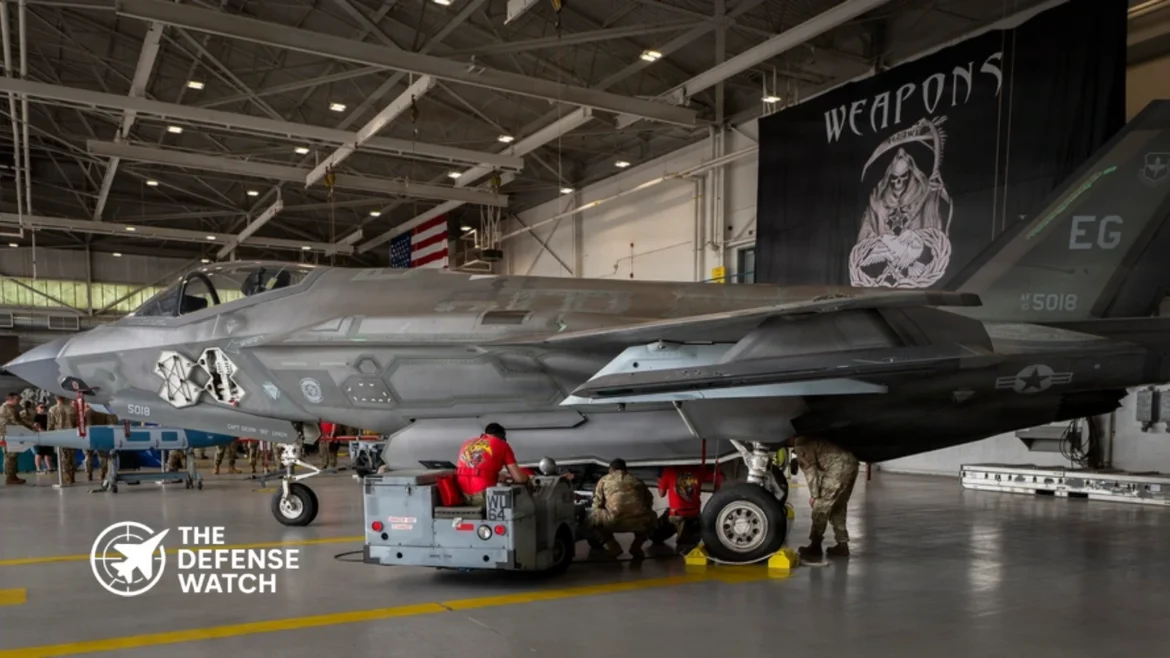
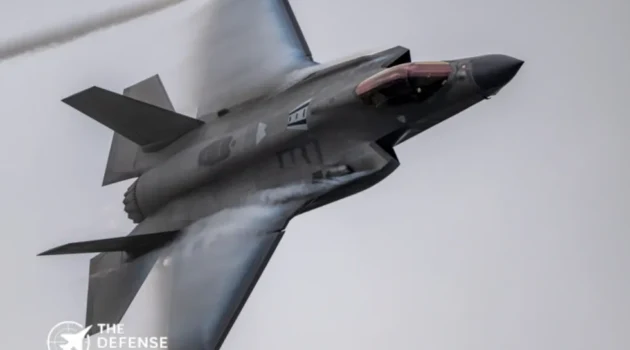
Lockheed Martin Corp. and Lockheed Martin Aeronautics Co. have received a $24.128 million modification to expand retrofit and modification support for F-35 Joint Strike Fighter aircraft operated by U.S. services and international customers. The award covers material modification kits, specialized test and tooling equipment, aircraft induction, depot site support and regional depot modification installations.
The modification, designated P00008, was issued by the Naval Air Systems Command (NAVAIR), Patuxent River, Maryland, against order N0001925F2558 under basic ordering agreement N0001924G0010. Work will be performed in Fort Worth, Texas, and is scheduled for completion in October 2028.
Takeaways
Lockheed Martin receives additional funding for F-35 retrofit and depot modification support
1. $24.1 Million F-35 Modification
Lockheed Martin has received a $24.128 million modification covering additional F-35 retrofit and modification requirements.
2. Depot Retrofit Infrastructure
The work includes modification kits, special test and tooling equipment, aircraft induction, depot site support and regional depot installations.
3. U.S. and International Fleet Support
The modification supports F-35 aircraft operated by the Air Force, Marine Corps, Navy, FMS customers and other international participants.
4. International Funding Is Significant
Non-U.S. Department of War participants and FMS customers provide $12.206 million, or about 50.6% of the obligated amount.
5. Work Runs Through October 2028
Work will be performed in Fort Worth, Texas, with completion expected in October 2028, extending the F-35 retrofit support pipeline.
Why the F-35 Retrofit Pipeline Matters
The award is part of the less visible infrastructure required to keep the F-35 fleet technologically relevant as aircraft move through successive modification and modernization cycles. Unlike new aircraft production, retrofit work requires existing airframes to be inducted into maintenance facilities, equipped with the necessary modification hardware, tested and returned to operational units.
That requirement is becoming more important as the F-35 fleet transitions toward newer hardware and software configurations. Lockheed Martin identifies Technology Refresh 3 (TR-3) as the computing and avionics foundation for future Block 4 capabilities. TR-3 provides greater processing capacity, additional memory and an updated architecture intended to support more advanced sensors, electronic warfare capabilities, weapons and data-processing functions.
The broader modernization effort also illustrates why retrofit capacity is strategically important. Block 4 encompasses more than 70 planned capability upgrades across the three F-35 variants, including improved target recognition, electronic warfare capabilities and increased weapons capacity. Existing aircraft therefore require a continuing pathway for hardware and software insertion rather than relying solely on new production aircraft.
This modification does not identify the individual F-35 modifications or aircraft affected. It therefore should not be interpreted as funding for a specific Block 4 capability. Instead, the contract language points to the enabling infrastructure needed to execute a range of retrofit activities across the U.S. and international F-35 enterprise.
Contract Breakdown & Financial Allocation
$24.128 Million Modification
The total modification value is $24,128,282. The funding is divided among U.S. Air Force and Navy aircraft procurement accounts, international participant funding and Foreign Military Sales accounts.
The obligated funding is allocated as follows:
- Fiscal 2024 Air Force aircraft procurement: $30,440, approximately 0.1%
- Fiscal 2024 Navy aircraft procurement: $2,615,826, approximately 10.8%
- Fiscal 2025 Air Force aircraft procurement: $5,450,402, approximately 22.6%
- Fiscal 2026 Air Force aircraft procurement: $1,266,039, approximately 5.2%
- Fiscal 2026 Navy aircraft procurement: $2,559,538, approximately 10.6%
- Non-U.S. Department of War participant funds: $9,096,785, approximately 37.7%
- Foreign Military Sales customer funds: $3,109,252, approximately 12.9%
The international component is notable. Combined non-U.S. Department of War participant and FMS funding totals $12.206 million, representing about 50.6% of the amount obligated at award.
Retrofit Kits and Depot Equipment
The modification provides material modification kits and specialized test and tooling equipment. These items are essential to converting engineering requirements into repeatable depot-level work.
The inclusion of aircraft induction and depot site support indicates that the effort extends beyond the delivery of individual hardware kits. Aircraft must be scheduled, inducted into the modification process, physically altered, inspected and tested before returning to the fleet.
Regional depot modification installations also point to a distributed support model. Such an approach can reduce the need to route every aircraft requiring modification through a single facility and can help align retrofit capacity with the geographic distribution of the expanding F-35 fleet.
Completion in October 2028
All work under the modification is expected to be completed by October 2028. The multi-year schedule reflects the nature of F-35 modification work, which must be coordinated with aircraft availability, depot capacity, configuration management, tooling and customer-specific requirements.
The F-35 program already operates across a large international user base, making standardized retrofit processes increasingly important for maintaining common aircraft configurations and interoperability.
Industry Impact & Acquisition Insight
The contract was not competed, which is consistent with the prime contractor’s central role in F-35 aircraft design, production, modification engineering and configuration management. Lockheed Martin is therefore positioned to provide the engineering and material integration required to modify aircraft whose configuration is controlled within the F-35 program.
The underlying order uses a cost-plus-fixed-fee and firm-fixed-price structure. A firm-fixed-price portion generally places greater cost-performance risk on the contractor because the price is established in advance. A cost-plus-fixed-fee element reimburses allowable costs while providing a predetermined fee, making it more suitable for work where the final effort or technical requirements carry greater uncertainty. The combination allows the government to structure different elements of the modification according to their cost and execution characteristics.
The award also highlights the increasingly global nature of F-35 sustainment and modernization. Lockheed Martin’s 2025 annual report identified continued investment in F-35 upgrades, including Block 4 enhancements, sensors, electronic warfare and data links.
For the F-35 enterprise, retrofit capacity is effectively part of combat capability. Advanced software and hardware provide limited operational value if aircraft cannot be efficiently inducted, modified, tested and returned to units. The Fort Worth award therefore supports an essential layer of the program’s long-term modernization architecture.
- ► $225.1 million modification awarded to Northrop Grumman Systems Corp.
- ► Covers design, development, and delivery of E-130J training weapons systems courseware.
- ► Supports the Navy Take Charge and Move Out recapitalization program.
- ► Work to be completed by March 2027 across Florida and Oklahoma.
- ► Contract managed by Naval Air Systems Command, Patuxent River.
Northrop Grumman Awarded E-130J Training Systems Contract Worth $225 Million
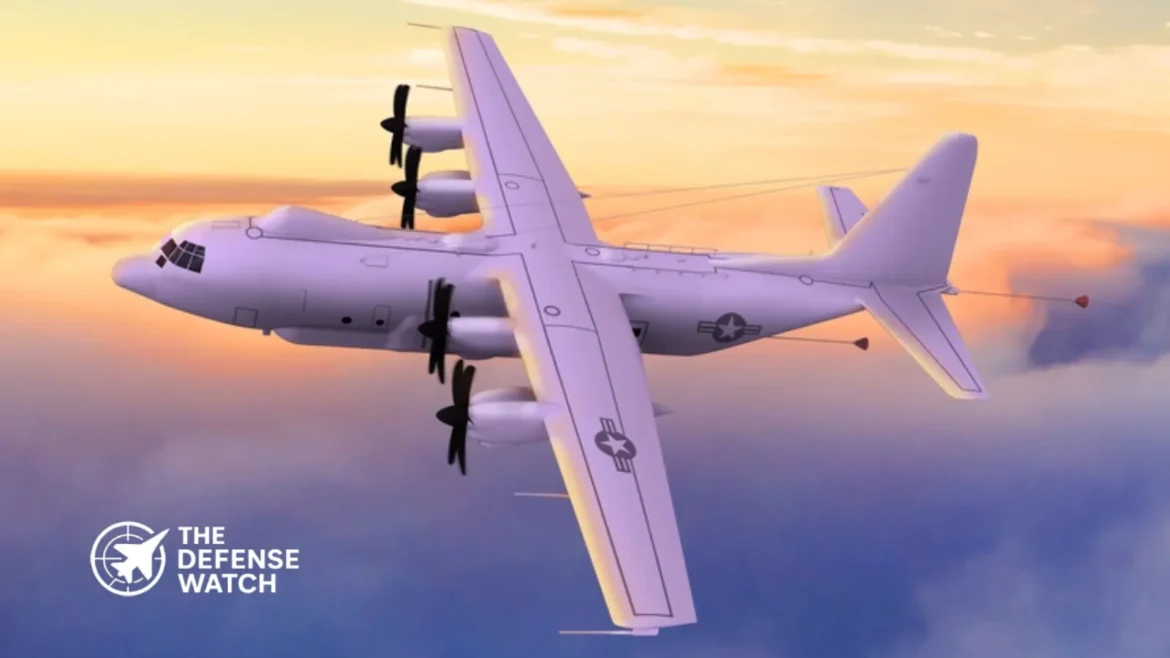
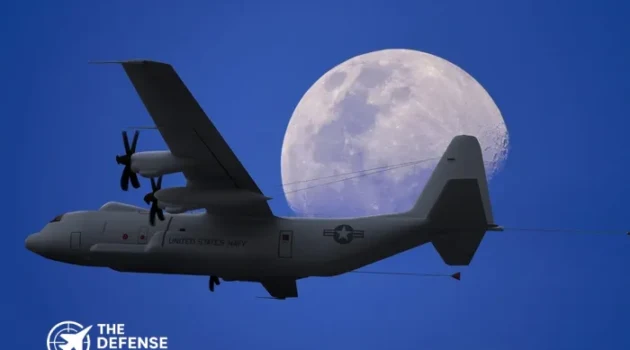
The Northrop Grumman E-130J contractmarks a significant step in the US Navy’s Take Charge and Move Out recapitalization effort, with the Pentagon awarding a $225.1 million modification for training systems development and delivery.
The Department of Defense announced that Northrop Grumman Systems Corp., based in Melbourne, Florida, received a cost-plus-incentive-fee modification valued at $225,109,424. The award exercises options for the design, development, and delivery of comprehensive E-130J weapons systems training materials and courseware.
The aircraft was previously referred to as E-XX before its official designation as E-130J.
Supporting The Take Charge And Move Out Program
The E-130J training systems contract directly supports the Navy’s Take Charge and Move Out recapitalization program. The initiative aims to modernize key airborne command and control capabilities, ensuring continuity of strategic communications and operational readiness.
Training systems are central to that effort. As new platforms transition from development to operational service, the Navy must field fully integrated courseware, simulators, and instructional materials. Without a mature training pipeline, even advanced aircraft cannot reach full operational capability on schedule.
Under this modification, Northrop Grumman will deliver all required training weapons systems materials, covering aircrew and maintenance training components. The cost-plus-incentive-fee structure reflects the technical complexity and evolving requirements typical of advanced training system development.
Workshare And Funding Details
According to the Pentagon, work under the Northrop Grumman E-130J contract will be performed in:
- Orlando, Florida, 64 percent
- Oklahoma City, Oklahoma, 31 percent
- Melbourne, Florida, 5 percent
The effort is expected to conclude by March 2027.
At the time of award, $54.9 million in fiscal 2026 Navy research, development, test and evaluation funds were obligated. Notably, these funds will not expire at the end of the current fiscal year, providing flexibility for program execution.
The contract was competitively awarded and is managed by Naval Air Systems Command, headquartered in Patuxent River, Maryland. NAVAIR oversees procurement, development, and sustainment of naval aviation systems across the fleet.
Strategic Context And Program Significance
While the aircraft’s operational mission details remain limited in public disclosures, the E-130J designation signals alignment with the C-130J airframe family. That suggests a proven platform adapted for specialized Navy requirements, consistent with recapitalization priorities focused on survivability, reliability, and interoperability.
The training systems portion of the program is more than an administrative milestone. Historically, delays in courseware development have slowed fielding timelines across multiple US aviation programs. By awarding this modification early in the lifecycle, the Navy appears intent on synchronizing platform delivery with training readiness.
From a defense budgeting perspective, the award also reflects sustained congressional support for naval aviation modernization. Research and development funding commitments indicate the program remains in an active maturation phase rather than full-rate production.
Industry And Capability Implications
For Northrop Grumman, the E-130J training systems contract strengthens its role in high-end mission systems integration and training solutions. The company has longstanding experience delivering airborne command, control, and ISR systems across multiple US services.
As recapitalization efforts accelerate across the Department of Defense, integrated training solutions are becoming a core requirement rather than a follow-on activity. Digital courseware, simulation environments, and mission rehearsal systems now form a critical part of operational readiness.
The Northrop Grumman E-130J contract underscores that reality. Training systems are no longer secondary to aircraft procurement. They are a foundational element of capability delivery.
Telephonics P-8A IFF contract expansion strengthens allied maritime aviation
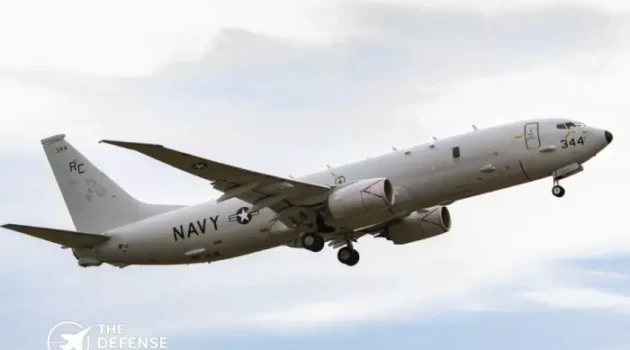
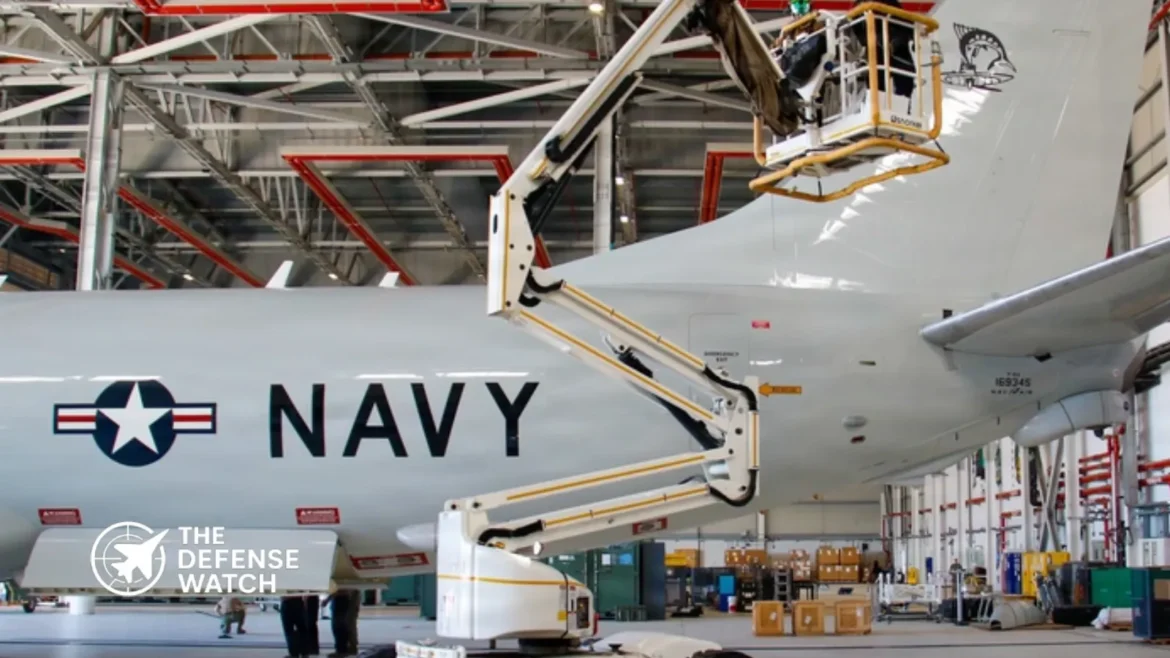
Telephonics, based in Farmingdale, New York, has been awarded a $16,022,537 contract modification to expand production and support of Identification Friend or Foe systems for the P-8A Poseidon aircraft, according to a U.S. Navy contract announcement. The Telephonics P-8A IFF contract supports U.S. Navy requirements and Foreign Military Sales customers, including Canada and Germany.
(adsbygoogle = window.adsbygoogle || []).push({});The contract modification, designated P00002, updates a previously awarded firm fixed price cost plus fixed fee contract and adds scope for additional production, delivery, and sustainment activities through April 2028.
Contract scope and system details
Under the modified contract, Telephonics will produce and deliver 29 AN UPX-43(V) Identification Friend or Foe Interrogators for the P-8A maritime patrol aircraft. The systems are allocated across U.S. Navy and allied fleets as follows:
- Eight IFF interrogator sets for the U.S. Navy
- Fourteen sets and three spares for the government of Canada
- Three sets and one spare for the government of Germany
In addition to the interrogators, the contract includes the production of 25 P-8A IFF trays, which support installation and integration aboard the aircraft.
The AN UPX-43(V) is a modern IFF interrogator used to identify cooperative air and surface contacts. On the P-8A Poseidon, the system supports maritime surveillance, anti submarine warfare, and coalition operations by enabling secure identification within joint and allied airspace.
(adsbygoogle = window.adsbygoogle || []).push({});Support, sustainment, and firmware updates
Beyond hardware production, the Telephonics P-8A IFF contract also covers a range of sustainment and lifecycle support activities. These include:
- Repair of repairable components
- Ongoing technical support
- Firmware updates for the IFF systems
These elements are critical for maintaining interoperability and system reliability across multinational P-8A fleets. Firmware updates ensure continued compliance with evolving identification standards and coalition operating requirements.
The inclusion of sustainment work reflects the growing emphasis on long term readiness and supportability for U.S. Navy and allied aviation platforms.
Funding and contract structure
The $16 million modification includes funding from both U.S. Navy procurement accounts and Foreign Military Sales customers.
- $4,932,817 is funded by Fiscal Year 2024 Navy aircraft procurement funds
- $11,089,721 is funded by Foreign Military Sales customers
The Navy funded portion will be obligated at the time of award, with funds set to expire at the end of the current fiscal year.
The contract was awarded on a non competitive basis, consistent with system sustainment and follow on production for existing platforms and suppliers.
Work location and schedule
All work under the contract will be performed in Farmingdale, New York, where Telephonics conducts system development, production, and support activities.
The Navy expects contract performance to be completed by April 2028, aligning with ongoing P-8A fleet modernization and allied force expansion timelines.
(adsbygoogle = window.adsbygoogle || []).push({});Strategic context for P-8A operators
The P-8A Poseidon is a cornerstone of U.S. and allied maritime patrol aviation. Operated by the U.S. Navy, Canada, Germany, and several other partner nations, the aircraft plays a key role in:
- Maritime domain awareness
- Anti submarine warfare
- Surface surveillance
- Coalition and NATO operations
Reliable IFF capability is essential for these missions, particularly during multinational operations where aircraft operate in shared airspace and contested maritime environments.
The Telephonics P-8A IFF contract supports this requirement by ensuring consistent system configuration and sustainment across multiple allied fleets.
Contracting authority
The contracting activity for the award is Naval Air Systems Command, headquartered at Patuxent River, Maryland. NAVAIR manages the development, acquisition, and sustainment of naval aviation platforms and systems, including the P-8A Poseidon.