GE Aerospace Tejas Engine Support Deal Strengthens India’s Fighter Sustainment
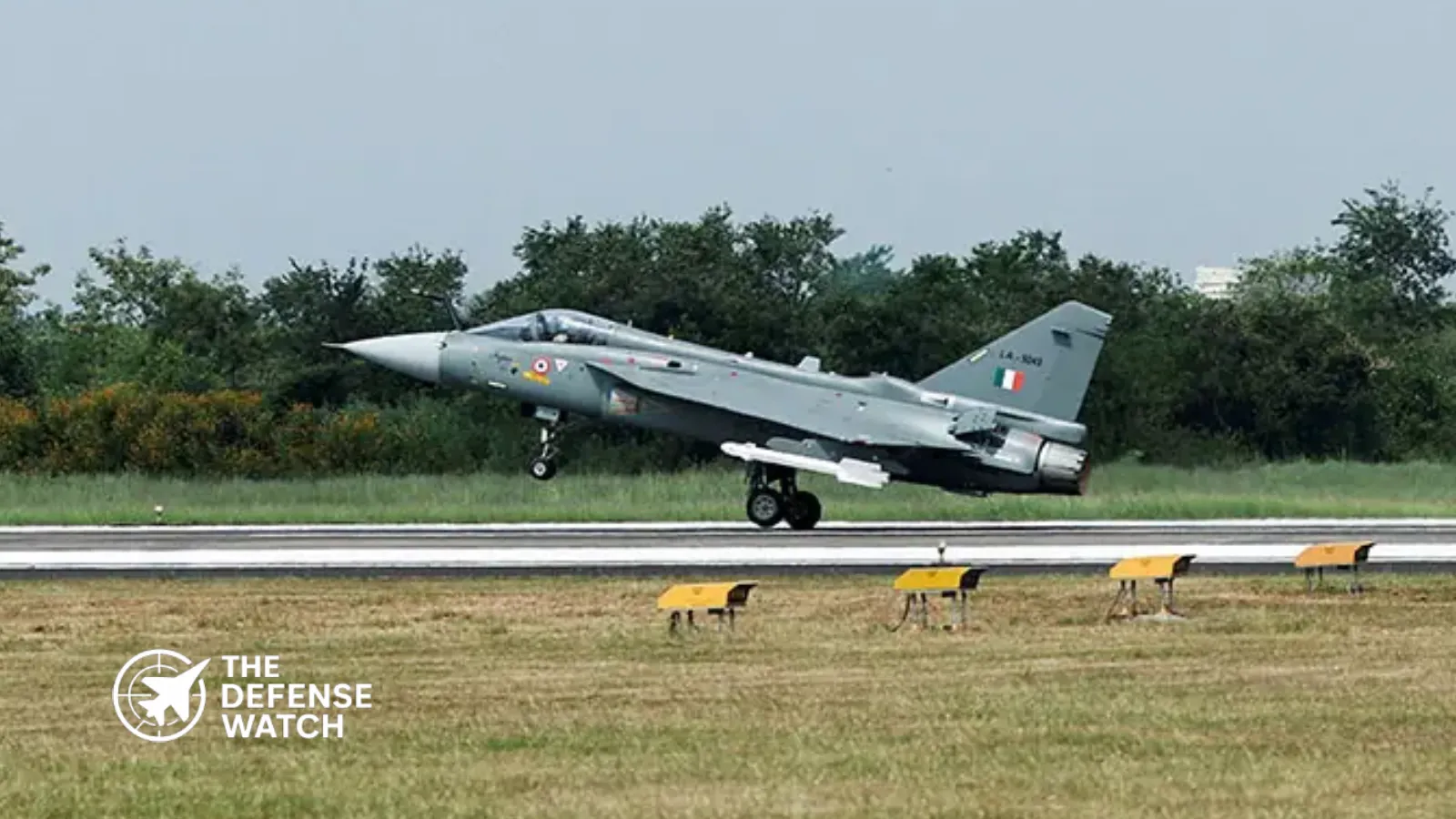
The GE Aerospace Tejas engine support deal marks a significant step in strengthening India’s indigenous fighter sustainment ecosystem, as GE Aerospace formalizes an agreement with the Indian Air Force to establish an in-country depot for F404-IN20 engine support.
The agreement focuses on maintenance, repair, and overhaul capabilities for the engines that power the HAL Tejas, a cornerstone of India’s domestic military aviation program.
The new depot will enable localized servicing of the F404-IN20 engine, reducing dependence on overseas maintenance pipelines and improving turnaround times.
- GE Aerospace signed a deal with the Indian Air Force to establish an in-country support depot for F404-IN20 engines.
- The engines power the Tejas Light Combat Aircraft fleet, India’s indigenous fighter program.
- The depot will enhance maintenance, repair, and overhaul capabilities within India.
- The agreement supports long-term sustainment and operational readiness of the Tejas fleet.
- The move aligns with India’s push for defense self-reliance and local industrial capability.
Enhancing Operational Readiness
The GE Aerospace Tejas engine support deal is designed to directly improve fleet availability. By positioning engine sustainment infrastructure within India, the Indian Air Force can reduce downtime associated with logistics, shipping, and external repair cycles.
For a growing Tejas fleet, this is operationally significant. Aircraft readiness rates often hinge on engine availability, and localized support helps mitigate bottlenecks that can arise from global supply chain constraints.
This move reflects a broader trend across air forces globally, where sustainment is increasingly viewed as a critical component of combat capability rather than a back-end function.
Strategic Push for Self-Reliance
The agreement aligns closely with India’s long-standing push for defense indigenization. Programs tied to domestic production, including the Tejas, are intended to reduce reliance on foreign suppliers while building a local industrial base.
While the F404-IN20 engine itself remains a U.S.-origin system, the GE Aerospace Tejas engine support deal introduces a hybrid model. It combines foreign technology with local sustainment capacity, offering a practical pathway toward greater autonomy without sacrificing proven performance.
This approach is consistent with India’s broader procurement strategy, which increasingly emphasizes technology transfer, local assembly, and in-country lifecycle support.
Industrial and Economic Impact
Establishing a local depot is not only a military decision but also an industrial one. The initiative is expected to generate technical expertise within India’s aerospace sector, including skills related to advanced engine diagnostics, repair, and overhaul.
Over time, such capabilities can contribute to a more resilient domestic supply chain. They also position India to potentially support other operators of similar engine platforms in the region, depending on policy and export frameworks.
From GE Aerospace’s perspective, the deal strengthens its long-term presence in a key defense market. India remains one of the world’s largest importers of military equipment, and partnerships tied to sustainment often lead to deeper industrial cooperation.
Broader Implications for Tejas Program
The Tejas program has faced scrutiny in the past over production pace and sustainment challenges. Improved engine support infrastructure addresses one of the critical variables affecting fleet performance.
As India continues to expand Tejas squadrons, ensuring consistent engine availability will be essential. The GE Aerospace Tejas engine support deal contributes directly to that objective by shortening maintenance cycles and improving predictability in fleet operations.
In a regional security environment marked by evolving airpower capabilities, incremental improvements in readiness can have outsized operational impact.
- â–º Contractor: General Electric, Lynn, Massachusetts.
- â–º Contract value: $20,085,584 firm-fixed-price delivery order.
- â–º Scope: Repair of 16 F404 engine components, totaling 275 repairs.
- â–º Completion date: December 2027.
- â–º Contracting activity: Naval Supply Systems Command Weapon Systems Support, Philadelphia.
US Navy Awards $20M F404 Engine Repair Contract To General Electric
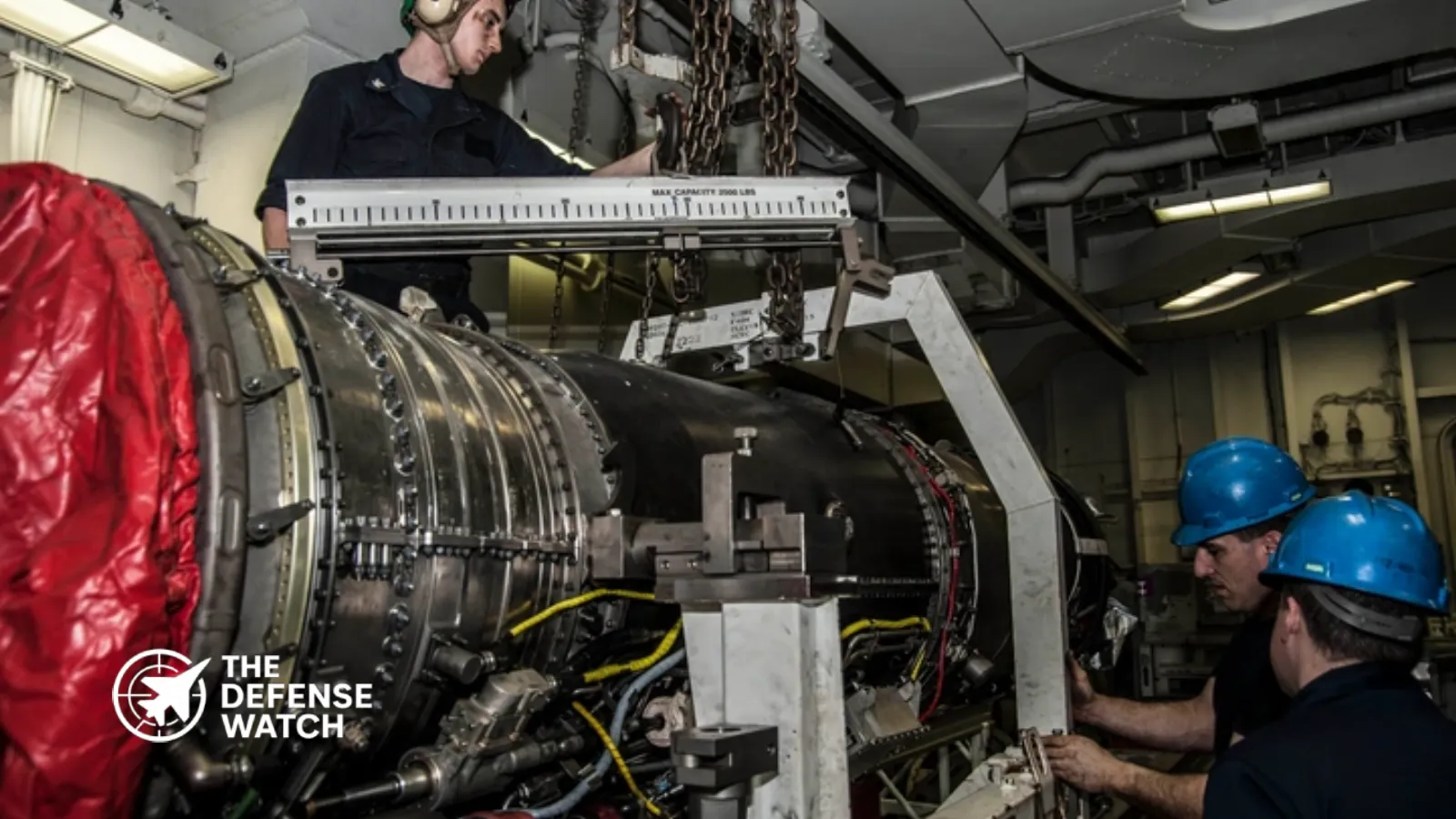
The US Navy has awarded a $20,085,584 F404 engine repair contract to General Electric in Lynn, Massachusetts, to support sustainment of the F404 turbofan engine fleet.
According to a Department of Defense contract announcement, the firm-fixed-price delivery order covers the repair of 16 different F404 engine components, totaling 275 individual repairs. Work will be performed in Lynn, Massachusetts, and is expected to be completed by December 2027.
The award was issued under a previously established basic ordering agreement and does not include an option provision.
Contract Structure And Funding
The F404 engine repair contract was issued under a previously awarded basic ordering agreement, identified as N00383-22-G-TF01. The new delivery order, N00383-26-F-TF04, is structured as a firm-fixed-price arrangement, meaning the total cost is set at award.
Fiscal 2026 working capital funds from the Navy, totaling $20,085,584, were obligated at the time of award. The funds will not expire at the end of the current fiscal year.
The contracting activity is Naval Supply Systems Command Weapon Systems Support, based in Philadelphia, Pennsylvania. This office manages supply chain and sustainment support for naval aviation platforms and propulsion systems.
The requirement was pursued on a sole-source basis under the authority of 10 U.S. Code 3204(a)(1), which allows for contracting without full and open competition when only one responsible source can meet agency requirements. One offer was solicited and received.
F404 Engine Fleet Sustainment
The F404 turbofan engine powers several frontline fighter aircraft, most notably the Boeing F/A-18 Hornet and variants of the Boeing F/A-18 Super Hornet. The engine is also used in international platforms such as the KAI T-50 Golden Eagle.
With hundreds of F404 engines in service globally, component repair contracts play a central role in maintaining operational readiness. Depot-level maintenance and component refurbishment extend engine life cycles, reduce replacement costs, and support fleet availability.
General Electric, headquartered in the United States, has long served as the original equipment manufacturer for the F404 series. Sustainment contracts like this one ensure continued access to technical data, proprietary parts, and certified repair processes required to meet naval aviation safety and performance standards.
Broader Context In Naval Aviation Sustainment
The award underscores the Navy’s ongoing investment in propulsion sustainment amid high operational tempo and aging aircraft inventories. While the Navy continues to modernize its carrier air wings with newer platforms, legacy F404-powered aircraft remain active across training and operational units.
Firm-fixed-price repair contracts provide cost predictability for the service while securing specialized industrial base capacity. Lynn, Massachusetts, remains a critical site for F404 engine production, overhaul, and repair activities.
As the Navy balances modernization with readiness, sustainment awards such as this F404 engine repair contract form a steady component of its aviation budget strategy.