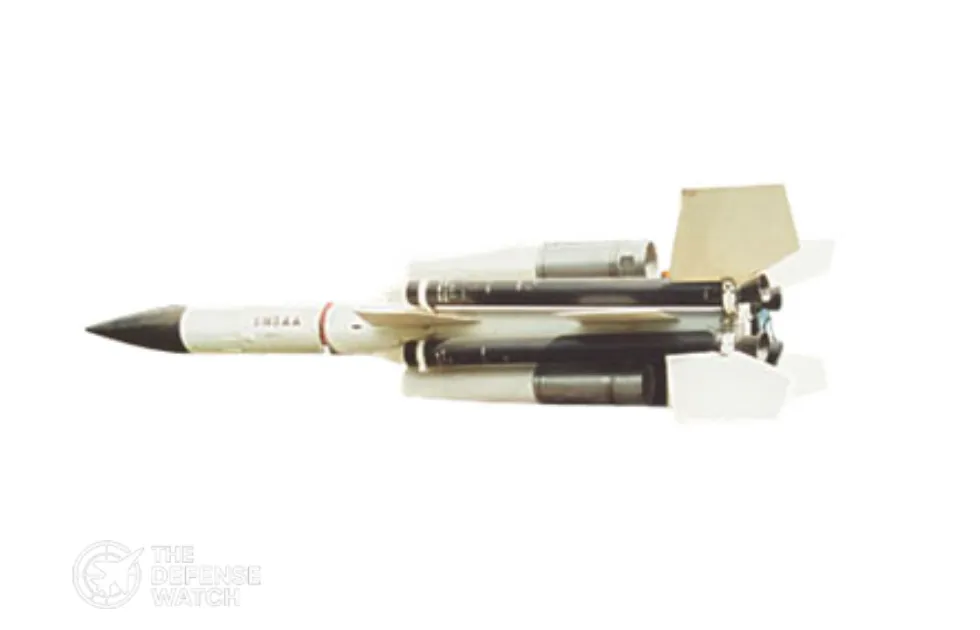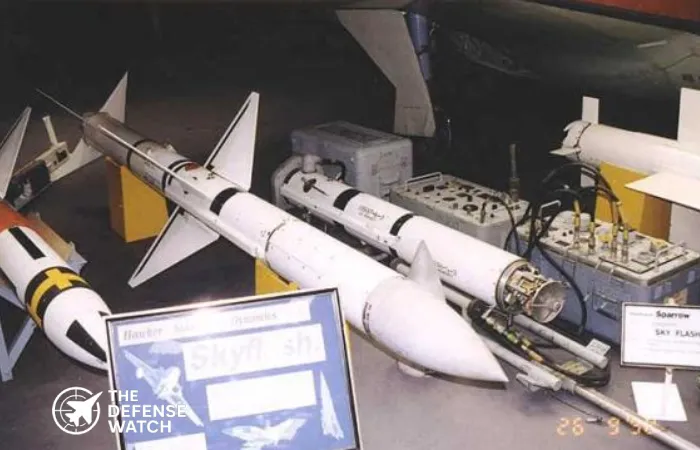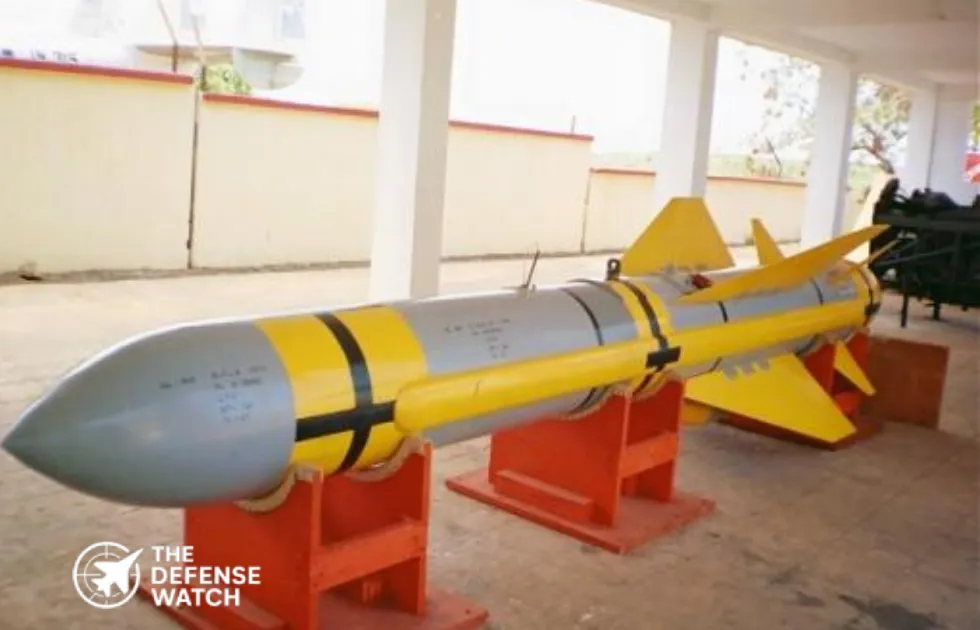
Sea Eagle Anti-Ship Missile
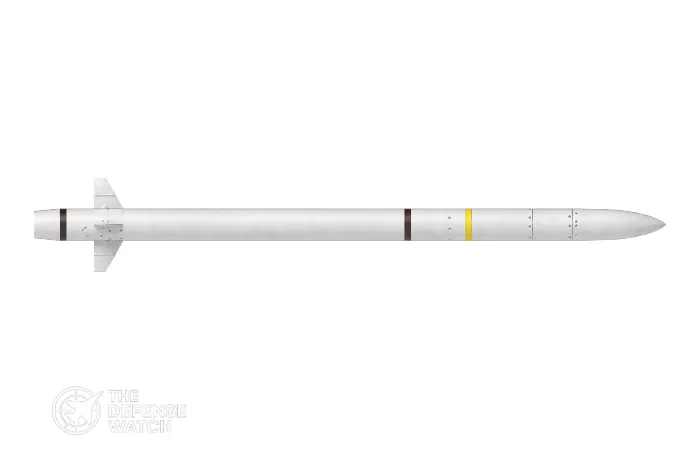
Sea Eagle combines inertial mid-course guidance with terminal active radar homing. After launch it descends to low altitude (typically under 20 m, dropping lower in the terminal phase) and maintains a subsonic cruise. Programmable flight paths, including dog-leg maneuvers and optional pop-up for seeker updates, allow coordinated multi-missile attacks from different directions. It was cleared for fixed-wing and rotary-wing platforms and saw operational use with the United Kingdom, India, Saudi Arabia, and limited trials elsewhere.
Manufacturer
Developed by British Aerospace (BAe) Dynamics under the P.3T designation, production began in 1982. Responsibility later transferred to MBDA (UK). The missile draws on the Martel airframe but replaces solid-rocket propulsion with a turbojet for greater range.
Speed and Range
Powered by a Microturbo TRI-60 turbojet, Sea Eagle cruises at approximately Mach 0.85 (about 1,040 km/h). Maximum range exceeds 110 km, depending on launch altitude, speed, and flight profile. Flight time is roughly 400 seconds at maximum range.
Cost/Price
Unit production costs were never publicly disclosed in open sources. As a 1980s-era system that left UK front-line service around 2000, current residual inventory or export values are not available in unclassified data.