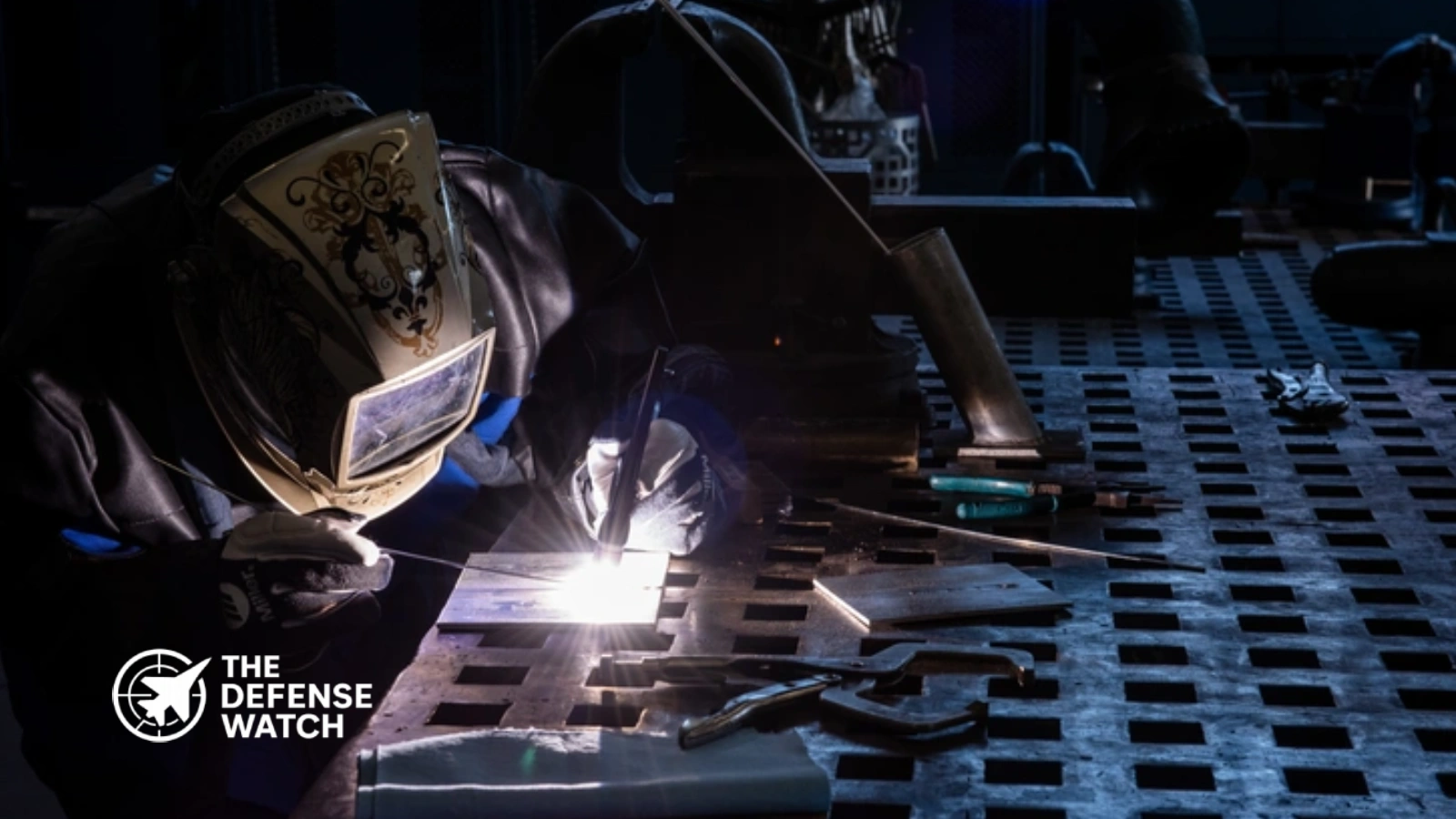
The Department of War is using a $450 million preferred equity investment to expand U.S. tungsten processing capacity, targeting a critical material used across missiles, munitions, aircraft, submarines and other defense systems.
Takeaways
The Department of War is committing $450 million to The Elmet Group to expand domestic tungsten processing and strengthen a critical defense supply chain.
Department Of War Targets U.S. Tungsten Supply
The U.S. tungsten supply chain is the focus of a new $450 million Department of War investment intended to expand domestic processing capacity and strengthen the defense industrial base.
The Department’s Office of the Assistant Secretary of War for Industrial Base Policy, working with the Economic Defense Unit, announced the redeemable preferred equity investment in The Elmet Group through the Industrial Base Analysis and Sustainment program.
The transaction is designed to increase U.S. capacity for processing tungsten and molybdenum, two materials used in a wide range of defense and industrial applications.
Assistant Secretary of War for Industrial Base Policy Mike Cadenazzi said the investment is intended to rebuild critical industrial capacity in the United States while strengthening supply chain resilience and supporting manufacturing employment.
The announcement comes as Washington places greater emphasis on domestic production and processing of critical minerals that are important to military manufacturing.
Why Tungsten Matters To The Defense Industrial Base
Tungsten is valued for its high density, hardness, heat resistance and durability. Those characteristics make it useful in applications where components must withstand high temperatures, mechanical stress or demanding operating conditions.
The material is used in armaments, aerospace components, propulsion systems, electronics and other industrial applications. USGS identifies tungsten alloys and heavy metals among the material’s applications in armaments, while tungsten also has important uses in high-temperature and wear-resistant systems.
For the defense sector, the significance is not limited to the availability of mined tungsten. Processing capacity is also important because raw materials must be converted into forms suitable for manufacturing.
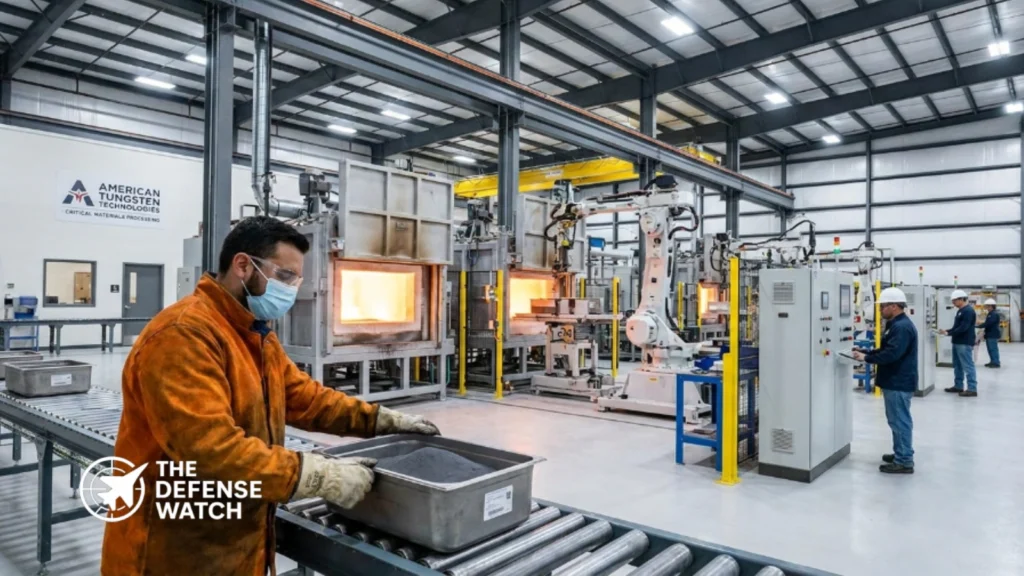
That makes downstream processing facilities a potential supply chain bottleneck even when mineral resources are available elsewhere.
The Department said Elmet supports more than 100 defense programs. Those programs include the F-35 fighter, Patriot PAC-3 air defense system, Trident D5 missile, Next Generation Interceptor, Precision Strike Missile and Virginia- and Columbia-class submarines.
The breadth of those applications illustrates why tungsten availability can affect multiple areas of the defense industrial base rather than a single weapon program.
$450 Million Investment Targets Processing Capacity
The Department said its investment will help expand Elmet’s domestic production and processing capabilities.
A central element is the planned establishment of what the Department describes as the only independent ammonium paratungstate facility in North America.
Ammonium paratungstate is an important intermediate product in the tungsten processing chain. Expanding production of this material in North America would therefore address a processing stage between raw tungsten feedstock and finished tungsten products.
The Department characterized this part of the supply chain as one of the major chokepoints affecting the U.S. industrial base.
The preferred equity structure also differs from a conventional procurement contract. Rather than simply purchasing a quantity of tungsten products, the government is taking a financial position intended to strengthen industrial capacity.
The Department said the structure is designed to support the company while protecting taxpayer interests.
China Dominates Global Tungsten Production
The investment also reflects the geographic concentration of global tungsten production.
USGS data shows China produced approximately 83 percent of the world’s mined tungsten in 2023. The same USGS assessment identified tungsten among the mineral commodities for which China was the world’s leading producer.
USGS has also described tungsten as a critical mineral partly because of the high concentration of global production in China.
That concentration creates a supply chain issue for defense manufacturers because access to raw material alone does not guarantee access to the refined and processed products needed for production.
The Department said China currently accounts for an estimated 85 percent of global tungsten supply and 40 percent of molybdenum supply. Those figures come from the Department’s announcement and differ slightly from USGS figures for specific production categories and years. The comparison is important because estimates can vary depending on whether they measure mined production, refined material or broader supply.
The broader trend is clear: tungsten production and processing remain highly concentrated outside the United States.
Elmet Investment Links Critical Minerals To Major Weapons Programs
The Elmet Group’s stated role across more than 100 Department of War programs gives the investment a wider defense industrial significance.
The F-35, Patriot PAC-3, Trident D5, Next Generation Interceptor and Precision Strike Missile represent different parts of the U.S. defense portfolio. They span tactical aviation, integrated air and missile defense, strategic weapons and long-range precision strike.
The inclusion of Virginia- and Columbia-class submarines also connects tungsten and molybdenum processing to the naval industrial base.
This matters because supply chain disruptions can affect programs indirectly. A material shortage does not necessarily stop an entire weapons program immediately, but limited access to specialized materials can create procurement delays, increase costs or constrain production rates.
The Department’s strategy is therefore focused on industrial capacity rather than simply maintaining inventories of finished weapons.
U.S. Industrial Base Expansion
The Department said the Elmet investment is expected to generate economic activity in several U.S. locations.
The expansion is expected to support new high-tech jobs in Coldwater, Michigan, and Lewiston, Maine, preserve high-paying manufacturing positions in Euclid, Ohio, and increase demand for upstream mining employment in Nevada.
The Department also estimates that the investment could support approximately 1,200 downstream jobs across manufacturing, engineering and logistics networks connected to major defense suppliers.
Those employment effects are secondary to the defense objective, but they illustrate how industrial-base investments can affect multiple parts of the supply chain.
The approach also fits a wider U.S. effort to increase domestic access to strategically important minerals.
A July 2026 report from Cronkite News noted that the U.S. government had been increasing investment in critical minerals as Washington seeks to reduce exposure to supply chains dominated by China and other foreign producers. The report also cited Cadenazzi’s earlier comments that the Department was looking at materials including tungsten, antimony, manganese and beryllium.
What The Investment Changes
The most important change is the potential expansion of processing capacity inside the United States and North America.
The investment does not immediately eliminate U.S. exposure to foreign tungsten supplies. Mining, refining, chemical processing and component manufacturing are separate stages, and strengthening one part of the chain does not automatically create a fully domestic supply chain.
However, establishing additional domestic processing capacity could reduce the number of external chokepoints that U.S. defense manufacturers must rely on.
That distinction is important. A secure critical-mineral supply chain requires more than domestic mining. It also requires refining, intermediate processing, component production, transportation capacity and qualified suppliers.
The Elmet investment addresses the processing portion of that chain.
Broader Defense Supply Chain Strategy
The transaction is part of a broader shift in U.S. defense policy toward strengthening the industrial base through direct government investment.
Recent U.S. government transactions involving critical minerals have also used strategic equity investments to support domestic or allied production. In August 2026, the Department announced a strategic equity investment involving Trilogy Metals and the Upper Kobuk Mineral Projects in Alaska, with the stated goal of reducing foreign supply vulnerabilities and strengthening U.S. industrial capacity.
The Elmet transaction applies a similar policy approach to a material already embedded in established defense production chains.
For the U.S. tungsten supply chain, the key issue will be whether the investment translates into sustained processing capacity, reliable feedstock and competitive domestic production over the long term.
The Department’s $450 million commitment represents a significant step toward that objective, but the industrial effects will depend on how quickly the planned facilities and capacity expansions are delivered.
Bottom Line
The Department of War’s $450 million investment in The Elmet Group is aimed at a specific weakness in the U.S. defense industrial base: limited domestic capacity for processing critical tungsten materials.
The investment is intended to expand U.S. tungsten and molybdenum capacity, establish an independent ammonium paratungstate facility in North America and strengthen supply chains supporting more than 100 defense programs.
USGS data shows why the issue has strategic importance. China accounted for about 83 percent of global mined tungsten production in 2023, making tungsten one of the more geographically concentrated critical mineral supply chains.
The immediate objective is not to replace global tungsten supply, but to build additional U.S. processing capacity and reduce the number of critical points where foreign supply disruptions could affect defense production.