

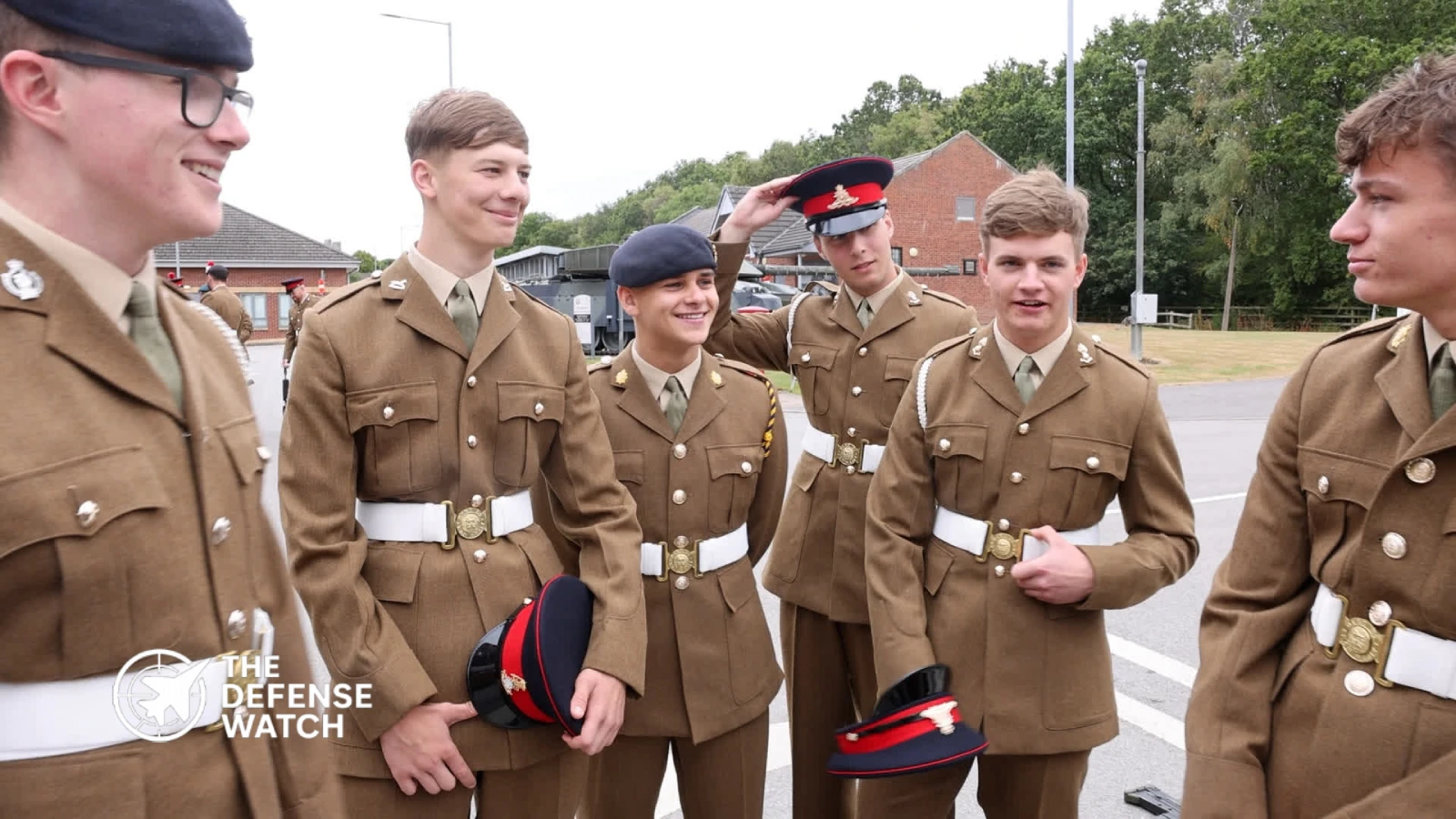
Army Foundation College Expansion Under Consideration
The Army Foundation College is at the center of early plans to expand the British Army’s capacity to train 16 and 17-year-old recruits, with the UK government considering whether a second establishment could be created in southern England.
- Army Foundation College Expansion Under Consideration
- Takeaways
- Thousands Of Young Recruits Train At Harrogate
- Why A Southern Army College Is Being Considered
- Under-18 Recruitment Remains A Distinctive Feature Of UK Defence
- Safeguarding Is A Major Consideration
- Recruitment Benefits And Retention Risks
- What Happens Next
Takeaways
Britain is considering additional capacity for under-18 Army recruits, but a second Army Foundation College remains an early-stage proposal.
The proposal, reported by Forces News on September 3, 2026, is not yet a confirmed construction or basing program. Defence sources cited by the publication said the idea remains in the early stages and is currently non-committal.
The possible expansion comes as Britain continues efforts to strengthen military recruitment and create more routes into service for young people. The Ministry of Defence has also been examining arrangements for the future operation and potential capacity of the existing Army Foundation College in Harrogate, North Yorkshire.
A February 2026 government procurement notice said the Ministry of Defence was considering whether additional capacity and infrastructure could be required at Harrogate as part of future arrangements for the college.
Harrogate Remains The Army’s Main Junior Soldier Training Center
The Army Foundation College in Harrogate is currently the British Army’s dedicated Phase One training establishment for recruits under 18.
The Army says Junior Soldiers can begin their application at 15 years and seven months, while attendance begins between ages 16 and 17 years and five months. Parental consent is required for recruits under 18.
Training is organized around two main course lengths. The shorter course lasts 23 weeks, including three weeks of leave, while the longer course lasts 48 weeks, including eight weeks of leave. The longer route is used for roles such as infantry, Royal Armoured Corps and Royal Artillery positions, while the shorter course supports several technical and specialist branches.
After completing Phase One training at Harrogate, Junior Soldiers continue to specialist Phase Two training associated with their chosen Army role.
Official Army material describes the college as combining military training with education and personal development. The program includes subjects such as English, mathematics and information technology, alongside military skills and physical training.
Thousands Of Young Recruits Train At Harrogate
The scale of the existing operation helps explain why additional capacity is being considered.
UK Parliament figures published in October 2025 show that 2,330 16 to 18-year-olds attended the Army Foundation College during 2024. The figures include recruits who remained at the college across calendar years, meaning they should not be interpreted as annual intake numbers.
Female attendance at the college was approximately 200 during 2024, according to separate Ministry of Defence figures supplied to Parliament. The annual figures are rounded and can include trainees whose courses crossed calendar years.
Forces News reported that approximately 1,200 new recruits aged 16 and 17 were expected to arrive at Harrogate over the weeks following its September 3 report. It also reported that roughly one in four British Army recruits are under 18.
These figures indicate that Harrogate already represents a significant part of the Army’s recruiting and training pipeline. A second location would therefore be more than a geographic convenience. It could potentially provide additional training capacity if the government ultimately decides that the Army should recruit and train larger numbers of younger personnel.
Why A Southern Army College Is Being Considered
One of the clearest arguments for a second establishment is geography.
Harrogate is in North Yorkshire, which can make the current system less accessible for prospective recruits and their families living in southern England. Forces News quoted Major Danny Causland, a Royal Artillery battery commander and former Junior Soldier, arguing that a southern location could make the opportunity more accessible to young people in areas farther from Harrogate.
From an Army planning perspective, distributing training capacity across more than one location could also reduce dependence on a single establishment.
However, accessibility alone does not establish a requirement for another college. A new site would require suitable accommodation, training areas, educational facilities, healthcare provision, safeguarding arrangements and permanent staff. It would also need to fit within the Army’s wider recruitment and training structure.
The Ministry of Defence’s February 2026 procurement notice is relevant because it shows that capacity at Harrogate is already part of official planning discussions. The notice specifically stated that the MOD was considering whether additional capacity and infrastructure might be needed at the existing site.
That does not confirm that a second college will be built. It does, however, demonstrate that the Army is examining how its Junior Soldier training model should operate in the future.
Under-18 Recruitment Remains A Distinctive Feature Of UK Defence
The UK’s recruitment of 16-year-olds distinguishes its military personnel system from many other NATO countries.
British Army policy allows people to enter as Junior Soldiers from age 16. Those recruits remain subject to additional protections because they are under 18.
The Ministry of Defence has stated that parental consent is required for under-18 enlistment. Parliament has also recorded that personnel below 18 are not deployed on hostile operations outside the UK or on operations where they could be exposed to hostilities.
The Army’s own recruitment material describes Junior Soldiers as beginning their Army careers at the Army Foundation College before moving to specialist training.
This creates a different training model from the standard adult-entry pathway. Instead of completing a roughly three-month basic training period, Junior Soldiers normally spend six or 12 months at Harrogate depending on their selected role.
Safeguarding Is A Major Consideration
Any decision to expand the Army Foundation College model would also need to account for the additional safeguarding requirements associated with under-18 personnel.
The Ministry of Defence has acknowledged that personnel under 18 have particular care and welfare requirements. Its safeguarding framework requires additional measures for younger trainees, including supervisory arrangements and risk assessments.
The issue has received renewed parliamentary attention. During evidence to a House of Commons committee in April 2026, MPs raised questions about investigations involving alleged sexual offences against under-18s at the Army Foundation College and questioned the effectiveness of existing safeguarding arrangements.
Those concerns are important to the expansion debate because increasing the number of teenage recruits would also increase the scale of the Army’s responsibility for their welfare, education and protection.
For the Army, any future second site would therefore need to demonstrate that safeguarding is built into its operating model rather than treated as an additional requirement after facilities are established.
Recruitment Benefits And Retention Risks
There is also a practical recruitment argument behind the Junior Soldier system.
The government has been looking for ways to broaden access to military careers. In February 2026, the Ministry of Defence and Department for Work and Pensions announced a recruitment initiative intended to connect more people with Armed Forces careers through local jobcentres and specialist advice. The government described the initiative as part of a wider effort to strengthen recruitment and training opportunities.
The Army Foundation College offers an early route into service while combining military preparation with education. For some school leavers, that can provide a structured transition from secondary education into employment and military training.
At the same time, the model has a significant retention challenge.
Forces News reported that between one in four and one in three recruits at the Army Foundation College leave each year, although the precise figure varies. Under-18 recruits can also exercise discharge rights, while parents can withdraw consent before the recruit reaches 18.
That means expanding physical capacity would not automatically translate into an equivalent increase in trained soldiers. Recruitment, successful completion of training and retention all remain separate factors.
What Happens Next
For now, the proposed second Army college should be treated as a planning concept rather than a funded defense program.
The government has not publicly committed to a specific location, construction schedule or final number of places for a second under-18 training establishment. Forces News reported that defence sources characterized the proposal as being at an early and non-committal stage.
The immediate issue is therefore whether the Army can justify additional Junior Soldier capacity and, if so, whether expanding Harrogate or creating a separate southern facility represents the better option.
The Army Foundation College will remain the central institution for under-18 Army training while that assessment continues.
The broader policy question is more significant. Britain is seeking to improve military recruitment while maintaining strict welfare and safeguarding obligations for personnel who join at 16 or 17. Any expansion will need to balance those objectives with the Army’s requirement for trained personnel.
For defense planners, the proposed second college is therefore not simply an infrastructure decision. It is part of a wider debate over how the British Army recruits, trains and retains its future workforce.