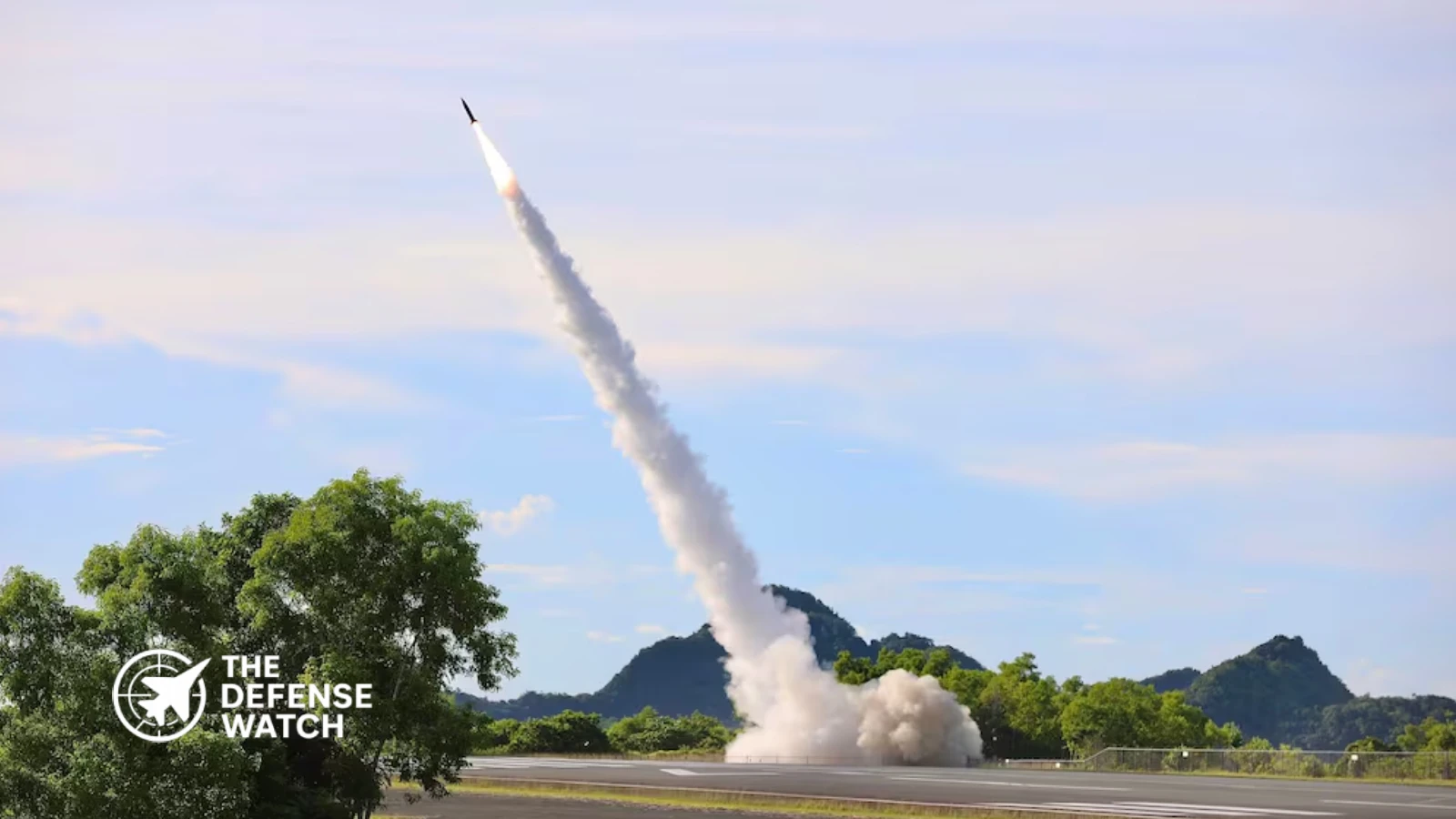
The Pentagon is treating workforce development as a core defense readiness issue as it seeks to expand U.S. manufacturing capacity.
U.S. Defense Industrial Base Workforce Shortage Becomes A Production Issue
The U.S. defense industrial base is facing a workforce problem that Pentagon officials increasingly view as a constraint on America’s ability to expand military production.
Michael Cadenazzi, assistant secretary of war for industrial base policy, told lawmakers Sept. 4 that the United States has roughly 400,000 unfilled skilled-trade positions across the defense industrial base. He warned that the gap could reach 2.5 million workers over the next decade if the workforce pipeline does not improve.
Takeaways
The Pentagon is making skilled labor a central part of its effort to expand the U.S. defense industrial base.
Cadenazzi made the comments during a House Appropriations Committee Defense Subcommittee field hearing in Santa Clarita, California, focused on industrial capacity and workforce development. The hearing included representatives from the War Department, Huntington Ingalls Industries and Pennsylvania College of Technology.
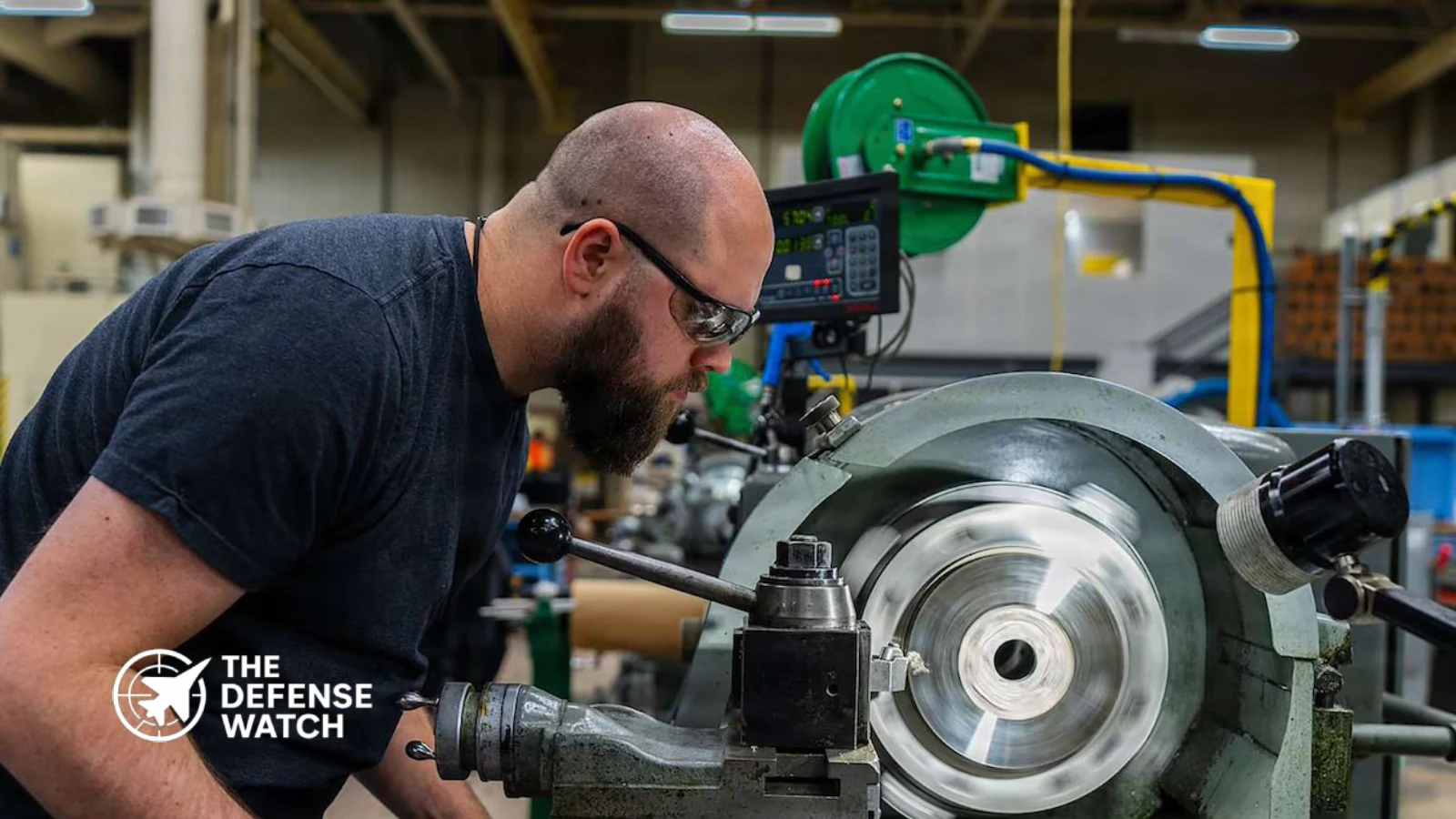
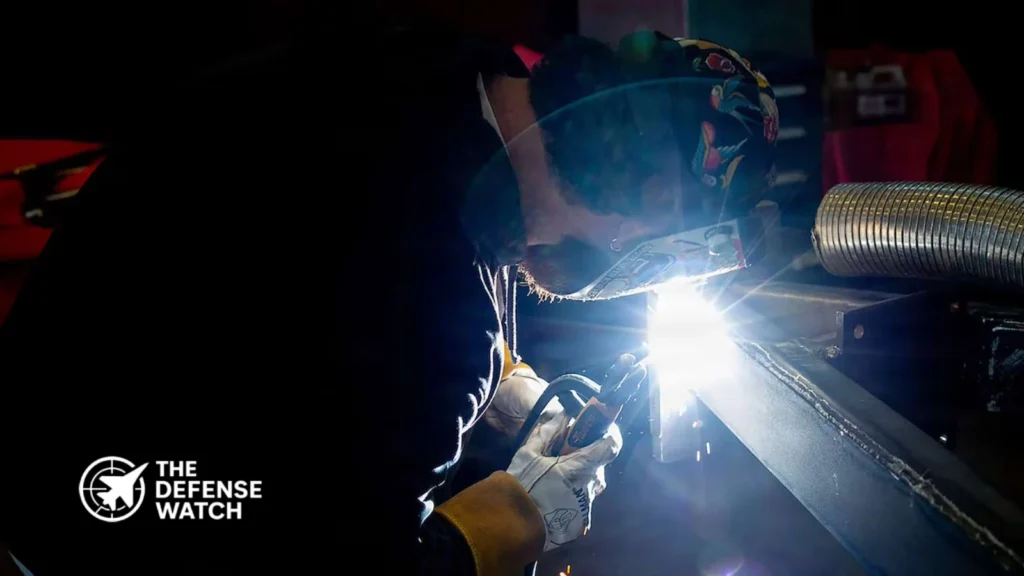
The issue extends beyond traditional engineering positions. The Pentagon is looking for welders, machinists, pipefitters, electricians, engineers and other workers who physically build and maintain military equipment.
Workforce Is Now Part Of Industrial Capacity
Expanding defense production requires more than adding factory space or increasing procurement contracts.
A new production line still needs workers capable of operating machine tools, fabricating components, welding structures, maintaining equipment and completing quality-control processes. Shipbuilding presents an especially clear example because many tasks cannot simply be transferred to software or automated systems.
Cadenazzi argued that the next generation of the defense workforce needs to be introduced to these careers much earlier.
He said students in elementary and middle school represent the future workforce for industries such as submarine construction. That makes education and public awareness an important part of the Pentagon’s industrial strategy.
The challenge is partly cultural. Cadenazzi said many young Americans have historically been encouraged to pursue four-year college degrees rather than skilled trades. The administration now wants to present manufacturing careers as a viable alternative, particularly for students interested in hands-on technical work.
That approach also has implications for parents and schools, which can strongly influence career decisions before students reach the labor market.
Pentagon Expands Build Freedom
The War Department is using the Build Freedom Initiative as a central vehicle for addressing the problem.
The program was formally launched in July with a $10 million award to the mikeroweWORKS Foundation to support scholarships and training for skilled trades such as welding, plumbing and electrical work. The funding is part of the department’s Industrial Base Analysis and Sustainment effort.
By September, Cadenazzi said Build Freedom had brought together more than 70 IBAS workforce projects under a single campaign.
The initiative initially launched in Texas, Michigan and Pennsylvania. The War Department says it intends to expand the effort nationally and direct prospective workers toward training, credentials, scholarships and employment opportunities.
The strategy is significant because it connects workforce development directly to defense production rather than treating employment programs as a separate policy area.
Shipbuilding Highlights The Challenge
The shortage is particularly important for the U.S. Navy, which is seeking to increase shipbuilding capacity while managing long production schedules and a highly specialized workforce.
Huntington Ingalls Industries, one of the companies represented at the September hearing, says it employs more than 45,000 people and invests more than $110 million annually in workforce development, education and training. Its programs include apprenticeship schools and training for trades such as welding, machining, pipefitting and electrical work.
HII’s experience illustrates why simply increasing defense spending does not automatically produce more military hardware. Companies must recruit workers, train them and develop sufficient proficiency before additional production capacity can translate into higher output.
HII’s Ingalls Shipbuilding division graduated 70 apprentices in March 2026 from a Department of Labor registered program combining classroom instruction, paid on-the-job training and industry-recognized credentials.
That model reflects the type of workforce pipeline Pentagon officials are seeking to expand.
A Long-Term Defense Industrial Base Problem
The workforce shortage is part of a broader challenge facing the U.S. defense industrial base.
The Pentagon is simultaneously attempting to expand production, strengthen domestic supply chains, improve industrial resilience and accelerate delivery of weapons and platforms. Those goals depend on companies having enough qualified personnel to execute the work.
Cadenazzi has previously described the workforce shortage as a structural problem tied to both skilled trades and engineering. In remarks earlier this year, he said the United States needed approximately 400,000 additional defense manufacturing workers and could require millions more over the following decade.
This creates a timing problem for policymakers. Training a machinist, welder, electrician or shipbuilder cannot be completed simply by increasing funding for a production contract. Workforce development can take years, particularly for jobs involving complex military systems and strict quality requirements.
For that reason, Build Freedom’s emphasis on students and early career awareness is intended to address the pipeline before workers reach the point where defense manufacturers need to hire them.
Why The Workforce Push Matters
The Pentagon’s workforce campaign signals that rebuilding the U.S. defense industrial base is increasingly being treated as both an economic and national security requirement.
The United States can invest in new facilities, expand procurement and provide companies with stronger demand signals, but those investments still depend on people capable of turning materials and components into operational weapons, aircraft, ships and other military systems.
The immediate target is the current pool of unfilled positions. The larger objective is to create a sustained pipeline of workers capable of supporting defense production over decades.
Build Freedom therefore represents more than a recruiting campaign. Its effectiveness will depend on whether federal funding, schools, industry apprenticeships and employers can create a continuous path from early exposure to technical training and, ultimately, long-term employment.
For the U.S. defense industrial base, that workforce pipeline could become as important as factory capacity itself.