U.S.-Australia Alliance Enters 75th Anniversary Year With Focus on Deterrence
The U.S.-Australia alliance is placing renewed emphasis on military interoperability and Indo-Pacific deterrence as Washington and Canberra mark the 75th anniversary of the ANZUS Treaty.
U.S. Secretary of War Pete Hegseth met Australian Deputy Prime Minister and Defense Minister Richard Marles at the Pentagon around the anniversary, with both officials highlighting the depth of their defense relationship and the need to maintain complementary military capabilities.
Takeaways
Washington and Canberra are using the 75th anniversary of ANZUS to reinforce defense cooperation and regional deterrence.
Hegseth said the two countries share an assessment of an increasingly complex security environment and stressed that allies must both plan together and ensure their capabilities can work together if a conflict occurs.
Marles described the alliance as a cornerstone of Australia’s foreign and strategic policy, saying its importance remains particularly significant as the regional security environment becomes more challenging.
ANZUS Turns 75
The ANZUS Treaty was signed in San Francisco on September 1, 1951, by Australia, New Zealand and the United States. It established a security framework intended to address threats to peace and security in the Pacific. The treaty entered into force in April 1952.
The alliance structure has changed over time. Since the 1980s, the practical defense relationship has centered primarily on bilateral cooperation between the United States and Australia, while Australia and New Zealand maintain their own close security relationship. Washington suspended its ANZUS security obligations to New Zealand in 1986 following Wellington’s restrictions on nuclear-capable and nuclear-powered U.S. Navy vessels.
For Australia and the United States, however, defense cooperation has continued to deepen through increasingly integrated planning, exercises, force posture arrangements and defense-industrial cooperation.
Australia’s government marked the anniversary on September 1 by describing ANZUS as a foundation of its enduring cooperation with the United States and New Zealand. It also highlighted efforts to develop an increasingly integrated and combat-capable Australian and New Zealand force.
Focus Shifts From Alliance History to Military Capability
The Pentagon meeting placed particular emphasis on what the alliance needs to deliver operationally.
Hegseth argued that capable allies should contribute to collective defense by investing in their own national security. He also pointed to alignment between U.S. and Australian defense strategies.
That emphasis reflects a broader shift in allied defense planning toward forces that can operate together across multiple domains rather than relying solely on individual platforms.
Recent Australian exercises illustrate that approach.
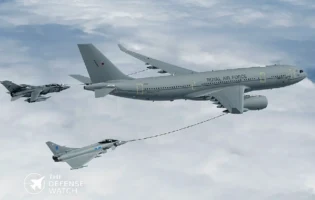
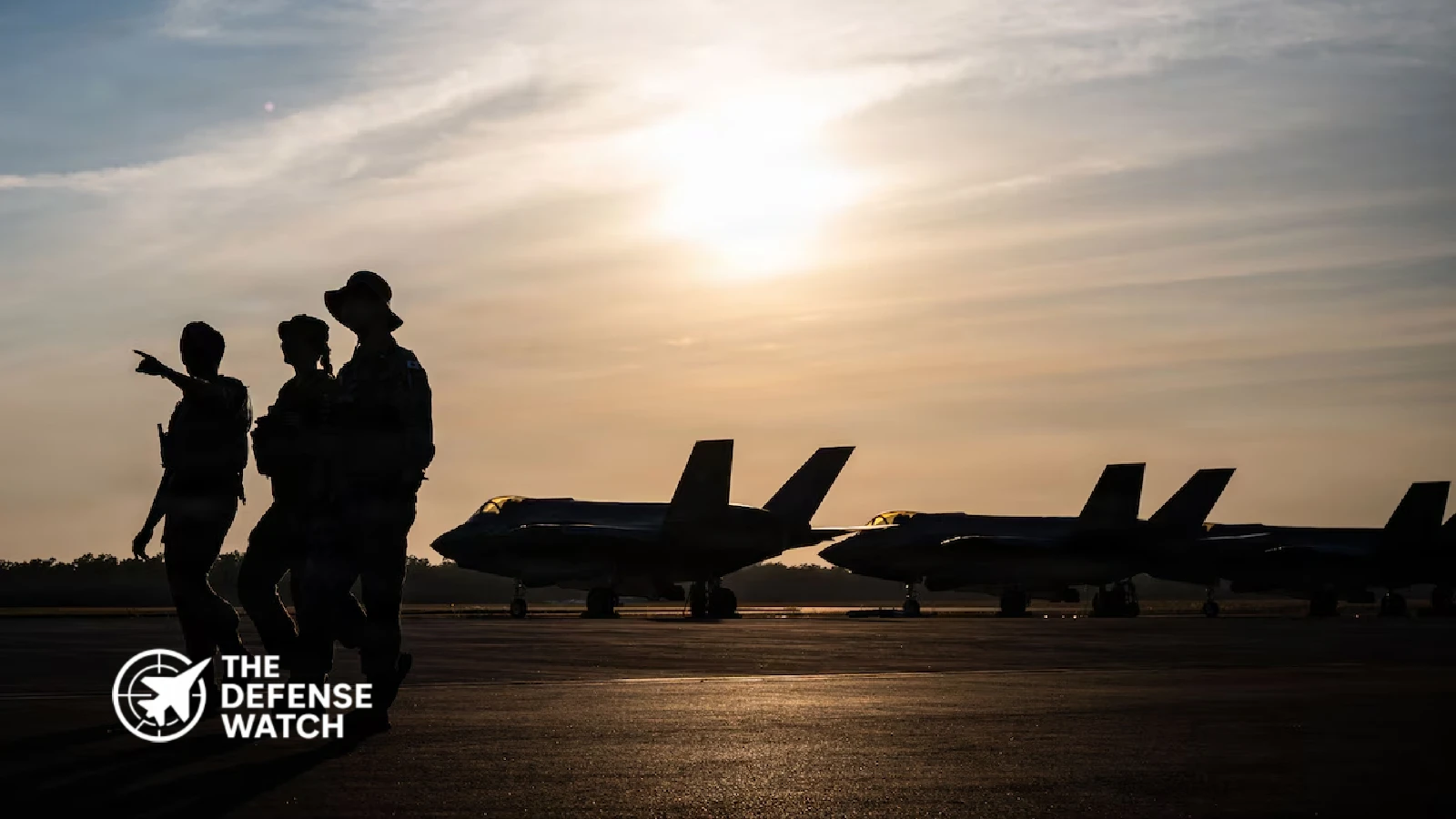
Exercise Southern Cross 26, held in northern Australia in July, brought together more than 1,000 personnel and up to 40 aircraft from Australia, the United States and Japan. The exercise focused on operating as a trilateral task force in a high-end warfighting environment, including dispersed operations, air-to-air refueling and multinational aircraft maintenance.
The U.S.-Australia relationship was also central to Exercise Talisman Sabre 2025. The large-scale exercise involved more than 40,000 personnel from 19 participating nations and included operations across the land, sea, air, cyber and space domains.
These activities provide practical opportunities for forces to test communications, logistics, command relationships and operational procedures alongside allied units.
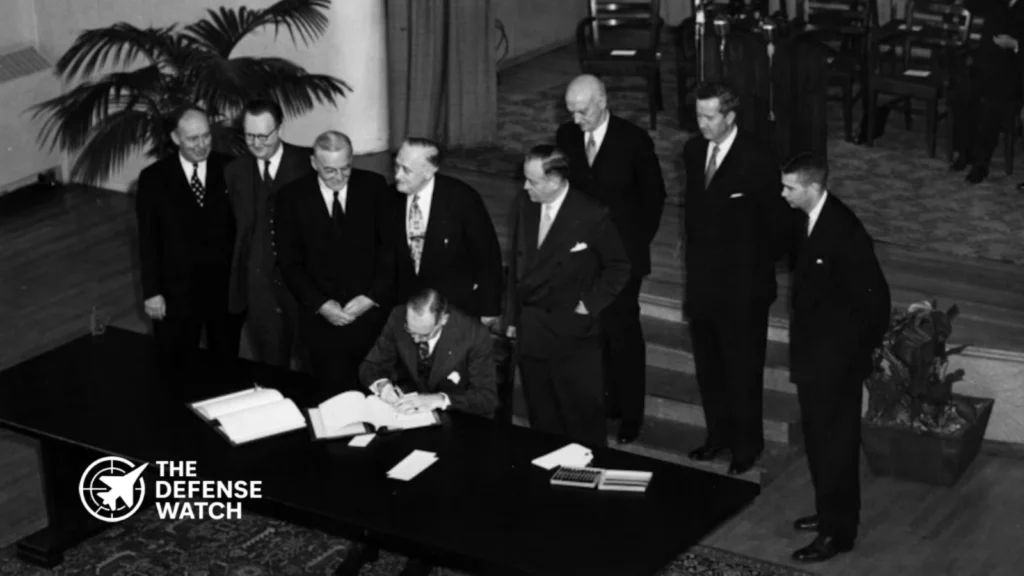
Secretary of State Dean Acheson signs the Tripartite Security Treaty between the U.S., Australia and New Zealand in San Francisco, Sept. 1, 1951. (Image : DoW)
Submarine Cooperation Moves Forward
One of the most significant elements of the evolving U.S.-Australia alliance is undersea cooperation through AUKUS.
Hegseth and Marles welcomed the arrival of U.S. Navy personnel in Western Australia supporting preparations for Submarine Rotational Force-West, or SRF-West.
The rotational force is planned to operate from HMAS Stirling near Perth from the end of 2027. The arrangement is part of the AUKUS pathway for building Australia’s capacity to operate and sustain conventionally armed, nuclear-powered submarines.
Earlier U.S. Defense Department planning called for U.S. Virginia-class and British Astute-class submarines to rotate through Western Australia under SRF-West.
Marles said on September 3 that U.S. personnel were already at HMAS Stirling preparing for the start of SRF-West. He also said the broader effort includes developing infrastructure and maintenance capacity at Stirling and the planned Henderson Defense Precinct.
The submarine effort is closely connected to Australia’s longer-term AUKUS plans. The United States has previously outlined a pathway involving the eventual transfer of Virginia-class submarines to Australia, followed by the development of the SSN-AUKUS submarine with the United Kingdom.
A More Integrated Indo-Pacific Posture
The anniversary meeting comes as the U.S.-Australia alliance becomes increasingly connected to a wider network of regional partnerships.
Australia’s exercises with the United States and Japan demonstrate the growing importance of trilateral cooperation, while Talisman Sabre has provided a larger multinational framework for testing high-end military operations.
The focus is increasingly on interoperability, distributed operations, logistics and the ability to sustain forces across Australia’s large geographic area.
For Washington, Australia also provides an important location for strengthening the U.S. military posture in the Indo-Pacific. For Canberra, deeper cooperation with the United States supports Australia’s effort to build more capable sovereign defense forces while improving the ability to operate with its closest military partner.
Marles said the two governments also discussed expanding the breadth and complexity of their existing force-posture cooperation. He indicated that further details could emerge during the next Australia-U.S. Ministerial Consultations, or AUSMIN.
The significance of the 75th anniversary therefore extends beyond commemorating a treaty signed in 1951. The current emphasis is on ensuring that the alliance remains operationally relevant as both countries adapt their military forces to a more demanding Indo-Pacific security environment.
What Comes Next
The immediate priority will be translating political commitments into additional military capability and practical cooperation.
That includes preparations for SRF-West, continued AUKUS implementation, expanded exercises and further integration of Australian and U.S. forces.
The U.S.-Australia alliance has already developed well beyond the treaty framework established 75 years ago. Its current direction is defined increasingly by the ability of the two militaries to plan, train, operate and sustain forces together.
For Washington and Canberra, that practical integration is becoming a central element of their approach to deterrence in the Indo-Pacific.