Su-57 Felon vs F-22 Raptor: Stealth Air Superiority Face-Off
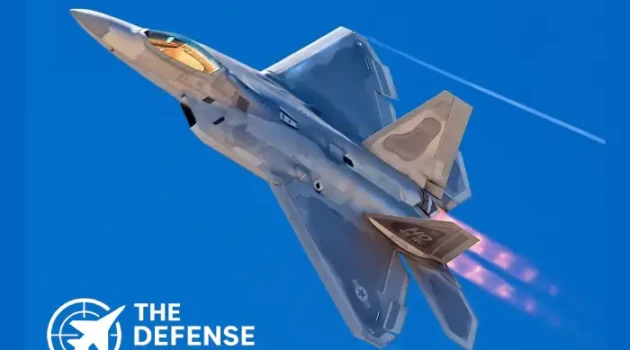
The Su-57 Felon and F-22 Raptor represent the pinnacle of Russian and American fifth-generation air superiority fighters. Designed by Sukhoi and Lockheed Martin respectively, these stealth jets embody their nations’ philosophies of aerial dominance. The F-22, operational since 2005, remains a benchmark for stealth and maneuverability, while the Su-57, officially entering limited service in 2020, showcases Russia’s latest advances in radar evasion and supermaneuvrability. In an era of renewed great-power competition and rapid technological evolution, comparing these two elite fighters provides key insights into how the U.S. and Russia envision future air warfare. From stealth shaping to advanced sensors and combat performance, the Su-57 vs F-22 debate continues to define the future of air superiority.
Performance Verdict
When comparing the Su-57 Felon vs F-22 Raptor, the F-22 maintains a clear edge in operational maturity, stealth effectiveness, and proven combat readiness. Its radar cross-section remains one of the smallest among any fighter, and its integrated avionics suite offers unmatched situational awareness. The F-22’s super cruise capability and combat-tested reliability make it the standard-bearer for air dominance.
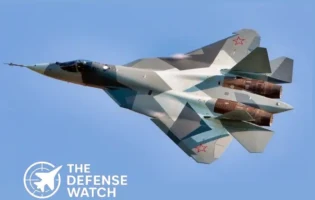
The Su-57, however, demonstrates superior agility through 3D thrust-vectoring and a broader weapons loadout versatility, including hypersonic missile integration potential. Yet, limited production numbers, engine reliability issues, and incomplete avionics integration have hindered its full operational potential.
In essence, while the F-22 Raptor dominates current-generation air superiority, the Su-57 Felon embodies Russia’s drive to close the technological gap. Future upgrades, such as the Izdeliye 30 engines, could narrow this divide — but for now, the skies belong to the Raptor.
Get real time update about this post category directly on your device, subscribe now.

| |
| Price | |
| Our Rating | |
| Manufacturer | Lockheed Martin Sukhoi |
| Category | Fighter Jets Fighter Jets |
General Information
| Name | F-22 Raptor Su-57 Felon |
| Manufacturer | Lockheed Martin, Boeing Defense Sukhoi (UAC) |
| Country of Origin | United States Russia |
| Type / Role | Air Superiority Stealth Fighter Stealth Air Superiority / Multirole Fighter |
| Generation | Fifth Generation Fifth |
| Status | In active service In limited service |
| First Flight | September 7, 1997 January 29, 2010 |
| Introduction / In Service Since | December 15, 2005 2020 |
| Number Built | 187 operational units ~25 (as of 2025) |
| Operators | United States Air Force Russian Aerospace Forces |
Dimensions & Structure
| Length | 62 ft (18.9 m) 20.1 m |
| Wingspan | 44.5 ft (13.6 m) 14.1 m |
| Height | 16.7 ft (5.1 m) 4.6 m |
| Wing Area | 840 sq ft (78 m²) 78.8 m² |
| Empty Weight | 43,340 lb (19,700 kg) ~18,000 kg |
| Maximum Takeoff Weight (MTOW) | 83,500 lb (38,000 kg) 35,000 kg |
| Internal Weapons Bay | 3 total (1 centerline, 2 side) Yes (2 main, 2 side) |
| External Hardpoints | 4 (non-stealth configuration) 6 |
Performance
| Maximum Speed | Mach 2.25 (2,414 km/h) Mach 2.0 |
| Range | 1,840 miles (2,960 km) 3,500 km |
| Combat Radius | 530 miles (850 km) 1,500 km |
| Service Ceiling | 65,000 ft (19,800 m) 20,000 m |
| Rate of Climb | 62,000 ft/min (315 m/s) 330 m/s |
| Thrust-to-Weight Ratio | 1.26 ~1.15 |
| G Limits | +9 G +9 |
Powerplant
| Engine Type | Pratt & Whitney F119-PW-100 turbofan Saturn AL-41F1 (future Izdeliye 30) |
| No. of Engines | 2 2 |
| Thrust (each) | 35,000 lbf (156 kN) 142 kN with afterburner |
| Thrust Vectoring | Yes (2D pitch vectoring) Yes (3D) |
| Fuel Capacity | 18,000 lb (8,200 kg) internal ~10,300 kg |
Armament
| Gun | 1× M61A2 Vulcan 20mm cannon 30mm GSh-30-1 cannon |
| Missiles (Air-to-Air) | AIM-120 AMRAAM, AIM-9 Sidewinder R-77, R-74M, R-37M |
| Missiles (Air-to-Ground) | JDAM, SDB Kh-38, Kh-59MK2 |
| Bombs | GBU-32 JDAM, GBU-39 SDB KAB-250/500 guided bombs |
| Hardpoints | 4 external (optional) 10 (internal + external) |
| Payload Capacity | 18,000 lb (8,200 kg) 10,000 kg |
Avionics & Systems
| Radar | AN/APG-77 AESA radar N036 Byelka AESA |
| Radar Range | 125+ miles (200+ km) 400+ km |
| Electronic Warfare (EW) System | AN/ALR-94 suite L402 Himalayas suite |
| Targeting System | Integrated multi-sensor fusion IRST + radar fusion |
| Helmet Display | Standard HUD (no HMD in baseline) Integrated HMS |
| Navigation | GPS/INS GLONASS-based INS |
| Autopilot / AI Assistance | Digital fly-by-wire Partial autonomy |
| Communication | Intra-flight data link, secure comms Encrypted data link |
Stealth & Technology
| Radar Cross Section (RCS) | ~0.0001 m² Estimated 0.3–0.5 m² |
| Stealth Features | Radar-absorbent materials, internal weapons Internal bays, radar-absorbing composites |
| Infrared Signature Reduction | Engine exhaust shielding Engine shielding, cooling design |
| Sensor Fusion | Yes Multi-source integration |
| Networking Capabilities | Limited Link-16, proprietary data link Limited data-link interoperability |
Variants
| Special Export Versions | None (export restricted) Su-57E (Export Variant) |
Operational History
| Major Conflicts / Deployments | Syria (2014–present) Syria (testing), Ukraine (limited combat) |
| Notable Operators | USAF (Air Combat Command, PACAF) Russia |
| Combat Proven? | Yes Limited |
| Mission Types | Air superiority, interception, precision strike Air superiority, strike, reconnaissance |
Cost & Program
| Unit Cost | ~$150 million (flyaway) ~$45–50 million (estimated) |
| Development Cost | ~$67 billion (program total) ~$10 billion (PAK FA program) |
| Program Name | Advanced Tactical Fighter (ATF) PAK FA (T-50) |
| Funding Countries | United States only Russia |
Additional Information
| Upgrades Planned | Avionics, radar, networking, sensors New radar, Izdeliye 30 engines |
| Future Replacement | NGAD (Next Generation Air Dominance) None planned (Su-57M modernization) |
| Export Restrictions | U.S. Congress export ban Controlled by Russian government |
| Notable Achievements | First operational 5th-gen fighter Russia’s first fifth-gen stealth jet |
| Competitors | F-35 Lightning II, Su-57, J-20 F-22 Raptor, F-35 Lightning II, J-20 Mighty Dragon |
|
Disclaimer Note
The information provided on TheDefenseWatch.com is for general informational purposes only. While we strive to ensure the accuracy, completeness, and timeliness of our content regarding defense and aerospace products, technologies, and specifications, we cannot guarantee that all information is 100% accurate or up-to-date due to the evolving nature of military technology and classified data.TheDefenseWatch.com does not warrant the reliability, suitability, or availability of the information for any specific purpose. Users are advised to consult official sources, such as manufacturers, government publications, or defense agencies, for precise and verified data before making decisions based on our content.We are not affiliated with any defense manufacturers, governments, or military organizations mentioned. Opinions, reviews, and ratings reflect expert analysis but are subjective and should not be considered endorsements. TheDefenseWatch.com is not responsible for any errors, omissions, or consequences arising from the use of this website’s content.External links are provided for convenience and do not imply endorsement. TheDefenseWatch.com reserves the right to update or modify content without prior notice. By using this website, you agree to our Privacy & Cookies Policy.
New Arrivals


Popular Comparisons
-
 SIG XM7 Rifle vs M4: Key Differences and Performance Comparison
View Comparison →
SIG XM7 Rifle vs M4: Key Differences and Performance Comparison
View Comparison → -
Eurofighter Typhoon vs Rafale vs F-35: Fighter Jet Comparison
View Comparison →
-
J-20 vs F-22: Stealth Fighter Showdown Explained
View Comparison →
-
F-14 Tomcat vs Su-57: Can a Legend Challenge Russia’s Stealth Fighter?
View Comparison →
-
Su-35 vs Su-57: Russia’s Top Fighter Jets Compared
View Comparison →
-
Eurofighter Typhoon vs Su-57: Ultimate Fighter Jet Comparison
View Comparison →
-
Rafale vs Su-57: 4.5 Gen vs 5th Gen Fighter Jet Comparison
View Comparison →
-
Su-57 vs F-16 Fighting Falcon: Stealth vs Speed
View Comparison →
-
China vs Russia: J-20 Mighty Dragon vs Su-57 Felon Comparison
View Comparison →
-
Su-57 vs F-35 Lightning II: Next-Gen Stealth Fighter Showdown
View Comparison →


- Pentagon Considers Second B-21 Raider Production Line To Accelerate U.S. Stealth Bomber Expansion

- France Unveils 78,000-Ton Nuclear Aircraft Carrier France Libre With 40-Aircraft Capacity
- L3Harris Wins $77.8M U.S. Navy Contract for Kineto Tracking Mount Sustainment
- US Navy Awards $15.38B Columbia-Class Submarine Contract To Strengthen Nuclear Deterrent
- China Surges Production Capacity For J-20 And J-35 Stealth Fighters As Beijing Expands Fifth-Generation Fleet
- Netanyahu Announces Elimination Of Senior Iranian Figures In Air Campaign
- US Bombers Avoid European Airspace On Iran Bombing Runs In Strategic Route Shift
- Japan’s EC-2 Electronic Warfare Jet Completes First Flight, Expanding Standoff Jamming Capabilities
- NASA’s X-59 Quiet Supersonic Jet Gears Up for Second Flight — A Giant Leap Toward Silent Boom AviationNASA X-59 Second Flight: Supersonic Aviation Reborn
- US Weapons Shipments to Taiwan Unaffected by Iran War, Officials Confirm