Executive Summary:
RTX has advanced a longer range version of its StormBreaker precision weapon from concept to flight testing in less than 12 months, marking one of the company’s fastest air launched weapon development efforts. The new design aims to significantly extend standoff strike range while retaining StormBreaker’s existing multi mode guidance and network enabled targeting capabilities for U.S. and allied air forces.
RTX Advances Longer Range StormBreaker Toward Flight Testing
RTX has moved its Longer Range StormBreaker precision strike weapon into flight testing less than a year after beginning development, demonstrating an accelerated approach to delivering new air launched capabilities for the U.S. military and international customers. The company announced the milestone during its recent update on advanced weapons development, highlighting a rapid engineering process driven by evolving operational requirements.
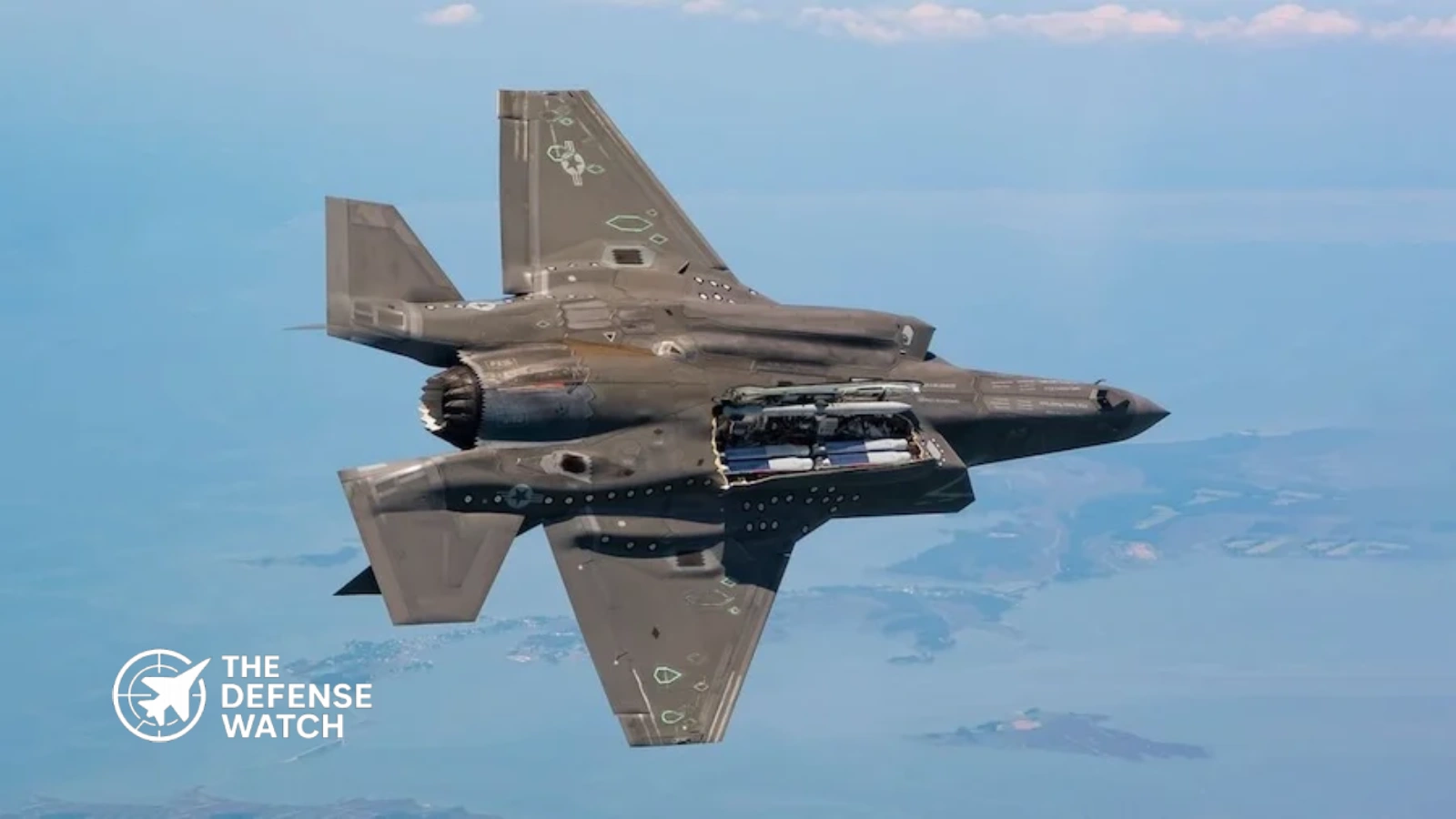
The effort builds on Raytheon’s existing StormBreaker family, officially designated the GBU 53/B, which is already fielded on the U.S. Air Force’s F 15E Strike Eagle and approved for the U.S. Navy’s F/A 18E/F Super Hornet. Integration continues across all three variants of the F 35 Lightning II.
Building On An Existing Combat Proven Weapon
Rather than designing an entirely new missile, RTX leveraged the mature StormBreaker architecture to shorten development timelines.
According to the company, engineers reused key subsystems while incorporating a new propulsion solution designed to dramatically increase engagement range. This modular approach allowed the weapon to progress from concept to flight testing in under 12 months.
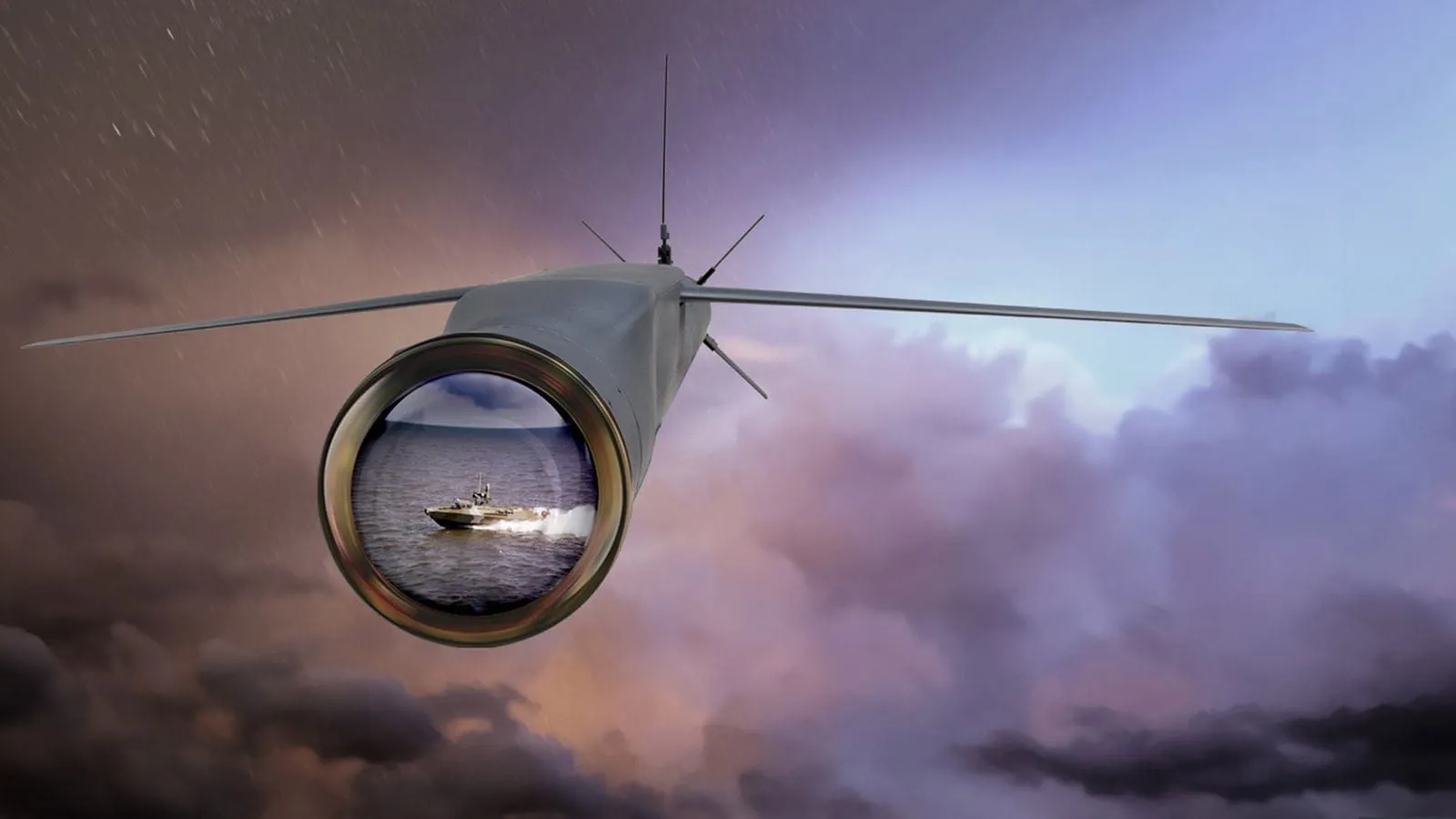
The original StormBreaker is designed to defeat both moving and stationary targets under challenging weather conditions. Its tri mode seeker combines:
- Imaging infrared guidance
- Millimeter wave radar
- Semi active laser guidance
A two way datalink also enables operators to update target information after launch, allowing the weapon to engage dynamic battlefield targets.
Longer Range Expands Operational Flexibility
The primary enhancement is increased standoff distance.
Although RTX has not disclosed exact performance figures, the longer range configuration is intended to allow aircraft to engage targets from farther outside hostile air defense envelopes while preserving StormBreaker’s precision engagement capability.
Greater range provides several operational advantages:
| Capability | Operational Benefit |
|---|---|
| Extended launch distance | Aircraft remain farther from enemy air defenses |
| Precision engagement | Reduced collateral damage against tactical targets |
| Network enabled guidance | In flight target updates improve flexibility |
| Multi mode seeker | Effective against moving targets in adverse weather |
| Existing StormBreaker architecture | Faster fielding and lower development risk |
Why The Development Timeline Matters
Modern defense procurement has increasingly emphasized speed.
Traditional precision weapon programs often require many years between concept definition and flight testing. RTX’s decision to reuse proven technologies reflects a broader industry trend toward modular weapon development, enabling manufacturers to respond more rapidly to changing operational requirements.
The company previously demonstrated this philosophy during development of the ground launched StormBreaker prototype, which progressed from concept to testing in roughly 50 days using existing weapon components and commercial rocket technology.
The air launched longer range variant follows the same engineering philosophy, reducing technical risk while accelerating delivery.
Strategic Context
The longer range StormBreaker arrives as U.S. and allied militaries place greater emphasis on long range precision strike against heavily defended targets.
Potential future operating environments in the Indo Pacific and Europe feature increasingly sophisticated integrated air defense systems, electronic warfare capabilities, and contested airspace. Aircraft capable of launching precision weapons from greater distances gain improved survivability while maintaining the ability to strike mobile targets.
StormBreaker’s existing network enabled architecture already supports engagement of moving vehicles, maritime targets, and fixed infrastructure under poor visibility. Extending range could significantly increase mission flexibility without requiring major aircraft modifications.
Unlike developing an entirely new weapon, upgrading an established munition also simplifies logistics, training, sustainment, and platform integration for operators already fielding StormBreaker.
Existing Integration Across Multiple Aircraft
StormBreaker continues expanding across multiple U.S. tactical aircraft.
The weapon has completed extensive testing from:
RTX reported a perfect 14 for 14 planned jettison success rate during U.S. Navy F-35C testing, supporting continued integration across the Joint Strike Fighter fleet.
As the F 35 becomes the primary tactical aircraft for numerous allied nations, a longer range StormBreaker could offer an incremental capability upgrade without requiring entirely new aircraft certification programs.
Industry Implications
Rapid adaptation of existing precision weapons has become a defining trend across the defense industry.
Rather than relying exclusively on lengthy next generation development programs, manufacturers are increasingly extending proven systems with improved propulsion, networking, software, and seekers. This approach reduces acquisition risk while delivering operational capability much faster.
For RTX, advancing the Longer Range StormBreaker from concept to flight testing in under a year demonstrates how modular weapon architectures can accelerate modernization. If flight testing proceeds successfully, the weapon could provide U.S. and allied air forces with a cost effective means of expanding precision strike reach while leveraging an already fielded family of smart munitions.
Executive Summary
The UK Ministry of Defence has approved the purchase of the GBU-53/B StormBreaker precision-guided bomb for the F-35B fleet. The move is intended to provide an interim standoff strike capability while the domestically developed SPEAR 3 missile remains delayed.The decision highlights ongoing pressure on Britain’s F-35 weapons integration roadmap and reflects growing concern over maintaining credible strike options in contested airspace.
UK Confirms F-35 Standoff Bomb Buy
The UK F-35 standoff bomb acquisition marks a significant shift in Britain’s approach to sustaining operational strike capability for its fifth-generation fighter fleet.
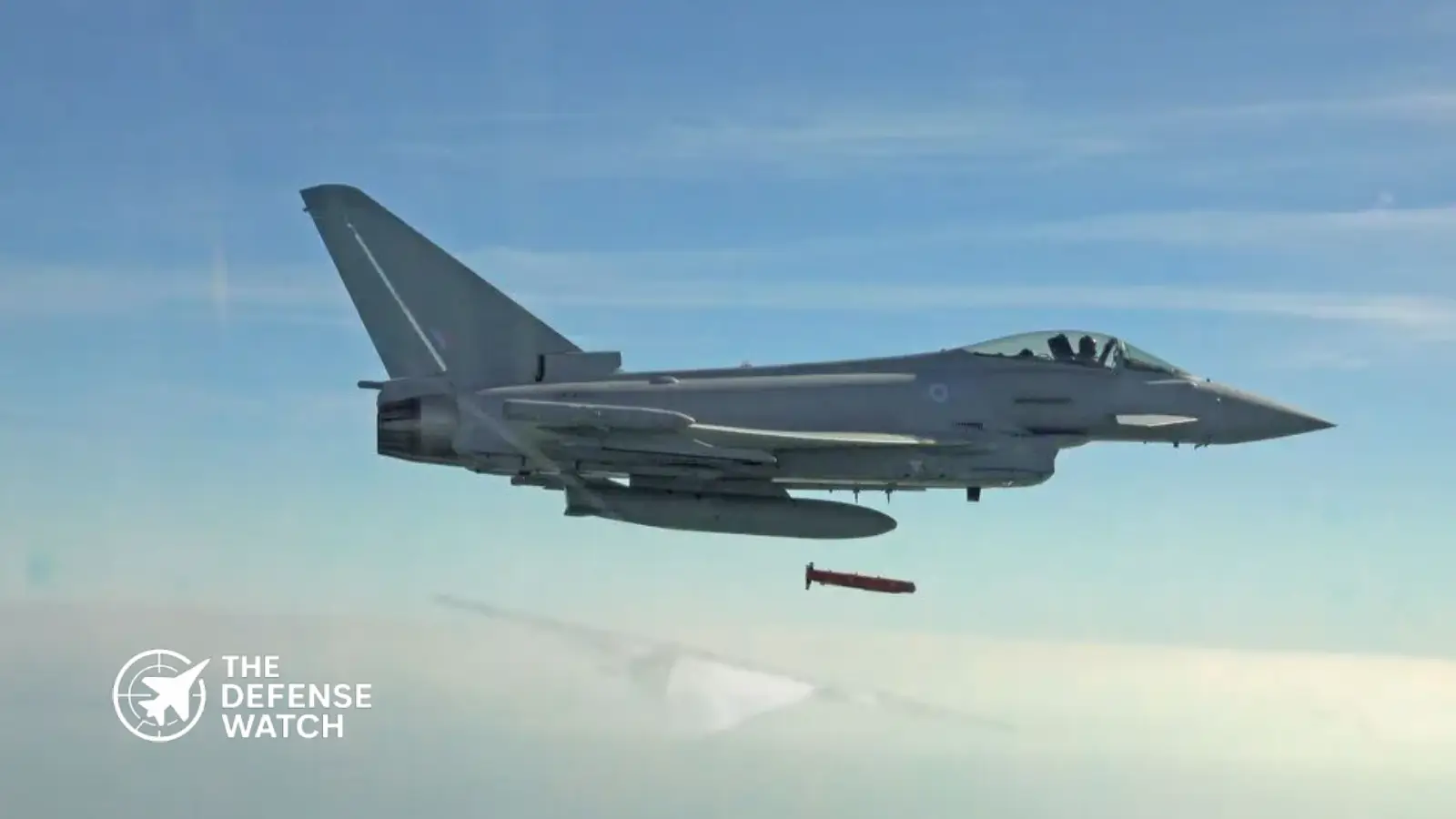
Britain has approved the procurement of the U.S.-made GBU-53/B Small Diameter Bomb II, also known as StormBreaker, through the Foreign Military Sales process. The weapon will serve as an interim solution until the delayed MBDA SPEAR 3 missile enters operational service.

The decision follows mounting scrutiny over the limited air-to-ground weapons currently available to the UK’s F-35B Lightning II aircraft. At present, British F-35Bs primarily rely on the Paveway IV precision-guided bomb for strike missions. Analysts and parliamentary oversight bodies have repeatedly warned that the aircraft lacks sufficient long-range standoff capability against advanced air defense systems.
Why Britain Is Buying StormBreaker
The StormBreaker weapon offers the UK an immediate capability increase without waiting for SPEAR 3 integration to be completed.
Manufactured by RTX, the GBU-53/B is designed to engage moving and stationary targets in poor weather and contested environments. The weapon combines millimeter-wave radar, infrared imaging, semi-active laser guidance, and GPS-assisted navigation. Its glide capability allows engagement ranges exceeding 100 kilometers under optimal launch conditions.
For the UK, the purchase addresses a growing operational gap.
SPEAR 3 was originally intended to become the primary precision strike weapon for British F-35Bs. The missile, developed by MBDA, features a turbojet-powered design with a reported range exceeding 140 kilometers. It was specifically engineered for internal carriage inside the F-35B weapons bay to preserve stealth characteristics.
However, the program has experienced repeated delays tied to integration challenges, supplier performance issues, and broader schedule adjustments associated with F-35 Block 4 modernization efforts. British officials now expect SPEAR 3 operational deployment to begin around fiscal year 2028-29, while some reports suggest full service entry could slip further into the early 2030s.
Strategic Impact On UK Carrier Strike Operations
The purchase has direct implications for Britain’s carrier strike strategy.
The Royal Navy’s Queen Elizabeth-class aircraft carriers depend heavily on the F-35B as their principal strike aircraft. Without an effective long-range precision weapon, the survivability and operational flexibility of carrier-based air wings could be constrained in high-threat environments.
StormBreaker provides a temporary solution that allows British F-35Bs to engage targets from safer stand-off distances while preserving low observable characteristics. The acquisition also aligns the UK more closely with U.S. F-35 operational weapon standards, potentially simplifying coalition interoperability during NATO operations.
The move also reflects a broader pattern among Western militaries seeking near-term capability solutions while next-generation weapons programs face development delays.
Pressure On Britain’s F-35 Modernization Plans
The UK F-35 standoff bomb decision also exposes wider challenges surrounding Britain’s combat air modernization timeline.
Britain completed delivery of its first 48 F-35B aircraft earlier this year and continues evaluating future procurement plans tied to broader defense spending reviews.
Yet weapons integration has emerged as a persistent weakness within the program.
While other F-35 operators have integrated a wider range of stand-off munitions, the UK’s aircraft have remained comparatively limited in strike flexibility. Parliamentary oversight bodies and defense analysts have increasingly questioned whether delays to SPEAR 3 risk undermining the long-term effectiveness of Britain’s carrier strike force.
The interim StormBreaker acquisition suggests the Ministry of Defence is prioritizing immediate operational readiness over waiting for a fully sovereign solution.
At the same time, Britain continues investing heavily in SPEAR 3 development. The missile remains central to the UK’s long-term concept for deep precision strike operations and future combat air integration.
Broader NATO And Operational Relevance
The decision comes amid renewed focus across NATO on survivability in contested airspace.
Modern integrated air defense systems, including long-range surface-to-air missile networks, have reinforced demand for air-launched precision weapons capable of engaging targets from outside high-risk engagement zones.
By moving ahead with the StormBreaker acquisition, the UK ensures its F-35B fleet retains a relevant strike capability while more advanced domestic weapons continue development.
The procurement also reflects the increasing importance of rapid capability adaptation in current defense planning cycles, particularly as European militaries seek to close gaps exposed by recent operational assessments and evolving regional security threats.
â– KEY FACTS AT A GLANCE- â–º The U.S. Navy has approved the StormBreaker smart weapon for operational use on the F A 18E F Super Hornet.
- â–º StormBreaker is developed by :contentReference[oaicite:0]{index=0} and designated GBU 53 B by the U.S. military.
- â–º The weapon features a tri mode seeker combining millimeter wave radar, imaging infrared, and semi active laser guidance.
- â–º StormBreaker enables engagement of moving targets in adverse weather and low visibility conditions.
- â–º The weapon is already integrated on the U.S. Air Force F 15E Strike Eagle and F 35 Lightning II.
- â–º Approval expands precision strike options for carrier air wings operating worldwide.
StormBreaker Super Hornet Integration Strengthens Carrier Strike Flexibility
The StormBreaker Super Hornet integration marks a significant expansion of the U.S. Navy’s precision strike toolkit. With approval for operational use on the F A 18E F Super Hornet, carrier air wings gain an all weather, network enabled weapon capable of engaging moving targets on land and at sea.
This matters now because naval aviation is increasingly expected to operate in contested environments, including the Western Pacific and Middle East. Weather, electronic warfare, and target mobility can limit traditional laser or GPS guided munitions. StormBreaker is designed to address those constraints.
Operational Impact For Carrier Air Wings
The GBU 53 B StormBreaker combines millimeter wave radar, imaging infrared, and semi active laser guidance into a single tri mode seeker. That allows aircrews to select guidance modes based on conditions and target type.
For the Super Hornet, this provides several operational advantages:
First, true moving target capability in poor visibility. Naval strike missions often involve dynamic maritime or littoral targets. Traditional laser guided bombs can struggle in cloud cover or dust. Millimeter wave radar provides an independent targeting channel.
Second, increased standoff flexibility. StormBreaker’s glide profile allows launch outside certain short range air defense envelopes. While not a long range cruise missile, it offers greater reach than many legacy unguided or short range guided bombs.
Third, networked targeting. The weapon can receive in flight updates through compatible datalinks. This aligns with the Navy’s distributed maritime operations concept, where sensors and shooters may be geographically separated.
Compared to legacy weapons such as the GBU 38 JDAM, StormBreaker offers greater adaptability against mobile targets. Compared to the AGM 154 JSOW, it adds advanced seeker discrimination in cluttered environments.
For carrier commanders, that translates into a more resilient strike package when operating against near peer adversaries with layered air defenses and electronic attack systems.
Comparison With Competing Systems
StormBreaker sits in a niche between short range guided bombs and larger stand off missiles. Internationally, similar roles are filled by weapons such as the SPEAR 3 from MBDA for the F 35 and Typhoon fleets. Like StormBreaker, SPEAR 3 emphasizes networked targeting and moving target engagement.
-
China and Russia field glide and stand off munitions with varying levels of seeker sophistication. However, few publicly known systems combine tri mode seekers with networked retargeting in a compact 250 pound class weapon.
The integration on the Super Hornet also ensures commonality across U.S. services. The U.S. Air Force already employs StormBreaker on platforms including the F 15E and F 35. Cross service adoption simplifies logistics, training, and procurement planning.
Industrial And Budget Context
StormBreaker is produced by RTX through its Raytheon business. The program has faced schedule adjustments in the past, largely tied to integration and testing complexities. Approval for Navy use signals maturation of the capability.
From a budget perspective, adding StormBreaker to the Super Hornet enhances the relevance of the F A 18E F fleet as the Navy transitions gradually toward a greater share of F 35C aircraft. According to Congressional budget documents, the Navy continues to invest in Super Hornet service life extensions and Block III upgrades.
Providing the aircraft with advanced munitions helps maintain combat credibility during that transition period. It also supports the Navy’s argument that legacy fourth generation platforms can remain viable in high threat scenarios when paired with modern sensors and weapons.
Regional Security Implications
In the Indo Pacific, carrier strike groups are central to U.S. deterrence posture. Potential adversaries field mobile missile launchers, fast attack craft, and dispersed ground units designed to complicate targeting.
StormBreaker gives Super Hornets improved ability to prosecute such targets under degraded conditions. That is particularly relevant in scenarios involving island chains, coastal infrastructure, or contested sea lanes.
In the Middle East, moving targets such as small boats or mobile rocket systems have historically posed challenges. An all weather, multi mode seeker reduces reliance on permissive conditions.
While the weapon does not fundamentally alter the balance of power, it incrementally strengthens U.S. ability to conduct precision strikes with reduced collateral damage risk. Its discrimination capabilities are intended to improve target identification in complex environments.
Why It Matters Now
The approval comes as the U.S. Navy emphasizes distributed operations and survivability. Carrier air wings are expected to operate with greater dispersion and to integrate more tightly with joint and allied forces.
A network enabled smart weapon supports that approach. It allows targeting data from off board sensors, including aircraft or maritime platforms, to feed into strike missions.
At the same time, adversaries are investing heavily in air defense modernization. Precision munitions that can adapt mid course and handle adverse weather help offset those investments.
Strategic Assessment
From a regional power balance perspective, StormBreaker integration reinforces U.S. qualitative advantages rather than introducing a disruptive new capability. It enhances flexibility and resilience within existing carrier strike doctrine.
Deterrence implications are subtle but meaningful. The ability to engage moving targets in bad weather complicates adversary planning. It reduces the likelihood that environmental factors can shield high value assets.
On the procurement side, Navy approval signals continued commitment to common joint munitions. That aligns with broader Pentagon efforts to streamline inventories and increase production scalability across services.
Alliance dynamics may also benefit. Many U.S. partners operate the Super Hornet or F 35. Shared access to advanced precision weapons can support interoperability and burden sharing in coalition operations.
Escalation risks remain limited at the system level. StormBreaker is a conventional precision weapon, not a strategic asset. However, as part of a broader modernization trend, it contributes to the steady tightening of the operational environment in contested regions.
What happens next will likely involve expanded fleet fielding, training integration, and potential foreign military sales interest. The key question is not whether StormBreaker changes warfare overnight, but how it fits into the Navy’s evolving approach to distributed, networked maritime combat.
-