Takeaways
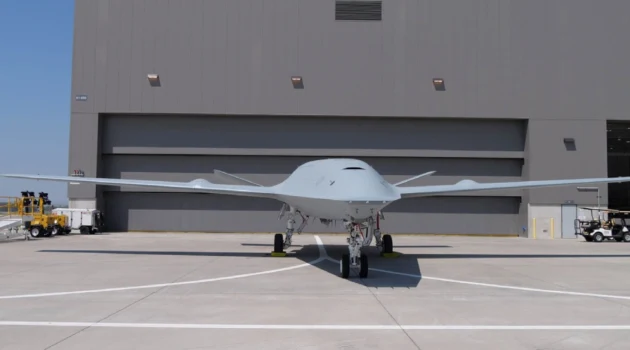
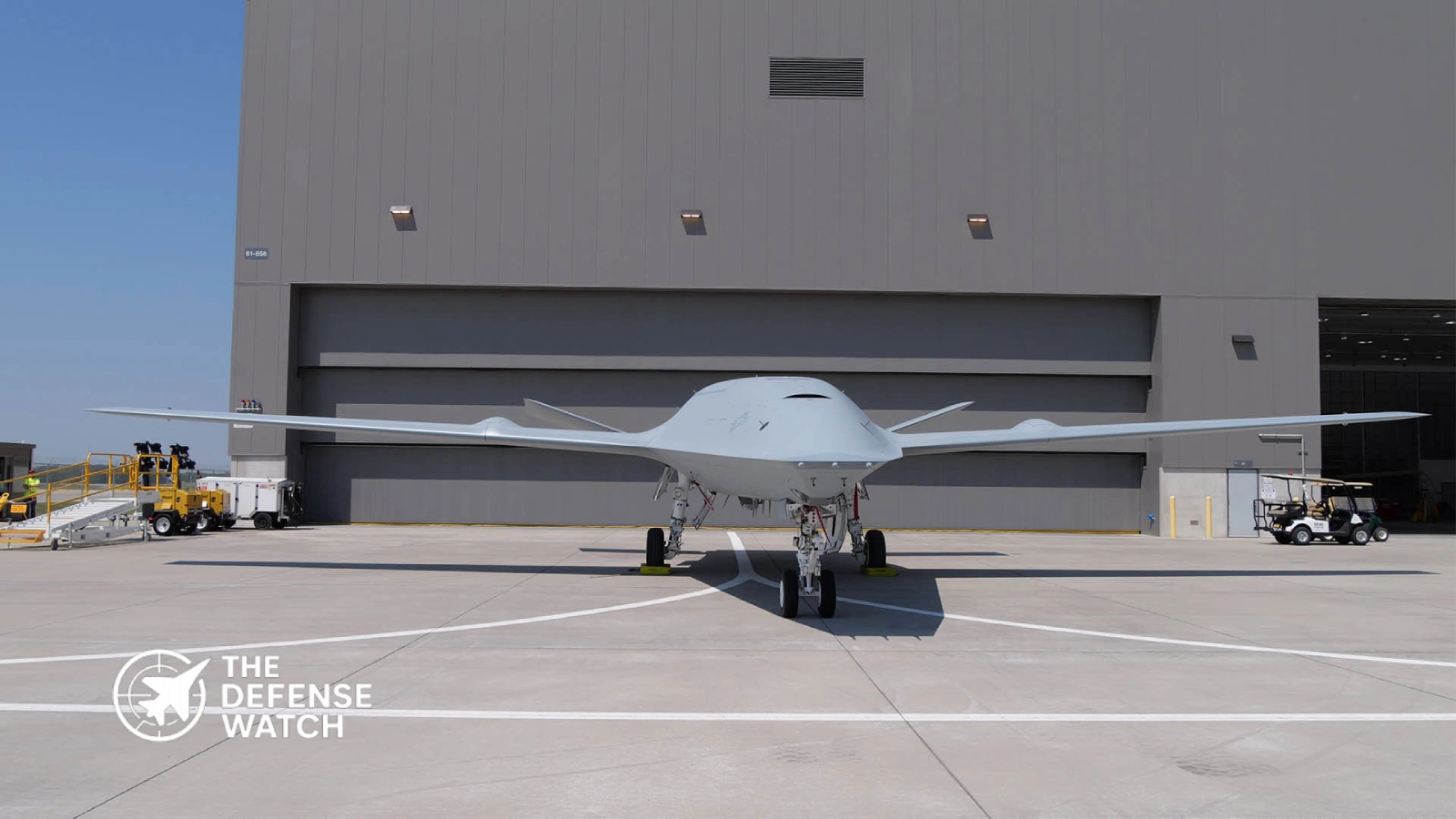
The U.S. Navy is moving the MQ-25A Stingray from development into low-rate production, establishing the first production path for a carrier-based unmanned aerial refueling aircraft.
Boeing MQ-25A Stingray Contract Moves Navy Into Production
The Boeing MQ-25A Stingray program has entered a significant production phase after the U.S. Navy awarded Boeing a major modification covering three Low Rate Initial Production Lot 1 aircraft and advance procurement for three additional Lot 2 aircraft. The modification provided in the contract notice is valued at up to $552.053 million and extends work through July 2031.
- Takeaways
- Boeing MQ-25A Stingray Contract Moves Navy Into Production
- What the MQ-25A Contract Buys
- MQ-25A Reaches Production After First Flight
- Why the MQ-25A Matters to the Carrier Air Wing
- Production Is Only One Part of the MQ-25A System
- Long Lead Components Signal Continued Production Planning
- The Industrial Base Is Spread Across the United States and Canada
- MQ-25A Production Comes With a Long Test and Integration Path
- What the MQ-25A Changes for U.S. Naval Aviation
- A New Production Baseline for the Stingray
The Navy separately described the overall Sept. 14 production award as a $562 million fixed-price incentive contract, with initial Lot 1 deliveries expected to begin in 2029. The difference reflects the distinction between the modification value specified in the contract language and the Navy’s rounded public description of the production award.
The action is being executed under contract N0001922C0048, originally awarded to Boeing in 2022 for MQ-25A Lot 1 advance acquisition work. Naval Air Systems Command, based at Patuxent River, Maryland, is the contracting activity.
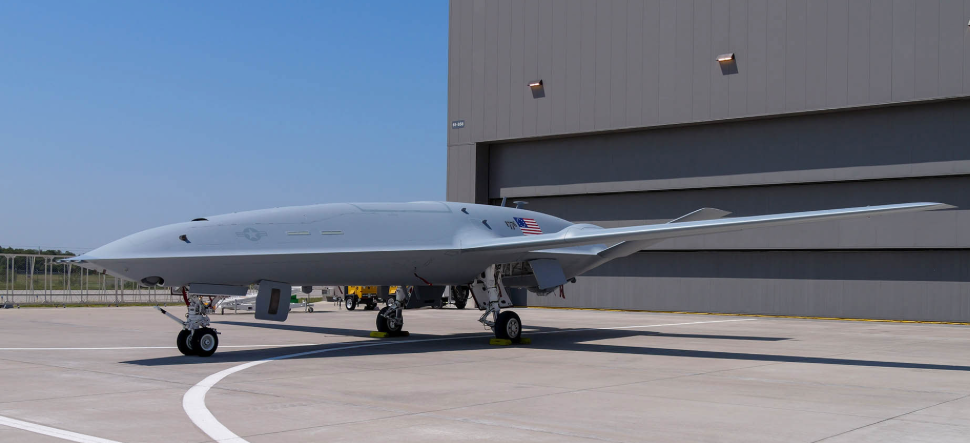
What the MQ-25A Contract Buys
The latest modification covers two closely related procurement activities.
| Item | Current Contract Action |
|---|---|
| Contractor | Boeing |
| Aircraft | MQ-25A Stingray |
| Lot | Lot 1 LRIP |
| Lot 1 aircraft | 3 |
| Lot 2 advance procurement | Long lead components for 3 aircraft |
| Contract modification | Up to $552.053 million |
| Navy public award value | $562 million |
| Completion | July 2031 |
| Contract type | Undefinitized fixed-price incentive modification |
| Competition | Not competed |
| Contracting activity | Naval Air Systems Command |
The Navy said the production contract funds three Lot 1 aircraft and advance acquisition of long lead components for three Lot 2 aircraft. The service also said the MQ-25 program of record contains 76 aircraft, including developmental and test aircraft already associated with the program.
At award, the Navy is obligating $100 million in fiscal 2025 aircraft procurement funds and $64.42848 million in fiscal 2026 aircraft procurement funds, for a combined initial obligation of about $164.43 million.
The remaining contract value will be obligated as the program progresses.
MQ-25A Reaches Production After First Flight
The production decision follows two major milestones in 2026.
The MQ-25A completed its first flight on April 25, 2026, flying for approximately two hours from Boeing’s facility at MidAmerica Airport in Mascoutah, Illinois. Navy and Boeing air vehicle pilots controlled the aircraft through the Unmanned Carrier Aviation Mission Control System. The flight tested basic flight controls, engine performance and handling characteristics.
The Navy subsequently announced Milestone C approval on May 19, allowing the aircraft to enter Low Rate Initial Production. At the time, the service said the initial production award would cover three Lot 1 aircraft and include options for later production lots.
The sequence is important because the MQ-25A is not simply another unmanned aircraft procurement. The program is intended to establish an operational unmanned aircraft inside the carrier air wing, where the aircraft must function within one of the most demanding aviation environments in the U.S. military.
Why the MQ-25A Matters to the Carrier Air Wing
The primary mission of the MQ-25A is aerial refueling.
The Navy intends to use the aircraft as an organic carrier-based tanker, reducing the requirement for F/A-18E/F Super Hornets to perform tanker duties. That can allow more crewed fighters to remain available for combat missions rather than being assigned primarily to tanker operations.
NAVAIR describes the MQ-25A as the Navy’s first operational carrier-based unmanned aircraft and says its integration will extend the range of carrier aircraft while improving the use of combat strike fighters.
This creates an important operational distinction. The MQ-25A is not designed primarily to replace the carrier’s strike fighters. Its value comes from changing how those aircraft are employed.
A carrier air wing has a finite number of aircraft and a finite amount of fuel available in the carrier operating area. A dedicated unmanned tanker can absorb the refueling mission while allowing fighters, electronic warfare aircraft and other receiver-capable platforms to retain greater mission availability.
The Navy has already demonstrated the basic concept with earlier MQ-25A testing. Test aircraft have conducted aerial refueling with the F/A-18 Super Hornet, F-35C Lightning II and E-2D Advanced Hawkeye.
Production Is Only One Part of the MQ-25A System
The MQ-25A program is broader than the aircraft itself.
NAVAIR identifies two major elements: the MQ-25A air vehicle and the Unmanned Carrier Aviation Mission Control System, which provides command and control for the aircraft. Carrier integration also involves deck handling, taxiing, launch and recovery procedures.
That integration requirement is one of the program’s most important technical challenges.
A conventional land-based unmanned aircraft can operate from a prepared runway with relatively predictable ground infrastructure. The MQ-25A must operate from a moving aircraft carrier, where launch and recovery involve catapult and arresting systems, deck handling procedures, limited space and complex interactions with crewed aircraft.
The aircraft must therefore be integrated into the carrier’s existing aviation cycle rather than treated as an independent unmanned system.
Long Lead Components Signal Continued Production Planning
The inclusion of long lead components for three Lot 2 aircraft is particularly significant from an industrial perspective.
Long lead procurement allows the Navy and Boeing to begin acquiring components that require substantial manufacturing time before the complete aircraft are assembled. This can reduce the risk of production delays when subsequent aircraft move through the manufacturing process.
The approach also provides an early indication that the Navy is planning beyond the initial three aircraft.
The Department of the Navy’s FY2026 budget documentation had already identified funding for three MQ-25A low-rate initial production aircraft and advance procurement for long lead material for subsequent aircraft.
The Navy’s broader program planning calls for a total inventory of 76 MQ-25A aircraft. Its FY2026 budget documents describe a fleet structure that includes operational squadrons, detachments and supporting mission-control systems.
The Industrial Base Is Spread Across the United States and Canada
The modification also illustrates the distributed industrial base supporting the MQ-25A.
The work allocation in the contract includes:
Location Share of Work St. Louis, Missouri 56% Torrance, California 8% Indianapolis, Indiana 4% Quebec, Canada 3% McKinney, Texas 2% Ontario, Canada 2% Kansas City, Missouri 1% Wichita, Kansas 1% Irvine, California 1% Other locations 22% St. Louis remains the dominant location, reflecting Boeing’s central role in MQ-25 production and program activity.
The distributed work structure also demonstrates how a single unmanned aircraft program supports suppliers and manufacturing operations across several U.S. states and Canadian provinces.
MQ-25A Production Comes With a Long Test and Integration Path
The move into LRIP does not mean the MQ-25A has completed all operational testing.
The Navy’s first flight in April began a broader flight test program intended to expand the aircraft’s performance envelope and verify mission systems.
GAO’s 2026 weapons systems assessment identifies the MQ-25A as a catapult-launched uncrewed aircraft intended for carrier operations and aerial refueling. GAO’s program timeline places the initial operational capability period around 2029 and the full-rate production decision around 2030.
That timeline puts the current production award in context. The Navy is buying production aircraft while the program continues through the testing and operational evaluation process required before full-rate production.
This is normal for a major defense acquisition program entering LRIP. The purpose of LRIP is to establish production capacity and produce a limited number of operationally representative aircraft while testing, evaluation and manufacturing processes continue.
What the MQ-25A Changes for U.S. Naval Aviation
The most important consequence of the MQ-25A program is not simply the addition of an unmanned tanker.
It is the introduction of an unmanned aircraft into the carrier air wing as an operational asset that works alongside crewed aircraft.
The Navy has described the Stingray as a pathfinder for future unmanned carrier aviation. Its mission-control architecture, carrier integration and manned-unmanned operating concept provide a foundation for additional unmanned systems that could eventually operate from carriers.
For the carrier air wing, the immediate benefit is tanker capacity. The longer-term significance lies in demonstrating that unmanned aircraft can be integrated into the launch, recovery, command-and-control and maintenance cycles of a nuclear-powered aircraft carrier.
That distinction matters as the Navy develops a future carrier air wing that is expected to combine crewed and uncrewed systems.
The MQ-25A therefore represents both an aircraft procurement and an operational integration effort.
A New Production Baseline for the Stingray
Boeing’s latest contract establishes the first LRIP production baseline for the MQ-25A.
Three Lot 1 aircraft will be produced while long lead components are acquired for three Lot 2 aircraft. Initial Lot 1 deliveries are expected to begin in 2029, according to the Navy.
The next major milestones will be continued flight testing, carrier integration, operational evaluation and preparation for fleet introduction.
The MQ-25’s eventual impact will depend on how effectively the Navy integrates the aircraft into carrier operations and how reliably it can provide tanker support without creating additional burdens on the carrier deck.
For now, the latest Boeing contract marks a clear transition: the MQ-25A Stingray is moving from a development program toward production and eventual fleet service as the U.S. Navy’s first operational carrier-based unmanned aircraft.