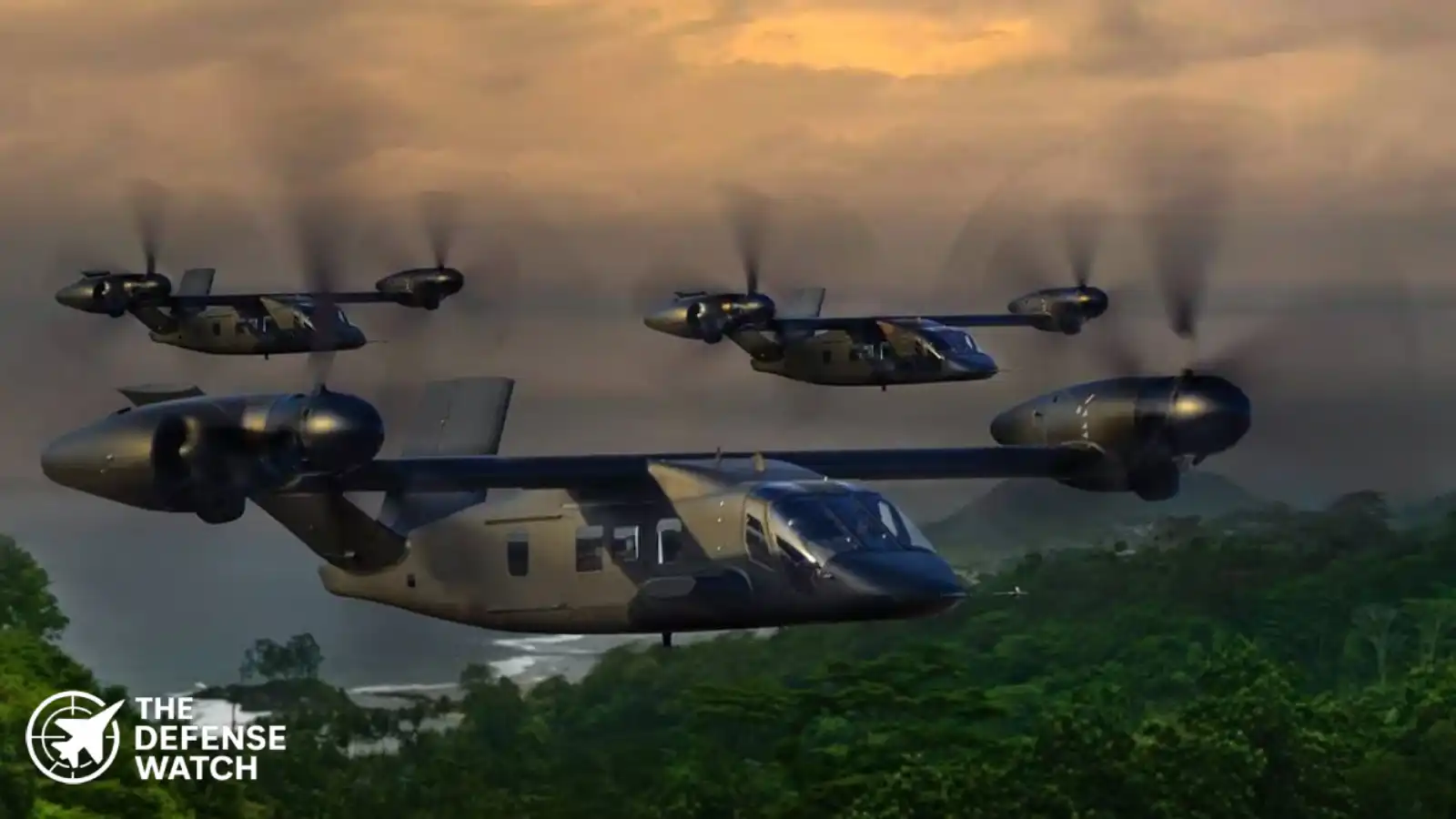
Bell MV-75A Cheyenne II Targets Future Marine Corps Missions
Bell MV-75A Cheyenne II has been unveiled as an armed next-generation tiltrotor concept aimed at future U.S. Marine Corps operations, according to reporting by Bell Textron. The design reflects a broader Pentagon shift toward longer-range, more survivable aircraft able to operate across contested maritime environments.
The concept appears tailored for expeditionary warfare, where Marine units may need to move rapidly between islands, support dispersed forces, and strike enemy naval or land targets without relying on large fixed bases.
- Bell has revealed the armed MV-75A Cheyenne II concept for future U.S. Marine Corps missions.
- The platform combines tiltrotor speed and range with offensive strike capability.
- Proposed missions include sea denial, precision strike, expeditionary assault, and island operations.
- The concept aligns with Marine Corps doctrine focused on distributed maritime operations in the Indo-Pacific.
- Cheyenne II signals growing demand for survivable long-range assault aircraft with weapons integration.
That matters because the U.S. Marine Corps has been reshaping its force structure for years around mobility, anti-ship warfare, and smaller forward units capable of operating inside contested zones.
What Is The MV-75A Cheyenne II?
The MV-75A Cheyenne II is presented as an armed tiltrotor aircraft, combining helicopter-style vertical lift with airplane-like cruise speed. That architecture is already familiar through the Bell Boeing V-22 Osprey, but Bell’s new concept suggests a more combat-focused mission set.
Unlike traditional assault transports, the Cheyenne II concept emphasizes direct offensive capability. Imagery released with the report indicates external weapons carriage and a profile intended for high-speed strike and support missions.
If fielded in any future form, such a platform could bridge multiple mission areas:
- Tactical troop transport
- Long-range raid support
- Maritime strike
- Armed escort
- Precision fires
- Rapid resupply in contested areas
Why Sea Denial Is Central To The Design
Sea denial refers to preventing an adversary from freely operating naval forces in a region. For the Marine Corps, that increasingly means using mobile units armed with missiles, sensors, drones, and aircraft to complicate enemy movement.
An armed MV-75A Cheyenne II could support that model in several ways:
- Rapidly moving anti-ship missile teams between islands
- Launching precision strikes on radar or missile sites
- Escorting expeditionary forces
- Resupplying isolated detachments
- Extending sensor and targeting networks
This is especially relevant in the Pacific, where distance between islands and limited basing options place a premium on speed and range.
How It Fits Marine Corps Modernization
The United States Marine Corps has divested some heavy legacy systems while investing in mobile missiles, lighter formations, and distributed operations under Force Design reforms.
The MV-75A Cheyenne II aligns with several of those priorities:
- Operational reach over large ocean spaces
- Faster repositioning than helicopters
- Vertical landing flexibility without runways
- Organic strike capability
- Support for small expeditionary detachments
This also reflects a wider U.S. defense trend where aircraft are expected to do more than transport. Survivability, networking, and weapons integration now matter as much as lift capacity.
Competitive Landscape
Bell’s tiltrotor experience gives it a strong industrial base, but future procurement would still face questions over cost, survivability, maintenance burden, and mission overlap with existing fleets.
The V-22 Osprey demonstrated the benefits of speed and range, but also highlighted sustainment and safety challenges over decades of service. Any successor or derivative concept would likely be judged on whether it improves reliability while reducing lifecycle costs.
For Marine planners, the key issue may not be whether a tiltrotor can fly farther, but whether it can survive in a modern missile-threat environment while carrying meaningful weapons loads.
Strategic Outlook
The Bell MV-75A Cheyenne II remains a concept rather than an announced procurement program. Still, its reveal offers a clear signal about where military aviation thinking is headed.
Future conflicts, especially in the Indo-Pacific, may reward aircraft that can launch from austere sites, move fast across long distances, and strike targets without waiting for larger joint assets.
That makes the Cheyenne II more than a design study. It is a snapshot of how industry sees the next Marine Corps fight.
Get real time update about this post category directly on your device, subscribe now.