U.S. Approves Possible $800 Million Helicopter Sale To Iraq
The U.S. State Department has approved a possible $800 million helicopter sale to Iraq, covering Bell 412EPX and Bell 407M aircraft along with weapons, sensors, communications equipment, training and logistical support. Reuters reported that Bell Textron of Fort Worth, Texas, has been identified as the principal contractor.
Takeaways
The proposed $800 million U.S. helicopter package would give Iraq a combination of transport, reconnaissance, targeting and armed rotary-wing capabilities.
The proposed transaction is part of the U.S. Foreign Military Sales system and should be treated as an authorization for a possible sale, rather than a completed procurement contract. The final quantity, configuration, schedule and value can change as the case moves through the acquisition process.
What Iraq Has Requested
The proposed package combines two different helicopter classes.
The Bell 412EPX is a twin-engine, medium utility helicopter designed around transport and multi-mission requirements. Bell lists seating for up to 14 passengers, a 5,000-pound cargo-hook capability and a maximum internal gross weight of 12,200 pounds. The aircraft also incorporates upgraded avionics and flight-control improvements intended to support operations in demanding environments.
The Bell 407M is a lighter military multi-role helicopter. Bell describes the platform as incorporating an integrated glass cockpit and weapons-management architecture, with missions including light attack and close air support. Bell lists a maximum cruise speed of 133 knots and a range of 337 nautical miles at its specified long-range cruise condition.
The proposed Iraqi fleet therefore appears designed around complementary missions rather than a single helicopter requirement. The 412EPX provides greater cabin and payload capacity, while the 407M offers a smaller platform suited to armed reconnaissance and tactical missions.
The publicly reported notification does not specify how many aircraft Iraq would receive of either type.
Weapons And Sensors Expand The Mission Set
The proposed sale is significant because the helicopters are not being considered simply as transport aircraft.
The package includes GAU-19 three-barrel machine-gun systems and M260 seven-tube rocket launchers for 2.75-inch rockets. These systems would provide the Iraqi aircraft with an armed capability for missions requiring direct fire or rocket engagement.

Image: Bell Textron Inc. The proposed sensor suite includes the L3Harris WESCAM MX-15HDI electro-optical and infrared system. Such a sensor provides an aircraft with day and night observation and target-detection functions, allowing crews to identify and track ground activity before an engagement or during surveillance missions.
The inclusion of the MX-15HDI is particularly relevant to the air-to-surface targeting role identified by the State Department. A helicopter equipped with a stabilized electro-optical and infrared sensor can combine observation, identification and targeting functions without relying entirely on separate ground surveillance assets.
The package also includes AN/AAR-60 Block 2 missile launch detection systems, which are intended to provide warning of missile threats to the aircraft. This is an important distinction from a basic utility helicopter configuration because it addresses survivability in environments where aircraft may face man-portable or other missile threats.
Communications, Training And Sustainment
The proposed sale extends beyond aircraft and weapons.
Iraq has requested very high frequency radios, spare parts, ground-support equipment, technical publications and data. The package also includes new-equipment training for pilots and maintenance personnel, together with U.S. government and contractor engineering, technical and logistics support.
That support structure matters because introducing a new military helicopter fleet requires more than delivering airframes.
Iraq would need trained aircrews, maintainers, spare-parts inventories, ground equipment, technical documentation and procedures for operating the aircraft alongside its existing rotary-wing fleet. The sustainment portion of the proposed package is therefore central to whether the aircraft can generate useful operational availability over time.
For Iraq, this could also reduce the risk of acquiring aircraft without the supporting infrastructure needed to keep them flying at meaningful rates.
Why The Bell 412EPX And 407M Combination Matters
The proposed combination gives Iraq two different rotary-wing capabilities within the same broader acquisition.
The Bell 412EPX is suited to missions where cabin space, payload and endurance are more important. Its utility configuration can support personnel movement, equipment transport and other missions requiring a larger cabin.

Image: Bell Textron Inc. The Bell 407M moves in the opposite direction. It is smaller and lighter, with a configuration centered on tactical operations and integrated weapons employment. Bell specifically positions the aircraft for light attack and close air support missions.
That division could allow Iraq to assign aircraft according to mission requirements rather than using a single helicopter type for every task.
The combination also illustrates an important feature of modern rotary-wing operations: mission effectiveness depends increasingly on the integration of sensors, communications, weapons and survivability systems rather than on the airframe alone.
Potential Impact On Iraq’s Rotary-Wing Force
The State Department said the proposed sale would strengthen Iraq’s ability to address current and future threats, with particular emphasis on rotary-wing transportation, reconnaissance and air-to-surface targeting. Washington also described Iraq as a strategic partner whose security capabilities support U.S. foreign-policy and national-security interests.
For Iraq, the potential benefit is a broader set of options for missions that fall between conventional ground operations and high-end fixed-wing airpower.
Helicopters can move personnel and equipment without requiring conventional runways, provide persistent observation over localized areas and support ground forces with relatively short response times. Armed reconnaissance aircraft can also combine surveillance and engagement capabilities when the mission requires both.
The value of the proposed fleet will therefore depend not only on aircraft numbers, but also on availability, training, maintenance capacity, sensor integration and the ability of Iraqi forces to coordinate rotary-wing assets with ground units.
The $800 Million Figure Needs Context
The $800 million figure should not be interpreted as the price of the helicopters alone.
Foreign Military Sale notifications commonly combine aircraft with weapons, sensors, spare parts, training, technical assistance, support equipment and other services. The estimated value represents the potential scope of the case rather than a guaranteed final contract value.
The proposed Iraqi package follows that broader model. In addition to the aircraft, it includes weapons, mission systems, communications equipment, training and long-term technical and logistics support.
That distinction is important when comparing the announcement with eventual procurement figures. The final agreement can contain fewer items or a different configuration, and its value can differ from the initial estimate.
What Happens Next
The State Department authorization is an important step, but it does not by itself complete the transaction.
The Foreign Military Sales process requires congressional notification and review. If the case proceeds, the U.S. and Iraqi governments would then work through the details of the eventual agreement, including aircraft configuration, quantities, equipment, delivery schedules and support arrangements.
The next significant indicators will therefore be whether the case advances through the FMS process and whether a final agreement identifies the number of Bell 412EPX and Bell 407M helicopters Iraq intends to acquire.
Until those details are finalized, the most accurate description is a possible $800 million U.S. Foreign Military Sale to Iraq, not an $800 million completed helicopter contract.
U.S. Defense-Industrial Implications
For the U.S. defense industry, Bell Textron’s designation as principal contractor places the company at the center of a potential program covering aircraft, mission integration and associated support.
Bell has continued to expand the international military market for the 412EPX. In June 2025, the company announced an agreement for 12 412EPX aircraft for the Tunisian Air Force, describing the aircraft as a multi-role military and security platform.
The 407M similarly gives Bell a product positioned between conventional utility helicopters and larger dedicated attack platforms. Its integrated weapons and cockpit architecture allows customers to configure the aircraft for tactical missions without acquiring a much heavier attack helicopter.
If the Iraqi case moves forward, it would add another Middle Eastern military customer to Bell’s growing international rotorcraft portfolio.
Bottom Line
The proposed $800 million U.S. helicopter sale to Iraq is broader than a conventional aircraft purchase. It combines Bell 412EPX utility helicopters, Bell 407M military helicopters, weapons, targeting sensors, missile warning equipment, communications systems, training and sustainment.
Its strategic significance lies in the combination of transport and armed reconnaissance capabilities. The proposed fleet would give Iraq additional options for moving forces, conducting surveillance and supporting ground operations from the air.
For now, however, the transaction remains a possible Foreign Military Sale. The final aircraft quantities, configuration, delivery schedule and contract value have yet to be established publicly.
Executive Summary:
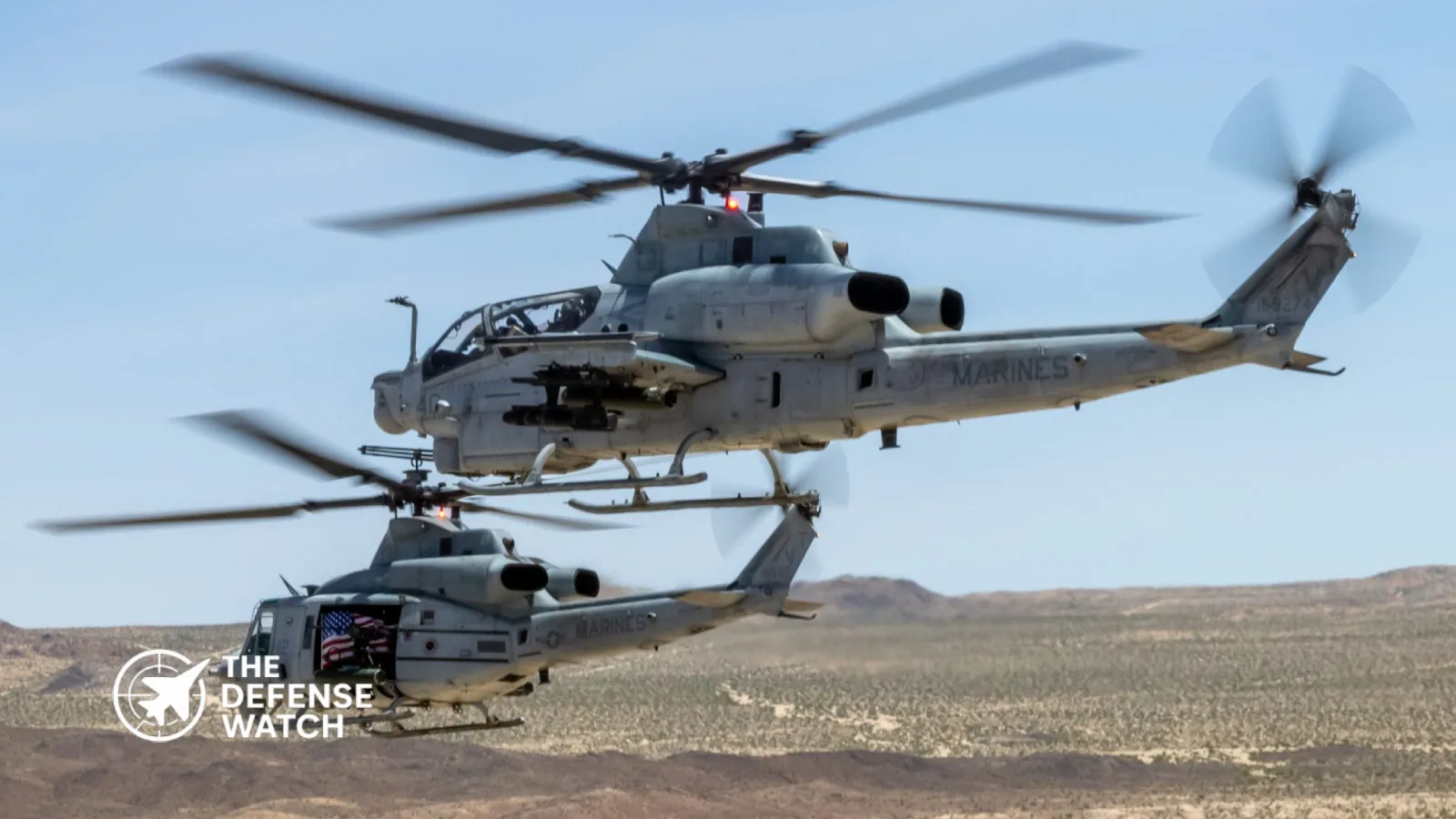
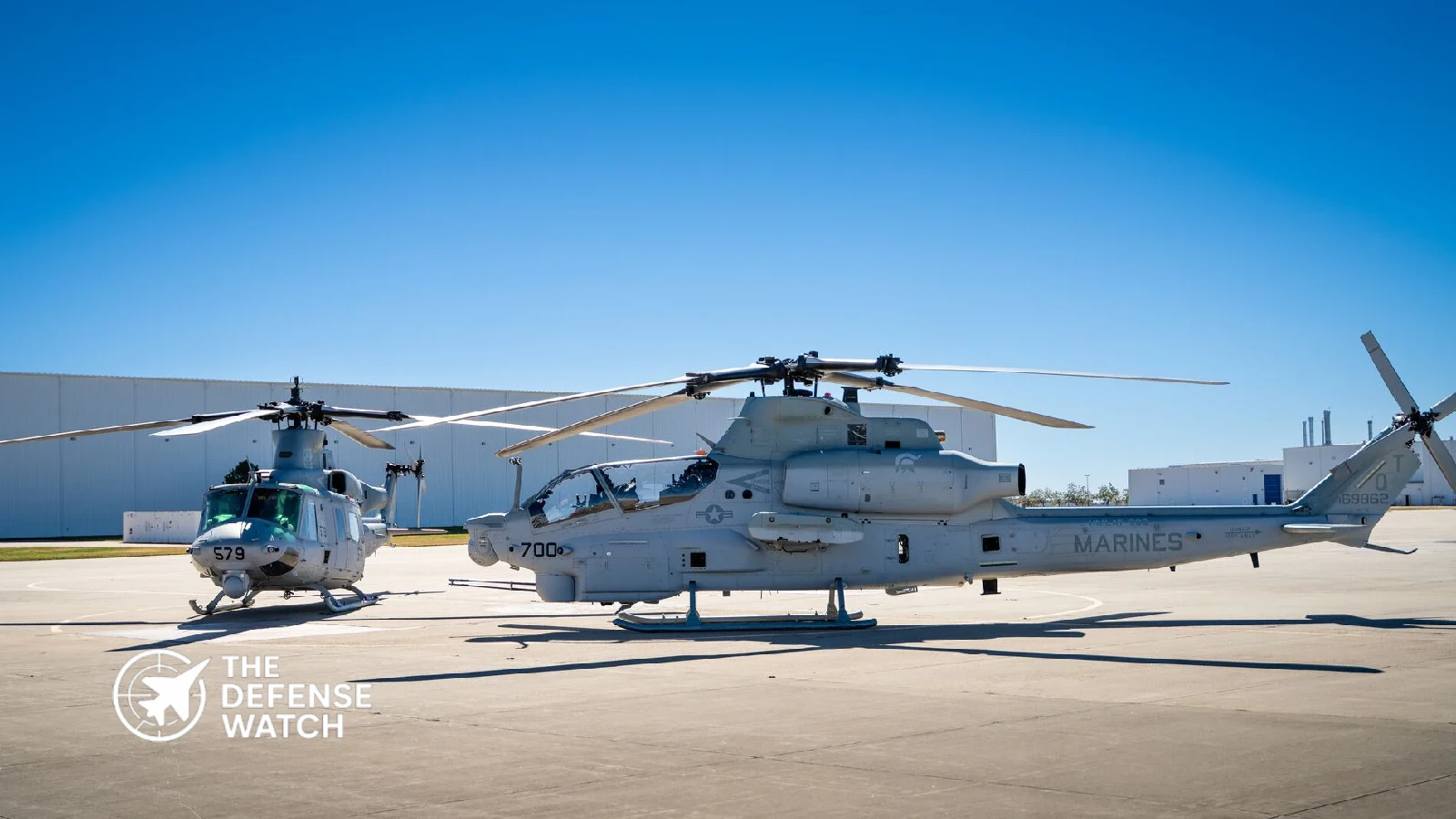
Bell Textron has received an estimated $300 million U.S. Navy contract to modernize up to 49 U.S. Marine Corps H-1 helicopters under the SPINE Phase 3.0 program. The upgrades will significantly improve electrical power, digital architecture, survivability, and future weapons integration, extending the operational relevance of the AH-1Z Viper and UH-1Y Venom well into the 2040s.
Bell Wins Major USMC HH-1 SPINE Upgrade Contract
Bell Textron has secured an estimated $300 million contract from the U.S. Department of the Navy to carry out the next phase of the Structural and Power Improvements for NextGen Effects (SPINE) modernization program for the U.S. Marine Corps‘ H-1 helicopter fleet. The award was announced by Bell on July 27, 2026.
The agreement covers upgrades for up to 49 helicopters, including 28 AH-1Z Viper attack helicopters and 21 UH-1Y Venom utility helicopters. Work will be performed at Bell’s Amarillo Assembly Center beginning in mid 2027, with deliveries of upgraded aircraft scheduled to begin in 2028.
What SPINE Phase 3.0 Will Deliver
The SPINE modernization program is designed to prepare the Marine Corps‘ H-1 fleet for increasingly networked, data driven battlefield operations.
According to Bell, the upgraded aircraft will receive improvements in several critical areas:
| Capability | Operational Benefit |
|---|---|
| Enhanced electrical power | Supports next generation sensors and mission systems |
| Reinforced structural components | Accommodates future equipment growth |
| Advanced digital data bus | Improves system integration |
| Link 16 tactical datalink | Enables real time battlefield networking |
| Improved defensive systems | Increases survivability in contested environments |
| Long range network enabled weapons support | Expands strike capability beyond current configurations |
Bell says these improvements will enable H-1 helicopters to operate more effectively alongside fixed wing aircraft while receiving targeting information through networked command and control systems.
Building on Earlier SPINE Milestones
The latest contract follows several years of developmental work.
In March 2026, Bell completed the first fully upgraded AH-1Z and UH-1Y aircraft under the SPINE program. Those helicopters were delivered to Naval Air Station Patuxent River for flight testing to validate the new configuration before fleet wide production begins.
The program was previously known as the Structural Improvement Electrical Power Upgrade (SIEPU) before being renamed SPINE to better reflect its broader modernization objectives.
Why The Upgrade Matters
The AH-1Z Viper and UH-1Y Venom remain the backbone of Marine Corps rotary wing aviation.
Rather than replacing the aircraft with an entirely new platform, the Marine Corps is extending their service life while integrating capabilities required for future expeditionary operations.
The modernization focuses on enabling:
- Digital connectivity across joint forces
- Integration of future precision weapons
- Increased onboard electrical generation
- Enhanced electronic warfare compatibility
- Improved survivability against modern air defense threats
Bell and Marine Corps officials have stated that the upgraded aircraft are expected to remain operational into the 2040s, reducing the need for an expensive near term replacement program.
Strategic Significance for U.S. Defense
The SPINE program reflects a broader shift across the U.S. military toward modernizing existing platforms for operations in highly contested environments.
Future Marine Corps concepts such as Expeditionary Advanced Base Operations (EABO) and Distributed Maritime Operations depend heavily on aircraft capable of sharing targeting data across multiple domains while operating close to hostile forces.
Adding Link 16 networking, improved electrical capacity, and digital architecture enables the H-1 fleet to support these concepts without requiring a completely new helicopter design. The additional power generation also creates room for future technologies such as advanced electronic warfare equipment, improved infrared countermeasures, autonomous mission systems, and next generation precision guided weapons.
From a budgetary perspective, upgrading proven aircraft often provides a faster and more cost effective path than developing a new rotorcraft, particularly as the Marine Corps balances investments across aviation, unmanned systems, long range fires, and amphibious capabilities.
Program Timeline
| Milestone | Status |
|---|---|
| First SPINE upgraded AH-1Z completed | Completed in 2026 |
| First SPINE upgraded UH-1Y completed | Completed in 2026 |
| Flight testing at NAS Patuxent River | Ongoing |
| Phase 3.0 production begins | Mid 2027 |
| First fleet deliveries | 2028 |
| Aircraft covered under contract | Up to 49 |
| Estimated contract value | $300 million |
Looking Ahead
The Phase 3.0 contract marks the transition of the SPINE program from prototype testing into fleet modernization.
As upgraded aircraft enter service beginning in 2028, the Marine Corps expects the enhanced AH-1Z and UH-1Y fleet to provide greater interoperability with joint forces, improved survivability in contested battlespaces, and expanded compatibility with future weapons and digital combat systems.
The modernization also demonstrates the Pentagon’s continued emphasis on extending the effectiveness of proven aviation platforms through targeted technology upgrades rather than wholesale fleet replacement.
Bell MV-75A Cheyenne II Targets Future Marine Corps Missions
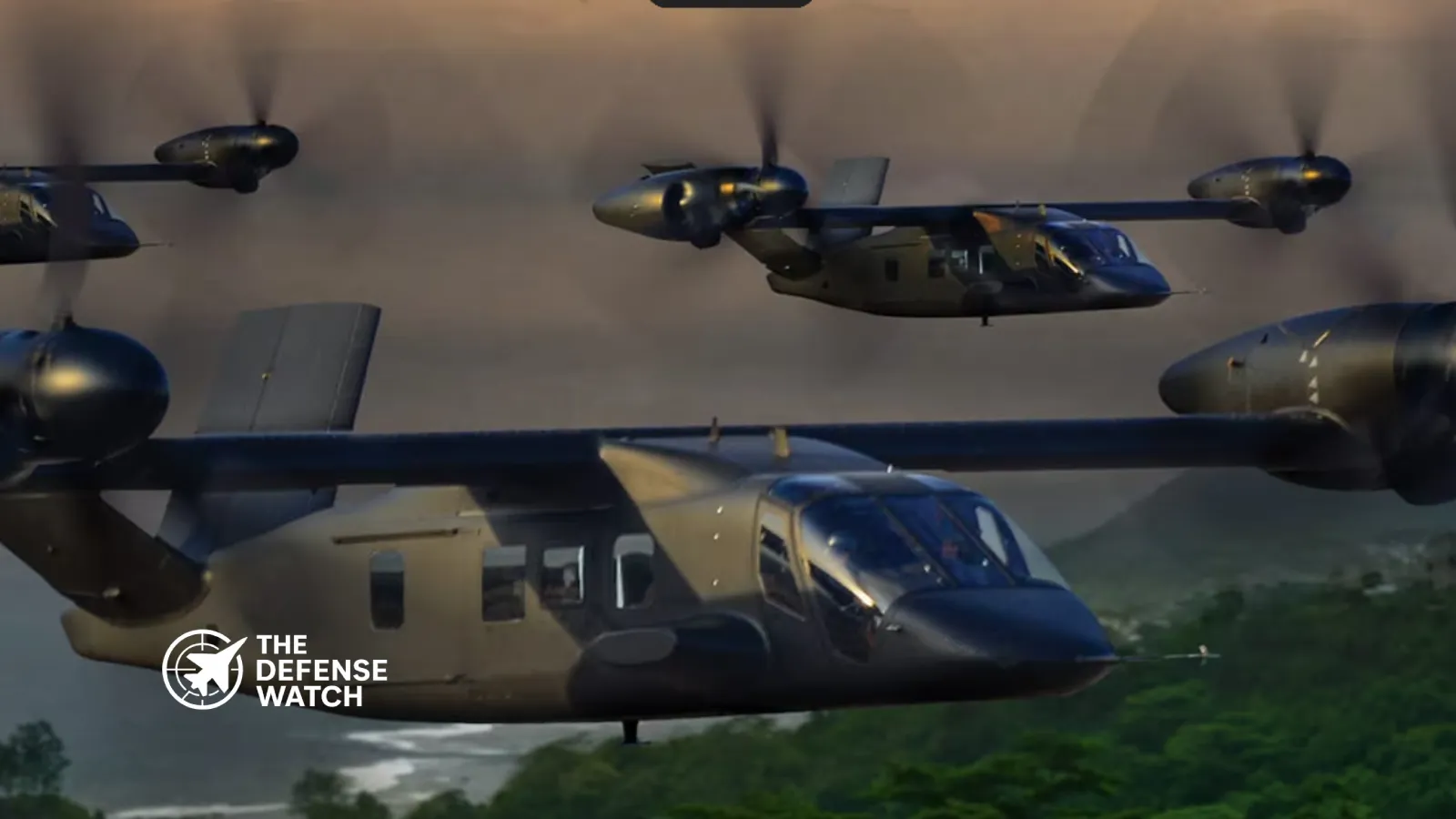
Bell MV-75A Cheyenne II has been unveiled as an armed next-generation tiltrotor concept aimed at future U.S. Marine Corps operations, according to reporting by Bell Textron. The design reflects a broader Pentagon shift toward longer-range, more survivable aircraft able to operate across contested maritime environments.
The concept appears tailored for expeditionary warfare, where Marine units may need to move rapidly between islands, support dispersed forces, and strike enemy naval or land targets without relying on large fixed bases.
- Bell has revealed the armed MV-75A Cheyenne II concept for future U.S. Marine Corps missions.
- The platform combines tiltrotor speed and range with offensive strike capability.
- Proposed missions include sea denial, precision strike, expeditionary assault, and island operations.
- The concept aligns with Marine Corps doctrine focused on distributed maritime operations in the Indo-Pacific.
- Cheyenne II signals growing demand for survivable long-range assault aircraft with weapons integration.
That matters because the U.S. Marine Corps has been reshaping its force structure for years around mobility, anti-ship warfare, and smaller forward units capable of operating inside contested zones.
What Is The MV-75A Cheyenne II?
The MV-75A Cheyenne II is presented as an armed tiltrotor aircraft, combining helicopter-style vertical lift with airplane-like cruise speed. That architecture is already familiar through the Bell Boeing V-22 Osprey, but Bell’s new concept suggests a more combat-focused mission set.
Unlike traditional assault transports, the Cheyenne II concept emphasizes direct offensive capability. Imagery released with the report indicates external weapons carriage and a profile intended for high-speed strike and support missions.
If fielded in any future form, such a platform could bridge multiple mission areas:
- Tactical troop transport
- Long-range raid support
- Maritime strike
- Armed escort
- Precision fires
- Rapid resupply in contested areas
Why Sea Denial Is Central To The Design
Sea denial refers to preventing an adversary from freely operating naval forces in a region. For the Marine Corps, that increasingly means using mobile units armed with missiles, sensors, drones, and aircraft to complicate enemy movement.
An armed MV-75A Cheyenne II could support that model in several ways:
- Rapidly moving anti-ship missile teams between islands
- Launching precision strikes on radar or missile sites
- Escorting expeditionary forces
- Resupplying isolated detachments
- Extending sensor and targeting networks
This is especially relevant in the Pacific, where distance between islands and limited basing options place a premium on speed and range.
How It Fits Marine Corps Modernization
The United States Marine Corps has divested some heavy legacy systems while investing in mobile missiles, lighter formations, and distributed operations under Force Design reforms.
The MV-75A Cheyenne II aligns with several of those priorities:
- Operational reach over large ocean spaces
- Faster repositioning than helicopters
- Vertical landing flexibility without runways
- Organic strike capability
- Support for small expeditionary detachments
This also reflects a wider U.S. defense trend where aircraft are expected to do more than transport. Survivability, networking, and weapons integration now matter as much as lift capacity.
Competitive Landscape
Bell’s tiltrotor experience gives it a strong industrial base, but future procurement would still face questions over cost, survivability, maintenance burden, and mission overlap with existing fleets.
The V-22 Osprey demonstrated the benefits of speed and range, but also highlighted sustainment and safety challenges over decades of service. Any successor or derivative concept would likely be judged on whether it improves reliability while reducing lifecycle costs.
For Marine planners, the key issue may not be whether a tiltrotor can fly farther, but whether it can survive in a modern missile-threat environment while carrying meaningful weapons loads.
Strategic Outlook
The Bell MV-75A Cheyenne II remains a concept rather than an announced procurement program. Still, its reveal offers a clear signal about where military aviation thinking is headed.
Future conflicts, especially in the Indo-Pacific, may reward aircraft that can launch from austere sites, move fast across long distances, and strike targets without waiting for larger joint assets.
That makes the Cheyenne II more than a design study. It is a snapshot of how industry sees the next Marine Corps fight.
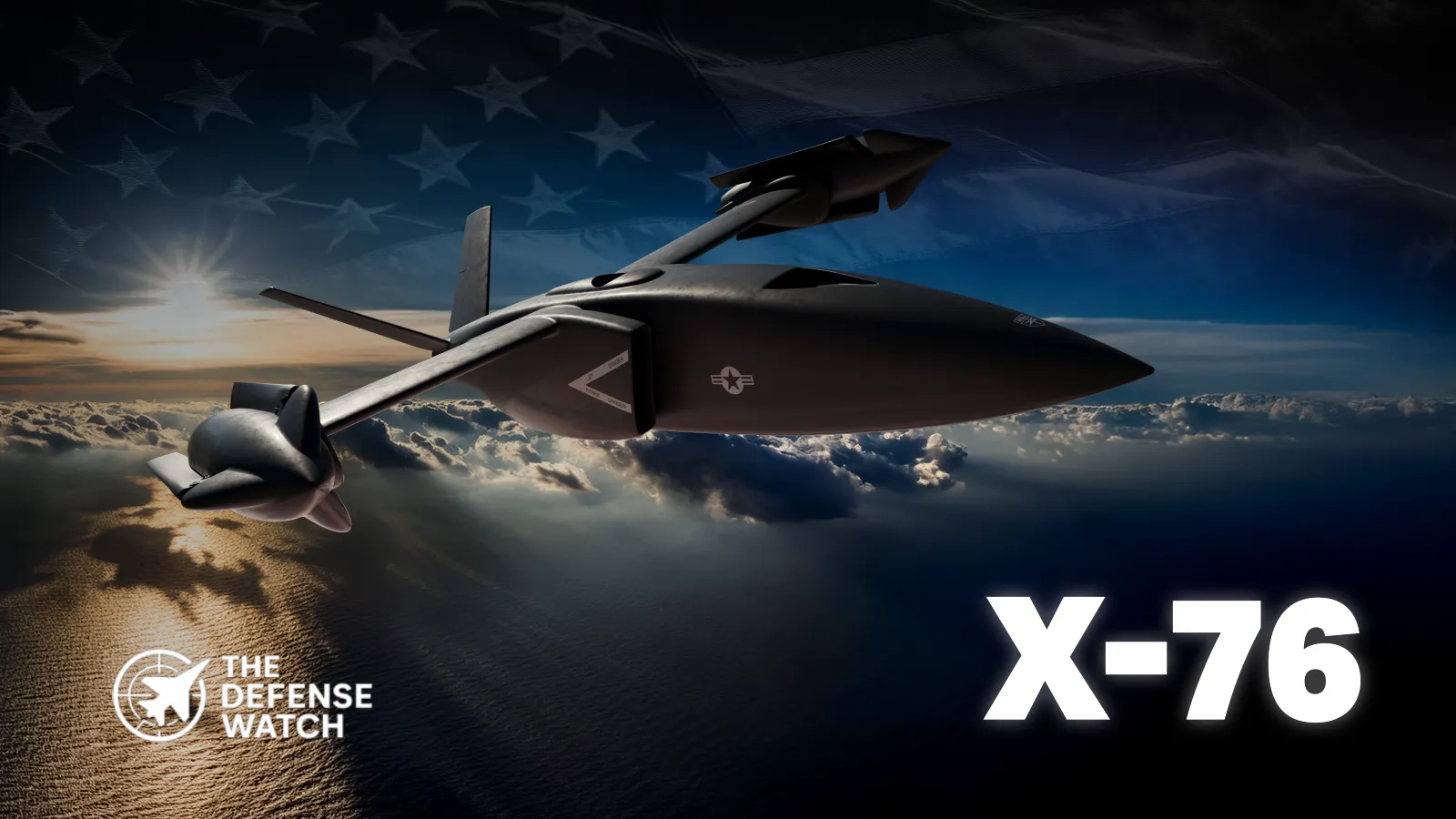
- Bell completed the Critical Design Review for DARPA’s SPRINT X-Plane program and received the official X-76 designation.
- The experimental aircraft aims to combine helicopter-like vertical lift with jet-like cruise speeds exceeding 400 knots.
- The program is jointly funded by DARPA and U.S. Special Operations Command to enable runway independent military aviation.
- Phase 2 now moves into aircraft construction and ground testing before a planned flight test phase later in the program.
- The X-76 demonstrator could shape future U.S. military vertical lift aircraft capable of rapid deployment without traditional airfields.
DARPA SPRINT X-76 X-Plane Advances Toward Flight Testing
The DARPA SPRINT X-76 X-Plane program has reached a major milestone after Bell Textron completed the aircraft’s Critical Design Review (CDR), clearing the project to move into the manufacturing phase. The aircraft demonstrator, officially designated X-76, is part of DARPA’s Speed and Runway Independent Technologies (SPRINT) initiative aimed at developing a new class of high speed vertical lift aircraft.
Bell will now begin constructing the experimental aircraft as part of Phase 2 of the program, which includes detailed design, manufacturing, integration, and ground testing ahead of a planned flight test campaign.
The program is jointly funded by DARPA and U.S. Special Operations Command and seeks to combine the vertical takeoff capability of helicopters with the speed and range typically associated with fixed wing aircraft.
The Big Picture
The DARPA SPRINT X-76 X-Plane reflects a broader U.S. effort to transform military air mobility through advanced vertical lift technologies. For decades, military planners have faced a fundamental trade off between aircraft that can take off vertically and those capable of high speed cruise.
Helicopters offer flexibility and can operate from small landing zones, but they typically cruise at speeds well below 200 knots. Fixed wing aircraft provide far greater speed and range but depend on runways, which can become vulnerable targets during high intensity conflict.
SPRINT aims to overcome that long standing limitation by developing aircraft that can operate without runways while cruising at speeds exceeding 400 knots.
Such capabilities align closely with emerging U.S. operational concepts such as distributed operations, rapid force projection, and expeditionary logistics in contested environments.
What’s Happening
Bell Textron announced on March 9, 2026, that it had successfully completed the Critical Design Review for the DARPA SPRINT program, enabling the company to begin building the aircraft demonstrator designated X-76.
The milestone follows Bell’s selection for Phase 2 of the program in 2025 after completing earlier conceptual and preliminary design phases.
The SPRINT program seeks to demonstrate an aircraft capable of:
- Cruising between 400 and 450 knots
- Hovering and landing in austere environments
- Operating from unprepared surfaces without traditional runways
Bell’s design uses an innovative stop and fold rotor system, allowing rotor blades to operate during vertical takeoff and landing but fold away during high speed forward flight to reduce aerodynamic drag.
Once the aircraft transitions to cruise mode, a separate propulsion system provides forward thrust, enabling speeds closer to jet powered aircraft.
Why It Matters
The DARPA SPRINT X-76 X-Plane directly addresses one of the most persistent operational constraints in military aviation, reliance on fixed runways.
Runways offer speed and payload advantages but represent a critical vulnerability during modern conflicts. Long range precision weapons and drone attacks have made airfields increasingly easy targets.
A high speed aircraft that can take off vertically and operate from small landing zones could allow U.S. forces to disperse aviation assets across many locations rather than concentrating them at a handful of major bases.
For special operations forces, the ability to insert or extract personnel rapidly without established infrastructure could significantly expand operational flexibility.
Strategic Implications
The technologies demonstrated by the X-76 could influence future U.S. military aircraft across multiple mission sets.
High speed VTOL aircraft could support:
- Special operations infiltration missions
- Rapid logistics and medical evacuation
- Forward resupply for distributed units
- Expeditionary basing in contested environments
In large scale conflict scenarios, these capabilities could improve survivability by reducing dependence on large fixed airfields.
The SPRINT concept also supports the Pentagon’s broader push toward distributed and resilient force structures, particularly in the Indo Pacific where dispersed island chains complicate traditional aviation operations.
Competitor View
Strategic competitors closely track U.S. experimental aviation programs, especially those related to vertical lift and operational mobility.
China has invested heavily in advanced rotorcraft and hybrid aircraft concepts aimed at extending operational reach across the Western Pacific. Russia has also explored high speed helicopter designs intended to increase battlefield mobility.
A successful demonstration of the DARPA SPRINT X-76 X-Plane would reinforce U.S. leadership in advanced vertical lift technology and may accelerate similar research efforts among competing powers.
Experimental X-plane programs have historically influenced global aviation trends. Technologies first demonstrated through such programs often appear later in operational aircraft.
What To Watch Next
With the design phase complete, the program now enters the aircraft construction stage.
Bell will focus on:
- Manufacturing the X-76 demonstrator
- Integrating propulsion and rotor systems
- Conducting ground testing and validation
Flight testing is expected during Phase 3 of the SPRINT program, which DARPA plans to begin around 2028.
Those tests will evaluate how effectively the aircraft can transition between vertical lift and high speed cruise while maintaining stability and efficiency.
Capability Gap
The DARPA SPRINT X-76 X-Plane targets a specific operational gap in military aviation.
Current tiltrotor aircraft such as the V-22 Osprey provide improved speed over helicopters but remain limited in top speed due to aerodynamic drag from their rotor systems.
The stop and fold rotor concept attempts to overcome that limitation by eliminating rotor drag once the aircraft transitions into forward flight.
However, the approach introduces technical challenges, particularly in flight transition, propulsion integration, and structural complexity. Demonstrating reliable transitions between rotor and cruise modes will be critical for the program’s success.
The Bottom Line
The DARPA SPRINT X-76 X-Plane represents a major step toward aircraft that combine helicopter flexibility with jet level speed, potentially redefining future military air mobility.
US Army Accelerates MV-75 Tiltrotor Fielding
The US Army is advancing fielding of the Bell MV-75 tiltrotor and aims to receive the first aircraft by late 2026, several years earlier than previously planned, service leaders said. The move marks a major shift in the Army’s Future Long Range Assault Aircraft (FLRAA) program and underlines urgency in modernizing its assault aviation fleet.
Army Chief of Staff General Randy George told soldiers in a January 13 forum that troops could begin flying the MV-75 by this time next year, a timeline that accelerates the delivery schedule from its original early-2030s expectations.
Tiltrotor Program Timeline and Acceleration
The MV-75, derived from Bell’s V-280 Valor tiltrotor demonstrator, was selected by the Army in 2022 to replace aging UH-60 Black Hawk helicopters under the FLRAA initiative. Its tiltrotor design aims to combine vertical takeoff and landing with fixed-wing speed and range.
Originally, first prototype deliveries and early flight testing were expected around 2027-2028, with operational fielding in the early 2030s. The Army and Bell have now agreed to move up that timeline. The service says active duty, National Guard, and Special Operations units may have MV-75s flying late in 2026 in a test and evaluation role.
Bell has begun assembling the first six MV-75 test aircraft in Wichita, Kansas, under contract for eight total, and plans to shift final assembly to its Amarillo, Texas facility, where Bell currently produces the V-22 Osprey tiltrotor.
Program Priorities and Capability Goals
The MV-75 tiltrotor is planned to give the Army significantly greater speed and range than legacy helicopters like the Black Hawk. Tiltrotor aircraft take off and land like rotary-wing platforms but transition to forward flight with proprotors that deliver faster cruise speeds.
Army leaders describe MV-75 as central to future assault and air mobility missions, especially in contested environments where rapid movement over long distances could be decisive. The aircraft is expected to support troop insertion, logistics lift, and other missions once fully operational.
Funding and Industrial Effort
Acceleration of the MV-75 schedule comes with a broader focus on US Army aviation modernization under the Future Vertical Lift framework. The FLRAA program represents one of the largest investments in Army aviation in decades. Funding adjustments and reprioritization of other programs have played a role in advancing tiltrotor development.
Bell says digital engineering methods have reduced manufacturing timelines for fuselage production, helping to support the accelerated delivery goal.
What Comes Next
Acceptance of the first MV-75 airframe in late 2026 will likely be followed by flight testing and evaluation well before initial operational capability. There is no confirmed date yet for full deployment with operational units.
Even with early deliveries, the Army plans to operate the MV-75 alongside a large fleet of Black Hawks for years, gradually replacing a significant portion of the current fleet.