Swedish Ammunition Plant Estonia Signals Major Capacity Expansion
The Swedish ammunition plant Estonia initiative marks a significant step in expanding Europe’s defense industrial base, with a major new facility planned to boost production of critical munitions for NATO forces.
The project, led by Swedish defense manufacturer Saab, reflects sustained demand for ammunition across Europe and highlights a broader shift toward localized production within NATO’s eastern flank.
- Swedish defense firm plans a major ammunition plant in Estonia to expand production capacity.
- Facility will focus on large-caliber ammunition critical for NATO ground forces.
- Project supports Europe’s push to reduce reliance on external munitions supply chains.
- Construction timeline and investment scale align with long-term defense demand growth.
- Estonia strengthens its role as a frontline NATO logistics and defense hub.
The Big Picture
European defense planners are accelerating efforts to rebuild ammunition stockpiles after years of underinvestment and high consumption rates driven by the war in Ukraine.
NATO countries have faced persistent shortages of artillery shells and other munitions, exposing structural weaknesses in production capacity. Governments across Europe have since prioritized industrial expansion to ensure long-term readiness.

The Swedish ammunition plant Estonia project fits directly into this strategy. By positioning manufacturing closer to NATO’s eastern front, the alliance improves both supply resilience and operational responsiveness.
What’s Happening
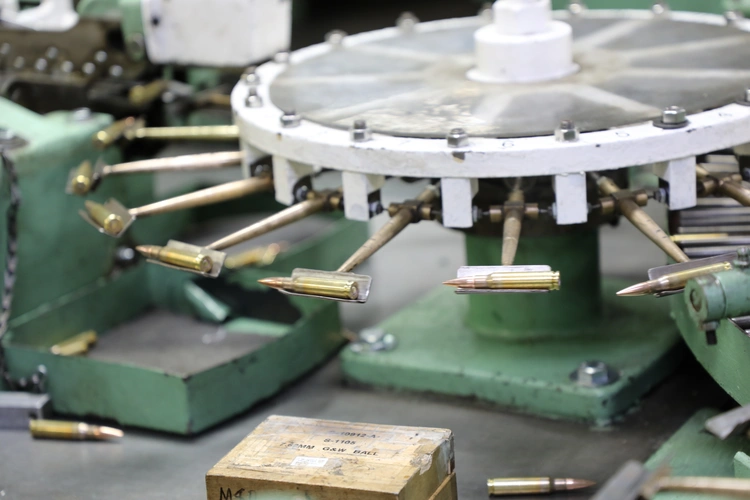
Saab confirmed plans to establish a large-scale ammunition production facility in Estonia, focusing on producing munitions used by modern land forces.
The plant will manufacture large-caliber ammunition, a category that includes artillery shells widely used in high-intensity conflict scenarios.
Estonia’s government is supporting the project as part of its broader defense industrial strategy. The facility is expected to strengthen domestic capabilities while contributing to NATO-wide supply chains.
While exact production volumes and timelines have not been fully disclosed, the initiative reflects long-term planning aligned with sustained European demand.
Why It Matters
The Swedish ammunition plant Estonia project addresses a critical bottleneck in NATO’s defense posture: ammunition availability.
Modern warfare, particularly in Ukraine, has demonstrated that high-intensity conflicts consume vast quantities of artillery rounds. Western stockpiles have struggled to keep pace with this demand.
By expanding production capacity within Europe, Saab’s new facility helps reduce dependence on external suppliers and mitigates risks tied to global supply disruptions.
The move also supports interoperability across NATO forces by ensuring consistent access to standardized munitions.
Strategic Implications
The decision to build the plant in Estonia carries clear strategic weight.
Estonia sits on NATO’s eastern flank, bordering Russia. Locating production there shortens supply lines to potential operational theaters and enhances logistical efficiency.
The facility also strengthens deterrence by signaling long-term industrial commitment to regional defense. It reinforces NATO’s ability to sustain prolonged operations if required.
From an industrial perspective, the project contributes to a more distributed manufacturing network, reducing the vulnerability of centralized production hubs.
Competitor View
Russia is likely to interpret the Swedish ammunition plant Estonia initiative as part of NATO’s broader effort to reinforce its eastern defenses.
Moscow has consistently criticized NATO’s military buildup near its borders. Increased ammunition production capacity in Estonia may be viewed as a step toward sustained operational readiness in the region.
At the same time, the move aligns with NATO’s defensive posture and reflects lessons learned from ongoing conflicts rather than signaling immediate escalation.
What To Watch Next
Construction timelines and production milestones will be key indicators of how quickly the Swedish ammunition plant Estonia becomes operational.
Observers should watch for:
New contracts tied to the facility’s output
Integration into NATO procurement frameworks
Expansion of similar projects across Europe
Government funding commitments for sustained production
Future announcements may also clarify production capacity and the range of munitions manufactured at the site.
Capability Gap
The Swedish ammunition plant Estonia aims to close a critical gap in artillery ammunition supply across NATO.
European forces have struggled to maintain adequate stockpiles for high-intensity operations. Existing production lines have proven insufficient for sustained conflict scenarios.
However, scaling up production takes time. Even with new facilities, workforce development, raw material sourcing, and industrial coordination remain limiting factors.
The plant improves long-term capacity but does not provide an immediate solution to short-term shortages.
The Bottom Line
The Swedish ammunition plant Estonia represents a strategic investment in NATO’s long-term readiness, strengthening Europe’s ability to sustain high-intensity warfare.