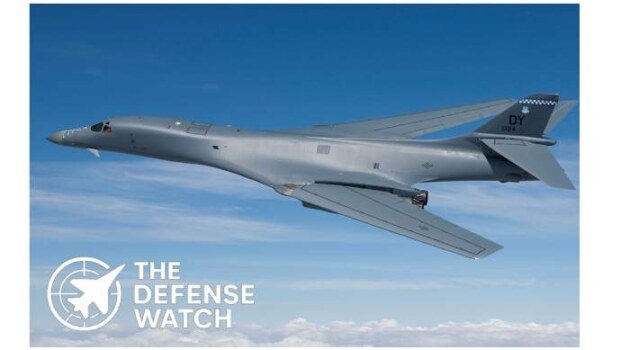
- U.S. Air Force deployed three B-52H Stratofortress bombers to RAF Fairford in the United Kingdom on March 9, 2026.
- The aircraft can carry large payloads including AGM-158 JASSM cruise missiles and precision guided bombs.
- Deployment strengthens the U.S. long-range strike posture as operations against Iranian military targets intensify.
- RAF Fairford now hosts a concentration of U.S. strategic bombers including B-1B and B-52H aircraft.
- Forward basing significantly reduces mission duration compared with bomber sorties launched from the continental United States.
U.S. Deploys B-52H Stratofortress Bombers To UK
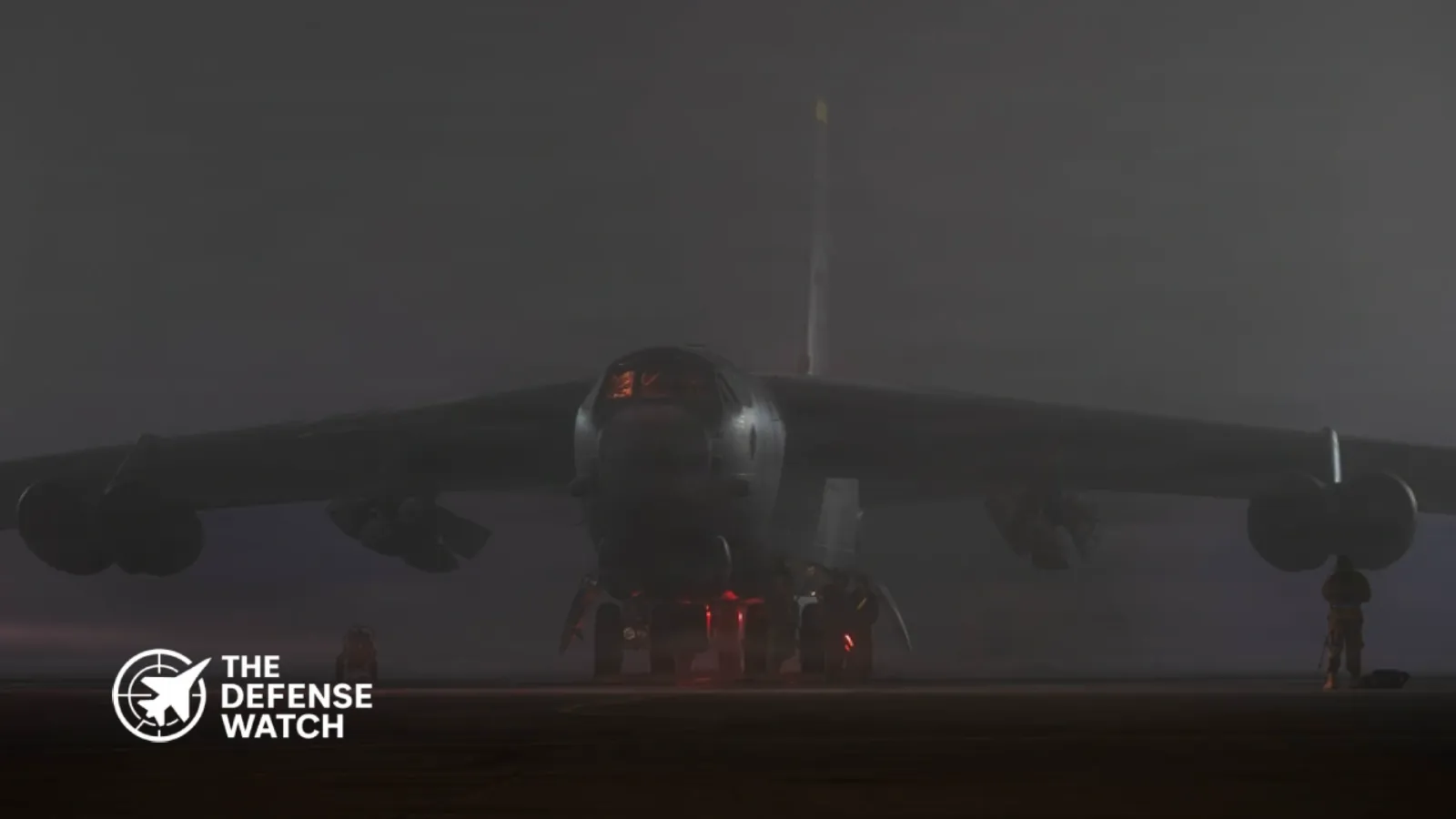
The B-52H Stratofortress bomber deployment to the United Kingdom marks a significant expansion of U.S. long-range strike capability as Washington increases pressure on Iranian military infrastructure. Three U.S. Air Force B-52H bombers arrived at Royal Air Force Fairford on March 9, 2026, reinforcing a growing concentration of American strategic aircraft in Europe supporting ongoing operations targeting Iran.
The deployment follows earlier arrivals of B-1B Lancer bombers to the same base, creating one of the largest U.S. bomber task force groupings in Europe in recent years.
The Big Picture
The United States increasingly relies on forward-deployed strategic bombers to provide rapid long-range strike options during regional crises. Heavy bombers such as the B-52H, B-1B Lancer, and B-2 Spirit form the backbone of America’s conventional global strike capability.
Positioning these aircraft in Europe allows the United States to project power into the Middle East, Eastern Europe, and North Africa without relying solely on bases inside the immediate conflict zone.
RAF Fairford in the United Kingdom has long served as a key staging location for U.S. bomber operations in Europe. The base supports Bomber Task Force rotations and offers the infrastructure required for sustained heavy bomber deployments, including long runways, maintenance facilities, and access to aerial refueling support.
(adsbygoogle = window.adsbygoogle || []).push({});The current deployment underscores how NATO territory continues to play a critical role in enabling U.S. military operations beyond Europe.
What’s Happening
Three B-52H Stratofortress bombers arrived at RAF Fairford after flying from Minot Air Force Base in North Dakota. The aircraft were tracked crossing the Atlantic before landing at the Gloucestershire base on March 9.
Their arrival follows the earlier deployment of eight B-1B Lancer bombers, bringing the total number of U.S. strategic bombers at the base to roughly eleven aircraft.
These bombers form part of the expanding U.S. air campaign targeting Iranian ballistic missile infrastructure and command facilities as part of the ongoing operation known as Operation Epic Fury.
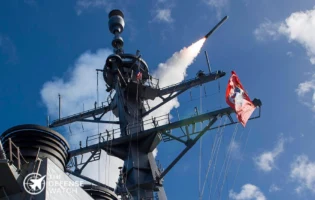
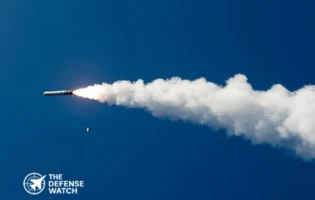
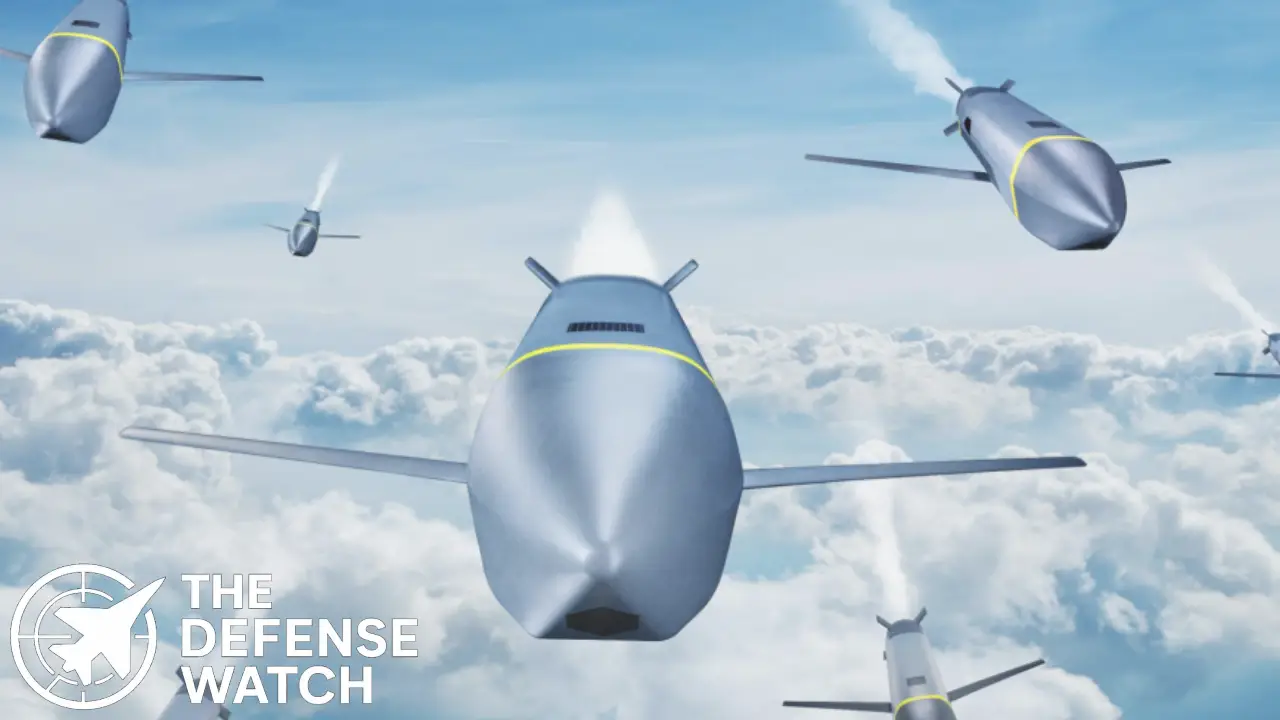
According to open-source imagery and flight tracking data, the B-52H bombers involved in the deployment are capable of carrying multiple AGM-158 Joint Air-to-Surface Standoff Missiles (JASSM). Each aircraft can reportedly carry up to twenty of these precision-guided cruise missiles when combining external pylons with internal rotary launchers.
This weapons configuration allows the aircraft to strike heavily defended targets from outside advanced air defense systems.
Why It Matters
Heavy bomber deployments provide the United States with several operational advantages during high-intensity conflicts.
First, the B-52H offers exceptional payload capacity. The aircraft can deliver large volumes of precision-guided munitions in a single sortie, making it well suited for sustained strike campaigns against infrastructure such as missile launch sites, command centers, and hardened facilities.
(adsbygoogle = window.adsbygoogle || []).push({});Second, the bomber’s long range allows it to operate from secure bases outside the immediate conflict zone. This reduces vulnerability to enemy missile attacks while still maintaining access to regional targets.
Forward basing in the United Kingdom significantly shortens flight times compared with launching missions from the continental United States. A round-trip strike from North America to the Middle East can exceed thirty hours, whereas operations from RAF Fairford are considerably shorter and allow faster sortie generation.
This improvement in operational tempo can become decisive during prolonged air campaigns.
Strategic Implications
The B-52H bomber deployment to the United Kingdom strengthens the United States’ deterrence posture while signaling the ability to sustain large-scale strike operations if necessary.
Concentrating multiple bomber types in Europe creates a flexible strike package. B-1B bombers provide high payload capacity for conventional precision weapons, B-2 aircraft offer stealth penetration against heavily defended targets, and B-52H bombers deliver high-volume standoff missile attacks.
Together, these aircraft form a layered strike architecture capable of targeting a wide range of objectives.
The deployment also highlights the growing role of NATO infrastructure in supporting U.S. operations beyond Europe. Allied bases provide logistical depth, secure basing, and access to critical aerial refueling networks that enable global strike missions.
For U.S. planners, maintaining this network remains essential for rapid crisis response.
(adsbygoogle = window.adsbygoogle || []).push({});Competitor View
Iran is likely to interpret the B-52H deployment as a signal that Washington is preparing to maintain a sustained strike capability rather than limited or symbolic operations.
Strategic bombers represent some of the most visible elemen
ts of American military power. Their deployment often serves both operational and signaling purposes.
From Tehran’s perspective, the presence of B-52H and B-1B bombers in Europe suggests that the United States can maintain continuous strike operations while rotating aircraft and crews to sustain pressure on Iranian military infrastructure.
Russia and China may also view the deployment as part of a broader demonstration of U.S. global strike capability. Both countries closely monitor bomber task force deployments because they reveal how quickly the United States can shift strategic assets between theaters.
What To Watch Next
Several developments will likely determine how the situation evolves in the coming weeks.
One factor will be whether additional bomber aircraft join the deployment. The United States frequently rotates bomber task force elements during active operations to maintain readiness and distribute operational load across multiple units.
Another indicator will be the type of weapons employed in upcoming missions. Long-range cruise missiles such as JASSM enable stand-off attacks, while heavier precision bombs may indicate operations against hardened facilities.
Satellite imagery, flight tracking data, and official military announcements will continue to provide clues about the scale and tempo of ongoing operations.
Capability Gap
The deployment addresses a key operational challenge facing long-range strike missions: distance.
Launching heavy bomber missions from the continental United States to targets in the Middle East requires complex aerial refueling chains and extremely long flight durations. Such missions place strain on aircraft crews and reduce the number of sorties that can be generated.
Forward basing bombers in Europe closes this gap. Aircraft can reach operational areas more quickly while maintaining high payload capacity and stand-off strike capability.
(adsbygoogle = window.adsbygoogle || []).push({});However, strategic bombers still rely heavily on aerial refueling, intelligence support, and secure airspace access to conduct sustained operations.
The Bottom Line
The B-52H Stratofortress bomber deployment to the United Kingdom significantly strengthens the United States’ ability to conduct sustained long-range strike operations against Iranian military targets.