- Home
- Catalog
- Fighter Jets
- Tejas Mk‑2 Fighter Jet
Tejas Mk‑2 Fighter Jet
Full Specifications
General Information
| Name | Tejas Mk‑2 / Medium Weight Fighter (MWF) |
| Manufacturer | Hindustan Aeronautics Limited (HAL), ADA/DRDO |
| Country of Origin | India |
| Type / Role | Multirole fighter / Medium-weight combat aircraft |
| Generation | 4.5th Generation |
| Status | Prototype development |
| First Flight | Projected 2025–2026 |
| Introduction / In Service Since | Expected post-2028 |
| Number Built | Prototype stage |
| Operators | Intended: Indian Air Force |
Dimensions & Structure
| Length | ~14.65 m |
| Wingspan | ~8.5 m |
| Height | ~4.86 m |
| Wing Area | ~38.4 m² |
| Empty Weight | ~7,000 kg |
| Maximum Takeoff Weight (MTOW) | ~17,500 kg |
| Internal Weapons Bay | None |
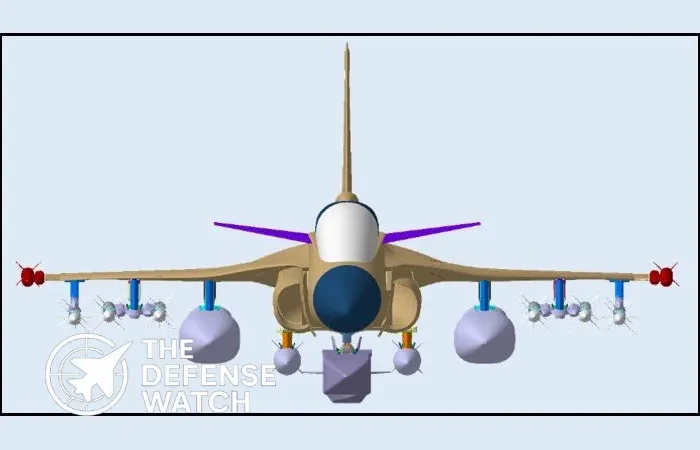
| External Hardpoints | 11 |
Performance
| Maximum Speed | Mach 1.8 |
| Range | ~1,500 km+ |
| Combat Radius | ~1,000 km |
| Service Ceiling | ~50,000 ft |
| Rate of Climb | Not publicly disclosed |
| Thrust-to-Weight Ratio | ~0.56 (based on F414 thrust & MTOW) |
| G Limits | +9 / –3.2 |
Powerplant
| Engine Type | GE F414-INS6 turbofan |
| No. of Engines | 1 |
| Thrust (each) | ~98 kN |
| Thrust Vectoring | No |
| Fuel Capacity | Increased over Mk‑1 (exact liters undisclosed) |
Armament
| Gun | Internal cannon (specific model undisclosed) |
| Missiles (Air-to-Air) | Astra BVR, short-range IR missiles |
| Missiles (Air-to-Ground) | Spice, SCALP-style standoff, Rudram anti-radiation |
| Bombs | Conventional and precision-guided bombs |
| Hardpoints | 11 external stations |
| Payload Capacity | ~6,500 kg |
Avionics & Systems
| Radar | Uttam AESA radar (indigenous) |
| Radar Range | Not publicly disclosed |
| Electronic Warfare (EW) System | Integrated EW suite |
| Targeting System | Multi-role precision targeting |
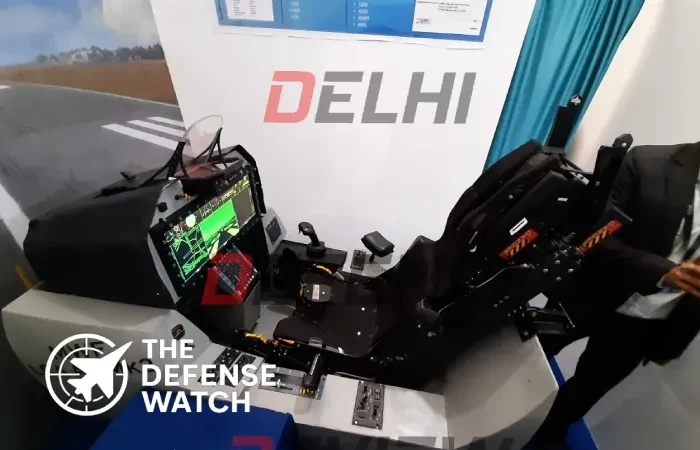
| Helmet Display | Large-area HUD & touchscreen cockpit displays |
| Navigation | INS / digital navigation systems |
| Autopilot / AI Assistance | Digital flight control computer |
| Communication | Secure multi-band comms (likely) |
Stealth & Technology
| Radar Cross Section (RCS) | Reduced via airframe design |
| Stealth Features | Canards, twisted intakes, composites |
| Infrared Signature Reduction | Standard reduction measures |
| Sensor Fusion | Radar, IRST, EW integrated |
| Networking Capabilities | Network-centric enabled; future upgrades possible |
Variants
| Special Export Versions | Potential export-customized version |
Operational History
| Major Conflicts / Deployments | None (prototype stage) |
| Notable Operators | Intended: Indian Air Force |
| Combat Proven? | No |
| Mission Types | Air dominance, ground strike, precision attack |
Cost & Program
| Unit Cost | Not publicly disclosed; cost-effective vs imported jets |
| Development Cost | Approx. ₹6,500 crore additional funding approved |
| Program Name | LCA Tejas Mk‑2 / Medium Weight Fighter |
| Funding Countries | India (domestic) |
Additional Information
| Upgrades Planned | Advanced avionics, weapons, networking |
| Future Replacement | May lead to Advanced Medium Combat Aircraft (AMCA) |
| Export Restrictions | Subject to Indian export controls |
| Notable Achievements | ~70–80% indigenous content, modular architecture |
| Competitors | Saab Gripen E, Dassault Mirage 2000, F‑16, other medium fighters |
PROS
- High Payload Capacity: Up to 6.5 tonnes allows flexible mission profiles.
- Modern Avionics: Uttam AESA radar, IRST, and EW suite boost situational awareness.
- Strong Engine: GE F414-INS6 offers significantly more thrust than prior variant.
- Indigenous Content: High level of domestic systems supports self-reliance.
- Modular Design: Efficient maintenance and upgrade paths via line-replaceable units.
CONS
- Delay Risks: First flight and production timelines have shifted; may impact induction.
- Single-Engine Limit: While powerful, one engine could affect survivability vs twin-engine fighters.
- Export Uncertainty: While promising, there is no firm export customer yet.
- Competition: Faces strong international competitors (e.g., Gripen, Rafale, F‑16) in export market.
- Stealth Limitations: Not a full stealth aircraft — RCS reduction exists, but limited compared to 5th-gen jets.
Tejas Mk‑2 Medium Weight Fighter
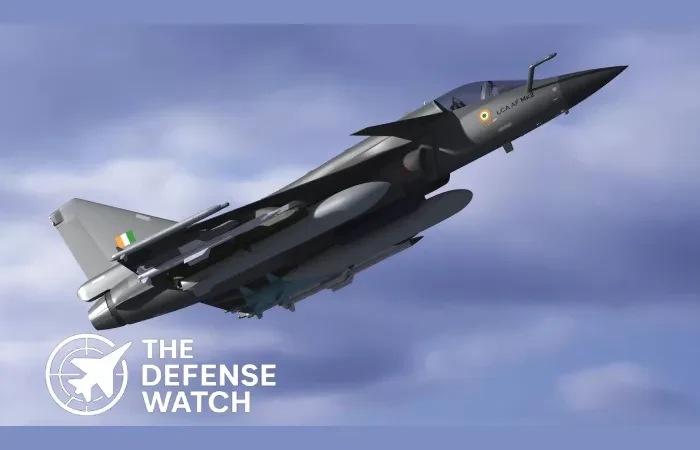
The Tejas Mk‑2, also known as the Medium Weight Fighter (MWF), is India’s next-generation combat aircraft — a bold leap ahead in capability over its predecessor. Developed by the Aeronautical Development Agency (ADA) together with Hindustan Aeronautics Limited (HAL), this 4.5‑generation multirole jet is tailor‑made to address the Indian Air Force’s future fleet requirements while also offering global appeal.
Origin, Manufacturer & Purpose
Manufactured by HAL in collaboration with ADA/DRDO, the Tejas Mk‑2 is designed to replace aging platforms like the MiG‑29, Mirage-2000, and Jaguar in the IAF. It represents India’s push for indigenous, high-performance aerospace hardware, aligning with the “Make in India” vision.
Performance & Capabilities
At its core is a powerful GE F414-INS6 turbofan engine, producing around 98 kN of thrust, granting the Mk-2 a top speed of Mach 1.8 and a service ceiling of approximately 50,000 feet. Its elongated fuselage, coupled with close-coupled canards, improves agility and lift while providing greater internal fuel capacity — delivering a combat radius reportedly up to around 1,000 km and an endurance of 120 minutes per mission.
Armament & Payload
With 11 external hardpoints and a 6.5‑tonne payload capacity, the Mk‑2 can carry a versatile mix of weapons: air-to-air missiles (e.g., Astra), precision ground-attack munitions (such as Indian-developed Spice and SCALP-style weapons), anti-radiation missiles, and bombs.
Avionics & Systems
Its avionics suite is built around a Uttam AESA radar, an indigenous active electronically scanned array radar capable of electronic warfare resilience. Additional sensors include an Infrared Search & Track (IRST) system, a missile approach warning system (MAWS), and advanced electronic warfare capabilities. The cockpit features a large-area touchscreen display, side-stick controls, and a modern digital flight control computer. An onboard oxygen generating system (OBOGS) ensures pilot sustainability at high altitudes.
Operational Outlook
Prototyping is well underway, with HAL projecting a first flight by late 2025 or early 2026, and mass production beginning around 2029 for induction into IAF service. Designed with modular architecture for future upgrades, the Tejas Mk‑2 aims for more than 70–80% indigenous content, making it a strategic asset both for India’s defense autonomy and potential export.
FAQs: Tejas Mk‑2 Fighter Jet
The Tejas Mk‑2 is a 4.5‑generation multirole fighter designed for the Indian Air Force, while the F‑16 is a 4th‑generation lightweight fighter. In terms of avionics and modern design, Tejas Mk‑2 features an indigenous AESA radar, advanced electronic warfare, and a more modern cockpit. However, the F‑16 has decades of operational experience, a proven combat record, and a larger global support network. Performance-wise, the F‑16 generally has a slightly higher thrust-to-weight ratio and combat-proven versatility. So, Tejas Mk‑2 is highly capable for its class but not yet fully comparable in operational maturity to the F‑16.
As of now, Tejas Mk‑2 is still in the prototype and development stage. India has not yet inducted operational Tejas Mk‑2 aircraft into the Indian Air Force. The first flight is projected around 2025–2026, with production beginning post-2028.
Yes. Tejas Mk‑2 offers advanced avionics, 4.5‑generation capabilities, a high payload capacity (6.5 tonnes), and modern multirole versatility. Its indigenous design emphasizes maneuverability, modular upgrades, and electronic warfare resilience. While not fully stealth, it provides a cost-effective, modern alternative for air dominance and precision strike missions.
The Rafale is a twin-engine, 4.5‑generation fighter with higher payload, longer range, and proven combat performance. Tejas Mk‑2, while modern and indigenous, is lighter, single-engine, and designed to complement the IAF’s existing fleet. Rafale remains superior in raw performance and combat experience, but Tejas Mk‑2 is more cost-effective and easier to maintain domestically.
Tejas Mk‑2 is a 4.5‑generation fighter jet, featuring AESA radar, digital flight controls, sensor fusion, and modern electronic warfare systems.
The Tejas fighter series, including Mk‑2, is made in India by Hindustan Aeronautics Limited (HAL) in collaboration with the Aeronautical Development Agency (ADA) and DRDO.
The unit cost of Tejas Mk‑2 is not officially disclosed, but estimates suggest it is significantly lower than imported 4.5‑generation jets like Rafale, with the aim of providing a cost-effective, indigenous solution for the Indian Air Force.
Get real time update about this post category directly on your device, subscribe now.
Reviews
Disclaimer Note
The information provided on TheDefenseWatch.com is for general informational purposes only. While we strive to ensure the accuracy, completeness, and timeliness of our content regarding defense and aerospace products, technologies, and specifications, we cannot guarantee that all information is 100% accurate or up-to-date due to the evolving nature of military technology and classified data.TheDefenseWatch.com does not warrant the reliability, suitability, or availability of the information for any specific purpose. Users are advised to consult official sources, such as manufacturers, government publications, or defense agencies, for precise and verified data before making decisions based on our content.We are not affiliated with any defense manufacturers, governments, or military organizations mentioned. Opinions, reviews, and ratings reflect expert analysis but are subjective and should not be considered endorsements. TheDefenseWatch.com is not responsible for any errors, omissions, or consequences arising from the use of this website’s content.External links are provided for convenience and do not imply endorsement. TheDefenseWatch.com reserves the right to update or modify content without prior notice. By using this website, you agree to our Privacy & Cookies Policy.

New Arrivals


Popular Comparisons
-
 SIG XM7 Rifle vs M4: Key Differences and Performance Comparison
View Comparison →
SIG XM7 Rifle vs M4: Key Differences and Performance Comparison
View Comparison → -
Eurofighter Typhoon vs Rafale vs F-35: Fighter Jet Comparison
View Comparison →
-
J-20 vs F-22: Stealth Fighter Showdown Explained
View Comparison →
-
F-14 Tomcat vs Su-57: Can a Legend Challenge Russia’s Stealth Fighter?
View Comparison →
-
Su-35 vs Su-57: Russia’s Top Fighter Jets Compared
View Comparison →
-
Eurofighter Typhoon vs Su-57: Ultimate Fighter Jet Comparison
View Comparison →
-
Rafale vs Su-57: 4.5 Gen vs 5th Gen Fighter Jet Comparison
View Comparison →
-
Su-57 vs F-16 Fighting Falcon: Stealth vs Speed
View Comparison →
-
China vs Russia: J-20 Mighty Dragon vs Su-57 Felon Comparison
View Comparison →
-
Su-57 Felon vs F-22 Raptor: Stealth Air Superiority Face-Off
View Comparison →


- Pentagon Considers Second B-21 Raider Production Line To Accelerate U.S. Stealth Bomber Expansion

- France Unveils 78,000-Ton Nuclear Aircraft Carrier France Libre With 40-Aircraft Capacity
- L3Harris Wins $77.8M U.S. Navy Contract for Kineto Tracking Mount Sustainment
- US Navy Awards $15.38B Columbia-Class Submarine Contract To Strengthen Nuclear Deterrent
- China Surges Production Capacity For J-20 And J-35 Stealth Fighters As Beijing Expands Fifth-Generation Fleet
- Netanyahu Announces Elimination Of Senior Iranian Figures In Air Campaign
- US Bombers Avoid European Airspace On Iran Bombing Runs In Strategic Route Shift
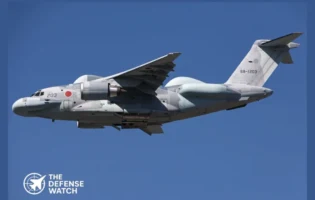
- Japan’s EC-2 Electronic Warfare Jet Completes First Flight, Expanding Standoff Jamming Capabilities
- NASA’s X-59 Quiet Supersonic Jet Gears Up for Second Flight — A Giant Leap Toward Silent Boom AviationNASA X-59 Second Flight: Supersonic Aviation Reborn
- US Weapons Shipments to Taiwan Unaffected by Iran War, Officials Confirm