

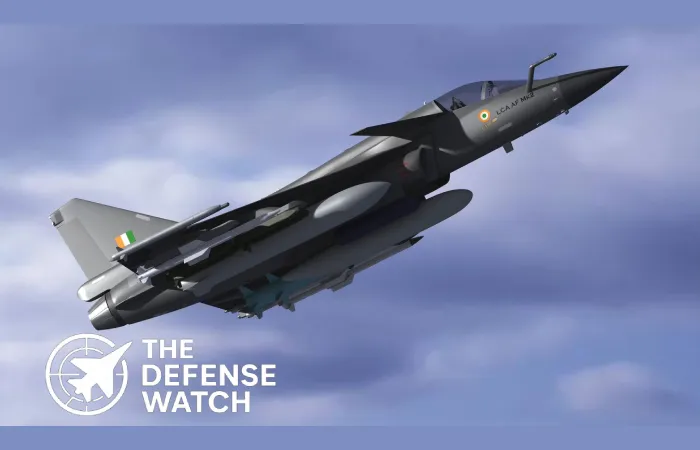
On November 21, 2025, an Indian Air Force (IAF) HAL Tejas light combat aircraft crashed during a demonstration flight at the Dubai Air Show, according to multiple media reports. The incident occurred around 2:10 PM local time at Al Maktoum International Airport, drawing onlookers as a plume of thick black smoke rose from the crash site.
The IAF confirmed the crash, stating that the pilot sustained fatal injuries. A court of inquiry has been constituted to determine the cause of the accident.
Background: The Tejas Fleet and Program
The LCA Tejas, developed by Hindustan Aeronautics Limited (HAL) in partnership with the Aeronautical Development Agency (ADA), is a lightweight, single-engine multirole fighter.
- It is central to India’s “Make in India” defense strategy, intended to reduce reliance on foreign fighters.
- Previous Tejas variants, like the Mk-1A, include upgrades such as AESA radar, advanced electronic warfare suites, and aerial refueling capability.
- In September 2025, India reportedly placed fresh orders with HAL for 97 Tejas jets, with deliveries expected to begin in 2027.
Preceding Controversy: Oil Leak Claims Debunked
Just days prior, social media circulated videos claiming a Tejas Mk-1 was leaking oil during the airshow.
- India’s Press Information Bureau (PIB) countered these claims, clarifying that the footage showed routine drainage of condensed water from the aircraft’s Environmental Control System (ECS) and On-Board Oxygen Generating System (OBOGS), especially common in humid environments.
- The Ministry of Defence described the leak narrative as “misleading” and “propaganda-driven.”
Analysis: Implications for Defense and Global Aerospace
1. Impact on India’s Aerospace Credibility
The Tejas crash during a high-profile international show is a major blow to India’s effort to market the aircraft to global customers. The incident could fuel reluctance among potential buyers, undermining export ambitions.
2. Safety and Reliability Spotlight
While the PIB dismissed earlier leak allegations as routine, the crash now raises serious questions about flight safety—especially for aerobatic maneuvers. If investigation finds design or maintenance flaws, it could trigger further scrutiny over HAL’s quality control and the Tejas’ reliability.
3. Export Strategy Risks
The Tejas is an important part of India’s defense export push. A public crash at an international trade show could erode confidence among foreign partners and delay or cancel pending deals.
4. Risk Management for International Airshows
Air show demonstration flights are inherently risky, and this accident underscores how live demonstrations expose manufacturers and air forces to reputational hazards. West-aligned defense buyers often compare such mishaps against Western platforms with proven track records.
5. Regional Security Implications
India continues to invest in the Tejas amid strategic competition with rivals like China and Pakistan. A crash raises concerns about sustainability of indigenous platforms and may pressure India to accelerate modernization or rely more on imported jets.
Conclusion: What Comes Next
India’s Tejas crash at the Dubai Air Show marks a tragic and potentially pivotal moment for its indigenous fighter program. The court of inquiry now underway will be closely watched by both domestic and international stakeholders. Depending on the outcome, this could prompt a reassessment of Tejas’s export viability, lead to engineering or training reforms, or influence India’s broader aerospace strategy.
Looking ahead, if the probe reveals systemic issues, India may need to bolster its quality assurance, pilot training, and safety protocols to reassure both its air force and prospective customers. On the other hand, a clear technical explanation and transparent findings could help mitigate reputational damage and preserve the Tejas program’s momentum.

What Happened: Tejas Crashes During Dubai Airshow Performance
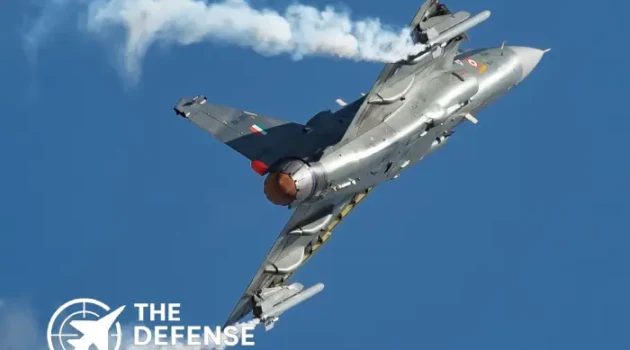
During a demonstration flight at the Dubai Airshow 2025, an Indian HAL Tejas light combat aircraft crashed, according to reports. The incident occurred at approximately 14:10 local time over Al Maktoum International Airport, where the biennial air show is being held.
Eyewitnesses at the event saw black smoke rising from the crash site, prompting emergency sirens and evacuation of nearby spectators. As of now, there is no confirmed information on whether the pilot ejected safely.
The Indian Air Force has acknowledged the crash.
Controversy: Oil Leak Claims Debunked by Indian MoD
Prior to the crash, social media circulated videos claiming that the Tejas Mk1 had suffered an oil leakage while ground-parked at the airshow.
India’s Ministry of Defence (MoD), via its Press Information Bureau (PIB) Fact Check unit, strongly refuted these claims. The MoD stated the fluid seen in the videos was condensed water, not oil, being intentionally drained from the Tejas’ Environmental Control System (ECS) and On-Board Oxygen Generating System (OBOGS) — normal procedures in high-humidity environments like Dubai.
According to the PIB, the leaking narrative was “deliberately pushed … to undermine the fighter’s proven technical reliability.”
Dubai Airshow 2025: Strategic Showcase for India
The Dubai Airshow is one of the world’s premier aerospace trade fairs, held biennially at Al Maktoum Airport. Wikipedia Billed as a high-profile platform, the 2025 event spans November 17–21 and attracts major global aerospace and defense players.
India’s participation has been particularly ambitious. Alongside the Tejas, the Suryakiran Aerobatic Team has flown displays, and India’s pavilion highlights capabilities from HAL, DRDO, and other firms in its push for defense exports and technological diplomacy.
Analysis: Implications for Defense, Diplomacy & Reputation
1. Operational Risks of Aerobatic Display Missions
Airshows inherently carry risk, especially when combat aircraft perform demonstration flights. The Tejas crash underscores how even mature platforms can face performance issues or pilot error in high-stress, low-margin environments.
For U.S. and allied defense observers, this incident may reinforce the value of thorough risk mitigation when deploying aircraft for public demonstrations. Lessons from this crash could influence how display teams structure their safety protocols, emergency ejection training, and pre-flight checks.
2. Strategic Setback for India’s Export Ambitions
India has been marketing the Tejas LCA to several international customers. A high-profile crash at a major global airshow could damage its reputation, potentially undermining confidence among potential buyers and partners. Given that part of India’s aerospace diplomacy strategy heavily relies on showcasing Tejas in such venues, this incident poses reputational risk.
3. Misinformation Challenges & Information Warfare
The rapid spread of “oil-leak” claims — and the MoD’s forceful rebuttal — highlights how disinformation and propaganda landscapes can directly affect defense narratives. For international defense analysts, the episode is a reminder: technical events can be manipulated as soft-power tools.
This incident also emphasizes the importance of official fact-check units (like PIB) in countering misinformation and protecting the credibility of defense platforms.
4. Impact on Global Aviation Safety Standards
Each crash at a major show tends to prompt scrutiny of safety standards across the event. Regulators and event organizers may respond by reviewing their risk frameworks, flight envelope rules for demonstration aircraft, and emergency response planning. The U.S. aerospace industry, deeply integrated in global airshow circuits, is likely to closely monitor the investigation’s outcome.
What’s Next: Investigation & Long-Term Impact
Investigation teams are already on the ground at Al Maktoum Airport. They will likely examine flight data recorders, maintenance logs, and airframe integrity to determine the cause of the crash.
If the cause turns out to be a technical malfunction, it could trigger redesign or retrofits. If pilot error or human factors are responsible, India’s air display protocols may undergo revisions.
From a bigger-picture perspective, the incident could slow Tejas’ export momentum — or spur reforms that make the platform more resilient. In either case, the fallout will be closely watched by international markets, including the U.S., as nations judge both the reliability and perceived stability of India’s aerospace sector.
Conclusion:
The crash of India’s HAL Tejas at Dubai Airshow 2025 is a sobering moment in what has otherwise been a showcase for India’s aerospace ambitions. Beyond immediate safety concerns, the incident raises deeper questions about the risk landscape for demonstration flights, the resilience of the Tejas program, and how nations manage defense reputations in the face of misinformation. As investigations proceed, the outcome could have lasting implications for India’s export strategy, airshow safety norms, and the credibility of one of its signature indigenous platforms.

India’s indigenous 4.5-generation Tejas Mk2, also known as the Medium Weight Fighter (MWF), is picking up pace. The prototype development has reached over 60% completion, with HAL and ADA targeting a rollout in early 2026. Groundbreaking engine partnerships further strengthen the program’s trajectory toward self-reliance.
Design and Development Progress
The Tejas Mk2 is a significantly evolved variant of the Tejas Mk1/A, featuring an elongated airframe, canard foreplanes, enhanced payload and fuel capacity, along with advanced sensors such as an AESA radar and IRST system. It is also projected to possess a high degree of indigenous content—above 60% with targets set for exceeding 80–90% in the long run.
As of mid-2025, prototype assembly has crossed the 60 percent complete mark, with wings and forward fuselage nearing completion and the rear fuselage production ramping up.
Rollout Timeline and Flight Testing
According to HAL and ADA sources, the first prototype is expected to be rolled out between January and March 2026, followed by ground testing and a maiden flight later in 2026.
Initial plans had aimed for rollout by late 2025 and a first flight in early 2026 — timelines that continue to evolve based on development progress.
Cockpit Innovation and Avionics
A recent reveal of the Tejas Mk2 simulator highlights a modern cockpit optimized for next-gen pilots. It emphasizes a Large Area Display (LAD) with touch-enabled interface, a side-stick joystick, and minimal physical switches. The cockpit also integrates sensor fusion, advanced electronic warfare systems, and improved environmental controls.
Engine Partnerships and Indigenous Capability
Engine availability remains a pivotal factor for the Mk2 program. India is in advanced negotiations with GE Aerospace to manufacture F414 engines domestically, including an extensive technology transfer component. This partnership also supports powerplants for future platforms like the AMCA and TEDBF.
Simultaneously, in light of persistent supply delays, India is exploring collaboration with Safran, aiming to diversify its engine supply base and build broader indigenous capabilities.
Strategic Vision & Context
The Tejas Mk2 is designed to replace aging IAF platforms such as the Jaguar, Mirage 2000, and MiG-29. Initial numbers point to six squadrons, with future expansion under the Special Purpose Vehicle (SPV) model involving private sector partners.
Former chief designer Kota Harinarayana asserts that within the next few years, India will achieve self-reliance in fighter jet manufacturing, with programs like Tejas Mk2 leading the charge.
Analysis / Context
India’s push for the Tejas Mk2 reflects a broader strategic imperative: building a next-generation, domestically supported air combat platform under the Aatmanirbhar Bharat initiative. However, delays in engine delivery, particularly from GE, underscore the risks of over-reliance on a single foreign supplier. Diversifying into Safran’s technology and ensuring robust engine production within India may be key to meeting the IAF’s urgent demand for fighter squadrons.
Meanwhile, emphasizing advanced cockpit ergonomics and modular production increases the Tejas Mk2’s adaptability and export potential. The program’s success will hinge on how seamlessly HAL can transition from prototype assembly to serial production by 2029, as planned, while maintaining cost-efficiency and indigenous content targets.
FAQs
The first prototype is slated for rollout between January and March 2026, with a maiden flight expected later in 2026.
It will use the GE F414 engine, to be produced in India under technology transfer. India is also exploring a Safran partnership as an alternate or supplementary source.
Upgrades include a larger airframe, canards, more fuel and payload capacity, advanced avionics (AESA radar, IRST), and an enhanced cockpit with modern ergonomics and sensor fusion.
Initial indigenous content exceeds 60%, with a goal of surpassing 80–90% through local engine production and private sector involvement.
Summary
The Tejas Mk2 is steadily advancing toward prototype rollout and flight testing, buoyed by significant domestic progress in avionics, cockpit design, and engine production partnerships. As India inches closer to realizing an indigenously supported, advanced fighter platform, the success of the Tejas Mk2 will be instrumental in shaping future airpower and self-reliance.