- Home
- Catalog
- Attack & Multirole Drones (UAVs)
- S-9 Swarm Drone
S-9 Swarm Drone
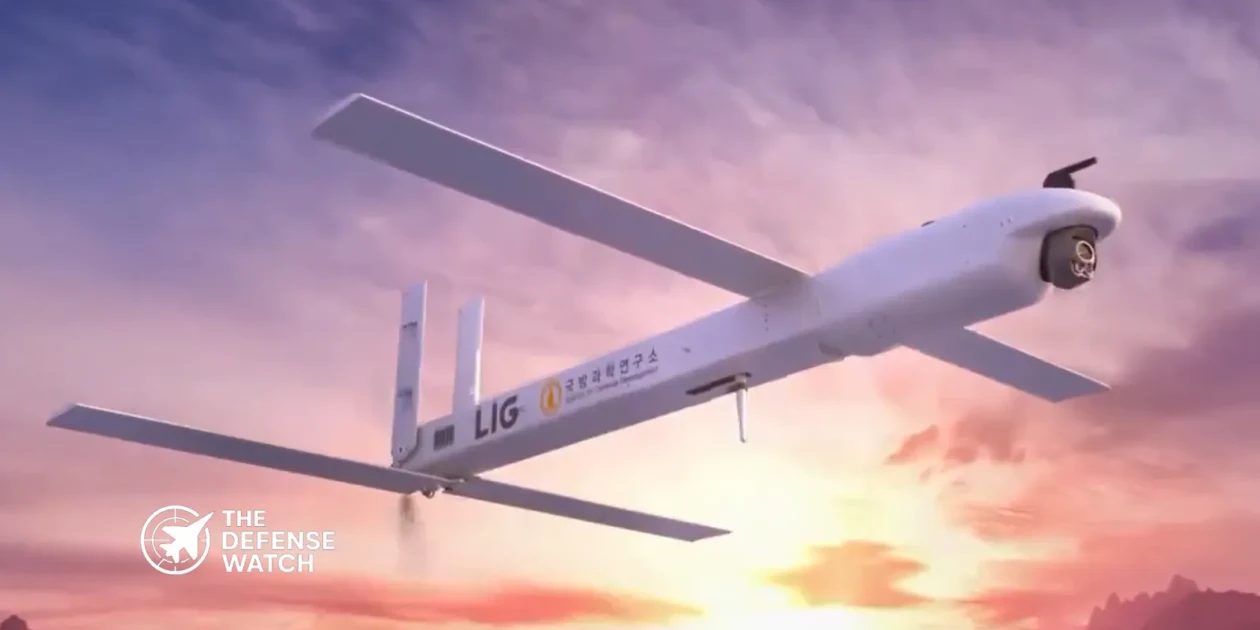
Full Specifications
1. General Information
| Name | S-9 Swarm Drone |
| Manufacturer | LIG Nex1 |
| Country of Origin | South Korea |
| Type / Role | Swarm Attack / Reconnaissance UAV |
| First Flight / Introduced | Under Development |
| Status | Prototype / Development Phase |
| Unit Cost | Not Publicly Disclosed |
2. Performance
| Maximum Speed | High Subsonic (Estimated) |
| Cruise Speed | Approx. 200 km/h (Estimated) |
| Operational Range | 100–150 km |
| Endurance | 2–4 hours |
| Service Ceiling | Approx. 5,000 m |
| Rate of Climb | Not Publicly Available |
3. Dimensions
| Length | Approx. 1–1.5 m (Estimated) |
| Wingspan | Approx. 2–3 m |
| Height | Not Publicly Available |
| Maximum Takeoff Weight (MTOW) | Estimated under 50 kg |
4. Payload & Armament
| Payload Capacity | Small Tactical Payload |
| Hardpoints | Internal Modular Payload Bay |
| Weapons | Small precision strike payloads |
| Sensors | EO/IR Cameras, AI Target Recognition |
| Avionics | Autonomous Flight Control, GPS/INS |
5. Propulsion
| Engine Type | Electric Propulsion |
| Engine Power | Not Publicly Disclosed |
| Propeller Type | Rear Mounted Propeller |
6. Communication & Control
| Control Type | Autonomous / Remote |
| Data Link Range | Tactical Line of Sight Network |
| Navigation | GPS / INS |
| Ground Control Station | Mobile Command System |
7. Operational Use
| Primary Users | Republic of Korea Armed Forces (Expected) |
| Combat Proven | No |
| Notable Operations | Under Development |
PROS
- Swarm capability enables coordinated multi drone operations
- AI assisted target recognition improves autonomous targeting
- Difficult for air defenses to intercept large drone swarms
- Lower cost compared to large combat UAVs
- Flexible mission roles including reconnaissance and strike
CONS
- Limited payload compared to larger UAVs
- Vulnerable to electronic warfare or signal disruption
- Shorter range than strategic drones
- Still under development and not fully operational
- Requires advanced network control infrastructure
South Korea S-9 Swarm Drone System
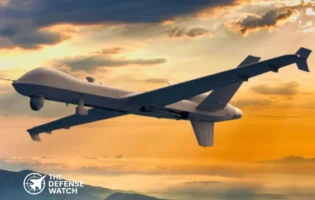
The S-9 swarm drone is an emerging unmanned combat system developed in South Korea to support next generation battlefield operations. Designed to operate in coordinated groups, the S-9 uses artificial intelligence and networked control systems to perform reconnaissance, strike missions, and electronic surveillance. Instead of deploying a single large drone, the system relies on dozens of small unmanned aircraft that work together as a synchronized swarm.
This approach improves survivability and mission flexibility. If one drone is destroyed or jammed, others in the swarm can continue the mission. The S-9 concept also supports rapid launch in large numbers, allowing forces to overwhelm air defenses or monitor wide areas of the battlefield.
Manufacturer
The S-9 swarm drone is being developed by LIG Nex1, a major South Korean defense technology company. The program is part of the broader S-series drone initiative aimed at expanding autonomous and AI enabled combat systems for the Republic of Korea Armed Forces.
The system integrates AI assisted automatic target recognition, enabling drones to detect, classify, and track targets with minimal operator input.
Speed
Exact flight performance details remain limited, but the S-9 is expected to operate at high subsonic speeds typical of small tactical UAVs, allowing rapid maneuvering and coordinated attacks during swarm operations.
Range
The drone is designed for tactical battlefield missions, with an estimated operational range of around 100–150 kilometers, depending on mission profile and communications link.
Cost / Price
Official pricing has not been disclosed. However, swarm drone concepts emphasize low cost production, allowing dozens of units to be deployed simultaneously. Estimated unit costs are expected to remain significantly lower than traditional military UAVs.
Get real time update about this post category directly on your device, subscribe now.
Reviews
Disclaimer Note
The information provided on TheDefenseWatch.com is for general informational purposes only. While we strive to ensure the accuracy, completeness, and timeliness of our content regarding defense and aerospace products, technologies, and specifications, we cannot guarantee that all information is 100% accurate or up-to-date due to the evolving nature of military technology and classified data.TheDefenseWatch.com does not warrant the reliability, suitability, or availability of the information for any specific purpose. Users are advised to consult official sources, such as manufacturers, government publications, or defense agencies, for precise and verified data before making decisions based on our content.We are not affiliated with any defense manufacturers, governments, or military organizations mentioned. Opinions, reviews, and ratings reflect expert analysis but are subjective and should not be considered endorsements. TheDefenseWatch.com is not responsible for any errors, omissions, or consequences arising from the use of this website’s content.External links are provided for convenience and do not imply endorsement. TheDefenseWatch.com reserves the right to update or modify content without prior notice. By using this website, you agree to our Privacy & Cookies Policy.
More Products from LIG Nex1
New Arrivals

Popular Comparisons
-
 SIG XM7 Rifle vs M4: Key Differences and Performance Comparison
View Comparison →
SIG XM7 Rifle vs M4: Key Differences and Performance Comparison
View Comparison → -
Eurofighter Typhoon vs Rafale vs F-35: Fighter Jet Comparison
View Comparison →
-
J-20 vs F-22: Stealth Fighter Showdown Explained
View Comparison →
-
F-14 Tomcat vs Su-57: Can a Legend Challenge Russia’s Stealth Fighter?
View Comparison →
-
Su-35 vs Su-57: Russia’s Top Fighter Jets Compared
View Comparison →
-
Eurofighter Typhoon vs Su-57: Ultimate Fighter Jet Comparison
View Comparison →
-
Rafale vs Su-57: 4.5 Gen vs 5th Gen Fighter Jet Comparison
View Comparison →
-
Su-57 vs F-16 Fighting Falcon: Stealth vs Speed
View Comparison →
-
China vs Russia: J-20 Mighty Dragon vs Su-57 Felon Comparison
View Comparison →
-
Su-57 Felon vs F-22 Raptor: Stealth Air Superiority Face-Off
View Comparison →


- South Korea’s S-9 Swarm Drone Program Nears Completion As ADD Advances AI-Enabled Drone Warfare

- UK Begins Production Of 37 RCH155 Self-Propelled Howitzers For British Army Modernization
- Iraqi Militia FPV Drone Attack On U.S. Victory Base Highlights Growing Threat To American Forces
- Anduril Industries Wins $20 Billion US Army Contract For AI Enabled Lattice Defense Platform
- US Bombs Iran’s Kharg Island In Major Strike On Strategic Oil Hub
- Türkiye Tests Bayraktar Kizilelma Unmanned Fighter Jet With Precision Guided Bomb Strike Capability
- Iranian Missile Strike Damages Five US KC-135 Stratotanker Aircraft At Saudi Base
- PAC-3 Interceptor Demonstrates High Effectiveness Against Ballistic And Hypersonic Missile Threats
- Japan Prepares New Electronic Warfare Aircraft For Testing Amid Rising Indo Pacific Tensions
- Raytheon Completes Alabama Missile Integration Facility Expansion To Boost U.S. Missile Production