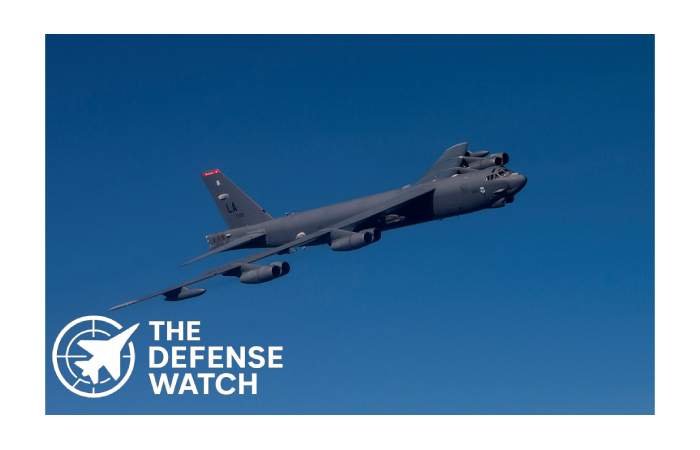
B-52 Stratofortress: America’s Long-Range Strategic Bomber
For over seven decades, the Boeing B-52 Stratofortress has served as a cornerstone of U.S. airpower and strategic deterrence. First flown in 1952 and entering service with the U.S. Air Force in 1955, the B-52 was designed as a long-range, subsonic heavy bomber capable of delivering both nuclear and conventional ordnance across intercontinental ranges without refueling.
Manufactured by Boeing Defense, Space & Security, the B-52’s longevity is a testament to its adaptability and robust engineering. It can carry up to 70,000 pounds of mixed ordnance, including cruise missiles, precision-guided bombs, and nuclear weapons. The aircraft’s unrefueled range exceeds 8,800 miles, and with aerial refueling, it can remain airborne for more than 24 hours—projecting American power anywhere on the globe.
Equipped with advanced avionics upgrades, modern AN/APG-79 radar, and digital communication systems, the Stratofortress remains a vital platform for modern warfare. The upcoming B-52J variant will feature new Rolls-Royce F130 engines, extending its operational life beyond 2050.
Despite lacking stealth characteristics, the B-52’s unmatched range, payload, and flexibility make it indispensable for missions including strategic bombing, maritime strike, and close air support. Its operational record spans conflicts from Vietnam to Iraq and Afghanistan, earning it a place as one of history’s most successful and enduring combat aircraft.