- Home
- Catalog
- Bombers & Strategic Aircraft
- MC-130J Commando II
MC-130J Commando II
Full Specifications
1. General Information
| Name | MC-130J Commando II |
| Manufacturer | Lockheed Martin |
| Country of Origin | United States |
| Introduction / In Service Since | 2014 |
| Status | Active service |
| Category | Special operations transport |
| Crew | 7 to 9 |
| Unit Cost | Approx USD 165 million |
2. Dimensions & Structure
| Length | 97 ft |
| Wingspan | 132 ft |
| Height | 38 ft |
| Wing Area | 1,745 sq ft |
| Empty Weight | 75,800 lb |
| Maximum Takeoff Weight (MTOW) | 164,000 lb |
3. Performance
| Maximum Speed | 355 mph |
| Range | Over 3,000 miles |
| Combat Radius | 1,000+ miles |
| Service Ceiling | 28,000 ft |
| Rate of Climb | 1,800 ft per minute |
4. Powerplant
| Engine Type | 4 x Rolls Royce AE 2100D3 |
| Thrust (per engine) | 4,591 shp |
| Total Thrust | 18,364 shp |
5. Payload & Armament
| Internal Payload Capacity | Approx 42,000 lb |
| Weapons Bay | None |
| Compatible Weapons | Defensive countermeasures |
| Hardpoints | Limited |
6. Avionics & Systems
| Radar System | Terrain following radar |
| Navigation | GPS INS |
| Electronic Warfare (EW) | Integrated self protection suite |
| Stealth Features | Low observable flight profiles |
7. Operational History
| Primary Operator | U.S. Air Force |
| Conflict Usage | Middle East, Africa, Indo Pacific |
| Notable Missions | SOF infiltration, resupply, refueling |
8. Additional Information
| Variants | MC-130J |
| Successor / Future Replacement | None planned |
| Estimated Operational Life | Beyond 2040 |
PROS
- Proven platform based on C-130J design
- Excellent low level and night operation capability
- Aerial refueling for helicopters and tiltrotor aircraft
- Long range with in flight refueling
- Advanced defensive and navigation systems
CONS
- High acquisition and operating cost
- Not a stealth aircraft
- Limited speed compared to jets
- Requires highly trained crew
- Large logistical footprint
MC-130J Commando II Special Operations Aircraft
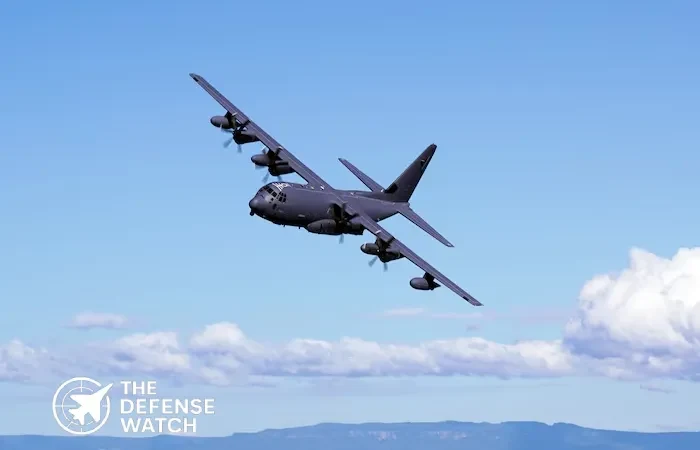
The MC-130J Commando II is a specialized variant of the C-130J Super Hercules designed for U.S. Air Force Special Operations Command. Built by Lockheed Martin, the aircraft supports some of the most demanding missions in the U.S. military, including infiltration, exfiltration, and resupply of special operations forces in contested and denied environments.
Derived from decades of combat experience with earlier MC-130 variants, the Commando II entered service in the mid 2010s. Its primary role is to operate at low altitude, often at night, using advanced navigation and defensive systems to avoid detection. The aircraft is optimized for precision flight in poor weather and blackout conditions, allowing crews to reach remote landing zones with high accuracy.
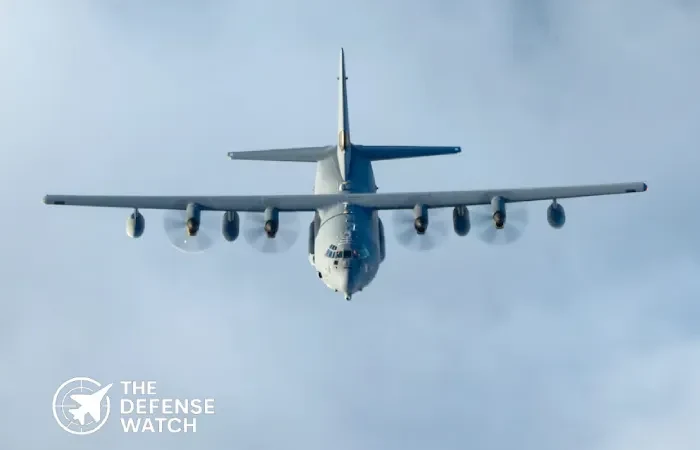
Powered by four Rolls Royce AE 2100D3 turboprop engines, the MC-130J reaches speeds of about 355 miles per hour and offers long range endurance with aerial refueling capability. The aircraft can refuel helicopters and tiltrotor aircraft in flight, a key requirement for deep special operations missions.
Its mission systems include terrain following radar, electro optical and infrared sensors, secure communications, and a modern electronic warfare suite. The cargo bay can carry troops, vehicles, or pallets, and supports airdrop operations for personnel and equipment. While not a gunship, the MC-130J can be fitted with defensive weapons and countermeasures for self protection.
The MC-130J has supported operations in the Middle East, Africa, and Indo Pacific regions. Its flexibility, range, and survivability make it a core asset for U.S. special operations aviation well into the future.
MC-130J Commando II Price
The estimated unit cost of the MC-130J Commando II is around 165 to 170 million U.S. dollars, depending on mission systems, support equipment, and procurement batch size.
Get real time update about this post category directly on your device, subscribe now.
Reviews
Disclaimer Note
The information provided on TheDefenseWatch.com is for general informational purposes only. While we strive to ensure the accuracy, completeness, and timeliness of our content regarding defense and aerospace products, technologies, and specifications, we cannot guarantee that all information is 100% accurate or up-to-date due to the evolving nature of military technology and classified data.TheDefenseWatch.com does not warrant the reliability, suitability, or availability of the information for any specific purpose. Users are advised to consult official sources, such as manufacturers, government publications, or defense agencies, for precise and verified data before making decisions based on our content.We are not affiliated with any defense manufacturers, governments, or military organizations mentioned. Opinions, reviews, and ratings reflect expert analysis but are subjective and should not be considered endorsements. TheDefenseWatch.com is not responsible for any errors, omissions, or consequences arising from the use of this website’s content.External links are provided for convenience and do not imply endorsement. TheDefenseWatch.com reserves the right to update or modify content without prior notice. By using this website, you agree to our Privacy & Cookies Policy.


New Arrivals




Popular Comparisons
-
 SIG XM7 Rifle vs M4: Key Differences and Performance Comparison
View Comparison →
SIG XM7 Rifle vs M4: Key Differences and Performance Comparison
View Comparison → -
Eurofighter Typhoon vs Rafale vs F-35: Fighter Jet Comparison
View Comparison →
-
J-20 vs F-22: Stealth Fighter Showdown Explained
View Comparison →
-
F-14 Tomcat vs Su-57: Can a Legend Challenge Russia’s Stealth Fighter?
View Comparison →
-
Su-35 vs Su-57: Russia’s Top Fighter Jets Compared
View Comparison →
-
Eurofighter Typhoon vs Su-57: Ultimate Fighter Jet Comparison
View Comparison →
-
Rafale vs Su-57: 4.5 Gen vs 5th Gen Fighter Jet Comparison
View Comparison →
-
Su-57 vs F-16 Fighting Falcon: Stealth vs Speed
View Comparison →
-
China vs Russia: J-20 Mighty Dragon vs Su-57 Felon Comparison
View Comparison →
-
Su-57 Felon vs F-22 Raptor: Stealth Air Superiority Face-Off
View Comparison →


- UK Nightfall Procurement Plans Face Government Silence Amid Air Defense Debate

- NASA Completes First Flight Of Laminar Flow Scaled Wing Design In Aerodynamic Breakthrough
- Singapore Orders Three G550 Maritime Surveillance Aircraft To Boost Early Warning Network
- Polish Defense Industry Backs EU SAFE Mechanism To Boost National Production And Exports
- How StormBreaker Integration Expands Super Hornet Precision Strike Options for The U.S. Navy
- Former US F-35 Pilot Arrested for Allegedly Training Chinese Air Force
- NATO Intelligence From Germany: SWARM Biotactics Cybernetic Insect Swarms Enter Operational Use
- UK And Norway Sign Naval Helicopter Pact To Deepen Maritime Defense Cooperation
- Israel MOD Signs $42 Million Merkava Tank Transmission Deal With Ashot Ashkelon
- China’s New Aircraft Carrier Faces Persistent Design Flaw, Raising Questions About PLAN Power Projection