- Home
- Catalog
- Artillery & Indirect Fire
- M270 Multiple Launch Rocket System
M270 Multiple Launch Rocket System



Full Specifications
1. General Information
| System Name | M270 MLRS |
| Manufacturer | Lockheed Martin |
| Country of Origin | United States |
| Type / Role | Tracked Rocket Artillery |
| Caliber | 227 mm |
| Year Introduced | 1983 |
| In Service | Yes |
| Unit Cost | USD 3.5–5 Million |
| Crew Required | 3 |
| Platform Type | Tracked Armored Vehicle |
| Power Source | Diesel Engine |
2. Performance & Firepower
| Maximum Effective Range | 70–300 km |
| Minimum Range | 10 km |
| Rate of Fire (Sustained / Burst) | 12 rockets in under 1 minute |
| Accuracy (CEP) | Under 10 m with guided rockets |
| Elevation Range | 0° to +60° |
| Traverse Range | 360° |
| Recoil System | None |
| Reload Time | 5–10 minutes |
3. Ammunition & Warhead Options
| Compatible Ammunition | GMLRS, ER GMLRS, ATACMS |
| Caliber Standard | 227 mm |
| Warhead Type | HE, unitary, submunition |
| Warhead Weight | Up to 90 kg |
| Fuse Type | Impact, proximity |
| Muzzle Velocity | Classified |
| Guidance | GPS and INS |
| Effective Burst Radius | Classified |
4. Fire Control & Targeting Systems
| Fire Control System | Digital ballistic computer |
| Aiming System | GPS and inertial navigation |
| Communication Link | Secure tactical radio |
| Night Operation | Yes |
| Automation Level | Semi automated |
| Targeting Assistance | Networked fire missions |
5. Launcher / Platform & Mobility
| Platform Type | Tracked armored vehicle |
| Vehicle Model | Bradley based chassis |
| Mobility Range | 480 km |
| Top Speed | 64 km/h |
| Ground Clearance | 450 mm |
| Setup / Emplacement Time | Under 2 minutes |
| Transportability | Airlift capable |
6. Protection & Survivability
| Armor Level | Light armored protection |
| CBRN Protection | Integrated |
| Counter-Battery Radar Integration | Yes |
| Smoke Launcher System | Yes |
| Shoot-and-Scoot Capability | Yes |
| Signature Reduction | Limited |
7. Command, Control & Networking
| C2 System | U.S. Army artillery C2 |
| Connectivity | Secure data link |
| Network Capability | Yes |
| Operation Mode | Networked fire missions |
| Compatible Systems | UAVs and forward observers |
8. Operational History
| Primary Operators | United States, NATO allies |
| Combat Proven | Yes |
| Operational Deployment | Gulf War, Iraq, Ukraine |
| Conflict History | High intensity conflicts |
| Notable Feature | Rapid massed fires |
9. Dimensions & Weight
| System Weight | 25 tons |
| Barrel Length | Approx. 7 m |
| Vehicle Weight | 25 tons |
| Dimensions (L×W×H) | Tracked vehicle standard |
| Transport Configuration | Air and sea transport |
10. Maintenance & Support
| Maintenance Cycle | Scheduled depot level |
| Field Servicing Time | Under 1 hour |
| Spare Parts Availability | High |
| Training Requirement | 3–4 weeks |
| Support Package | U.S. Army logistics |
11. Economic / Procurement Data
| Estimated unit cost | USD 3.5–5 Million |
| Cost per Round | USD 100,000 plus |
| Country Procurement Program | U.S. Army, NATO |
| Export Status | ITAR controlled |
| Manufacturer Website | Lockheed Martin |
PROS
- Long range precision strike capability
- High payload with rapid salvo fire
- Tracked mobility for armored operations
- Proven combat record
- NATO standard system
CONS
- High procurement and operating cost
- Large logistical footprint
- Limited protection against top attack threats
- Reloading requires resupply vehicles
- Not optimized for urban environments
M270 Multiple Launch Rocket System (MLRS)
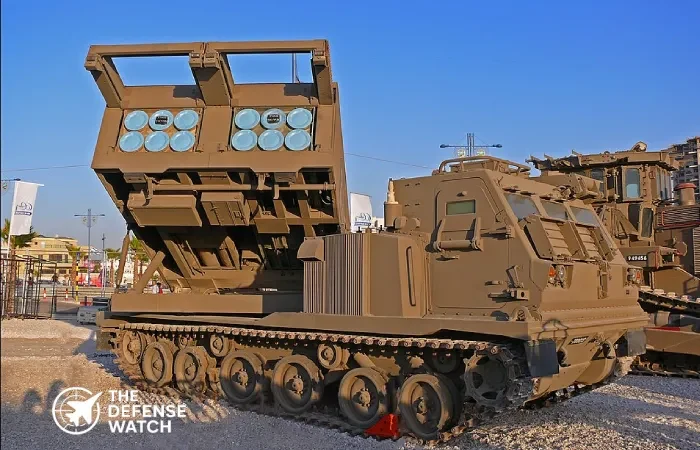
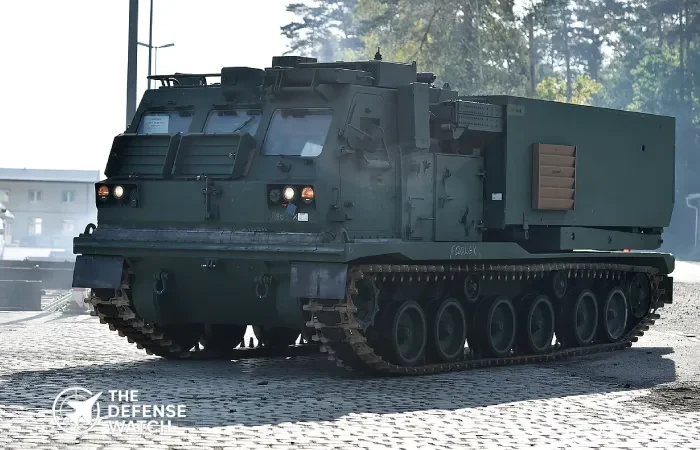
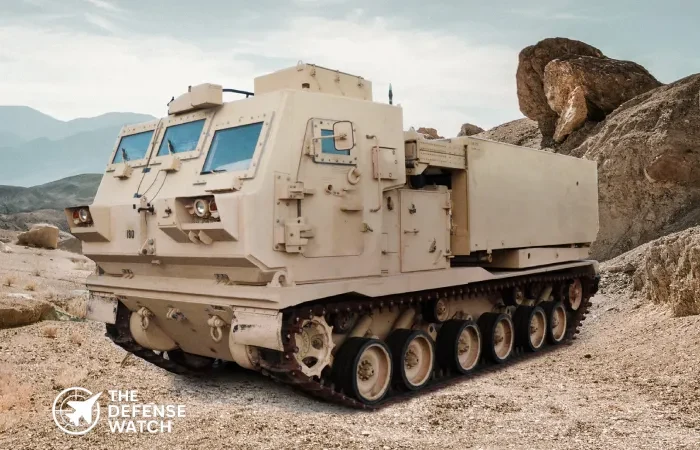
The M270 Multiple Launch Rocket System, known as MLRS, is one of the most proven long range rocket artillery platforms in U.S. Army service. Designed to deliver rapid, high volume firepower, the system gives ground forces the ability to strike deep targets with speed and accuracy. Since its introduction during the Cold War, the M270 has remained a key asset for large scale and high intensity combat.
Development and Role
The M270 was developed in the United States and is manufactured by Lockheed Martin, with the tracked launcher vehicle originally produced by FMC. It entered service in the early 1980s to counter massed armored formations. Today, its role has expanded to include precision strikes against command posts, air defenses, and logistics hubs.
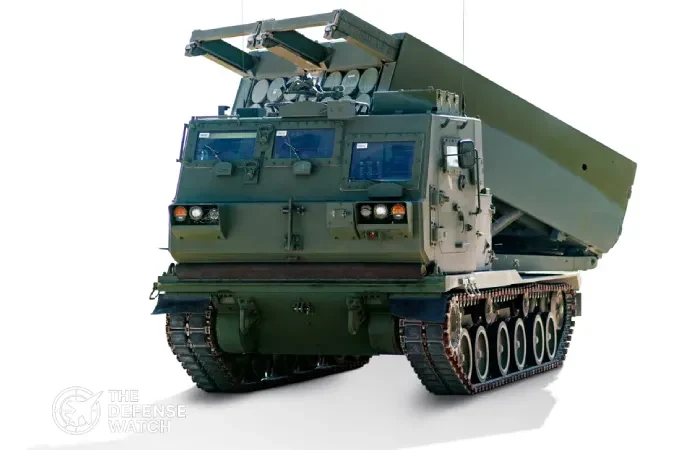
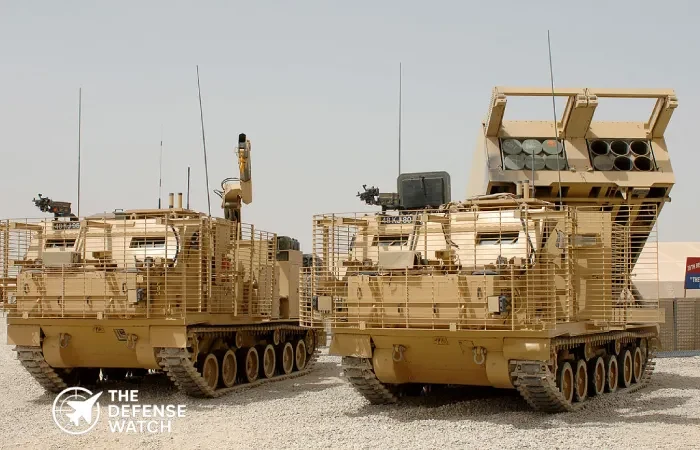
The launcher is mounted on a tracked chassis derived from the Bradley Fighting Vehicle, allowing it to move with armored units across rough terrain. A standard crew of three operates the system.
MLRS Price
The M270 Multiple Launch Rocket System price in the United States varies by configuration and upgrade level. Estimates place the launcher unit cost between USD 3.5 million and USD 5 million, excluding ammunition and support equipment.
Firepower and Capabilities
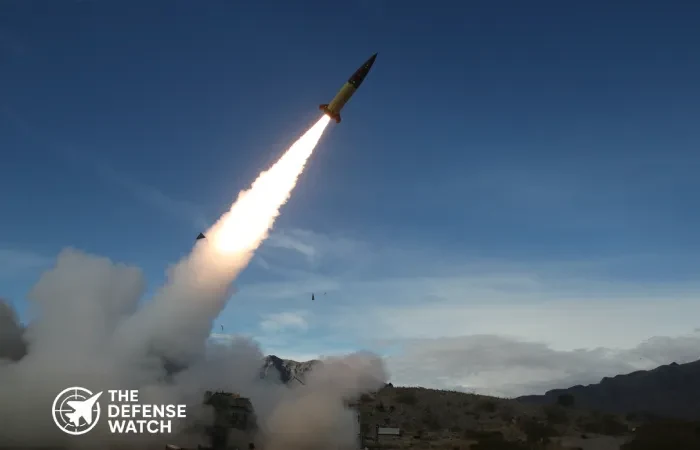
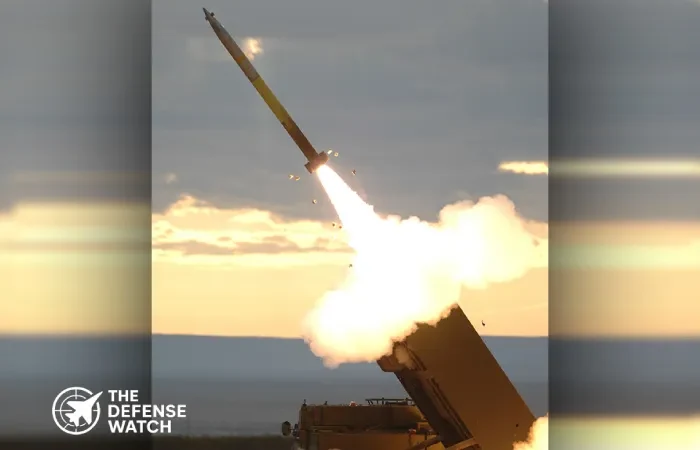
The M270 carries two pods, each holding six 227 mm rockets or one ATACMS missile. With guided rockets, the system can strike targets out to about 70 to 80 km, while ATACMS missiles extend reach to roughly 300 km. Digital fire control allows rapid targeting, networked operations, and fast shoot and move tactics.
Operational History
The M270 has seen combat in the Gulf War, Iraq, Syria, and Ukraine through allied use. Its ability to deliver accurate, heavy fire while staying mobile has proven effective against both conventional and irregular forces.
Get real time update about this post category directly on your device, subscribe now.
Reviews
Disclaimer Note
The information provided on TheDefenseWatch.com is for general informational purposes only. While we strive to ensure the accuracy, completeness, and timeliness of our content regarding defense and aerospace products, technologies, and specifications, we cannot guarantee that all information is 100% accurate or up-to-date due to the evolving nature of military technology and classified data.TheDefenseWatch.com does not warrant the reliability, suitability, or availability of the information for any specific purpose. Users are advised to consult official sources, such as manufacturers, government publications, or defense agencies, for precise and verified data before making decisions based on our content.We are not affiliated with any defense manufacturers, governments, or military organizations mentioned. Opinions, reviews, and ratings reflect expert analysis but are subjective and should not be considered endorsements. TheDefenseWatch.com is not responsible for any errors, omissions, or consequences arising from the use of this website’s content.External links are provided for convenience and do not imply endorsement. TheDefenseWatch.com reserves the right to update or modify content without prior notice. By using this website, you agree to our Privacy & Cookies Policy.


New Arrivals







Popular Comparisons
-
 SIG XM7 Rifle vs M4: Key Differences and Performance Comparison
View Comparison →
SIG XM7 Rifle vs M4: Key Differences and Performance Comparison
View Comparison → -
Eurofighter Typhoon vs Rafale vs F-35: Fighter Jet Comparison
View Comparison →
-
J-20 vs F-22: Stealth Fighter Showdown Explained
View Comparison →
-
F-14 Tomcat vs Su-57: Can a Legend Challenge Russia’s Stealth Fighter?
View Comparison →
-
Su-35 vs Su-57: Russia’s Top Fighter Jets Compared
View Comparison →
-
Eurofighter Typhoon vs Su-57: Ultimate Fighter Jet Comparison
View Comparison →
-
Rafale vs Su-57: 4.5 Gen vs 5th Gen Fighter Jet Comparison
View Comparison →
-
Su-57 vs F-16 Fighting Falcon: Stealth vs Speed
View Comparison →
-
China vs Russia: J-20 Mighty Dragon vs Su-57 Felon Comparison
View Comparison →
-
Su-57 Felon vs F-22 Raptor: Stealth Air Superiority Face-Off
View Comparison →


- UK Nightfall Procurement Plans Face Government Silence Amid Air Defense Debate

- NASA Completes First Flight Of Laminar Flow Scaled Wing Design In Aerodynamic Breakthrough
- Singapore Orders Three G550 Maritime Surveillance Aircraft To Boost Early Warning Network
- Polish Defense Industry Backs EU SAFE Mechanism To Boost National Production And Exports
- How StormBreaker Integration Expands Super Hornet Precision Strike Options for The U.S. Navy
- Former US F-35 Pilot Arrested for Allegedly Training Chinese Air Force
- NATO Intelligence From Germany: SWARM Biotactics Cybernetic Insect Swarms Enter Operational Use
- UK And Norway Sign Naval Helicopter Pact To Deepen Maritime Defense Cooperation
- Israel MOD Signs $42 Million Merkava Tank Transmission Deal With Ashot Ashkelon
- China’s New Aircraft Carrier Faces Persistent Design Flaw, Raising Questions About PLAN Power Projection