- Home
- Catalog
- Submarines
- Kilo Class Submarine
Kilo Class Submarine
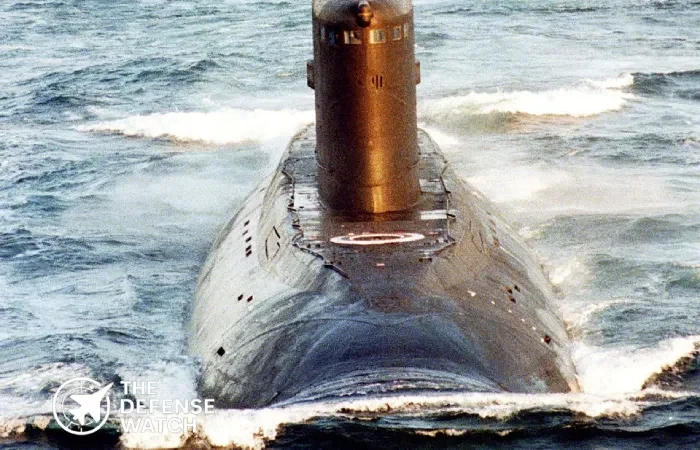
Full Specifications
1. General Information
| Name / Class | Kilo Class Project 877 |
| Country of Origin | Russia |
| Type | Diesel electric attack submarine |
| Manufacturer | Rubin Design Bureau Admiralty Shipyards |
| Operators | Russia, China, India, Iran, Algeria, Vietnam |
| In Service | 1982 |
| Status | Active and upgraded variants in service |
2. Dimensions & Design
| Length | 72.6 meters |
| Beam (Width) | 9.9 meters |
| Draught / Draft | 6.2 meters |
| Displacement (Surfaced) | 2300 tons |
| Displacement (Submerged) | 3000 tons |
| Hull Material | High tensile steel |
| Crew | 52 |
3. Propulsion & Performance
| Power Source | Diesel electric |
| Engine / Reactor Type | Diesel generators electric motor |
| Propulsion System | Single shaft propeller |
| Speed (Surfaced) | 10 knots |
| Speed (Submerged) | 17 knots |
| Range | 6000 nautical miles |
| Endurance | 45 days |
| Operational Depth | 240 meters |
| Test Depth | 300 meters |
| Maximum Depth | 300 meters |
4. Armament
| Torpedo Tubes | 6 x 533 mm |
| Torpedoes / Missiles | Heavyweight torpedoes anti ship missiles |
| Cruise / Ballistic Missiles | Land attack capable on later variants |
| Mines | Up to 24 |
| Decoys / Countermeasures | Acoustic decoys |
5. Sensors & Electronics
| Sonar System | MGK series sonar suite |
| Radar | Navigation radar |
| Combat Management System | Integrated Russian CMS |
| Electronic Warfare System | ESM and ECM suite |
| Communication Systems | HF VHF satellite comms |
| Navigation Systems | Inertial and satellite navigation |
6. Stealth & Defense
| Anechoic Coating | Yes |
| Noise Reduction Features | Raft mounted machinery |
| Magnetic Signature Reduction | Degaussing systems |
| Acoustic Signature Level | Very low for convention |
7. Payload & Capacity
| Weapons Payload | Torpedoes missiles mines |
| Special Forces Accommodation | Limited |
| UUV / Drone Capability | Not standard |
8. Notable Technologies
| Reactor / AIP Type | None diesel electric |
| Automation Level | Moderate |
| Special Features | Quiet propulsion optimized hull |
9. Operational History
| Major Deployments | Black Sea Mediterranean Indo Pacific |
| Combat / Exercises | Regular multinational exercises |
| Upgrades | Improved sonar missile integration |
10. Cost & Production
| Unit Cost | 250 to 350 million USD |
| Number Built | Over 60 |
| Production Period | 1980s to early 2000s |
11. Media & Credits
| Image / Video Source | Public domain naval imagery |
| Official Website | Design Bureau |
| Reference Credit | Open source defense publications |
PROS
- Very low acoustic signature
- Proven and mature design
- Heavy torpedo and missile load
- Effective in shallow waters
- Lower cost than nuclear submarines
CONS
- Limited submerged endurance
- Slower than nuclear submarines
- Requires frequent snorkeling
- Smaller crew comfort space
- Aging baseline technology
Kilo Class Submarine Silent Diesel Electric Attack Sub
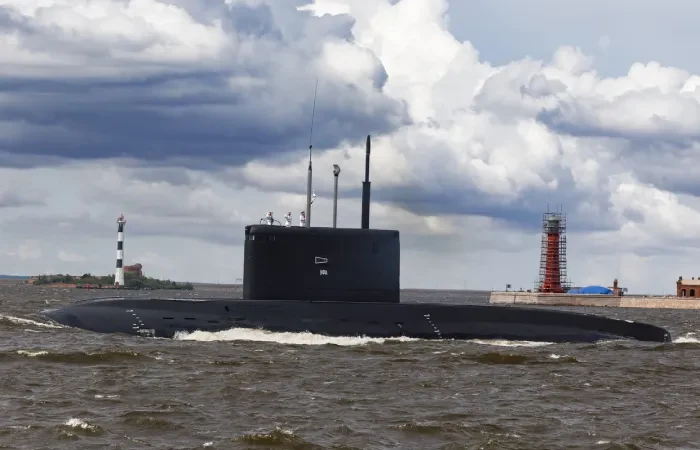
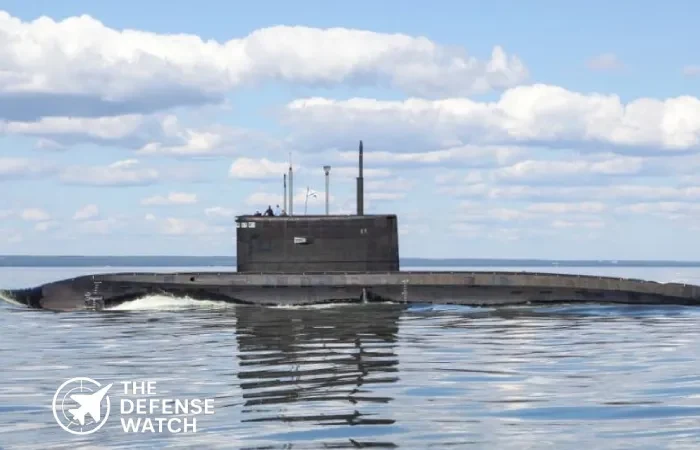
The Kilo class submarine is one of the most widely exported conventional submarines in modern naval history. Designed during the Cold War, it remains relevant due to its stealth focused design and proven combat reliability. Western navies long referred to it as a black hole because of its low acoustic signature in littoral waters.
Origin and Manufacturer
The Kilo class was developed by the Rubin Design Bureau and built primarily at Admiralty Shipyards in Russia. Introduced in the early 1980s, it was intended as a coastal and regional sea denial platform for the Soviet Navy. Over time, upgraded variants expanded its mission set and export appeal.
Mission and Capabilities
This submarine is optimized for anti ship and anti submarine warfare. It is also capable of intelligence gathering, mine laying, and special forces insertion. Operating on diesel electric propulsion, the Kilo class prioritizes quiet movement over raw speed, making it effective in choke points and shallow seas.
Performance and Armament
The Kilo class reaches speeds of around 17 knots submerged and has an operational range exceeding 6000 nautical miles on diesel power. It is armed with six forward torpedo tubes capable of launching heavyweight torpedoes, anti ship cruise missiles, and naval mines. Later variants support land attack cruise missiles, increasing strategic value.
Operational Use
Kilo class submarines are operated by several U.S. strategic competitors and partners, including Russia, China, India, and Iran. They have been deployed in the Black Sea, Mediterranean, and Indo Pacific regions, where their stealth poses challenges to NATO naval forces.
Kilo Class Submarine Price
There is no direct purchase price for the Kilo class submarine in the United States, as it is not operated or procured by the U.S. Navy. However, international unit costs are estimated between 250 and 350 million USD depending on configuration, weapons, and support packages. U.S. analysts often reference this cost range when comparing foreign diesel electric submarine capabilities to American nuclear powered platforms.
Get real time update about this post category directly on your device, subscribe now.
Reviews
Disclaimer Note
The information provided on TheDefenseWatch.com is for general informational purposes only. While we strive to ensure the accuracy, completeness, and timeliness of our content regarding defense and aerospace products, technologies, and specifications, we cannot guarantee that all information is 100% accurate or up-to-date due to the evolving nature of military technology and classified data.TheDefenseWatch.com does not warrant the reliability, suitability, or availability of the information for any specific purpose. Users are advised to consult official sources, such as manufacturers, government publications, or defense agencies, for precise and verified data before making decisions based on our content.We are not affiliated with any defense manufacturers, governments, or military organizations mentioned. Opinions, reviews, and ratings reflect expert analysis but are subjective and should not be considered endorsements. TheDefenseWatch.com is not responsible for any errors, omissions, or consequences arising from the use of this website’s content.External links are provided for convenience and do not imply endorsement. TheDefenseWatch.com reserves the right to update or modify content without prior notice. By using this website, you agree to our Privacy & Cookies Policy.
More Products from Rubin Design Bureau Admiralty Shipyards
New Arrivals


Popular Comparisons
-
 SIG XM7 Rifle vs M4: Key Differences and Performance Comparison
View Comparison →
SIG XM7 Rifle vs M4: Key Differences and Performance Comparison
View Comparison → -
Eurofighter Typhoon vs Rafale vs F-35: Fighter Jet Comparison
View Comparison →
-
J-20 vs F-22: Stealth Fighter Showdown Explained
View Comparison →
-
F-14 Tomcat vs Su-57: Can a Legend Challenge Russia’s Stealth Fighter?
View Comparison →
-
Su-35 vs Su-57: Russia’s Top Fighter Jets Compared
View Comparison →
-
Eurofighter Typhoon vs Su-57: Ultimate Fighter Jet Comparison
View Comparison →
-
Rafale vs Su-57: 4.5 Gen vs 5th Gen Fighter Jet Comparison
View Comparison →
-
Su-57 vs F-16 Fighting Falcon: Stealth vs Speed
View Comparison →
-
China vs Russia: J-20 Mighty Dragon vs Su-57 Felon Comparison
View Comparison →
-
Su-57 Felon vs F-22 Raptor: Stealth Air Superiority Face-Off
View Comparison →


- Iran-US Ceasefire Negotiations Stall as Strait of Hormuz Standoff Deepens

- US Deploys Uncrewed Drone Boats In Conflict With Iran As Maritime Tensions Escalate
- Raytheon Expands Alabama Missile Integration Facility To Boost U.S. Defense Production Capacity
- Australian-Built Boxer Combat Reconnaissance Vehicles Roll Off Production Line, Boosting Land 400 Program
- U.S. Army To Begin M1E3 Abrams Prototype Operational Testing In Summer 2026
- Raytheon Secures $773.5M Contract Boost For AN/TPY-2 Radar Development Through 2030
- Javelin Missile Production Ramp Accelerates as Lockheed Martin Overhauls Supply Chain for High-Volume Output
- Indian Army To Buy 800 Km Plus Range BrahMos Supersonic Cruise Missiles
- US Navy Iwo Jima Amphibious Ready Group Expands Caribbean Anti-Trafficking Push
- Chinas Laser Air Defense Systems Light Arrow 21A And Light Arrow 11E Form Layered Counter Drone Shield