- Home
- Catalog
- Fighter Jets
- JF-17C Block III Fighter Jet
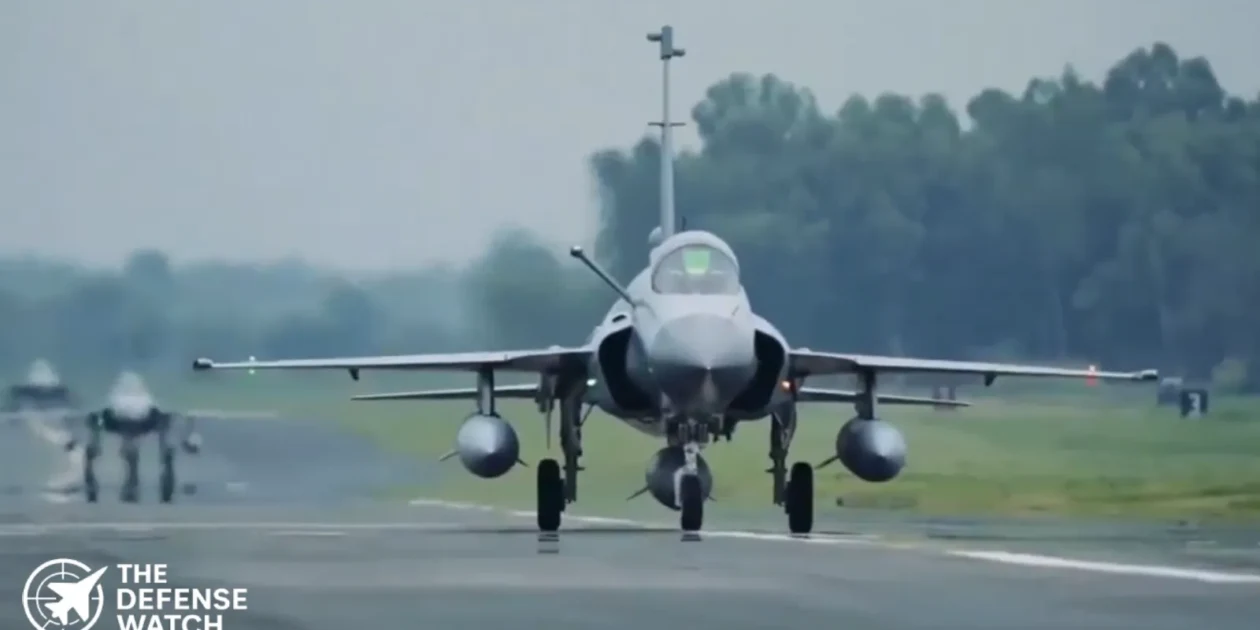
JF-17C Block III Fighter Jet
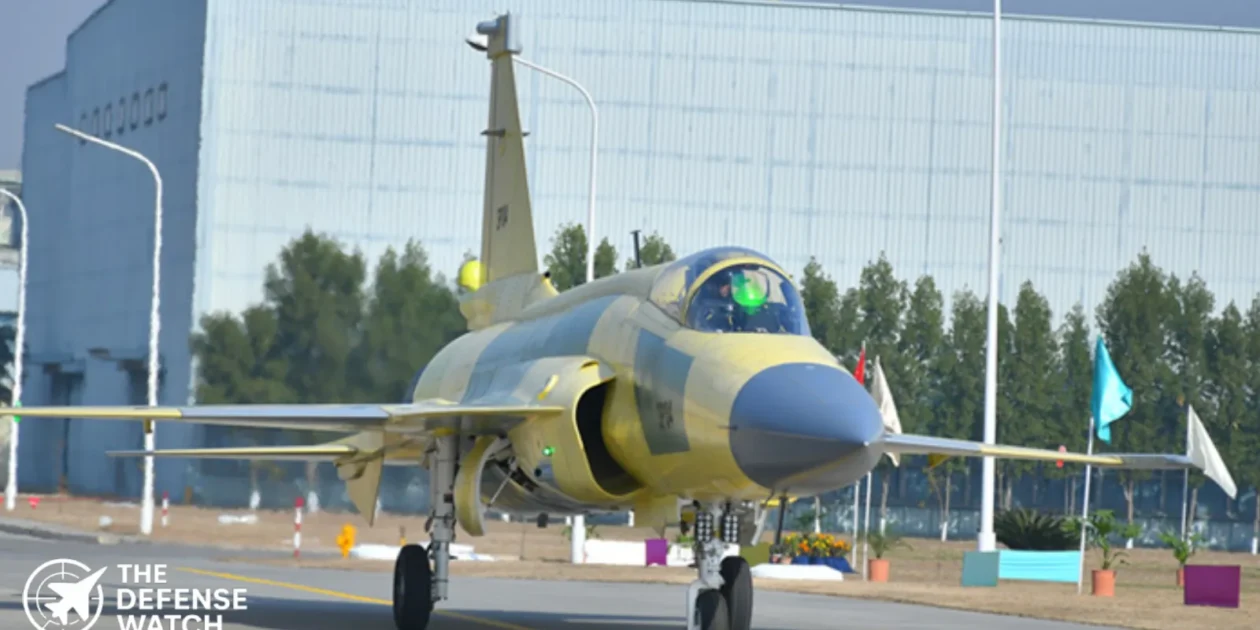
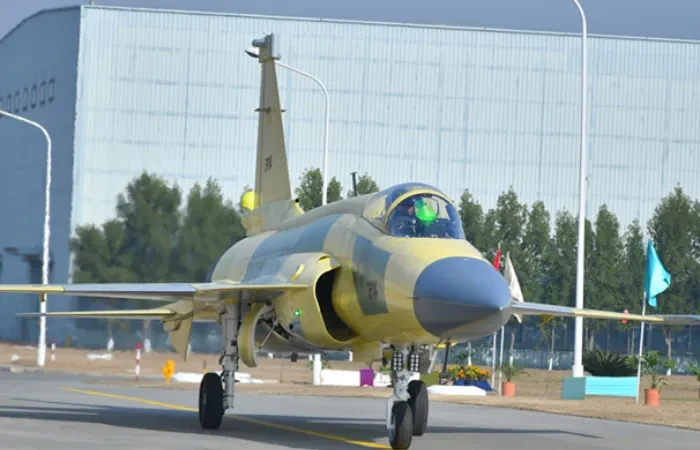
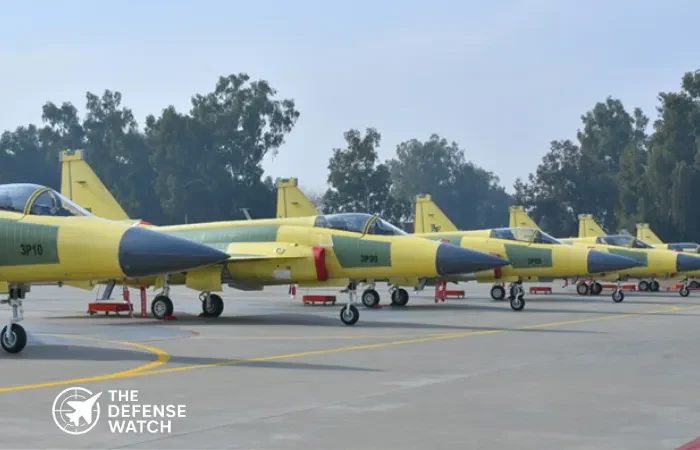
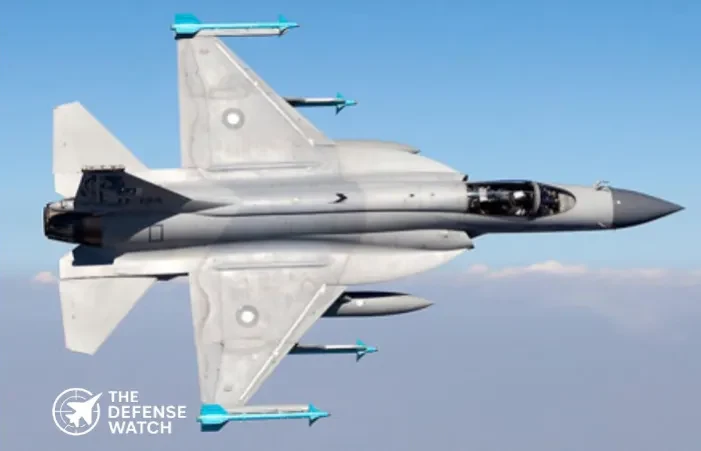

Full Specifications
General Information
| Name | JF-17C Block III |
| Manufacturer | Pakistan Aeronautical Complex (PAC), Chengdu Aircraft Industry Group |
| Country of Origin | Pakistan, China |
| Type / Role | Lightweight multirole fighter |
| Generation | 4.5 |
| Status | In service / production |
| First Flight | December 15, 2019 (Block III prototype) |
| Introduction / In Service Since | 2023 |
| Number Built | 50+ (PAF orders; exports ongoing) |
| Operators | Pakistan Air Force, Azerbaijan Air Force |
Dimensions & Structure
| Length | 14.93 m |
| Wingspan | 9.45 m |
| Height | 4.77 m |
| Wing Area | 24.4 sq m |
| Empty Weight | 6,586 kg |
| Maximum Takeoff Weight (MTOW) | 12,700 kg |
| Internal Weapons Bay | None |
| External Hardpoints | 8 |
Performance
| Maximum Speed | Mach 1.6–1.8 (~1,910 km/h) |
| Range | ~1,800 km (ferry internal); 3,482 km with tanks |
| Combat Radius | ~1,200–1,300 km |
| Service Ceiling | 16,916 m (55,500 ft) |
| Rate of Climb | 300 m/s |
| Thrust-to-Weight Ratio | ~0.95–1.07 |
| G Limits | +8 / -3 |
Powerplant
| Engine Type | Klimov RD-93MA afterburning turbofan |
| No. of Engines | 1 |
| Thrust (each) | 91.2 kN (with afterburner) |
| Thrust Vectoring | No |
| Fuel Capacity | Internal + drop tanks (up to 10,000 lb total) |
Armament
| Gun | 1 × 23 mm GSh-23 twin-barrel cannon |
| Missiles (Air-to-Air) | PL-5E, PL-10, PL-12, PL-15 |
| Missiles (Air-to-Ground) | Ra’ad cruise missile, CM-400AKG |
| Bombs | Laser-guided, GPS-guided, unguide |
| Hardpoints | 8 |
| Payload Capacity | 3,600 kg |
Avionics & Systems
| Radar | KLJ-7A AESA |
| Radar Range | 160–170 km |
| Electronic Warfare (EW) System | Integrated digital EW, RWR |
| Targeting System | External targeting pod supported |
| Helmet Display | Helmet Mounted Display and Sight |
| Navigation | INS + GPS |
| Autopilot / AI Assistance | Digital fly-by-wire |
| Communication | Secure data link and encrypted radio |
Stealth & Technology
| Radar Cross Section (RCS) | Reduced compared to earlier blocks |
| Stealth Features | RCS reduction shaping and materials |
| Infrared Signature Reduction | Limited |
| Sensor Fusion | Partial sensor fusion |
| Networking Capabilities | Data link enabled |
Variants
| Special Export Versions | JF-17A, JF-17B, JF-17C, Custom avionics for export clients |
Operational History
| Major Conflicts / Deployments | May 2025 India-Pakistan tensions (air-to-air/strike roles) |
| Notable Operators | Pakistan Air Force, Azerbaijan |
| Combat Proven? | Limited operational exposure |
| Mission Types | Air superiority, ground attack, SEAD |
Cost & Program
| Unit Cost | $25–55 million (estimated) |
| Development Cost | Joint program (not publicly detailed) |
| Program Name | JF-17 Thunder Program |
| Funding Countries | Pakistan, China |
Additional Information
| Upgrades Planned | Potential Block 4/OCU with further avionics/AI |
| Future Replacement | Next-generation indigenous fighter |
| Export Restrictions | Subject to Chinese approval |
| Notable Achievements | First AESA-equipped JF-17 |
| Competitors | F-16V, Tejas Mk1A, FA-50 |
PROS
- Modern AESA radar for improved detection and tracking
- Lower acquisition and operating cost than Western fighters
- Multirole capability with diverse weapon options
- Advanced cockpit with helmet mounted display
- Designed for rapid maintenance and high sortie rates
CONS
- Limited combat radius compared to heavier fighters
- Single engine design reduces redundancy
- Lower payload than twin engine aircraft
- Smaller radar aperture than large fighters
- Limited stealth characteristics
JF-17C Block III Multirole Fighter Jet
The JF-17C Block III represents the most advanced version of the Thunder fighter family, designed to deliver modern combat capability at a controlled cost. Developed to meet the needs of air forces seeking credible air defense and strike power without relying on high end Western platforms, the aircraft brings fourth plus generation features into a lightweight multirole design.
Overview and Capabilities
Jointly developed by Pakistan Aeronautical Complex and China’s Chengdu Aircraft Industry Group, the JF-17C Block III is intended for air superiority, ground attack, and maritime strike missions. The aircraft introduces a modern AESA radar, wide area cockpit display, helmet mounted sight, and an upgraded electronic warfare suite. These upgrades significantly improve situational awareness, tracking range, and survivability in contested airspace.
Powered by a single turbofan engine, the jet reaches supersonic speed and supports both beyond visual range and within visual range combat. Its open architecture avionics allow integration of Chinese and Pakistani weapons, making it flexible for export customers with diverse operational needs.
Operational Role
The Block III is designed to replace aging third generation fighters while operating alongside more advanced platforms. It is optimized for air policing, quick reaction alert, precision strike, and networked operations. For U.S. defense observers, the aircraft highlights how China and Pakistan are offering an affordable alternative to Western light fighters in the global market.
JF-17C Block III Fighter Jet Price
The estimated unit cost ranges between 30 and 35 million US dollars, depending on avionics configuration, weapons package, and support agreements.
Get real time update about this post category directly on your device, subscribe now.
Reviews
Disclaimer Note
The information provided on TheDefenseWatch.com is for general informational purposes only. While we strive to ensure the accuracy, completeness, and timeliness of our content regarding defense and aerospace products, technologies, and specifications, we cannot guarantee that all information is 100% accurate or up-to-date due to the evolving nature of military technology and classified data.TheDefenseWatch.com does not warrant the reliability, suitability, or availability of the information for any specific purpose. Users are advised to consult official sources, such as manufacturers, government publications, or defense agencies, for precise and verified data before making decisions based on our content.We are not affiliated with any defense manufacturers, governments, or military organizations mentioned. Opinions, reviews, and ratings reflect expert analysis but are subjective and should not be considered endorsements. TheDefenseWatch.com is not responsible for any errors, omissions, or consequences arising from the use of this website’s content.External links are provided for convenience and do not imply endorsement. TheDefenseWatch.com reserves the right to update or modify content without prior notice. By using this website, you agree to our Privacy & Cookies Policy.
More Products from PAC - Pakistan Aeronautical Complex
New Arrivals








Popular Comparisons
-
 SIG XM7 Rifle vs M4: Key Differences and Performance Comparison
View Comparison →
SIG XM7 Rifle vs M4: Key Differences and Performance Comparison
View Comparison → -
Eurofighter Typhoon vs Rafale vs F-35: Fighter Jet Comparison
View Comparison →
-
J-20 vs F-22: Stealth Fighter Showdown Explained
View Comparison →
-
F-14 Tomcat vs Su-57: Can a Legend Challenge Russia’s Stealth Fighter?
View Comparison →
-
Su-35 vs Su-57: Russia’s Top Fighter Jets Compared
View Comparison →
-
Eurofighter Typhoon vs Su-57: Ultimate Fighter Jet Comparison
View Comparison →
-
Rafale vs Su-57: 4.5 Gen vs 5th Gen Fighter Jet Comparison
View Comparison →
-
Su-57 vs F-16 Fighting Falcon: Stealth vs Speed
View Comparison →
-
China vs Russia: J-20 Mighty Dragon vs Su-57 Felon Comparison
View Comparison →
-
Su-57 Felon vs F-22 Raptor: Stealth Air Superiority Face-Off
View Comparison →


- UK Nightfall Procurement Plans Face Government Silence Amid Air Defense Debate

- NASA Completes First Flight Of Laminar Flow Scaled Wing Design In Aerodynamic Breakthrough
- Singapore Orders Three G550 Maritime Surveillance Aircraft To Boost Early Warning Network
- Polish Defense Industry Backs EU SAFE Mechanism To Boost National Production And Exports
- How StormBreaker Integration Expands Super Hornet Precision Strike Options for The U.S. Navy
- Former US F-35 Pilot Arrested for Allegedly Training Chinese Air Force
- NATO Intelligence From Germany: SWARM Biotactics Cybernetic Insect Swarms Enter Operational Use
- UK And Norway Sign Naval Helicopter Pact To Deepen Maritime Defense Cooperation
- Israel MOD Signs $42 Million Merkava Tank Transmission Deal With Ashot Ashkelon
- China’s New Aircraft Carrier Faces Persistent Design Flaw, Raising Questions About PLAN Power Projection