- Home
- Catalog
- Defense Systems
- HQ-9B Air Defense System
HQ-9B Air Defense System
Full Specifications
1. General Information
| System Name | HQ-9B Air Defense System |
| Manufacturer | China Aerospace Science and Industry Corporation |
| Country of Origin | China |
| Type / Role | Long-Range Surface-to-Air Missile (SAM) System |
| In Service | Yes |
| Year Introduced | Around 2015 |
| Unit Cost | USD 500 million to 1 Billion (Estimated per Battery) |
2. Performance & Capabilities
| Maximum Engagement Range | 200 km |
| Maximum Engagement Altitude | 27 km |
| Target Types | Aircraft, Cruise Missiles, UAVs, Some Ballistic Missiles |
| Interception Probability | Estimated 80 to 90 percent (varies by target) |
| Reaction Time | 10 to 15 seconds |
| Radar Detection Range | Up to 300 km |
3. Missile Specifications
| Missile Type | HQ-9B Long-Range SAM |
| Missile Length | ~6.8 m |
| Missile Weight | ~1300 kg |
| Warhead Type | High Explosive Fragmentation |
| Warhead Weight | ~180 kg |
| Speed | Mach 4+ |
4. Radar & Fire Control
| Radar Type | Phased Array Radar |
| Radar Name | HT-233 Radar |
| Detection Range | Up to 300 km |
| Tracking Capacity | 100+ Targets |
| Guidance System | Command Guidance with Terminal Radar Homing |
| Fire Control System | Digital Integrated Fire Control |
5. Launcher & Mobility
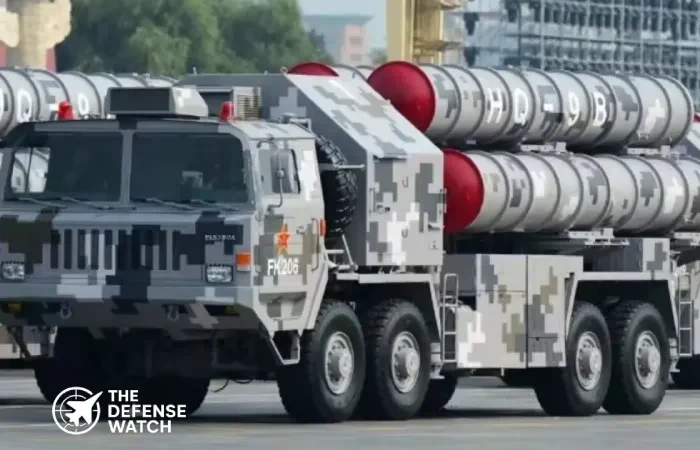
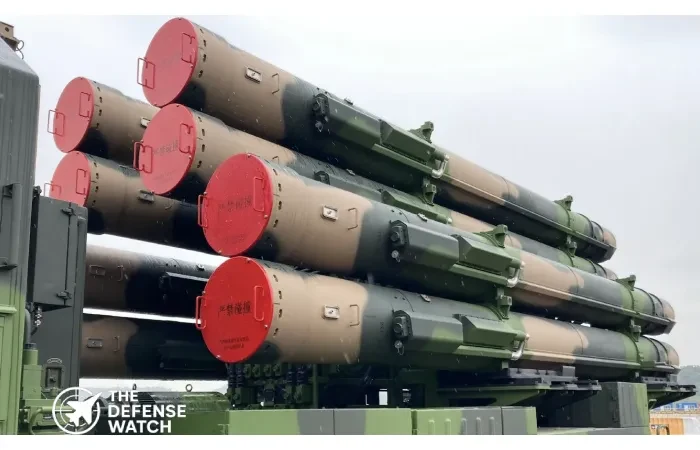
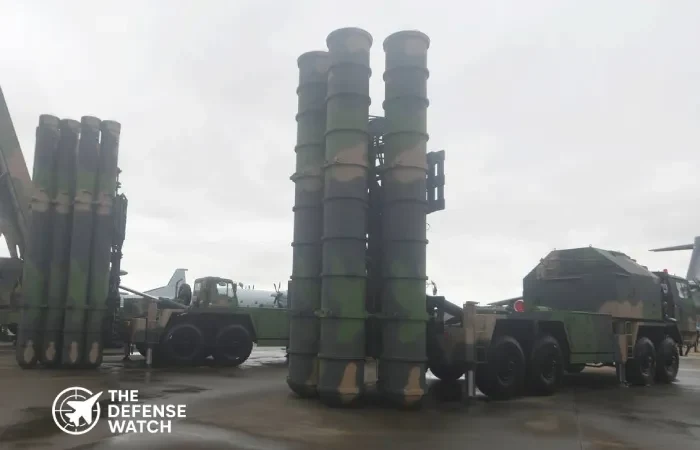
| Launcher Type | Mobile Truck Mounted |
| No. of Missiles per Launcher | 4 |
| Reload Time | 30 to 60 minutes |
| Mobility Platform | 8x8 Heavy Military Truck |
| Crew Required | 4 to 6 personnel |
6. Command & Control
| C2 System | Integrated Air Defense Command System |
| Connectivity | Secure Data Link / Military Communication Network |
| Network Capability | Yes |
| Operation Mode | Autonomous or Network Integrated |
7. Operational Use
| Primary Operator | China, Pakistan, Turkmenistan |
| Combat Proven | No confirmed combat use |
| Conflict History | Not publicly documented |
| Notable Feature | Long-range area air defense capability |
PROS
- Long engagement range against aircraft and cruise missiles
- High speed interceptor missiles (Mach 4+)
- Mobile truck mounted launchers for rapid deployment
- Advanced radar with long detection range
- Capable of engaging multiple targets simultaneously
CONS
- Limited publicly available performance data
- Less combat experience compared with Western systems
- Vulnerable to advanced electronic warfare environments
- High procurement and operational costs
- Requires integrated radar network for maximum effectiveness
HQ-9B Long-Range Air Defense Missile System
The HQ-9B is a modern long-range surface-to-air missile system designed to defend strategic assets from aircraft, cruise missiles, and certain ballistic missile threats. Developed as an upgraded version of the earlier HQ-9, the system integrates advanced radar technology, improved missile guidance, and enhanced engagement range. It forms a key part of China’s layered air defense network and is intended to counter modern aerial threats including stealth aircraft, high-speed cruise missiles, and unmanned aerial systems.
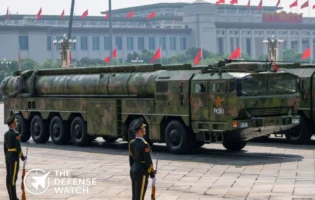
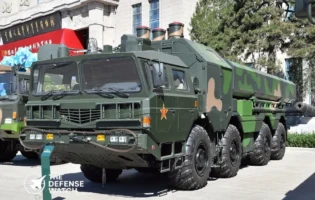
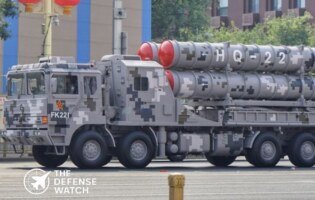
Designed for high mobility and rapid deployment, the HQ-9B uses truck mounted launchers and integrated command systems to operate as part of a larger air defense network. The system combines long-range surveillance radar, digital fire control, and high-speed interceptor missiles to detect, track, and destroy airborne targets across large areas.
Manufacturer
The HQ-9B air defense system is developed by the China Aerospace Science and Industry Corporation (CASIC) along with other Chinese defense industry partners. It represents an evolution of China’s indigenous air defense technology programs and incorporates lessons from earlier missile systems.
China introduced the HQ-9 family to provide a strategic air defense capability comparable to other long-range missile systems used globally. The HQ-9B variant improves radar performance, engagement range, and electronic counter countermeasures, enabling it to operate effectively in contested electronic warfare environments.
Speed and Range
The interceptor missiles used by the HQ-9B system are estimated to reach speeds exceeding Mach 4, allowing rapid engagement of fast-moving targets. The missile engagement range is widely assessed to reach up to 200 km, depending on target type and engagement conditions.
The system’s radar network can detect aerial targets at ranges of roughly 300 km, providing early warning and tracking capability for incoming aircraft, cruise missiles, and UAVs. Advanced tracking and guidance systems allow the HQ-9B to engage multiple targets simultaneously.
Cost / Price
HQ-9B Long-Range Air Defense Missile System Price is estimated to range between USD 500 million and USD 1 billion per battery, depending on configuration, radar systems, and missile inventory.
Get real time update about this post category directly on your device, subscribe now.
Reviews
Disclaimer Note
The information provided on TheDefenseWatch.com is for general informational purposes only. While we strive to ensure the accuracy, completeness, and timeliness of our content regarding defense and aerospace products, technologies, and specifications, we cannot guarantee that all information is 100% accurate or up-to-date due to the evolving nature of military technology and classified data.TheDefenseWatch.com does not warrant the reliability, suitability, or availability of the information for any specific purpose. Users are advised to consult official sources, such as manufacturers, government publications, or defense agencies, for precise and verified data before making decisions based on our content.We are not affiliated with any defense manufacturers, governments, or military organizations mentioned. Opinions, reviews, and ratings reflect expert analysis but are subjective and should not be considered endorsements. TheDefenseWatch.com is not responsible for any errors, omissions, or consequences arising from the use of this website’s content.External links are provided for convenience and do not imply endorsement. TheDefenseWatch.com reserves the right to update or modify content without prior notice. By using this website, you agree to our Privacy & Cookies Policy.


New Arrivals


Popular Comparisons
-
 SIG XM7 Rifle vs M4: Key Differences and Performance Comparison
View Comparison →
SIG XM7 Rifle vs M4: Key Differences and Performance Comparison
View Comparison → -
Eurofighter Typhoon vs Rafale vs F-35: Fighter Jet Comparison
View Comparison →
-
J-20 vs F-22: Stealth Fighter Showdown Explained
View Comparison →
-
F-14 Tomcat vs Su-57: Can a Legend Challenge Russia’s Stealth Fighter?
View Comparison →
-
Su-35 vs Su-57: Russia’s Top Fighter Jets Compared
View Comparison →
-
Eurofighter Typhoon vs Su-57: Ultimate Fighter Jet Comparison
View Comparison →
-
Rafale vs Su-57: 4.5 Gen vs 5th Gen Fighter Jet Comparison
View Comparison →
-
Su-57 vs F-16 Fighting Falcon: Stealth vs Speed
View Comparison →
-
China vs Russia: J-20 Mighty Dragon vs Su-57 Felon Comparison
View Comparison →
-
Su-57 Felon vs F-22 Raptor: Stealth Air Superiority Face-Off
View Comparison →


- Baykar Unveils AI Powered K2 Kamikaze Drone For Long Range Autonomous Strike Missions

- Nordic Air Defence Expands Into Poland With WB Group Counter Drone Partnership
- US Armed A-10 Warthog Attack Aircraft Support Operation Epic Fury Against Iran
- UK Built Nuclear Missiles Proposal Sparks Debate Over Britain’s Strategic Deterrent Independence
- ArianeGroup And Thales Develop FLP-T 150 Rocket Artillery System For France’s Long-Range Strike Program
- General Atomics Explores JASSM, LRASM, And JSM Integration On MQ-9B Unmanned Aircraft
- Six U.S. Airmen Killed In KC-135 Crash During Operation Epic Fury In Iraq
- Drone Attacks On U.S. From The Sea: A Growing Homeland Security Concern
- South Korea’s S-9 Swarm Drone Program Nears Completion As ADD Advances AI-Enabled Drone Warfare
- UK Begins Production Of 37 RCH155 Self-Propelled Howitzers For British Army Modernization