- Home
- Catalog
- Radar Systems
- AN TPQ 53 Radar System
AN TPQ 53 Radar System
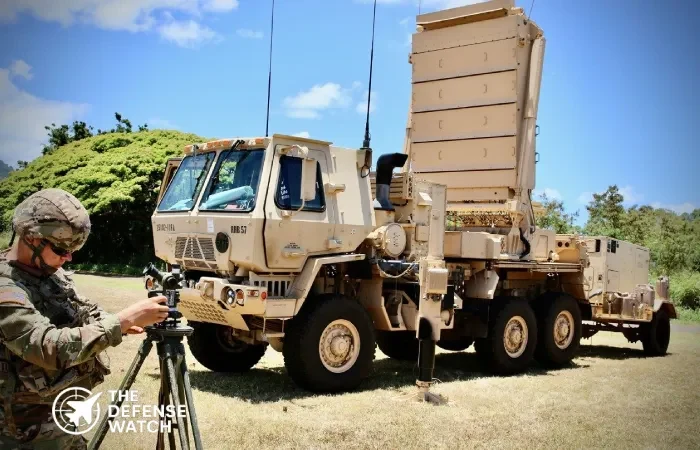
Full Specifications
1. General Information
| Name / Designation | AN TPQ 53 |
| Manufacturer | Lockheed Martin |
| Country of Origin | Lockheed Martin |
| Type / Role | Counterfire radar |
| Operational Domain | Land |
| Status | Active service |
2. Technical Specifications
| Frequency Band | S band |
| Antenna Type | Active electronically scanned array |
| Antenna Aperture / Size | Classified |
| Power Output | Classified |
| Detection Range | Up to 60 km |
| Tracking Range | Short to long range |
| Target Tracking Capacity | Multiple targets |
| Elevation Coverage | High angle coverage |
| Azimuth Coverage | 360 degree sector scanning |
| Beam Steering | Electronic |
| Pulse Repetition Frequency (PRF) | Classified |
| Resolution | High |
| Update Rate | Near real time |
| Clutter Rejection / ECCM | Advanced ECCM |
3. Functional Capabilities
| Primary Functions | Counter rocket artillery mortar |
| Target Types | RAM threats |
| Integration / Networking | US Army C2 systems |
| IFF Capability | Limited |
| Data Link / Networking | Tactical data networks |
| Weather & Terrain Resistance | All weather |
| Mobility / Mounting | Vehicle mounted |
4. Physical & Operational Characteristics
| Dimensions | Vehicle integrated |
| Weight | Classified |
| Power Requirement | Vehicle generator |
| Cooling System | Active cooling |
| Operating Temperature Range | Military standard |
| Deployment Platform | Tactical truck |
| Crew Requirement | 3 to 4 personnel |
5. Software & Processing
| Signal Processor Type | Digital radar processor |
| Processing Speed | High |
| AI / Automation Features | Automated track generation |
| Data Output / Interface | Digital tactical links |
| Software Upgradeability | Modular updates |
6. Operational History
| Year Introduced | 2010s |
| Users / Operators | United States Army |
| Notable Deployments | Middle East operations |
| Successor / Predecessor | Replaced AN TPQ 36 37 |
7. Export / Compliance Data
| Export Availability | Limited |
| ITAR / MTCR Status | ITAR controlled |
| Cost Estimate | USD 15 to 20 million |
PROS
- High accuracy counterfire detection
- AESA radar with fast update rate
- Rapid setup and relocation
- Strong integration with US Army networks
- Reduced crew size
CONS
- High procurement cost
- Vehicle mounted limits concealment
- Complex electronics increase sustainment needs
- Export tightly controlled
- Requires trained operators
AN TPQ 53 Counterfire Radar System
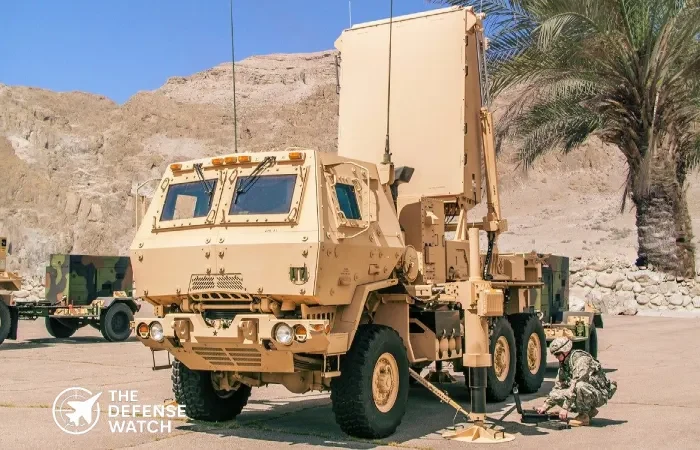
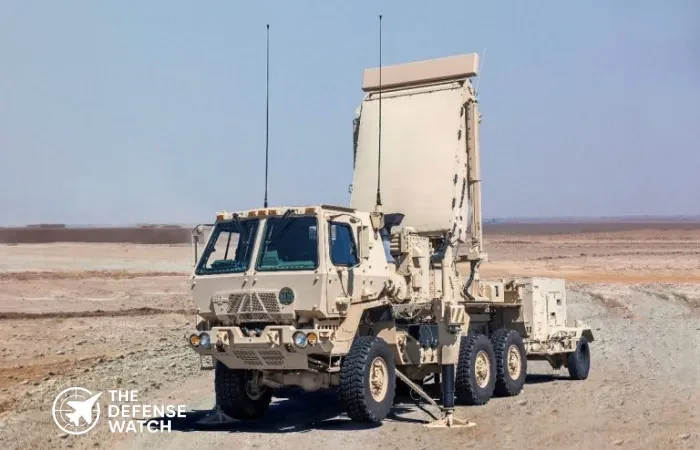
The AN TPQ 53 radar system is a modern counterfire sensor built to protect US and allied forces from indirect fire threats. Designed for fast moving and contested battlefields, it gives commanders rapid warning and accurate firing point data against rockets artillery and mortars.
Developed by Lockheed Martin in the United States, AN TPQ 53 replaces older counterfire radars with a single system able to handle short range and long range missions. It uses an active electronically scanned array radar to search wide areas while tracking multiple threats at once. The system can be deployed in minutes and relocated quickly to avoid enemy targeting.
Core Mission and Capabilities
AN TPQ 53 is optimized for counter rocket artillery and mortar missions. It detects incoming rounds shortly after launch, calculates their point of origin, and shares that data with fire control networks. Detection ranges reach up to 60 kilometers for rockets, with shorter but highly precise coverage for mortars and artillery shells.
The radar supports 360 degree surveillance through rapid sector scanning. Its AESA antenna allows fast beam steering without moving parts, improving reliability and update rate. Advanced signal processing helps reject clutter and maintain performance in complex terrain and weather.
Operational Use and Integration
The system is fully networked with US Army battle management systems, including FAAD C2 and AFATDS. It is mounted on a tactical vehicle and can operate with a small crew, reducing manpower needs. AN TPQ 53 has seen operational use with US forces and partners in active combat zones, where counterfire speed directly saves lives.
AN TPQ 53 Radar System Price in United State
The AN/TPQ-53 Radar System price in the United States is not officially published. Open source defense budget data suggests a unit cost in the range of USD 15 to 20 million depending on configuration support equipment and contracts.
FAQs
Rockets artillery mortars and ballistic projectiles.
Up to 60 km for rocket threats.
Yes it is vehicle mounted and deploys quickly.
The United States Army and selected allied forces.
Yes it replaces systems like AN TPQ 36 and 37.
Get real time update about this post category directly on your device, subscribe now.
Reviews
Disclaimer Note
The information provided on TheDefenseWatch.com is for general informational purposes only. While we strive to ensure the accuracy, completeness, and timeliness of our content regarding defense and aerospace products, technologies, and specifications, we cannot guarantee that all information is 100% accurate or up-to-date due to the evolving nature of military technology and classified data.TheDefenseWatch.com does not warrant the reliability, suitability, or availability of the information for any specific purpose. Users are advised to consult official sources, such as manufacturers, government publications, or defense agencies, for precise and verified data before making decisions based on our content.We are not affiliated with any defense manufacturers, governments, or military organizations mentioned. Opinions, reviews, and ratings reflect expert analysis but are subjective and should not be considered endorsements. TheDefenseWatch.com is not responsible for any errors, omissions, or consequences arising from the use of this website’s content.External links are provided for convenience and do not imply endorsement. TheDefenseWatch.com reserves the right to update or modify content without prior notice. By using this website, you agree to our Privacy & Cookies Policy.


New Arrivals


Popular Comparisons
-
 SIG XM7 Rifle vs M4: Key Differences and Performance Comparison
View Comparison →
SIG XM7 Rifle vs M4: Key Differences and Performance Comparison
View Comparison → -
Eurofighter Typhoon vs Rafale vs F-35: Fighter Jet Comparison
View Comparison →
-
J-20 vs F-22: Stealth Fighter Showdown Explained
View Comparison →
-
F-14 Tomcat vs Su-57: Can a Legend Challenge Russia’s Stealth Fighter?
View Comparison →
-
Su-35 vs Su-57: Russia’s Top Fighter Jets Compared
View Comparison →
-
Eurofighter Typhoon vs Su-57: Ultimate Fighter Jet Comparison
View Comparison →
-
Rafale vs Su-57: 4.5 Gen vs 5th Gen Fighter Jet Comparison
View Comparison →
-
Su-57 vs F-16 Fighting Falcon: Stealth vs Speed
View Comparison →
-
China vs Russia: J-20 Mighty Dragon vs Su-57 Felon Comparison
View Comparison →
-
Su-57 Felon vs F-22 Raptor: Stealth Air Superiority Face-Off
View Comparison →


- Pentagon Considers Second B-21 Raider Production Line To Accelerate U.S. Stealth Bomber Expansion

- France Unveils 78,000-Ton Nuclear Aircraft Carrier France Libre With 40-Aircraft Capacity
- L3Harris Wins $77.8M U.S. Navy Contract for Kineto Tracking Mount Sustainment
- US Navy Awards $15.38B Columbia-Class Submarine Contract To Strengthen Nuclear Deterrent
- China Surges Production Capacity For J-20 And J-35 Stealth Fighters As Beijing Expands Fifth-Generation Fleet
- Netanyahu Announces Elimination Of Senior Iranian Figures In Air Campaign
- US Bombers Avoid European Airspace On Iran Bombing Runs In Strategic Route Shift
- Japan’s EC-2 Electronic Warfare Jet Completes First Flight, Expanding Standoff Jamming Capabilities
- NASA’s X-59 Quiet Supersonic Jet Gears Up for Second Flight — A Giant Leap Toward Silent Boom AviationNASA X-59 Second Flight: Supersonic Aviation Reborn
- US Weapons Shipments to Taiwan Unaffected by Iran War, Officials Confirm