

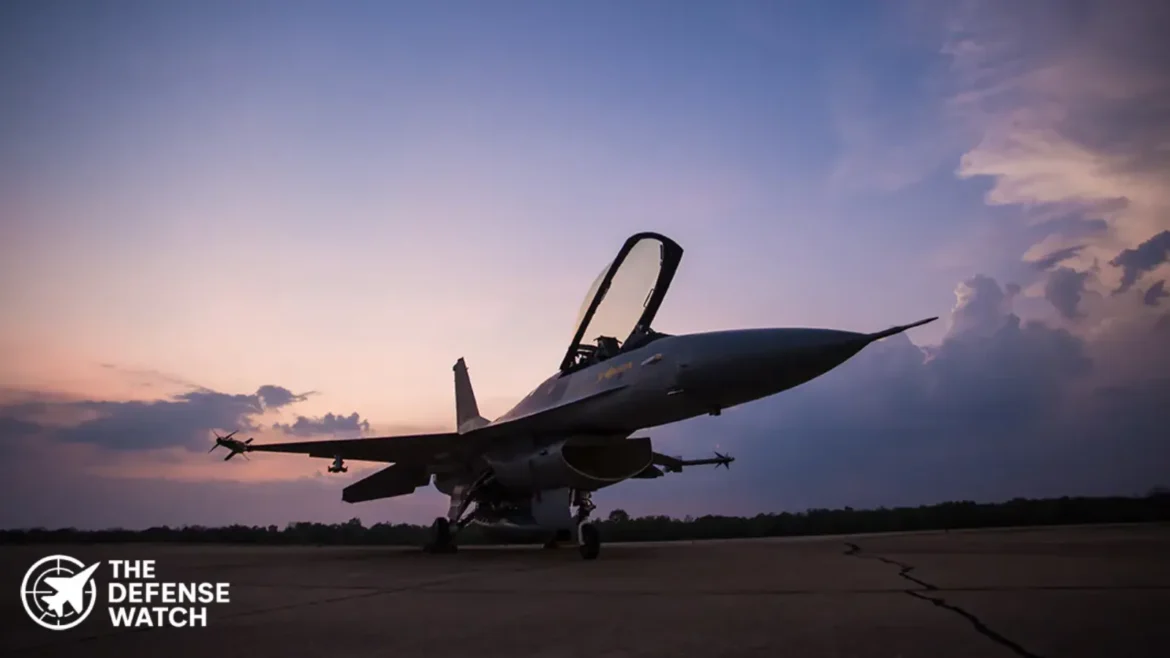
The US Air Force has awarded Sabena Aerospace Engineering a $235.4 million F-16 FMS support contract to sustain Ukraine’s growing F-16 fleet, marking another major step in long term Western backing for Ukrainian airpower. The contract covers intermediate and depot level aircraft and engine maintenance, along with material management support, under the Foreign Military Sales framework.
The award underscores the shift from short term aid to structured, multi year sustainment as Ukraine integrates Western combat aircraft into active service.
Contract Details and Scope
According to the US Department of Defense contract announcement, Sabena Aerospace Engineering, based in Woluwe-Saint-Lambert, Belgium, received a ceiling value contract worth up to $235,449,716. The award combines time and materials and firm fixed price elements, providing flexibility for varying maintenance and support demands over the contract period.
The effort supports the F-16 System Program Office and is specifically tied to Foreign Military Sales support for Ukraine. Work will be performed at Sabena’s facilities in Belgium, with contract performance scheduled through Jan. 28, 2029.
At the time of award, $69,725,380 in FMS funds were obligated. The Air Force Lifecycle Management Center at Hill Air Force Base, Utah, is the contracting authority under contract number FA823226CB005.
The contract was awarded as a sole source acquisition, reflecting Sabena’s existing qualifications, infrastructure, and experience with the F-16 platform.
Role of Sabena Aerospace Engineering
Sabena Aerospace Engineering is a well established European maintenance, repair, and overhaul provider with decades of experience supporting military aircraft fleets. The company has long been involved in F-16 sustainment programs for European air forces and NATO partners, covering structural maintenance, avionics support, and engine related work.
Under this contract, Sabena will provide intermediate and depot level maintenance for both aircraft and engines. This includes scheduled inspections, structural repairs, component overhauls, and supply chain and material management functions needed to keep aircraft mission ready.
By relying on a European based provider, the US Air Force can shorten logistics chains and reduce turnaround times for aircraft supporting Ukraine, while operating within NATO aligned maintenance ecosystems.
Importance for Ukraine’s F-16 Program
The Sabena Aerospace contract is a key enabler for Ukraine’s transition to Western multirole fighters. While aircraft deliveries and pilot training often receive the most attention, long term sustainment is critical to operational effectiveness.
F-16s require robust depot level support to maintain airframe life, radar and avionics reliability, and engine performance. Without consistent access to certified maintenance facilities and spare parts management, sortie rates and mission readiness can degrade quickly.
By securing a multi year FMS support contract, the US Air Force is helping ensure that Ukraine’s F-16 fleet remains viable beyond initial operational capability. This approach aligns with broader US and allied efforts to integrate Ukraine into Western defense support structures rather than relying on ad hoc wartime solutions.
FMS Framework and Oversight
The Foreign Military Sales system allows partner nations to acquire defense articles and services through the US government, ensuring standardization, oversight, and compliance with US policy. In this case, the FMS structure provides transparency and accountability for funds supporting Ukraine, while leveraging existing US Air Force program offices and contracting mechanisms.
The involvement of the F-16 System Program Office ensures that maintenance activities follow established technical orders, safety standards, and configuration control processes used across global F-16 fleets. This reduces risk and supports interoperability with NATO air forces.
Broader Context of US and Allied Support
The Sabena Aerospace award fits within a broader pattern of US and allied investments in sustainment and logistics for Ukraine. As Kyiv fields more Western supplied systems, including combat aircraft, air defense, and armored vehicles, sustainment contracts are becoming as strategically important as initial equipment transfers.
European based maintenance hubs are increasingly central to this strategy, allowing advanced support to be delivered without moving sensitive systems into the United States or into contested airspace. Belgium’s location and NATO integration make it a practical choice for F-16 sustainment activities.
What Comes Next
With funding already obligated and contract performance underway, Sabena Aerospace is expected to begin or expand maintenance activities supporting Ukrainian F-16s in the near term. As additional aircraft are transferred and operational tempo increases, demand for depot level support is likely to grow over the life of the contract.
The award signals continued US confidence in the FMS model as a long term mechanism for sustaining Ukraine’s air combat capabilities, while reinforcing the role of trusted European industry partners in that effort.
US Air Force Sustainment Contract Overview
The US Air Force Sustainment Center has awarded a major sustainment contract valued at up to seven billion dollars to support contract field team labor augmentation across the force.
The indefinite delivery indefinite quantity multiple award contract supports aircraft and system sustainment missions worldwide and will run for ten years, according to official Air Force contract data.
Contract Scope and Structure
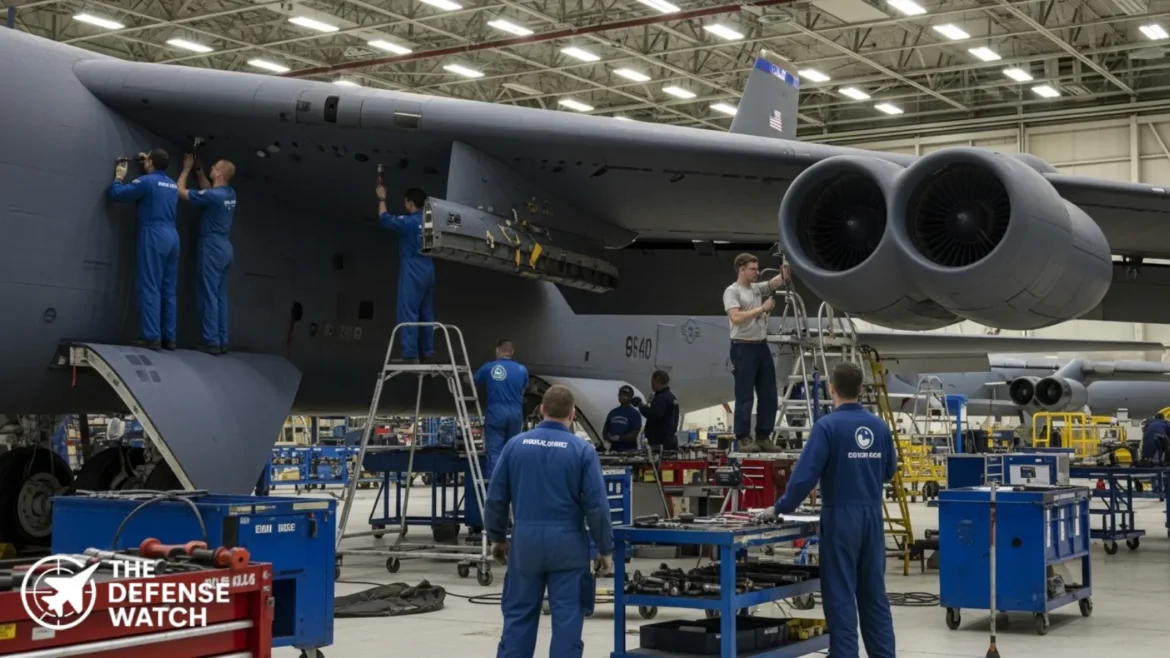
The contract provides contract field team labor augmentation to support Air Force maintenance, repair, and operational readiness missions. These teams are typically deployed to supplement organic Air Force maintenance units, particularly for high demand aircraft platforms and specialized systems.
The effort covers a ten year period from February 2026 to January 2036 and includes a five year base period with one five year option. Work locations will be determined through individual task orders and may include domestic and overseas operating sites.
The total contract ceiling is set at seven billion ten million dollars. At the time of award, fiscal year 2026 operations and maintenance funding totaling eleven thousand five hundred dollars was obligated, reflecting the initial administrative action rather than full program execution.
The contracting activity is the Air Force Sustainment Center at Tinker Air Force Base in Oklahoma.
Companies Selected for the Award
Twenty three companies were selected under the multiple award structure following a competitive acquisition that received twenty six offers.
Awarded firms include
4MHR Logistics LLC of Texas
Adams Communication Engineering Technology of Maryland
Aircraft Readiness Alliance of Alaska
Akima Logistics Services of Virginia
Global Logistics Support Services of Alabama
Kay and Associates of Illinois
PKL Services of California
Powerhouse Resources International of North Carolina
R2C Limited Liability of Alabama
Resicum International of Virginia
S and K Aerospace of Montana
Strategic Technology Institute of Maryland
Vali of Alabama
Vector Solutions of Arizona
AAR Government Services of Illinois
Amentum Services of Virginia
M1 Support Services of Texas
Several companies received more than one contract line under the award structure, reflecting their ability to support multiple mission areas.
Why Field Team Support Matters
Contract field teams play a central role in sustaining complex Air Force aircraft fleets, especially legacy platforms that require specialized technical expertise.
These teams often support depot level maintenance, aircraft modification programs, foreign military sales support, and surge operations where organic manpower is insufficient. They also provide continuity for long term sustainment programs where contractor experience is critical.
According to Air Force sustainment planning documents, contractor field support helps maintain readiness while allowing uniformed maintainers to focus on core operational missions.
Strategic Context
The award aligns with broader Air Force sustainment priorities focused on fleet availability, cost control, and lifecycle management. As aircraft fleets age and modernization efforts compete for funding, sustainment contracts remain a critical pillar of force readiness.
The Air Force Sustainment Center oversees maintenance and supply chain operations for a wide range of aircraft, including bombers, tankers, fighters, and mobility platforms. Contracted field team support enables rapid response to maintenance demands across this diverse inventory.
Defense acquisition experts note that large scale multiple award contracts also increase flexibility, allowing the Air Force to compete task orders and adjust workload distribution based on performance and mission need.