- Home
- Catalog
- Compare
- F-35 Lightning II vs J-20 Mighty Dragon — U.S. vs China Stealth Fighter Comparison
F-35 Lightning II vs J-20 Mighty Dragon — U.S. vs China Stealth Fighter Comparison
The rivalry between the F-35 Lightning II and J-20 Mighty Dragon represents more than a contest between two advanced fighter jets—it’s a reflection of U.S. and Chinese military power in the 21st century.
As tensions grow across the Indo-Pacific, both nations are preparing for potential air superiority contests that could shape future conflicts. The F-35, America’s cornerstone fifth-generation multirole fighter, has been battle-tested, exported to allies, and integrated across NATO. The J-20, on the other hand, embodies China’s push for indigenous aerospace innovation and anti-access/area-denial (A2/AD) capability.
This F-35 vs J-20 comparison explores how these stealth jets differ in design philosophy, performance, and combat effectiveness—and what that means for U.S. airpower in a potential showdown.
Specifications Comparison: F-35 vs J-20
| Specification | F-35 Lightning II | J-20 Mighty Dragon |
|---|---|---|
| Origin | United States (Lockheed Martin) | China (Chengdu Aircraft Industry Group) |
| Role | Multirole Stealth Fighter | Air Superiority/Interceptor |
| Crew | 1 | 1 |
| Top Speed | Mach 1.6 | Mach 2.0 (est.) |
| Combat Range | ~670 miles (1,080 km) | ~700 miles (1,100 km) (est.) |
| Service Ceiling | 50,000 ft | 66,000 ft (est.) |
| Thrust | Pratt & Whitney F135 (43,000 lbf) | WS-15/AL-31F (32,000–38,000 lbf) |
| Internal Weapons Bay | 4 × AIM-120 or 2 × bombs + missiles | 4–6 missiles (PL-10, PL-15) |
| Avionics | AN/APG-81 AESA Radar, DAS, EOTS | Type 1475 AESA Radar (estimated) |
| Stealth Rating | Very Low Observable | Low Observable (front-aspect optimized) |
| Unit Cost | ~$85 million (F-35A) | Estimated ~$100–120 million |
| Entered Service | 2016 (USAF) | 2017 (PLAAF) |
Design & Stealth Technology
F-35 Lightning II
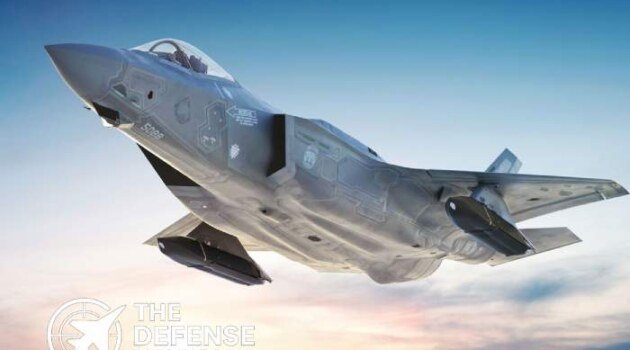
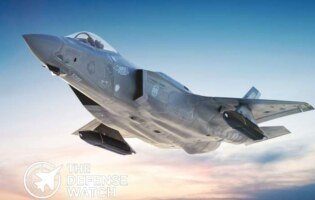
Lockheed Martin’s F-35 was built around low observability and information dominance. Its radar-absorbent coatings, internal weapons bays, and carefully contoured fuselage make it one of the world’s stealthiest aircraft. Combined with its Distributed Aperture System (DAS) and Electro-Optical Targeting System (EOTS), the F-35 gives pilots unmatched situational awareness.
J-20 Mighty Dragon
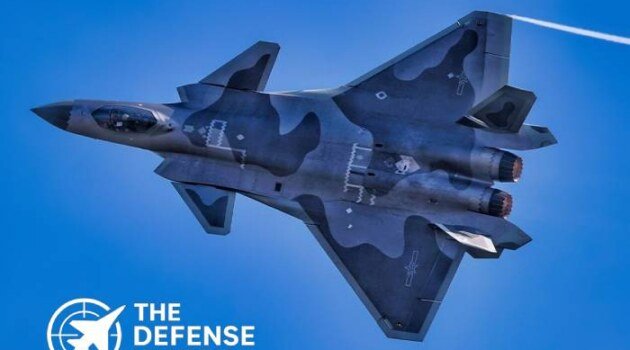
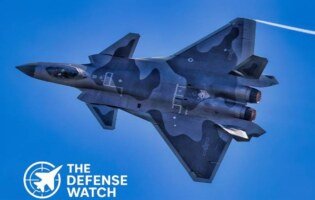
The Chengdu J-20 is designed for long-range interception and anti-stealth operations. Its canard-delta layout gives it strong maneuverability but compromises radar stealth to some extent. The jet uses a large nose section for a powerful AESA radar and possibly infrared search and track (IRST) systems to detect stealth aircraft like the F-35.
While both aircraft are stealthy, analysts note that the J-20’s stealth optimization focuses mainly on frontal radar cross-section reduction, while the F-35 maintains 360-degree stealth for survivability in dense threat environments.
F-35 Lightning II Fighter Jet vs Chengdu J-20 Mighty Dragon Stealth Fighter

Firepower & Performance
F-35 Armament
- Internal bays: AIM-120D AMRAAMs, GBU-31 JDAMs, or SDBs
- External stations (in “beast mode”): Up to 18,000 lb payload
- Gun: 25mm GAU-22/A cannon (F-35A)
The F-35’s strength lies in its networked combat capability—it can detect, track, and share data with other aircraft, ships, and ground forces, often shooting targets beyond visual range before being seen.
J-20 Armament
- Internal bays: PL-15 long-range air-to-air missiles, PL-10 short-range missiles
- External pylons: For future stand-off weapons (reduced stealth)
The J-20 prioritizes long-range interception and is reportedly armed with the PL-15, a missile believed to outrange the AMRAAM. However, its fire-control systems and missile reliability remain less proven in combat compared to U.S. equivalents.
Operational Range & Mobility
The J-20 has an edge in ferry range, with greater fuel capacity for long-range patrols across the South China Sea and East China Sea. However, it suffers from engine limitations—Chinese WS-15 engines have faced development delays, forcing reliance on Russian AL-31F powerplants with lower thrust-to-weight ratios.
The F-35’s engine reliability, short takeoff capability (F-35B), and carrier version (F-35C) give the U.S. and its allies operational flexibility across land and sea, from Japan to the Persian Gulf.
Combat Effectiveness & Real-World Deployment
The F-35 has combat-proven capability, having flown missions in Iraq, Syria, and Afghanistan. Over 1,200 units are in service across the U.S., NATO, and allied forces—creating an unmatched logistical and training network.
In contrast, the J-20 remains untested in combat. The People’s Liberation Army Air Force (PLAAF) has begun fielding squadrons in the Western Theater Command, indicating a focus on potential engagements over Taiwan or the South China Sea. However, the PLAAF lacks the joint sensor-fusion infrastructure and pilot combat experience of U.S. and allied air forces.
Cost, Export Value & Industrial Impact
The F-35 program represents one of the most successful export efforts in modern defense—partnered with over a dozen nations, including the U.K., Japan, Australia, and Italy. Its cost per unit has steadily declined, reaching around $85 million for the F-35A.
The J-20 is not available for export, limiting its strategic reach. China instead markets the FC-31 (also known as J-35) as a potential export stealth fighter and future carrier jet. However, it remains far from achieving the F-35’s global interoperability and industrial scale.
Analysis: F-35 vs J-20
| Category | Advantage |
|---|---|
| Stealth & Sensors | F-35 |
| Speed & Range | J-20 (marginally) |
| Combat Data Integration | F-35 |
| Weapon Range (PL-15 vs AIM-120D) | J-20 (potentially) |
| Operational Maturity & Reliability | F-35 |
| Export & Industrial Reach | F-35 |
The F-35’s maturity, data fusion, and combat experience make it the clear leader in most categories. The J-20, while impressive, remains a strategic deterrent rather than a combat-proven system. Chinese advances in engines and sensors could narrow the gap by the 2030s, but for now, the F-35 dominates the fifth-generation fighter landscape.
Conclusion
The F-35 Lightning II holds the advantage in stealth, technology integration, and combat readiness, while the J-20 Mighty Dragon leads in range and missile reach. In a real-world clash, the outcome would likely depend on networked warfare, not just airframe specs—and that’s where the U.S. and its allies currently maintain superiority.
Both aircraft symbolize a larger contest: American air dominance vs. China’s strategic rise. The skies of the Indo-Pacific may well decide which nation defines the future of aerial warfare.
FAQ: F-35 vs J-20 Comparison
The F-35 is generally considered stealthier due to its 360-degree radar signature reduction and advanced coatings. The J-20’s stealth is optimized mainly for frontal engagement.
Yes, slightly. The J-20 can reach approximately Mach 2, while the F-35 tops out at Mach 1.6. However, the F-35’s sensor fusion gives it an advantage before visual contact.
Over 1,200 F-35s are active worldwide. Estimates suggest around 200–250 J-20s are operational within the PLAAF.
Not yet. The F-35 has seen real combat and joint operations, while the J-20 remains largely untested outside exercises.
The J-35 (FC-31) is China’s second stealth fighter, potentially a carrier-based jet. It may compete with the F-35C in the 2030s, but remains in development.
Get real time update about this post category directly on your device, subscribe now.
| |
| Price | |
| Our Rating | |
| Manufacturer | Lockheed Martin Chengdu Aerospace Corporation (CAC) |
| Category | Fighter Jets Fighter Jets |
General Information
| Name | F-35 Lightning II Chengdu J-20 Mighty Dragon |
| Manufacturer | Lockheed Martin Chengdu Aerospace Corporation (CAC) |
| Country of Origin | United States China |
| Type / Role | Multirole Stealth Fighter Stealth Air Superiority / Multirole Fighter |
| Generation | 5th 5th Generation |
| Status | In Service In Active Service |
| First Flight | December 15, 2006 January 11, 2011 |
| Introduction / In Service Since | 2015 March 2017 |
| Number Built | 1,200+ (as of 2025) 200+ (estimated as of 2025) |
| Operators | USA, UK, Japan, Israel, Italy, Australia, and others People’s Liberation Army Air Force (PLAAF) |
Dimensions & Structure
| Length | 51.2 ft (15.6 m) 20.4 m (67 ft) |
| Wingspan | 35 ft (10.7 m) 13.5 m (44 ft) |
| Height | 14.4 ft (4.38 m) 4.45 m (14.6 ft) |
| Wing Area | 460 sq ft (42.7 m²) ~78 m² |
| Empty Weight | 29,300 lb (13,300 kg) 19,000 kg |
| Maximum Takeoff Weight (MTOW) | 70,000 lb (31,800 kg) 37,000 kg |
| Internal Weapons Bay | 2 (up to 5,700 lb payload) 2 main + 2 side bays |
| External Hardpoints | 6–10 (up to 18,000 lb total) 4 (optional) |
Performance
| Maximum Speed | Mach 1.6 Mach 2.0+ |
| Range | 1,380 mi (2,220 km) 2,000 km |
| Combat Radius | ~670 mi (1,080 km) 1,100 km |
| Service Ceiling | 50,000 ft (15,240 m) 66,000 ft (20,000 m) |
| Rate of Climb | 45,000 ft/min 60,000 ft/min |
| Thrust-to-Weight Ratio | 0.87 ~1.1 |
| G Limits | +9 +9 G |
Powerplant
| Engine Type | Pratt & Whitney F135-PW-100 WS-15 (or AL-31FM2 on earlier units) |
| No. of Engines | 1 2 |
| Thrust (each) | 43,000 lbf 30,000 lbf (WS-15, projected) |
| Thrust Vectoring | Yes (on F-35B variant) Yes (newer variants) |
| Fuel Capacity | ~18,500 lb internal ~25,000 lb (internal) |
Armament
| Gun | GAU-22/A 25mm cannon (F-35A) None (internal space optimized for stealth) |
| Missiles (Air-to-Air) | AIM-120 AMRAAM, AIM-9X PL-10, PL-15, PL-21 (future) |
| Missiles (Air-to-Ground) | AGM-154 JSOW, AGM-158 JASSM KD-series guided missiles |
| Bombs | JDAM, Paveway II/III, SDB I/II Precision-guided bombs (optional) |
| Hardpoints | 6 external + 2 internal 4 external (non-stealth use) |
| Payload Capacity | ~18,000 lb ~11,000 kg |
Avionics & Systems
| Radar | AN/APG-81 AESA Type 1475 AESA radar |
| Radar Range | ~150+ km ~200+ km |
| Electronic Warfare (EW) System | AN/ASQ-239 suite Integrated ECM suite |
| Targeting System | EOTS (Electro-Optical Targeting System) Electro-Optical Targeting System (EOTS) |
| Helmet Display | HMDS Gen III Yes |
| Navigation | GPS/INS with terrain-following Inertial + Satellite-assisted |
| Autopilot / AI Assistance | Advanced flight management Semi-autonomous flight control |
| Communication | MADL & Link 16 secure data links Encrypted data links, satellite comms |
Stealth & Technology
| Radar Cross Section (RCS) | ~0.001 m² Estimated 0.025–0.1 m² |
| Stealth Features | RAM coating, internal weapons bay, edge alignment Shaping, RAM coating, internal bays |
| Infrared Signature Reduction | Yes Engine shrouds, thermal coating |
| Sensor Fusion | Full 360° data integration Yes |
| Networking Capabilities | Distributed data-sharing with allied units Integrated with PLAAF command networks |
Variants
| Special Export Versions | F-35I (Israel), F-35A (Japan), etc. Experimental electronic warfare variant |
Operational History
| Major Conflicts / Deployments | Middle East operations (Iraq, Syria) None confirmed |
| Notable Operators | USAF, USN, USMC, RAF, IDF PLAAF |
| Combat Proven? | Yes Not yet combat-tested |
| Mission Types | Air superiority, strike, SEAD, ISR Air superiority, long-range interception, precision strike |
Cost & Program
| Unit Cost | $80–100 million (variant-dependent) ~$100–120 million (estimated) |
| Development Cost | ~$400 billion (program total) Classified |
| Program Name | Joint Strike Fighter (JSF) Mighty Dragon Program |
| Funding Countries | USA, UK, Italy, Netherlands, Canada, Australia, etc. China |
Additional Information
| Upgrades Planned | Block 4, Tech Refresh 3 WS-15 engine, new avionics, EW enhancements |
| Future Replacement | NGAD (2035+) None (core 5th-gen fleet) |
| Export Restrictions | U.S. FMS approval required Not for export |
| Notable Achievements | Widest global fighter program in history First operational stealth fighter in Asia |
| Competitors | Su-57, J-20, Tempest, KF-21 F-22 Raptor, F-35 Lightning II, Su-57 Felon |
|
Disclaimer Note
The information provided on TheDefenseWatch.com is for general informational purposes only. While we strive to ensure the accuracy, completeness, and timeliness of our content regarding defense and aerospace products, technologies, and specifications, we cannot guarantee that all information is 100% accurate or up-to-date due to the evolving nature of military technology and classified data.TheDefenseWatch.com does not warrant the reliability, suitability, or availability of the information for any specific purpose. Users are advised to consult official sources, such as manufacturers, government publications, or defense agencies, for precise and verified data before making decisions based on our content.We are not affiliated with any defense manufacturers, governments, or military organizations mentioned. Opinions, reviews, and ratings reflect expert analysis but are subjective and should not be considered endorsements. TheDefenseWatch.com is not responsible for any errors, omissions, or consequences arising from the use of this website’s content.External links are provided for convenience and do not imply endorsement. TheDefenseWatch.com reserves the right to update or modify content without prior notice. By using this website, you agree to our Privacy & Cookies Policy.
New Arrivals


Popular Comparisons
-
 SIG XM7 Rifle vs M4: Key Differences and Performance Comparison
View Comparison →
SIG XM7 Rifle vs M4: Key Differences and Performance Comparison
View Comparison → -
Eurofighter Typhoon vs Rafale vs F-35: Fighter Jet Comparison
View Comparison →
-
J-20 vs F-22: Stealth Fighter Showdown Explained
View Comparison →
-
F-14 Tomcat vs Su-57: Can a Legend Challenge Russia’s Stealth Fighter?
View Comparison →
-
Su-35 vs Su-57: Russia’s Top Fighter Jets Compared
View Comparison →
-
Eurofighter Typhoon vs Su-57: Ultimate Fighter Jet Comparison
View Comparison →
-
Rafale vs Su-57: 4.5 Gen vs 5th Gen Fighter Jet Comparison
View Comparison →
-
Su-57 vs F-16 Fighting Falcon: Stealth vs Speed
View Comparison →
-
China vs Russia: J-20 Mighty Dragon vs Su-57 Felon Comparison
View Comparison →
-
Su-57 Felon vs F-22 Raptor: Stealth Air Superiority Face-Off
View Comparison →


- Ecuadorian And U.S. Military Forces Launch Operations Against Narco-Terrorists In Ecuador

- Iran Strike Legality Questioned As U.S. Lawmakers Clash Over Congressional Notification
- Shield AI V-BAT Arctic Operations Signal Shift In NATO Maritime ISR
- UK Weighs Deployment Of HMS Duncan Destroyer To Protect Cyprus From Iranian Drone And Missile Threats
- US Says Third Wave Of Strikes On Iran Could Be Coming Amid Ongoing Middle East Conflict
- Russian KOMETA-M Found In Iranian Shahed-136 Drone After Attack On UK Akrotiri Base
- TP400-D6 Programme Reaches 1 Million Engine Flying Hours, Marking Major Milestone For Europrop International
- Qatar International Media Office Responds To Bloomberg Article, Rejects Allegations
- US Central Command Says Iranian Navy Eliminated In Gulf Of Oman Strikes
- How Hermeus Quarterhorse Mk 2.1’s First Flight Advances America’s Race to Field Reusable Supersonic Drones