

Executive Summary:
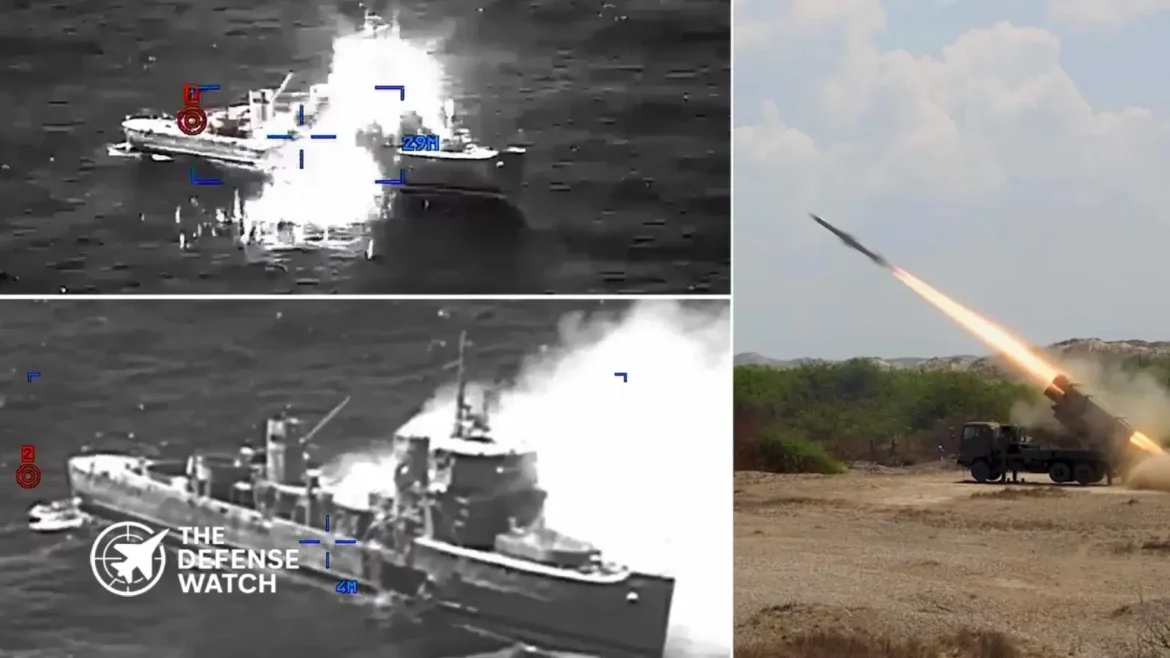
Japan fired Type 88 anti ship missiles overseas for the first time during Balikatan 2026 in the Philippines. The live fire event highlighted growing Japan Philippines military cooperation and reflected Tokyo’s expanding role in Indo Pacific regional security operations.
Japan Type 88 Missile Debuts Overseas During Balikatan 2026
Japan Type 88 anti ship missile operations reached a historic milestone during the Balikatan 2026 military exercise in the Philippines, where Japanese forces conducted the system’s first overseas live fire deployment. The event marked a significant expansion of Japan’s operational military posture beyond its territory and underscored increasing trilateral security coordination among Japan, the Philippines, and the United States.
The launch was conducted by the Japan Ground Self Defense Force during the annual Balikatan exercise, one of the Indo Pacific region’s largest multinational military drills.
The deployment reflects Tokyo’s broader effort to strengthen maritime deterrence capabilities amid rising security tensions in the South China Sea and wider Western Pacific region.
First Overseas Launch Signals Strategic Shift
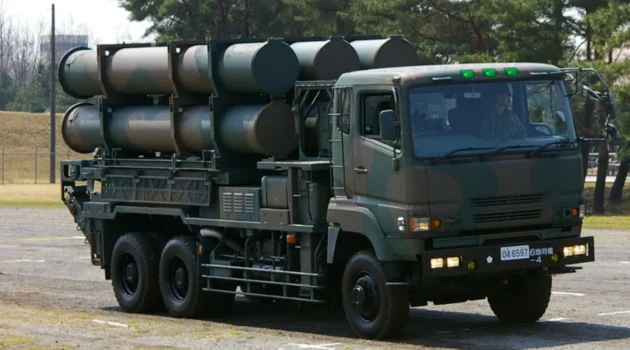
The Type 88 surface to ship missile system has long served as a core coastal defense weapon for Japan. Developed by Mitsubishi Heavy Industries, the truck mounted missile is designed to engage hostile naval vessels at extended ranges while supporting distributed coastal defense operations.
Balikatan 2026 marked the first time Japan fired the missile system outside Japanese territory. The move carries substantial geopolitical significance because Japan historically maintained strict limits on overseas military activities under its post World War II defense framework.
Over the last several years, however, Tokyo has gradually expanded defense cooperation with regional allies and partners. Japan has increased joint exercises, intelligence sharing, and interoperability initiatives with the United States, Australia, and the Philippines as concerns over regional maritime security continue to grow.
Defense analysts view the overseas missile firing as evidence that Japan is transitioning from a homeland focused defense posture toward a more expeditionary regional deterrence role.
Balikatan 2026 Highlights Regional Maritime Security
Balikatan 2026 involved thousands of personnel from allied and partner nations across multiple operational domains, including maritime security, amphibious warfare, air defense, and coastal strike operations.
The Philippines has increasingly become a central geographic node in Indo Pacific security planning due to its proximity to contested waters in the South China Sea and its strategic location near Taiwan’s southern approaches.
The inclusion of Japanese anti ship missile systems in the exercise demonstrated a growing emphasis on coastal denial strategies designed to complicate hostile naval movements in critical maritime corridors.
Military planners across the Indo Pacific have increasingly focused on mobile land based anti ship missile systems because they offer relatively survivable and flexible maritime strike capabilities compared to fixed installations.
The Type 88 missile system supports that concept through mobile launch vehicles capable of rapid deployment across dispersed islands and coastal terrain.
Japan And Philippines Expand Defense Cooperation
Defense ties between Japan and Philippines have accelerated significantly in recent years.
Tokyo has supported Manila through defense equipment transfers, maritime surveillance assistance, and expanded joint training activities. The two countries also signed a Reciprocal Access Agreement aimed at simplifying military cooperation and troop deployments during joint operations and exercises.
For the Philippines, deeper cooperation with Japan provides additional maritime security support as Manila continues to modernize its armed forces and strengthen deterrence capabilities in disputed waters.
For Japan, expanded defense engagement in Southeast Asia helps reinforce regional stability while supporting freedom of navigation and open sea lane security.
The Type 88 live fire event also demonstrated growing interoperability between allied forces operating across shared maritime theaters.
Type 88 Missile Remains Relevant Despite Newer Systems
Although Japan is fielding more advanced anti ship missiles such as the Type 12 upgraded variants, the Type 88 remains operationally relevant for coastal defense missions.
The missile uses active radar homing guidance and was specifically designed for anti ship warfare in Japan’s island defense environment. Mounted on mobile transporter erector launchers, the system can rapidly reposition to avoid detection and counterattack.
Its participation in Balikatan 2026 suggests Japan continues to view layered anti ship missile capabilities as essential for regional deterrence.
The deployment also highlighted how legacy missile systems can still contribute meaningfully to modern distributed maritime defense concepts when integrated into multinational operational frameworks.
Growing Focus On Indo Pacific Deterrence
The overseas launch comes amid broader regional military modernization efforts across the Indo Pacific.
China’s expanding naval activity, increased gray zone operations, and frequent military exercises around contested maritime areas have prompted regional governments to strengthen defense readiness and alliance coordination.
Japan’s latest missile deployment demonstrates how regional security partnerships are evolving from symbolic exercises toward more operationally integrated deterrence activities.
The use of live anti ship missile firing during a multinational exercise sends a visible message regarding allied readiness and collective maritime defense coordination in the region.
While Tokyo continues to describe its defense posture as defensive in nature, the expanding scope of overseas military activities indicates a clear shift toward proactive regional security engagement.
- Japan is preparing a new airborne electronic warfare aircraft derived from the Kawasaki P-1 maritime patrol platform.
- The aircraft will conduct signals intelligence, radar detection, and electronic jamming missions.
- The system is intended to replace aging EP-3 Orion electronic intelligence aircraft used by the Japan Maritime Self-Defense Force.
- Development funding includes roughly 41.4 billion yen requested in Japan’s FY2025 defense budget.
- The platform will support Japan’s growing focus on electromagnetic warfare and cross-domain military operations.
Japan Electronic Warfare Aircraft Program Moves Toward Testing
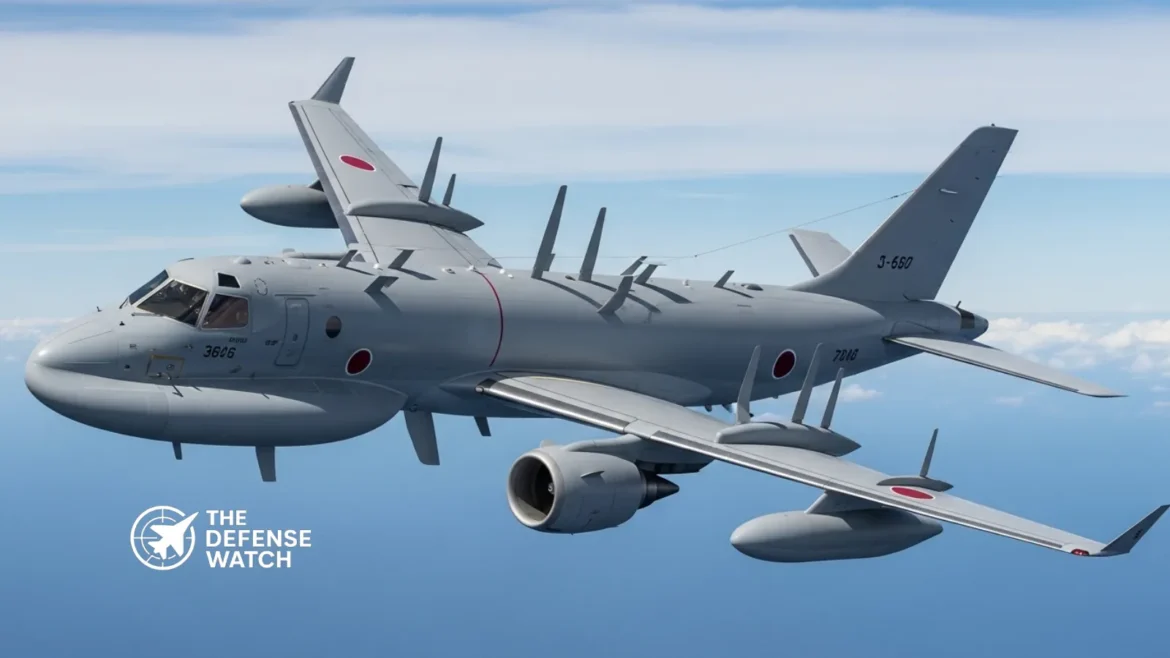
Japan’s new electronic warfare aircraft is moving toward testing as Tokyo accelerates efforts to strengthen its electromagnetic warfare capabilities. The aircraft, derived from the Kawasaki P-1 maritime patrol aircraft, is designed to conduct signals intelligence collection, radar detection, and electronic attack missions for the Japan Maritime Self-Defense Force (JMSDF).
The platform forms part of a broader Japanese defense modernization initiative aimed at improving the country’s ability to detect, disrupt, and exploit adversary communications and radar systems. Once operational, the aircraft will replace the JMSDF’s aging EP-3 Orion electronic intelligence aircraft, which have been in service since the early 1990s.
Japan’s Ministry of Defense has requested approximately 41.4 billion yen (about $288 million) in its fiscal year 2025 defense budget to continue development of the program.
The Big Picture
Electronic warfare has become a central domain in modern military operations. Control of the electromagnetic spectrum determines how effectively forces can detect threats, communicate, guide weapons, and disrupt enemy systems.
Japan’s defense strategy increasingly emphasizes this domain as regional security conditions grow more complex. Chinese and Russian military activity in the East China Sea and Western Pacific has increased significantly over the past decade, placing greater pressure on Japan’s surveillance and electronic intelligence capabilities.
Modern conflicts rely heavily on networked sensors, digital command systems, and advanced radar. Electronic warfare platforms can degrade these systems without firing a shot. They can jam communications, deceive radar networks, or collect intelligence on adversary capabilities.
For Tokyo, developing a modern Japan electronic warfare aircraft allows the Self-Defense Forces to operate more effectively in a highly contested electromagnetic environment.
What’s Happening
Japan’s Ministry of Defense is developing a specialized electronic warfare aircraft based on the domestically produced Kawasaki P-1 maritime patrol aircraft. The P-1 already serves as Japan’s primary anti-submarine and maritime surveillance aircraft.
The electronic warfare variant will incorporate a wide range of sensors and systems designed to monitor and manipulate the electromagnetic spectrum.
According to Japanese defense planning documents, the aircraft will support missions including:
- Signals intelligence (SIGINT)
- Electronic intelligence (ELINT)
- Communications intelligence (COMINT)
- Radar detection and classification
- Electronic jamming and deception
The aircraft is expected to carry multiple antennas, sensor arrays, and specialized radomes positioned around the fuselage. These features enable the platform to collect electronic emissions from radar and communication systems over long distances.
Japanese defense officials describe the platform as a multi-sensor electronic intelligence aircraft designed to support joint operations across multiple domains.
Prototype development began in fiscal year 2024, with production and testing expected to continue through the early 2030s.
Why It Matters
Electronic warfare capability is essential for modern military operations.
Advanced air defense systems rely on radar networks that track aircraft, guide missiles, and coordinate defenses. Electronic warfare platforms can interfere with those networks by jamming signals or feeding false information into radar systems.
The new Japan electronic warfare aircraft will give Tokyo a stronger ability to monitor foreign military activity and disrupt hostile sensors if necessary.
This capability is particularly important for maritime security. Japan sits along major sea lanes that connect the Pacific and Indian Oceans. Monitoring electromagnetic emissions from ships, aircraft, and military installations helps the Self-Defense Forces maintain situational awareness across vast areas.
Electronic intelligence aircraft also support targeting, early warning, and battle management during joint operations.
Strategic Implications
The development of a modern electronic warfare aircraft reflects Japan’s broader shift toward advanced defense technologies.
Tokyo’s latest national defense strategies emphasize:
- Cross-domain operations
- Integrated command and control networks
- Long range strike capabilities
- Advanced intelligence and surveillance systems
Electronic warfare sits at the center of all these capabilities.
If deployed effectively, the platform could support operations involving fighter aircraft, naval forces, and missile defense systems. It could also help protect friendly aircraft by degrading enemy radar and missile guidance systems.
For allied operations, the aircraft could contribute to intelligence sharing and joint situational awareness across the Indo Pacific.
Competitor View
China will likely view the new Japan electronic warfare aircraft as part of a broader regional trend toward advanced electromagnetic warfare capabilities.
The People’s Liberation Army has invested heavily in electronic warfare platforms, including specialized aircraft designed to jam radar systems and support suppression of enemy air defenses.
From Beijing’s perspective, Japan’s development of a modern airborne electronic warfare capability strengthens the technological edge of U.S. allied forces operating in the Western Pacific.
Russia may also monitor the program closely, particularly given its growing military presence in the Sea of Japan and surrounding areas.
However, Japan has framed the program as a defensive measure intended to improve surveillance, intelligence collection, and operational resilience.
Capability Gap
The program addresses a clear capability gap in Japan’s current electronic intelligence fleet.
The JMSDF currently operates a small number of EP-3 Orion aircraft that perform signals intelligence missions. These aircraft have served for decades and are becoming increasingly difficult to maintain.
Older platforms also struggle to keep pace with modern digital radar systems, encrypted communications networks, and advanced electronic warfare techniques.
By replacing these aircraft with a new system derived from the P-1, Japan aims to deploy a platform with:
- Greater sensor sensitivity
- Expanded data processing capacity
- Improved survivability
- Longer operational endurance
Despite these advantages, electronic warfare aircraft often operate close to contested airspace, which exposes them to potential interception or missile threats.
For that reason, these platforms typically operate with escort aircraft or maintain stand-off distances from hostile defenses.
What To Watch Next
Several milestones will shape the future of the program.
Key developments include:
- Prototype production and ground testing
- Initial flight testing of the electronic warfare configuration
- Integration of advanced signal processing systems
- Operational evaluation with the JMSDF
Full operational capability is expected later in the next decade once testing and system integration are completed.
Japan’s defense planners may also expand the program depending on operational requirements and budget priorities.
The Bottom Line
Japan’s new electronic warfare aircraft program marks a significant step toward strengthening electromagnetic dominance and intelligence collection capabilities in the Indo Pacific.
Japan Deploys Laser Weapons on Warships
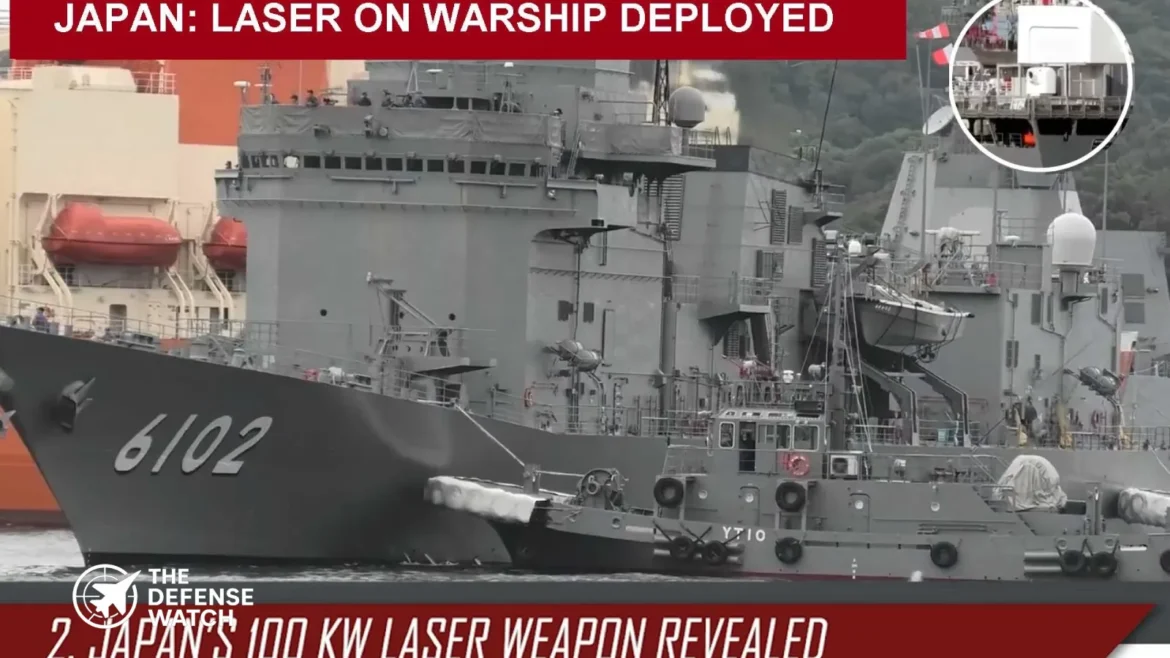
Japan has officially deployed laser weapons on its naval vessels, joining the United States and the United Kingdom in integrating advanced directed-energy systems into its fleet. This development marks a significant leap in maritime defense, emphasizing the strategic importance of laser weapons in modern naval operations.
The announcement comes as Japan continues to modernize its Self-Defense Forces amid regional security challenges. The deployment reportedly began in 2025, with the Japan Maritime Self-Defense Force (JMSDF) equipping select ships with high-energy laser systems designed to counter drones, small boats, and incoming threats with precision and minimal logistical footprint.
Background on Naval Laser Technology
Directed-energy weapons, such as shipborne lasers, have emerged as a transformative technology for naval defense. These systems deliver precise, speed-of-light engagements against aerial and surface threats, significantly reducing reliance on traditional missile or gun systems.
The United States Navy first operationalized laser systems aboard vessels like the USS Portland and USS Preble. The U.K. followed with trials on its Type 45 destroyers, deploying mid-power laser weapons for defensive purposes. Japan’s entry into this domain demonstrates the growing international adoption of directed-energy technologies.
Naval lasers operate using high-energy beams that can disable or destroy small craft, drones, and other aerial threats. The technology offers advantages in speed, accuracy, and cost per engagement compared with conventional weapons. Experts note that laser systems also allow ships to engage multiple targets in rapid succession without the logistical constraints of missile inventories.
Japanese Deployment Details
According to defense sources, Japan’s initial deployment involves mid-power laser systems mounted on key destroyers and frigates. The systems are reportedly capable of tracking multiple targets simultaneously and engaging threats at ranges sufficient to protect the vessel and its immediate operational area.
While official specifications remain classified, JMSDF statements indicate that the laser weapons have been successfully tested against unmanned aerial systems and small surface targets during trials conducted in Japanese territorial waters. The deployment is expected to expand gradually as the technology is integrated into additional vessels and fleet operations are adjusted to leverage the new capabilities.
Expert and Policy Perspective
Analysts highlight that Japan’s move aligns with broader regional security concerns, particularly the rise of drone swarms, fast attack craft, and missile threats in East Asia. By adopting directed-energy weapons, Japan strengthens its defensive posture while keeping pace with allied navies in terms of technological capability.
A naval defense analyst commented that “Japan’s integration of laser systems underscores the shift toward cost-effective, rapid-response solutions for ship protection. It also signals a commitment to interoperability with U.S. and U.K. forces, which increasingly rely on similar technologies.”
Implications and Future Prospects
The integration of laser weapons enhances the JMSDF’s operational flexibility, particularly in littoral zones and congested maritime environments. Experts anticipate that Japan will continue to invest in higher-power laser systems capable of countering larger threats, including missiles, as technology matures.
This deployment also contributes to the broader global trend of modernizing naval forces through directed-energy systems. Japan, by joining the U.S. and U.K., signals a shift in naval strategy that emphasizes technological superiority and precision defense.
Japanese Defense Minister Shinjiro Koizumi confirmed that plans are underway to deploy medium-range surface-to-air missiles (SAMs) on Yonaguni Island — Japan’s westernmost territory, located roughly 70 miles (about 110 kilometres) east of Taiwan.
Yonaguni already hosts radar and electronic-surveillance facilities. The deployment aims to enhance Japan’s defensive posture as regional tensions escalate.
Background: Why Yonaguni Matters
Yonaguni occupies a critical position along the so-called “First Island Chain” — a string of islands stretching from Japan down toward Taiwan and the Philippines. Historically, this chain has been viewed as a strategic buffer zone. Recent years have seen increasing military activity, including maritime, airborne, and electronic surveillance operations, in the East China Sea and Taiwan Strait region.
In addition, Tokyo has already expanded missile deployments on other southern islands — such as Ishigaki Island — as part of a broader effort to reinforce its southwestern defenses..
Yonaguni’s proximity to Taiwan means that any conflict involving the island would place Yonaguni near the frontlines. In that context, adding SAM systems significantly alters the strategic calculations for any operations near the Taiwan Strait.
The Plan: Details of the SAM Deployment
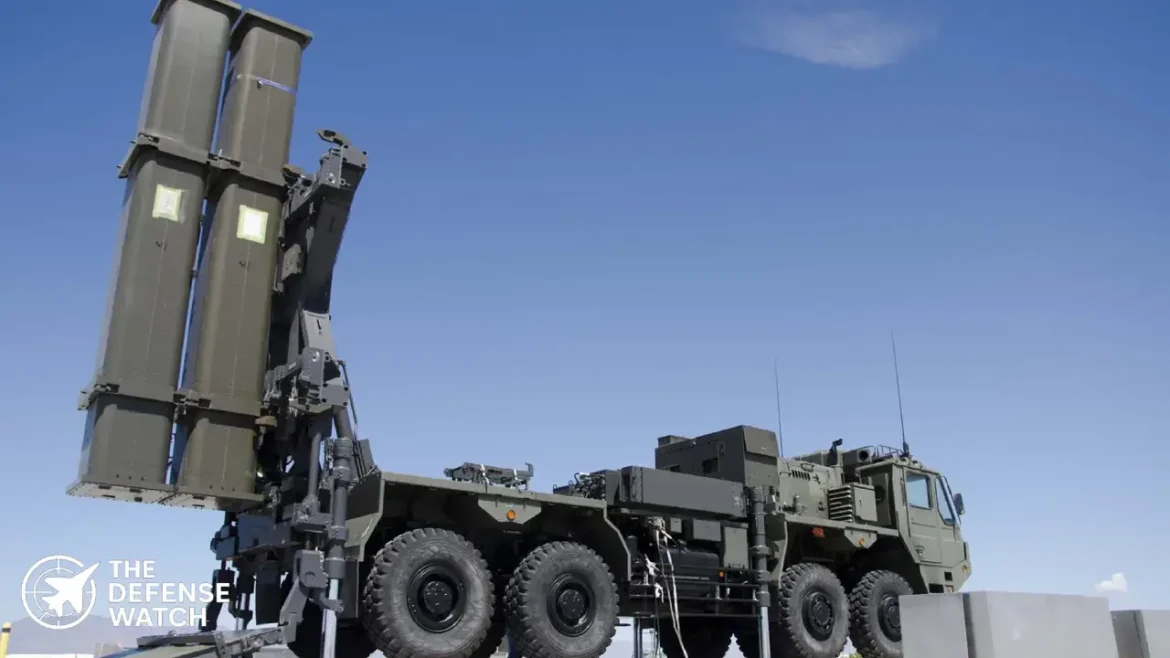
The missile system to be deployed on Yonaguni is the domestically developed Type 03 Chū-SAM — a medium-range surface-to-air missile system operated by the Japan Ground Self‑Defense Force (JGSDF).
Key characteristics of the Type 03 Chu-SAM:
- Mobility: launchers are truck-mounted, enabling quick repositioning.
- Radar: uses an active electronically scanned array (AESA) radar capable of tracking many aerial targets.
- Capability: designed to intercept aircraft, helicopters, and cruise missiles at medium altitude and ranges typically cited around 48 km (approximately 30 miles).
According to Okinawa-area media and defense-ministry statements, the deployment constitutes a full missile battery, though Tokyo has not yet published a firm timetable.
During his visit, Koizumi said the deployment intends to bolster deterrence and help reduce the risk of an armed attack on Japan. He also dismissed suggestions that the move would escalate regional tensions.
Strategic and Regional Implications
Enhancing Air Defense in the South
By adding Type 03 Chu-SAM to Yonaguni, Japan establishes a forward-looking air-defense node — extending surveillance and interception capabilities deep into the southwestern archipelago. This strengthens airspace control over critical sea lanes and islands in the East China Sea. Experts say the move complicates the planning of any adversary attempting to operate aircraft or drones near the First Island Chain.
Further, a missile battery on Yonaguni could protect other assets placed there in a crisis — including radars, maritime sensors, or refuelling/storage points used by Japanese or allied forces.
Impact on Regional Dynamics
The deployment inevitably adds another layer of strategic significance to what has traditionally been a quiet, remote island. Local populations in Yonaguni and surrounding Ishigaki have voiced concerns that their communities could become frontline areas if conflict breaks out.
From a broader geopolitical standpoint, Japan’s south-island missile build-up signals a deepening shift in Tokyo’s security posture — reflecting growing concern over possible conflict in the Taiwan Strait.
Reaction and Regional Response
Unsurprisingly, the missile deployment plan has drawn sharp criticism from Beijing. The People’s Republic of China Ministry of Foreign Affairs denounced the move as reckless and provocative, accusing Tokyo of exacerbating regional tensions and undermining stability in East Asia.
On the other hand, officials in Taipei have signalled that Tokyo’s efforts to bolster island defenses could contribute to broader security in the Taiwan Strait — and stressed that Japan’s deployment does not imply territorial ambitions toward Taiwan. Taipei Times+1
In Tokyo, government statements emphasize that the deployment aims solely at defensive deterrence, countering potential threats and safeguarding Japanese territory.
What Comes Next
As Japan proceeds with the Type 03 Chu-SAM deployment on Yonaguni, attention now turns to timing, force structure, and potential further enhancements. Observers will watch for:
- The number of batteries deployed and their exact configuration (radar coverage, launcher density, integration with other air-defense assets).
- Whether additional missile types — such as long-range or anti-ship systems — are brought to the southern islands in future phases.
- How China responds militarily or diplomatically, particularly if Japan continues to expand its southern perimeter.
- The extent of cooperation between Japan and allies (notably the United States Marine Corps) in coordinating defence posture across the First Island Chain.
With Yonaguni now evolving from a distant surveillance outpost into a fortified forward base, the strategic balance around the Taiwan Strait and East China Sea is shifting — in ways that may reshape regional deterrence calculations for years to come.