
- Home
- Defense Systems
- Aircraft Carriers
- Liaoning Aircraft Carrier
Liaoning Aircraft Carrier
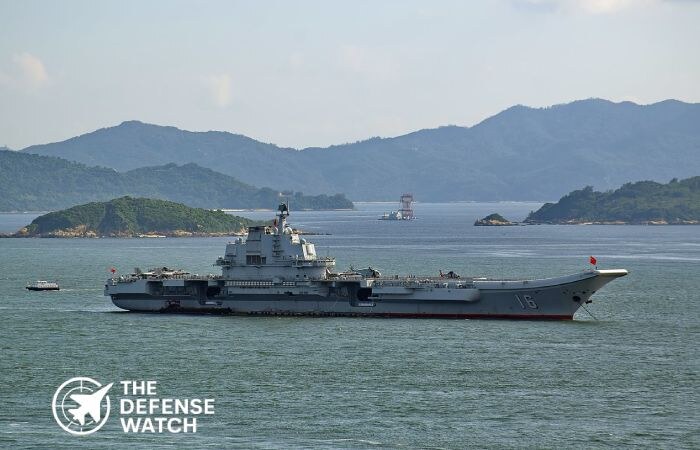
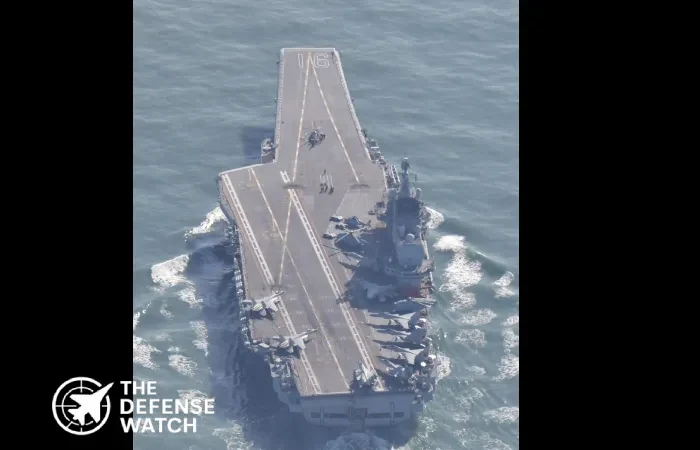
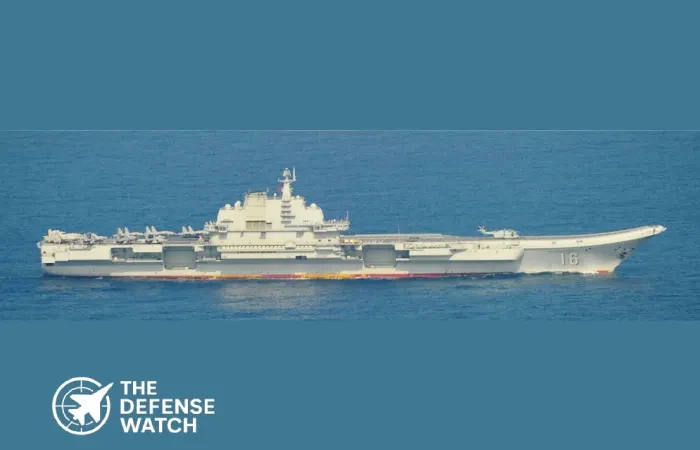
Defense Systems Full Specifications
1. Physical Characteristics
| Ship Type | Aircraft Carrier |
| Class | Kuznetsov-class (modernized, PLAN variant) |
| Length | ~304 m |
| Beam (Width) | ~38 m |
| Flight Deck Width | ~70 m |
| Draft | ~10.5 m |
| Displacement (Full Load) | 60,000–66,000 tons |
2. Propulsion & Performance
| Propulsion Type | Conventional (steam turbine) |
| Powerplant | Oil-fired boilers + turbines |
| Shafts | 4 shafts |
| Maximum Speed | ~30 knots |
| Range | 8,000–12,000 nm |
| Endurance | ~45 days |
3. Flight Operations
| Aircraft Launch System | STOBAR |
| Catapult Type | None (ski-jump) |
| Recovery System | Arresting gear |
| Total Aircraft Capacity | ~40 aircraft |
| Hangar Capacity | Full-length hangar |
| Aircraft Types Supported | J-15, Z-18, Z-9 helicopters |
4. Sensors & Electronics
| Primary Radar | 3D multifunction radar |
| Navigation Radar | Standard naval navigation suite |
| Fire Control Radar | Supports CIWS and SAM systems |
| Electronic Warfare Suite | ECM, jammers, ESM |
| Communication Systems | PLAN SATCOM and data links |
5. Weapons & Defense Systems
| CIWS | Type 1130 |
| Short-Range SAMs | HQ-10 |
| Missile Launchers | Limited defensive |
| Decoy Systems | Chaff, flares, electronic decoys |
6. Command & Control
| Combat Management System | PLAN integrated CMS |
| Combat Information Center (CIC) | Central operations hub |
| Air Operations Center | Manages J-15 & helicopter ops |
| Data Links | Tactical and satellite links |
7. Crew & Capacity
| Ship Crew | ~2,000 |
| Air Wing Personnel | ~1,000 |
| Total Complement | ~3,000+ |
8. Construction & Cost
| Shipbuilder/Manufacturer | Dalian Shipbuilding Industry Company |
| Construction Started | 1985 (Soviet origin), refit early 2000s |
| Commissioned | 2012 |
| Estimated Cost | ~$3–4B |
PROS
- Provides China’s first full-scale carrier aviation training platform
- STOBAR system offers simpler and reliable operations
- Supports J-15 fighters and multi-role helicopter fleet
- Enhanced situational awareness via 3D surveillance radar
- Strengthens PLAN power projection in East and South China Seas
CONS
- STOBAR limits aircraft payload and fuel compared to CATOBAR carriers
- Conventional propulsion reduces endurance versus nuclear carriers
- Limited defensive weapons compared to U.S. counterparts
- Smaller air wing capacity than modern Western carriers
- Primarily a training and transitional platform, not frontline-optimized
Liaoning CV-16: China’s First Modern Aircraft Carrier
The Liaoning (CV-16) represents China’s first operational aircraft carrier and the foundation of the People’s Liberation Army Navy’s (PLAN) emerging carrier strike capability. Commissioned in 2012, the vessel marked a decisive shift in China’s maritime ambitions, transitioning the navy from coastal defense to blue-water operations. Initially built as the Soviet Varyag, the unfinished hull was acquired from Ukraine in 1998 and later refitted by Dalian Shipbuilding Industry Company, transforming it into a modern training and operational platform.
Designed primarily to develop carrier aviation proficiency, the Liaoning uses a STOBAR (Short Take-Off But Arrested Recovery) configuration, employing a ski-jump ramp instead of catapults. This limits aircraft launch weight but streamlines operations for the carrier’s primary fighter, the Shenyang J-15. Complementing these fighters are helicopters for airborne early warning, anti-submarine warfare, and logistics support.
With a displacement of roughly 60,000–66,000 tons, Liaoning is powered by conventional steam turbines, enabling speeds up to 30 knots and operating endurance suited for extended regional patrols. The vessel is equipped with a modern command-and-control suite, 3D surveillance radars, and defensive systems such as the Type 1130 CIWS and HQ-10 short-range SAMs to counter close-in threats.
Operationally, Liaoning has participated in multiple Western Pacific deployments and high-profile exercises, serving as the PLAN’s primary carrier training platform. It also acts as a precursor to China’s more advanced carriers, including the Shandong and the CATOBAR-capable Fujian, offering insight into the evolving doctrine and capabilities of China’s naval aviation forces.
For U.S. defense observers, the Liaoning remains a key benchmark for assessing China’s carrier development trajectory, naval modernization pace, and strategic intent in the Indo-Pacific.
Disclaimer Note
The information provided on TheDefenseWatch.com is for general informational purposes only. While we strive to ensure the accuracy, completeness, and timeliness of our content regarding defense and aerospace products, technologies, and specifications, we cannot guarantee that all information is 100% accurate or up-to-date due to the evolving nature of military technology and classified data.TheDefenseWatch.com does not warrant the reliability, suitability, or availability of the information for any specific purpose. Users are advised to consult official sources, such as manufacturers, government publications, or defense agencies, for precise and verified data before making decisions based on our content.We are not affiliated with any defense manufacturers, governments, or military organizations mentioned. Opinions, reviews, and ratings reflect expert analysis but are subjective and should not be considered endorsements. TheDefenseWatch.com is not responsible for any errors, omissions, or consequences arising from the use of this website’s content.External links are provided for convenience and do not imply endorsement. TheDefenseWatch.com reserves the right to update or modify content without prior notice. By using this website, you agree to our Privacy & Cookies Policy.
More Defense Systems from Dalian Shipbuilding Industry Company (DSIC)
New Arrivals

Popular Comparisons
-
 J-10C vs JF-17 Thunder: Which Fighter Is More Capable?
View Comparison →
J-10C vs JF-17 Thunder: Which Fighter Is More Capable?
View Comparison → -
Tejas vs Gripen: Key Differences and Capabilities
View Comparison →
-
Tejas vs MiG-21 Bison: How India Replaced Its Iconic Supersonic Fighter
View Comparison →
-
F-35 vs F-16: Stealth, Sensors and Combat Roles
View Comparison →
-
Tejas Fighter Jet vs F-16 Fighting Falcon: Capability Compared
View Comparison →
-
Rafale Fighter Jet vs F-16 Fighting Falcon : Which Fighter Has the Edge?
View Comparison →
-
Su-57 Fighter Jet vs J-20 Fighter Jet: Stealth and Air Combat Compared
View Comparison →
-
Mirage 2000 vs Tejas Mk1A: Legacy Combat Power vs Indigenous Modernization
View Comparison →
-
Rafale Fighter Jet vs F-22 Raptor: Which Air Dominance Fighter Has the Edge?
View Comparison →
-
Tejas Fighter Jet vs. Rafale Fighter Jet: India’s Indigenous Fighter Meets France’s Proven Multirole Combat Aircraft
View Comparison →


- DIA 2026 Space Report Warns China May Field Orbital Directed-Energy Weapons by Late 2020s

- Boeing Advances Second MQ-25 Stingray Toward Testing for U.S. Navy
- Saab Unveils Sea Giraffe AMB D Radar With 250-Kilometer Air Surveillance Range
- Most Advanced Fighter Jet in the World in 2026: F-22 vs. F-35 vs. J-20
- Lockheed Martin Wins $88.6 Million Navy Contract for Radiant Mercury Systems
- Pentagon Uses Department of War Name to Reinforce Message to Adversaries
- Israel’s Military Chief Reportedly Opposed Pre-Election Strike on Iran
- Canada Receives First Two F-35 Fighters as Review of 72 Aircraft Continues
- Lockheed Martin Completes $3.45 Billion Ultra Maritime Acquisition
- Lockheed Martin Advances Ramjet-Powered PrSM Increment 4 Missile




Fighter Jets
-
 F-100 Super Sabre
-
North American F-86 Sabre
-
Northrop YF-23 Fighter
-
Rafale F5 Fighter
-
SU-57 Felon Stealth Fighter
-
Boeing F/A-XX Fighter
-
JF-17 Thunder Fighter Jet
-
F-47 Fighter Jet
-
MIG-31 Fighter Jet
-
J-10CE Fighter Jet
-
Chengdu J-10 Fighter Jet
-
Chengdu J-10C Fighter Jet
-
Gripen E Fighter Jet
-
Tejas Mk1A Fighter Jet
-
Tejas Mk‑2 Fighter Jet
-
F-16V Viper Block 70 Fighter Jet
-
F-15EX Eagle II Fighter
-
F-15E Strike Eagle Fighter
-
F/A-18E/F Super Hornet Fighter Jet
-
Saab Gripen F Fighter Jet
-
JAS 39E/F Gripen Fighter Jet
-
JAS 39 Gripen Fighter Jet
-
F-35A Lightning II Fighter Jet
-
F/A-18F Super Hornet







Recent Compares
-
J-10C vs JF-17 Thunder: Which Fighter Is More Capable?
View Comparison →
-
Tejas vs Gripen: Key Differences and Capabilities
View Comparison →
-
Tejas vs MiG-21 Bison: How India Replaced Its Iconic Supersonic Fighter
View Comparison →
-
F-35 vs F-16: Stealth, Sensors and Combat Roles
View Comparison →
-
Tejas Fighter Jet vs F-16 Fighting Falcon: Capability Compared
View Comparison →
Latest Defense Systems
10 Compares Defense Systems
-
J-10C vs JF-17 Thunder: Which Fighter Is More Capable?
View Comparison →
-
Tejas vs Gripen: Key Differences and Capabilities
View Comparison →
-
Tejas vs MiG-21 Bison: How India Replaced Its Iconic Supersonic Fighter
View Comparison →
-
F-35 vs F-16: Stealth, Sensors and Combat Roles
View Comparison →
-
Tejas Fighter Jet vs F-16 Fighting Falcon: Capability Compared
View Comparison →
-
Rafale Fighter Jet vs F-16 Fighting Falcon : Which Fighter Has the Edge?
View Comparison →
-
Su-57 Fighter Jet vs J-20 Fighter Jet: Stealth and Air Combat Compared
View Comparison →
-
Mirage 2000 vs Tejas Mk1A: Legacy Combat Power vs Indigenous Modernization
View Comparison →
-
Rafale Fighter Jet vs F-22 Raptor: Which Air Dominance Fighter Has the Edge?
View Comparison →
-
Tejas Fighter Jet vs. Rafale Fighter Jet: India’s Indigenous Fighter Meets France’s Proven Multirole Combat Aircraft
View Comparison →
- DIA 2026 Space Report Warns China May Field Orbital Directed-Energy Weapons by Late 2020s
- Boeing Advances Second MQ-25 Stingray Toward Testing for U.S. Navy
- Saab Unveils Sea Giraffe AMB D Radar With 250-Kilometer Air Surveillance Range
- Most Advanced Fighter Jet in the World in 2026: F-22 vs. F-35 vs. J-20
- Lockheed Martin Wins $88.6 Million Navy Contract for Radiant Mercury Systems