











@2026 – All Right Reserved. TheDefenseWatch.com
- Home
- Defense Systems
- Compare
- GCAP vs FCAS, Europe Sixth Generation Fighter Race
GCAP vs FCAS, Europe Sixth Generation Fighter Race
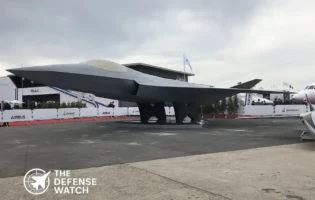
Europe’s GCAP vs FCAS competition is shaping the future of air combat, with major implications for NATO and U.S. defense planning. As Washington pushes forward with its own Next Generation Air Dominance (NGAD) program, two rival European efforts are racing to define what a sixth-generation fighter should look like.
The Global Combat Air Programme (GCAP), led by the UK, Japan, and Italy, and the Future Combat Air System (FCAS), driven by France, Germany, and Spain, represent different visions of airpower. Both aim to replace current frontline aircraft such as the Eurofighter Typhoon and Rafale by the 2035–2040 timeframe.
For U.S. defense planners, this rivalry matters. It will shape interoperability with allies, influence export markets, and determine whether Europe emerges as a unified aerospace power or remains divided.
GCAP vs FCAS Specs Comparison
| Feature | GCAP | FCAS |
|---|---|---|
| Lead Nations | UK, Japan, Italy | France, Germany, Spain |
| Prime Contractors | BAE Systems, Mitsubishi Heavy Industries, Leonardo | Dassault Aviation, Airbus, Indra |
| Aircraft Type | Sixth-generation stealth fighter | Sixth-generation stealth fighter |
| Expected Entry into Service | ~2035 | ~2040 |
| Max Speed | Likely supersonic (Mach 2+) | Likely supersonic (Mach 2+) |
| Range | Extended range with loyal wingmen | Long-range with remote carriers |
| Crew | Optionally manned | Optionally manned |
| Payload | Internal + external, advanced weapons | Internal + external, modular weapons |
| Key Concept | Networked combat ecosystem | System-of-systems architecture |
| Estimated Program Cost | $50–80+ billion | $100+ billion |
| Export Strategy | Open, global partners | More restricted, EU-focused |
Note: Final specifications remain classified or under development.
Design & Technology
GCAP Design Approach
GCAP focuses on a flexible, digitally integrated platform. The aircraft is expected to feature advanced stealth shaping, adaptive engines, and AI-driven systems. One key element is its open architecture, allowing rapid upgrades and integration of new technologies.
The UK has emphasized software dominance. GCAP is being built with digital engineering at its core, which could shorten development cycles and reduce long-term costs.
Japan brings advanced electronics and sensor technology, while Italy contributes avionics and integration expertise. This multinational mix gives GCAP a strong industrial base across both Europe and Asia.
FCAS Design Approach
FCAS takes a different path. It is not just a fighter, but a “system of systems.” At its center is the Next Generation Fighter (NGF), supported by remote carriers (drones) and a combat cloud network.
France, led by Dassault, is pushing for strong air dominance capability, with a focus on nuclear deterrence compatibility. This adds complexity, since the aircraft must meet strict French strategic requirements.
Germany and Spain are focused on networking and collaborative combat. The program aims to integrate manned and unmanned assets more tightly than traditional fighters.
Firepower & Performance
GCAP Weapons and Combat Systems
GCAP is expected to carry a mix of next-generation air-to-air missiles, hypersonic weapons, and electronic warfare systems. Internal weapons bays will maintain stealth, while external hardpoints may be used in lower-threat environments.
A major focus is sensor fusion. Pilots will rely on AI to process vast amounts of battlefield data in real time. This could give GCAP an edge in beyond-visual-range combat.
The aircraft will likely control loyal wingman drones, extending its reach and survivability.
FCAS Firepower
FCAS places even greater emphasis on distributed firepower. Instead of relying solely on the fighter, it uses remote carriers to deliver weapons, conduct reconnaissance, and perform electronic attacks.
The NGF itself will still be heavily armed, but its real strength lies in coordinated swarm tactics.
France’s requirement for nuclear capability means FCAS may retain a dual-role strike function, unlike GCAP, which is more focused on air dominance and multirole flexibility.
Operational Range & Mobility
GCAP Range
GCAP is designed for long-range operations, especially given Japan’s involvement and the Indo-Pacific focus. The aircraft will likely feature advanced propulsion systems for extended endurance.
It may also support aerial refueling and distributed basing, allowing operations from dispersed locations.
FCAS Range
FCAS also targets long-range missions but relies more on networked assets. Remote carriers can extend the operational footprint without requiring the fighter itself to travel as far.
European geography and NATO doctrine influence this design. FCAS is optimized for operations over the European theater and nearby regions.
Combat Effectiveness
GCAP in Combat
GCAP’s strength lies in flexibility and interoperability. With partners across Europe and Asia, it is designed to work in coalition environments, including alongside U.S. systems like the F-35.
Its open architecture could allow rapid adaptation to emerging threats, a key advantage in modern warfare.
FCAS in Combat
FCAS is built around coordinated operations. Its combat cloud and remote carriers could create a highly resilient and adaptive force.
However, the program faces challenges. Political disagreements between partner nations have slowed progress. This could delay deployment and affect readiness.
Cost & Export Value
GCAP Cost and Market Appeal
GCAP aims to be export-friendly. The inclusion of Japan signals a broader global market strategy, potentially attracting partners in Asia and the Middle East.
Lower political restrictions compared to FCAS could make GCAP more appealing to buyers.
FCAS Cost and Export Limits
FCAS is likely to be more expensive, partly due to its ambitious system-of-systems design.
Export policies may also be stricter, especially given France and Germany’s differing views on arms sales. This could limit its global reach.
GCAP vs FCAS Analysis
The GCAP vs FCAS debate comes down to two competing philosophies.
GCAP emphasizes:
- Flexibility
- Open architecture
- Global partnerships
FCAS focuses on:
- Integrated systems
- European strategic autonomy
- Advanced networking
From a U.S. perspective, GCAP may align more closely with American approaches, especially in terms of interoperability and export flexibility. FCAS, on the other hand, reflects Europe’s desire to reduce reliance on U.S. defense systems.
Both programs face risks. GCAP must manage complex multinational coordination across continents. FCAS must overcome political friction within Europe.
Conclusion: GCAP vs FCAS Who Wins?
There is no clear winner in the GCAP vs FCAS who wins debate, at least not yet.
- GCAP may gain the edge in speed of development and export potential.
- FCAS could lead in integrated warfare concepts and system-level innovation.
In a high-intensity conflict, FCAS’s networked approach might offer advantages. In coalition operations, GCAP’s flexibility could prove more effective.
For the U.S., both programs are important. They will shape allied capabilities and determine how future air wars are fought alongside American forces.
FAQ: GCAP vs FCAS
What is the difference between GCAP and FCAS?
GCAP focuses on flexibility and global partnerships, while FCAS emphasizes a system-of-systems approach with strong European integration.
When will GCAP and FCAS enter service?
GCAP aims for around 2035, while FCAS is expected closer to 2040.
Which is more advanced in the GCAP vs FCAS comparison?
Both are advanced in different ways. GCAP leads in open architecture, while FCAS excels in networked warfare concepts.
Will the U.S. work with GCAP or FCAS?
The U.S. is more likely to align closely with GCAP due to interoperability and shared partners, but it will cooperate with both.
GCAP vs FCAS who wins in combat?
It depends on the scenario. FCAS may dominate in networked battles, while GCAP could perform better in flexible, coalition operations.


| |
| Price | |
| Our Rating | |
| Manufacturer | BAE Systems Dassault Aviation |
| Category | Future / Concept Weapons Future / Concept Weapons |
1) Basic / Identification
| Name | Global Combat Air Program (GCAP) Future Combat Air System Fighter |
| Designation | Tempest / F-X successor NGF |
| Manufacturer / Developer | BAE Systems, Mitsubishi Heavy Industries, Leonardo Dassault Aviation, Airbus Defence and Space |
| Country / Lead partner | UK, Japan, Italy France, Germany, Spain |
| Type / Role | Sixth-generation multirole stealth fighter Sixth generation multirole fighter |
| Status | Development / Prototype phase Development |
| Program Start | 2022 2017 |
| Estimated unit cost | est. $200–250 million USD est. 100M USD plus |
| Public Source / Reference | gov.uk, mod.uk, jmod.go.jp Official FCAS program releases |
2) Performance & Capabilities
| Operational Concept | Air superiority, strike, electronic warfare, ISR Networked air dominance with unmanned support |
| Effective Range / Engagement Envelope | 1,500–2,000 km Long range, extended combat radius |
| Speed / Response Time | Mach 2+ supercruise Mach 2 class, est. |
| Endurance / Sustained Operation | Approx. 3 hours Long duration missions |
| Precision / Accuracy | High via multi-sensor fusion and AI target ID High, sensor fused targeting |
| Mobility / Basing | Land-based, carrier-capable variant possible Air based |
3) Propulsion / Power / Energy
| Power Source | Advanced adaptive-cycle turbine Turbofan engines |
| Power Output | Classified (est. 180 kN combined thrust) Classified |
| Propulsion Type | Twin-engine jet propulsion Adaptive cycle turbofan |
| Fuel / Energy Storage | Aviation kerosene with high-efficiency cycle Internal with efficiency focus |
4) Payload / Kill Mechanism
| Primary Effect | Kinetic, EW, precision-guided strike Kinetic and electronic |
| Payload Mass / Warhead | ~10,000 kg total internal/external stores Classified |
| Guidance / Targeting | Multi-spectral AI-enhanced system AI assisted, multi mode |
| Multi-mode Capability | Air-to-air, air-to-ground, EW, drone control Lethal and non lethal |
5) Sensors, Avionics & Autonomy
| Sensors | AESA radar, EO/IR, quantum navigation, passive sensors AESA radar, EO IR, RF |
| Autonomy Level | Supervised autonomy with AI co-pilot Supervised autonomy |
| AI Features | Predictive threat analysis, swarming coordination Target recognition, mission support |
| Communications & Datalinks | SATCOM, Link-16, encrypted mesh network Secure mesh and SATCOM |
6) Survivability & Countermeasures
| Signature Reduction | Advanced composites, radar-absorbent materials Advanced stealth shaping |
| Defensive Systems | EW suite, towed decoys, DRFM jammers Electronic warfare suites |
| Resilience | Cyber hardening and redundant avionics systems Cyber hardened systems |
7) Integration & Interoperability
| Integration | NATO and allied data networks Networked C2 cloud |
| Suitable Platforms | Land bases, future carriers Crewed aircraft and drones |
| Interoperability Standards | Link-16, BLOS, future combat cloud NATO aligned links |
| Upgrade Path | Software-defined mission system, modular avionics Software driven modular design |
8) Legal / Ethical / Policy Notes
| Export Control | Restricted under ITAR-like national frameworks National and EU restrictions |
| Legal/Ethical Flags | AI use supervised by human operator AI assisted lethal systems |
| Policy Implications | Strategic deterrence, Indo-Pacific balance European strategic autonomy |
9) Operational / Program Notes
| Notable Tests / Milestones | Concept reveal (2022), prototype under development Concept and demonstrator phases |
| Expected IOC (if given) | 2035 (estimated) Early 2040s |
| Partners / Contractors | BAE Systems, Leonardo, MHI, Rolls-Royce, Avio Aero Dassault, Airbus, Indra |
| Remarks | Intended to compete with NGAD and FCAS Specs subject to change |

|
Disclaimer Note
The information provided on TheDefenseWatch.com is for general informational purposes only. While we strive to ensure the accuracy, completeness, and timeliness of our content regarding defense and aerospace products, technologies, and specifications, we cannot guarantee that all information is 100% accurate or up-to-date due to the evolving nature of military technology and classified data.TheDefenseWatch.com does not warrant the reliability, suitability, or availability of the information for any specific purpose. Users are advised to consult official sources, such as manufacturers, government publications, or defense agencies, for precise and verified data before making decisions based on our content.We are not affiliated with any defense manufacturers, governments, or military organizations mentioned. Opinions, reviews, and ratings reflect expert analysis but are subjective and should not be considered endorsements. TheDefenseWatch.com is not responsible for any errors, omissions, or consequences arising from the use of this website’s content.External links are provided for convenience and do not imply endorsement. TheDefenseWatch.com reserves the right to update or modify content without prior notice. By using this website, you agree to our Privacy & Cookies Policy.
New Arrivals
Popular Comparisons
-
 Tejas vs Gripen: Key Differences and Capabilities
View Comparison →
Tejas vs Gripen: Key Differences and Capabilities
View Comparison → -
Tejas vs MiG-21 Bison: How India Replaced Its Iconic Supersonic Fighter
View Comparison →
-
F-35 vs F-16: Stealth, Sensors and Combat Roles
View Comparison →
-
Tejas Fighter Jet vs F-16 Fighting Falcon: Capability Compared
View Comparison →
-
Rafale Fighter Jet vs F-16 Fighting Falcon : Which Fighter Has the Edge?
View Comparison →
-
Su-57 Fighter Jet vs J-20 Fighter Jet: Stealth and Air Combat Compared
View Comparison →
-
Mirage 2000 vs Tejas Mk1A: Legacy Combat Power vs Indigenous Modernization
View Comparison →
-
Rafale Fighter Jet vs F-22 Raptor: Which Air Dominance Fighter Has the Edge?
View Comparison →
-
Tejas Fighter Jet vs. Rafale Fighter Jet: India’s Indigenous Fighter Meets France’s Proven Multirole Combat Aircraft
View Comparison →
-
F-22 Raptor vs. F-35 Joint Strike Fighter: Which Fifth Generation Fighter Has the Edge?
View Comparison →
- NASA’s SpaceX Crew-12 Nears Return After Extended ISS Science Mission

- F-15E Shot Down Over Iran: How the Dude 44 Crew Was Brought Home
- Operation Mount Hope III: How Two Night Stalker Chinooks Carried a Libyan Hind Out of Chad
- North Korea Fires Ballistic Missile From Wonsan Toward East Sea
- BAE Systems Wins $70.5 Million Trident II D5 Support Contract
- Saudi Arabia Weighs Yemen Offensive to Retake Bab el-Mandeb
- L3Harris Expands WESCAM Manufacturing Focus for Mission-Ready EO/IR Systems
- Northrop Grumman Unveils FORTITUDE RF Chip for Faster Defense Systems
- Northrop Grumman YFQ-48A Talon Blue Completes Autonomous Flight Test
- U.S. Warns Defense Industry Lacks Capacity for Rapid Weapons Surge