






@2026 – All Right Reserved. TheDefenseWatch.com
- Home
- Defense Systems
- Compare
- Su-57 vs F-35 Cost Analysis: Price, Maintenance, and Export Availability
Su-57 vs F-35 Cost Analysis: Price, Maintenance, and Export Availability
The debate around Su-57 vs F-35 cost goes beyond sticker price. It reflects two very different defense ecosystems, one led by the United States and its allies, the other shaped by Russia’s constrained but evolving military industry.
For U.S. readers, the comparison matters. The F-35 Lightning II is the backbone of allied airpower across NATO and Indo-Pacific partners. Meanwhile, Russia’s Sukhoi Su-57 represents Moscow’s attempt to field a peer competitor in the fifth-generation space.
Recent conflicts and export trends show that cost, not just capability, is shaping global airpower. Many countries now weigh affordability, maintenance burden, and political alignment as much as stealth and sensors.
This article breaks down the su 57 vs f 35 price, lifecycle cost, and export value in a clear, fact-driven way.
Su-57 vs F-35 Specs Comparison
| Feature | Su-57 (Russia) | F-35 Lightning II (U.S.) |
|---|---|---|
| Role | Multirole stealth fighter | Multirole stealth fighter |
| Crew | 1 | 1 |
| Max Speed | Mach 2.0 | Mach 1.6 |
| Combat Radius | ~1,500 km | ~1,100 km |
| Stealth Design | Partial (frontal focus) | Full-spectrum stealth |
| Engines | 2 (AL-41 / Izdeliye 30 planned) | 1 (F135 engine) |
| Weapons Load | Internal + external | Internal + external |
| Service Entry | Limited (2020s) | 2015 |
| Unit Cost (est.) | $35–50 million | $80–100 million |
| Cost per Flight Hour | ~$25,000 (est.) | ~$33,000 (target trending lower) |
Design & Technology
Sukhoi Su-57 vs F-35 Lightning II
The sukhoi su 57 vs f 35 lightning ii comparison starts with design philosophy.
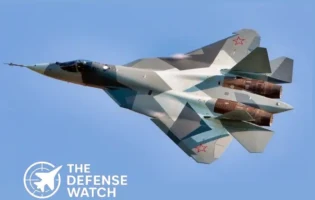
The Su-57 focuses on speed, maneuverability, and multi-role flexibility. It uses stealth shaping but lacks the same level of radar cross-section reduction seen in U.S. designs. Its internal weapons bays and composite materials reduce visibility, but exposed engine blades and airframe geometry limit full stealth performance.
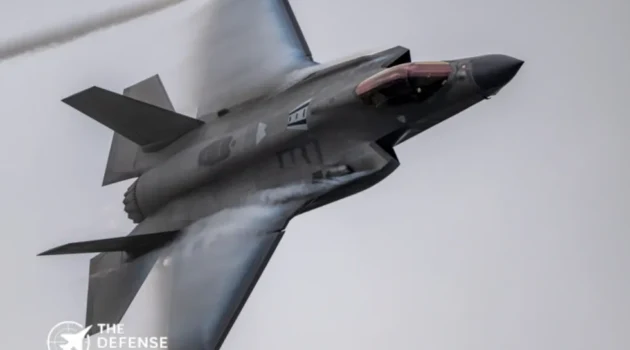
The F-35, by contrast, was built around stealth from the ground up. Every surface, angle, and material is designed to minimize detection across radar bands. The aircraft also integrates sensor fusion, combining radar, infrared, and electronic warfare data into a single pilot interface.
From a U.S. defense perspective, the F-35’s advantage is not just stealth. It is the ability to operate as part of a networked battlespace.
Firepower & Performance
Weapons and Combat Systems
The Su-57 carries a mix of Russian air-to-air and air-to-ground weapons, including advanced missiles like the R-77M and hypersonic-capable systems in development. It also features supermaneuverability using thrust-vectoring engines.
The F-35 Lightning II emphasizes beyond-visual-range combat. It carries AIM-120 AMRAAM missiles internally and can switch to a higher payload in non-stealth mode. Its targeting and sensor systems allow it to engage threats before being detected.
In raw maneuverability, the Su-57 may have an edge. In detection, targeting, and first-shot capability, the F-35 leads.
Operational Range & Mobility
The russian su-57 vs f-35 comparison shows a clear difference in range and deployment philosophy.
The Su-57 offers a longer combat radius, which suits Russia’s need to cover large geographic areas with fewer bases. Its twin-engine design also improves survivability in long-range missions.
The F-35 trades some range for stealth and sensor capability. However, the U.S. offsets this with aerial refueling, forward basing, and carrier variants (F-35B and F-35C).
Mobility for the F-35 is not just about distance. It is about integration into global U.S. logistics and allied networks.
Combat Effectiveness
Real-World Use and Doctrine
The F-35 Lightning II vs Su-57 debate is shaped heavily by operational history.
The F-35 has seen extensive deployment with U.S. forces and allies. It has been used in real-world operations for surveillance, strike missions, and deterrence patrols. Its strength lies in data sharing, electronic warfare, and joint operations.
The Su-57 has had limited operational exposure, including reported deployments in Syria and Ukraine. However, its numbers remain low, and its combat role is still evolving.
From a U.S. military standpoint, effectiveness is not just about the aircraft. It is about how it fits into doctrine. The F-35 is central to U.S. joint force strategy, while the Su-57 operates in a more limited ecosystem.
Cost & Export Value
Su-57 vs F-35 Price Breakdown
The su 57 vs f 35 price comparison shows a clear gap.
- Su-57 unit cost: Estimated between $35 million and $50 million
- F-35 unit cost: Around $80 million to $100 million depending on variant
At first glance, the Su-57 looks far cheaper. But procurement cost is only part of the story.
Maintenance and Lifecycle Cost
The su 57 vs f 35 cost debate becomes more complex when maintenance is included.
The F-35 has faced criticism for high operating costs. However, the U.S. Department of Defense has pushed to reduce cost per flight hour, with steady improvements in sustainment efficiency and global supply chains.
The Su-57, while cheaper to buy, lacks a mature global maintenance network. Spare parts, engine upgrades, and avionics support remain limited. This can increase long-term costs and reduce readiness rates.
In practical terms, the F-35 is expensive but predictable. The Su-57 is cheaper upfront but carries higher uncertainty.
Export Availability and Geopolitical Impact
Export value is where the gap widens.
The F-35 Lightning II is widely exported to NATO allies and partners, including the UK, Japan, Australia, and several European nations. Its sales strengthen U.S. alliances and standardize airpower across regions.
The Su-57 has struggled in export markets. India withdrew from the joint FGFA program, and few confirmed buyers exist. Sanctions, production delays, and political risk limit its appeal.
For many countries, buying the F-35 is not just a military decision. It is a strategic alignment with the United States.
Analysis: Strengths and Weaknesses
Su-57 Strengths
- Lower acquisition cost
- High speed and maneuverability
- Longer combat range
Su-57 Weaknesses
- Limited stealth effectiveness
- Small production numbers
- Weak export ecosystem
F-35 Strengths
- Advanced stealth and sensor fusion
- Strong global support network
- Proven operational use
F-35 Weaknesses
- Higher cost per unit
- Maintenance complexity
- Dependence on U.S. supply chain
From a U.S. defense perspective, the F-35 is not just a fighter. It is part of a larger system of systems. That gives it a strategic advantage that goes beyond performance metrics.
Conclusion: Who Has the Edge?
The su 57 vs f 35 cost comparison shows two very different approaches.
If the focus is low upfront price, the Su-57 clearly wins. It offers a cheaper entry into fifth-generation aviation.
If the focus is long-term capability, reliability, and alliance integration, the F-35 has the edge. Its higher cost is offset by a mature ecosystem and proven performance.
In a high-end conflict, especially involving NATO forces, the F-35’s networked warfare capabilities likely provide a decisive advantage.
For countries outside Western alliances, the Su-57 may still appeal. But its limited availability and uncertain support structure remain major barriers.
FAQ
Su-57 vs F-35 cost, which is cheaper?
The Su-57 is cheaper upfront, with a lower unit price. The F-35 costs more but offers a stronger support system and long-term reliability.
Su-57 vs F-35 who wins in combat?
It depends on the scenario. The F-35 has an advantage in stealth and detection, while the Su-57 may perform better in close-range maneuvering.
Why is the F-35 more expensive than the Su-57?
The F-35 includes advanced stealth, sensor fusion, and a global logistics network, all of which increase cost.
Is the Su-57 widely exported?
No. The Su-57 has limited export success due to sanctions, production issues, and geopolitical factors.
F-35 Lightning II vs Su-57, which is better for allies?
For U.S. allies, the F-35 is the preferred choice due to interoperability, support, and integration with NATO systems.

| |
| Price | |
| Our Rating | |
| Manufacturer | Sukhoi Lockheed Martin |
| Category | Fighter Jets Fighter Jets |
General Information
| Name | Su-57 Felon F-35 Lightning II |
| Manufacturer | Sukhoi (UAC) Lockheed Martin |
| Country of Origin | Russia United States |
| Type / Role | Stealth Air Superiority / Multirole Fighter Multirole Stealth Fighter |
| Generation | Fifth 5th |
| Status | In limited service In Service |
| First Flight | January 29, 2010 December 15, 2006 |
| Introduction / In Service Since | 2020 2015 |
| Number Built | ~25 (as of 2025) 1,200+ (as of 2025) |
| Operators | Russian Aerospace Forces USA, UK, Japan, Israel, Italy, Australia, and others |
Dimensions & Structure
| Length | 20.1 m 51.2 ft (15.6 m) |
| Wingspan | 14.1 m 35 ft (10.7 m) |
| Height | 4.6 m 14.4 ft (4.38 m) |
| Wing Area | 78.8 m² 460 sq ft (42.7 m²) |
| Empty Weight | ~18,000 kg 29,300 lb (13,300 kg) |
| Maximum Takeoff Weight (MTOW) | 35,000 kg 70,000 lb (31,800 kg) |
| Internal Weapons Bay | Yes (2 main, 2 side) 2 (up to 5,700 lb payload) |
| External Hardpoints | 6 6–10 (up to 18,000 lb total) |
Performance
| Maximum Speed | Mach 2.0 Mach 1.6 |
| Range | 3,500 km 1,380 mi (2,220 km) |
| Combat Radius | 1,500 km ~670 mi (1,080 km) |
| Service Ceiling | 20,000 m 50,000 ft (15,240 m) |
| Rate of Climb | 330 m/s 45,000 ft/min |
| Thrust-to-Weight Ratio | ~1.15 0.87 |
| G Limits | +9 +9 |
Powerplant
| Engine Type | Saturn AL-41F1 (future Izdeliye 30) Pratt & Whitney F135-PW-100 |
| No. of Engines | 2 1 |
| Thrust (each) | 142 kN with afterburner 43,000 lbf |
| Thrust Vectoring | Yes (3D) Yes (on F-35B variant) |
| Fuel Capacity | ~10,300 kg ~18,500 lb internal |
Armament
| Gun | 30mm GSh-30-1 cannon GAU-22/A 25mm cannon (F-35A) |
| Missiles (Air-to-Air) | R-77, R-74M, R-37M AIM-120 AMRAAM, AIM-9X |
| Missiles (Air-to-Ground) | Kh-38, Kh-59MK2 AGM-154 JSOW, AGM-158 JASSM |
| Bombs | KAB-250/500 guided bombs JDAM, Paveway II/III, SDB I/II |
| Hardpoints | 10 (internal + external) 6 external + 2 internal |
| Payload Capacity | 10,000 kg ~18,000 lb |
Avionics & Systems
| Radar | N036 Byelka AESA AN/APG-81 AESA |
| Radar Range | 400+ km ~150+ km |
| Electronic Warfare (EW) System | L402 Himalayas suite AN/ASQ-239 suite |
| Targeting System | IRST + radar fusion EOTS (Electro-Optical Targeting System) |
| Helmet Display | Integrated HMS HMDS Gen III |
| Navigation | GLONASS-based INS GPS/INS with terrain-following |
| Autopilot / AI Assistance | Partial autonomy Advanced flight management |
| Communication | Encrypted data link MADL & Link 16 secure data links |
Stealth & Technology
| Radar Cross Section (RCS) | Estimated 0.3–0.5 m² ~0.001 m² |
| Stealth Features | Internal bays, radar-absorbing composites RAM coating, internal weapons bay, edge alignment |
| Infrared Signature Reduction | Engine shielding, cooling design Yes |
| Sensor Fusion | Multi-source integration Full 360° data integration |
| Networking Capabilities | Limited data-link interoperability Distributed data-sharing with allied units |
Variants
| Special Export Versions | Su-57E (Export Variant) F-35I (Israel), F-35A (Japan), etc. |
Operational History
| Major Conflicts / Deployments | Syria (testing), Ukraine (limited combat) Middle East operations (Iraq, Syria) |
| Notable Operators | Russia USAF, USN, USMC, RAF, IDF |
| Combat Proven? | Limited Yes |
| Mission Types | Air superiority, strike, reconnaissance Air superiority, strike, SEAD, ISR |
Cost & Program
| Unit Cost | ~$45–50 million (estimated) $80–100 million (variant-dependent) |
| Development Cost | ~$10 billion (PAK FA program) ~$400 billion (program total) |
| Program Name | PAK FA (T-50) Joint Strike Fighter (JSF) |
| Funding Countries | Russia USA, UK, Italy, Netherlands, Canada, Australia, etc. |
Additional Information
| Upgrades Planned | New radar, Izdeliye 30 engines Block 4, Tech Refresh 3 |
| Future Replacement | None planned (Su-57M modernization) NGAD (2035+) |
| Export Restrictions | Controlled by Russian government U.S. FMS approval required |
| Notable Achievements | Russia’s first fifth-gen stealth jet Widest global fighter program in history |
| Competitors | F-22 Raptor, F-35 Lightning II, J-20 Mighty Dragon Su-57, J-20, Tempest, KF-21 |
|
Disclaimer Note
The information provided on TheDefenseWatch.com is for general informational purposes only. While we strive to ensure the accuracy, completeness, and timeliness of our content regarding defense and aerospace products, technologies, and specifications, we cannot guarantee that all information is 100% accurate or up-to-date due to the evolving nature of military technology and classified data.TheDefenseWatch.com does not warrant the reliability, suitability, or availability of the information for any specific purpose. Users are advised to consult official sources, such as manufacturers, government publications, or defense agencies, for precise and verified data before making decisions based on our content.We are not affiliated with any defense manufacturers, governments, or military organizations mentioned. Opinions, reviews, and ratings reflect expert analysis but are subjective and should not be considered endorsements. TheDefenseWatch.com is not responsible for any errors, omissions, or consequences arising from the use of this website’s content.External links are provided for convenience and do not imply endorsement. TheDefenseWatch.com reserves the right to update or modify content without prior notice. By using this website, you agree to our Privacy & Cookies Policy.
New Arrivals
Popular Comparisons
-
 Tejas vs Gripen: Key Differences and Capabilities
View Comparison →
Tejas vs Gripen: Key Differences and Capabilities
View Comparison → -
Tejas vs MiG-21 Bison: How India Replaced Its Iconic Supersonic Fighter
View Comparison →
-
F-35 vs F-16: Stealth, Sensors and Combat Roles
View Comparison →
-
Tejas Fighter Jet vs F-16 Fighting Falcon: Capability Compared
View Comparison →
-
Rafale Fighter Jet vs F-16 Fighting Falcon : Which Fighter Has the Edge?
View Comparison →
-
Su-57 Fighter Jet vs J-20 Fighter Jet: Stealth and Air Combat Compared
View Comparison →
-
Mirage 2000 vs Tejas Mk1A: Legacy Combat Power vs Indigenous Modernization
View Comparison →
-
Rafale Fighter Jet vs F-22 Raptor: Which Air Dominance Fighter Has the Edge?
View Comparison →
-
Tejas Fighter Jet vs. Rafale Fighter Jet: India’s Indigenous Fighter Meets France’s Proven Multirole Combat Aircraft
View Comparison →
-
F-22 Raptor vs. F-35 Joint Strike Fighter: Which Fifth Generation Fighter Has the Edge?
View Comparison →
- U.S. Marines Rehearse NMESIS Anti-Ship Tactics in Hawaii

- U.S. Navy Uses Gray Flag to Test E-2D Hawkeye Tactics and Integration
- Trump, Hegseth Announce $6.6 Billion Arsenal-2 Shipyard in Maryland
- At Least 81 U.S. Military Aircraft Lost or Damaged in Iran War : Report
- Ukraine Launches Large Drone Attack on Moscow Region
- U.S. Air Force Confirms HACM Flight Test in Australia
- CSG Targets U.S. Land Systems Market With AUSA 2026 Debut
- General Dynamics Unveils Full Wolf XM30 Design Ahead of AUSA 2026
- Indian Air Force Needs 36 to 40 New Fighters Each Year, Chief Says
- Northrop Grumman Gets $66M MQ-4C Triton Retrofit Order